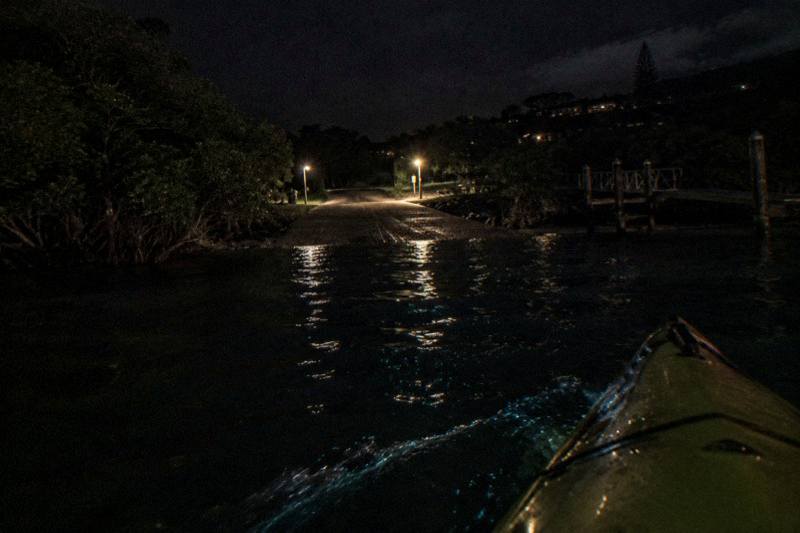
Will Every Bioluminescence Kayak Tour See The Glow?
No tour in Auckland promises bioluminescence. What each operator actually says about seeing the glow, and what happens on a night with none.
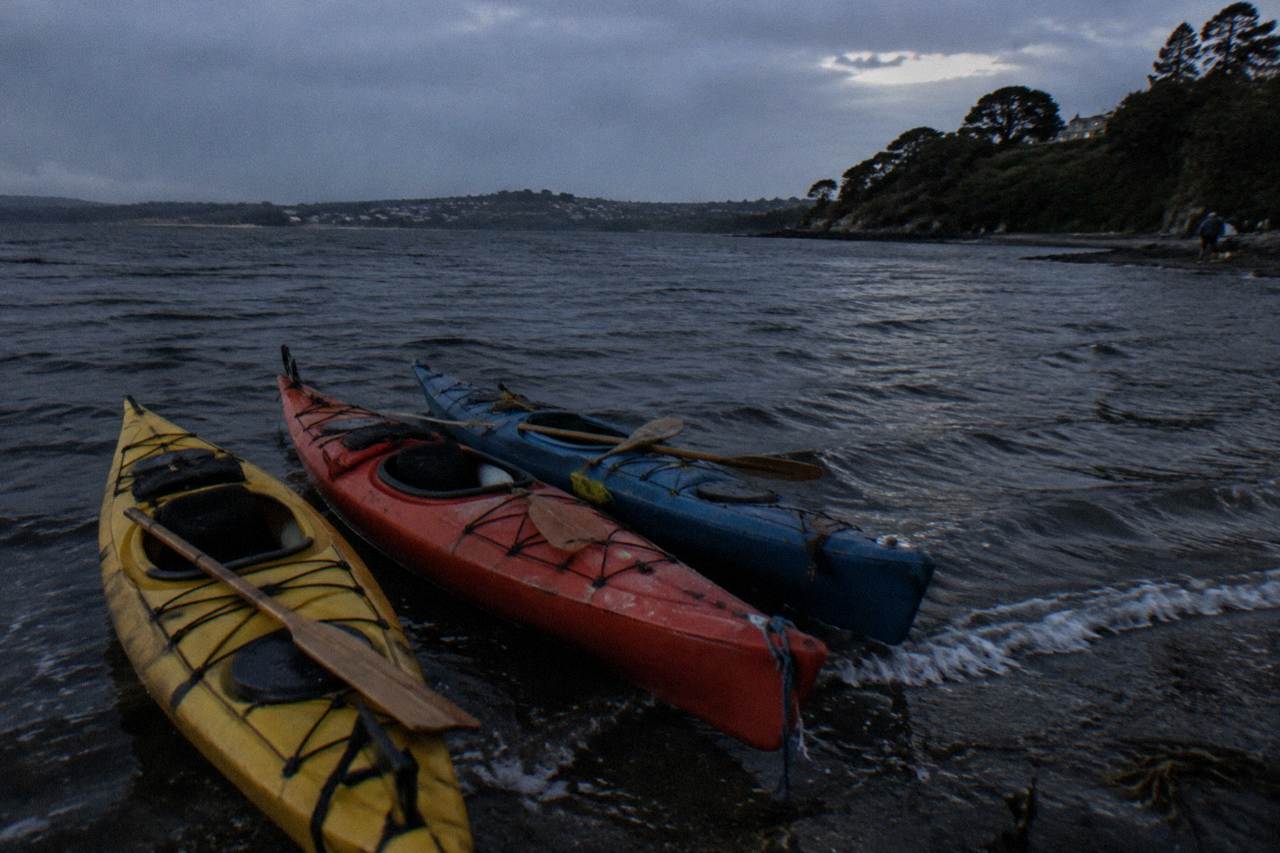
No. No Auckland bioluminescence kayak tour guarantees the glow, and the operators that address the question say so plainly. Canoe & Kayak Adventures writes that bioluminescence "can never be guaranteed" and offers a free repeat tour if the guide confirms none was seen. Social Nature Movement says the organisms "vary naturally". Auckland Sea Kayaks says bioluminescence is "sometimes" seen on its sunset tour. That is the honest starting point for anyone weighing the price of a ticket against a natural event nobody controls.
The question matters because the dedicated glow paddles in Auckland are short, affordable trips with a live organism in the starring role. The cheapest, the Social Nature Movement glow paddle on its more-reviewed booking page, starts from $53 per person for 1.5 to 2 hours and carries 4.9 across 329 reviews. Its sister page for the same trip shows 5.0 across 46 reviews at $62.42. The Canoe & Kayak Adventures equivalent runs 2 hours from $67.52, rated 4.1 across 207 reviews on one page and 4.5 across 67 reviews on the other. The glow can vary night to night, so no booking guarantees a light show. They are buying a guided paddle on a dark North Shore night, with a chance of the thing that gives the genre its name.
No, and no operator in Auckland claims otherwise. Each company that sells a glow-themed kayak trip states, in its own words, that bioluminescence is a natural phenomenon outside its control. Canoe & Kayak Adventures says it "can never be guaranteed". Social Nature Movement says the organisms "vary naturally". Auckland Sea Kayaks applies the word "sometimes" to its sunset tour only. A booking is a ticket to try, not a ticket to see.
The mechanism behind the hope is well understood even when the outcome is not. The glow that Auckland paddles chase comes mostly from dinoflagellates, single-celled organisms that flash when the water around them is disturbed. Wikipedia's summary of the science describes the light as mostly blue-green, triggered by mechanical disturbance such as a boat, a swimmer or waves, controlled by a circadian clock and occurring only at night. The flash itself lasts about 80 milliseconds. A paddle stroke is enough of a trigger. Whether enough cells are present on a given night, in a given bay, is the part nobody can promise.
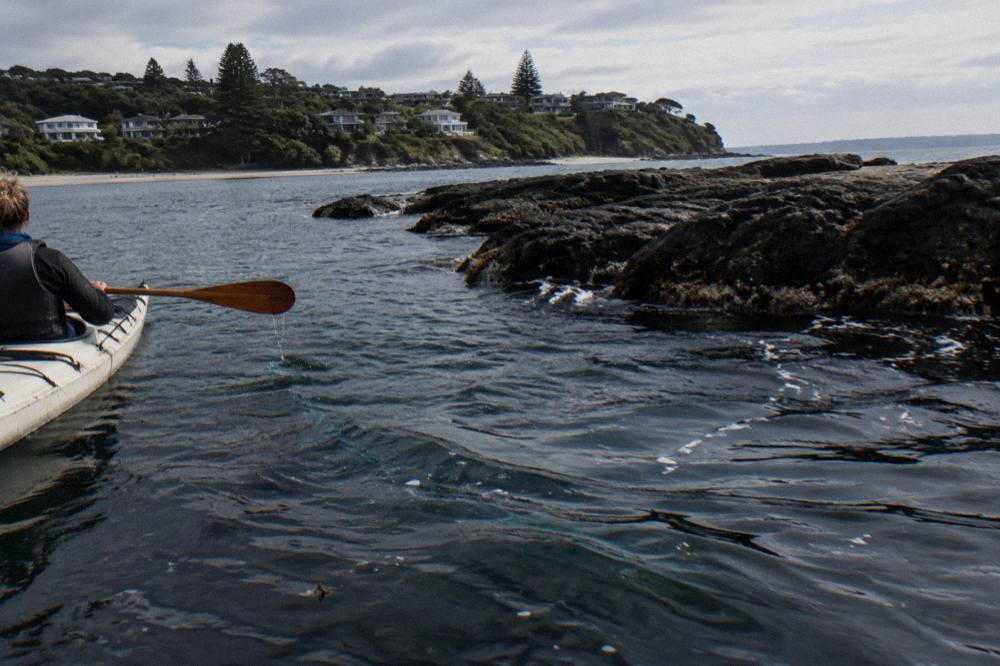
The name most often attached to the spectacle is Noctiluca scintillans, popularly the "Sea Ghost" or "Fire of Sea". Earth Sciences New Zealand, formerly NIWA, describes it as a non-photosynthetic dinoflagellate species of alga whose cells phosphoresce when disturbed. Auckland Council environmental scientist Dr Megan Carbines, quoted by Local Matters, called it "a non-toxic dinoflagellate, which often forms bright blooms around the coast in summer" and noted that when disturbed "it also emits a burst of light, often seen when swimmers or boats move through the water at night". She added that rising water temperature "is conducive to these sorts of blooms if combined with calm conditions allowing them to accumulate". Warmth plus calm, in other words, stacks the deck. It does not lock the result.
For a buyer, the practical read is this: the dedicated bioluminescence tours are built around the glow, launch on the North Shore where the operators take their guests, and are priced between $53 and $67.52 per person for roughly two hours. Each one is a guided paddle with a natural lottery attached. The operators are not being evasive when they decline to promise a sighting. They are describing the ocean accurately.
Three trips frame the decision nicely. Two are dedicated glow paddles from different operators, and one is a longer Rangitoto sunset paddle on which the operator only says bioluminescence is "sometimes" seen. Anyone whose heart is set on the glow should notice which category a trip sits in before checking dates, because the wording differs by tour, not just by price.
What Do The Auckland Operators Say About Seeing Bioluminescence?
Each operator publishes its own sentence on the question. Canoe & Kayak Adventures: bioluminescence "can never be guaranteed", but "it's very rare not to see at least one type", and a free repeat tour follows if the guide confirms none was seen. Social Nature Movement: the organisms "vary naturally". Auckland Sea Kayaks: "sometimes" seen on its sunset tour, "typically October to April".
Those three positions are not interchangeable, and none of them should be read across to another company's tour. Canoe & Kayak Adventures goes furthest toward reassuring a nervous buyer. Its full wording: "Bioluminescence is a natural event and can never be guaranteed, but we plan every trip around the best conditions and it's very rare not to see at least one type. If you don't see any on your tour, as confirmed by your guide on the night, we'll give you a free repeat tour." Two things carry weight there. The repeat offer applies only when the guide confirms on the night that nothing was seen, and the terms of that offer belong to the operator. It is a real safety net, and it is also a conditional one.
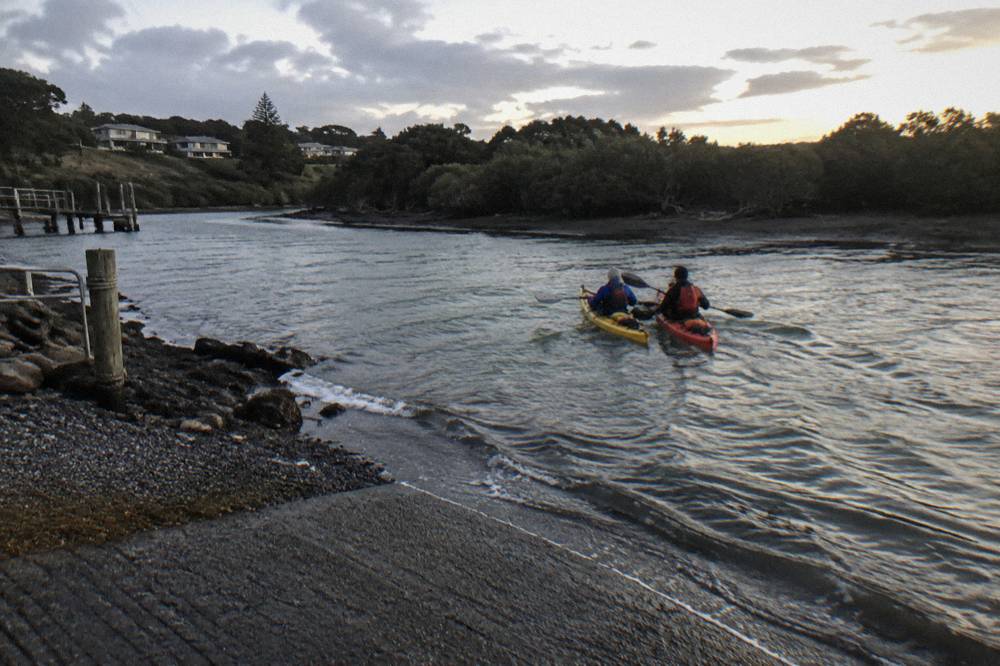
Social Nature Movement, which runs the dedicated glow tours from Okura Boat Ramp or Waiake Beach and the seven-hour Tiritiri Matangi dinner trip, keeps its language about natural variation. Its Tiritiri booking page describes the return paddle with "a chance to see bioluminescent plankton", and the phrasing is deliberate: the trip is sold as a dinner, wildlife and night-walk experience, and the plankton are a possibility on the paddle home, not the product. Auckland Sea Kayaks, meanwhile, makes no bioluminescence claim at all for its City Lights tours from Westhaven Marina. Its "sometimes" line belongs to the Rangitoto sunset tour alone.
The comparison below gathers each company's published position next to the tours it applies to.
| Operator | Tours the wording applies to | What the operator says | If no glow is seen |
|---|---|---|---|
| Canoe & Kayak Adventures | Its 2 hour North Shore glow tour, from $67.52 | "Can never be guaranteed", "very rare not to see at least one type" | Free repeat tour if the guide confirms none was seen |
| Social Nature Movement | Its Okura and Waiake glow tours, from $53, and the Tiritiri Matangi trip, from $139 | The organisms "vary naturally"; the Tiritiri trip lists "a chance to see bioluminescent plankton" | No repeat offer stated |
| Auckland Sea Kayaks | The Rangitoto sunset tour only, from $116 and $139.02 on its two booking pages; City Lights makes no glow claim | "Sometimes" seen, "typically October to April", never guaranteed | No repeat offer stated |
One more distinction deserves a sentence of its own. Cancellation by the operator, for weather or for the moon, is separate from the question of whether a tour that runs sees anything. A tour can launch as scheduled, paddle for two hours under a dark sky, and still find the water showing no glow. The operators' glow language covers that outcome. Their weather and moon rules cover a different one: the night not going ahead at all.
Does The Moon Affect Whether A Tour Sees The Glow In Auckland?
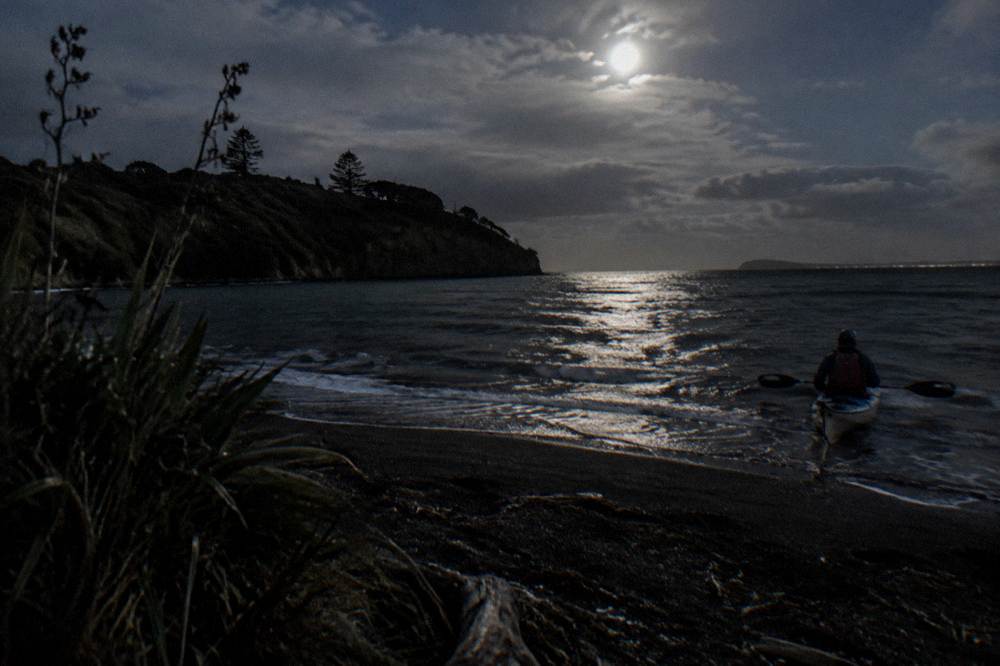
Yes, in the operator's own words, moonlight changes how visible the glow is, and one operator cancels around it. Social Nature Movement runs no tour when the moon is in the sky above 50 percent illumination, so gaps in its availability are intentional. Canoe & Kayak Adventures does not cancel for the moon but recommends booking near a new moon or on later-moonrise nights. Auckland Sea Kayaks has no moon rule.
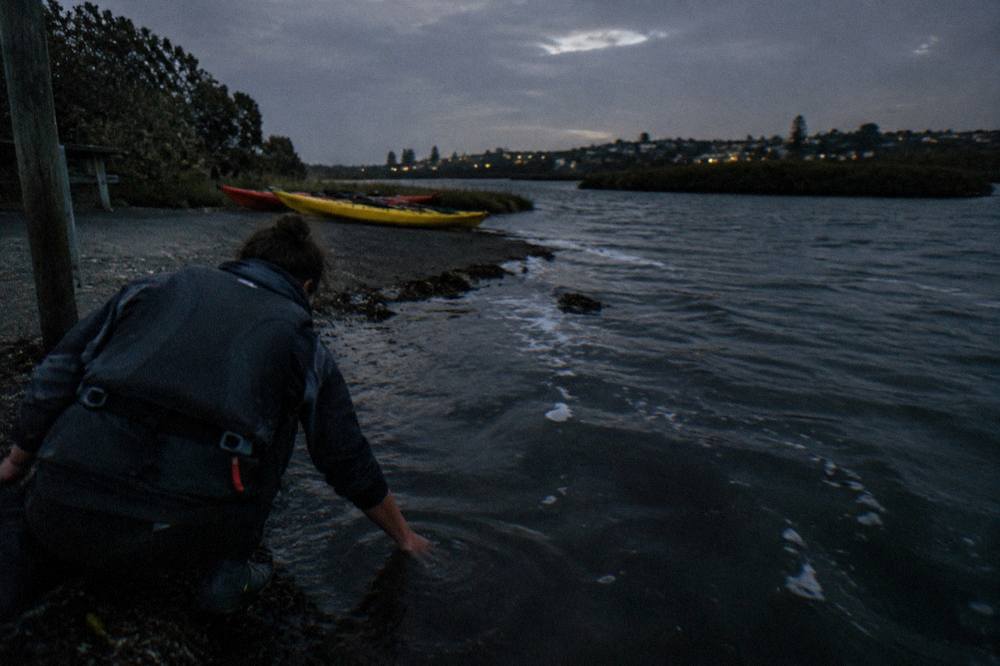
The logic is simple physics dressed in operator wording. The flash of a dinoflagellate is a small, brief pulse of blue-green light. A bright moon adds ambient light to the same water, and Social Nature Movement states it plainly: "we do not operate when the moon is in the sky and at more than 50% illumination, as excessive moonlight can significantly reduce the quality and visibility of the bioluminescence, so gaps in our availability are intentional." A would-be bookers opening that company's calendar and finding holes should read them as design, not as a thin market.
Canoe & Kayak Adventures treats the moon as a visibility factor rather than a cutoff. Its notice reads: "Moonlight affects this tour and how brightly you will see bioluminescence. When the moon is brighter, the glow can be more subtle, but still visible. We recommend booking near a new moon or on nights with later moonrise." The same operator adds a seasonal sentence, "In November-April, the glow is often strong enough to enjoy on most nights", which applies to its tours only and should not be borrowed for anyone else's. Social Nature Movement's own season line, that peak Auckland bioluminescence season runs October to April, likewise belongs to that operator alone.
For anyone planning around the lunar calendar, new moon dates computed from US Naval Observatory data for Auckland local time include 9 November 2026, 9 December 2026, 8 January 2027, 7 February 2027 and 8 March 2027. Full moons fall on 25 November 2026, 24 December 2026 and 23 January 2027 in the same series. A date is not a promise of darkness and not a promise of a sighting. It is a piece of arithmetic, and the reader who wants the fuller picture can compare it with the moon-by-moon detail in moon phase and bioluminescence tour timing.
Can Weather Cancel An Auckland Bioluminescence Kayak Tour Before It Starts?
Yes. Each operator states its own limits and makes the final call on the day. Social Nature Movement proceeds only in calm conditions, with stated wind and rain ceilings at its two launches. Canoe & Kayak Adventures offers a different date or a full refund when it cancels for weather. Auckland Sea Kayaks operates within strict wind and sea limits and may move, reschedule or fully refund a trip.
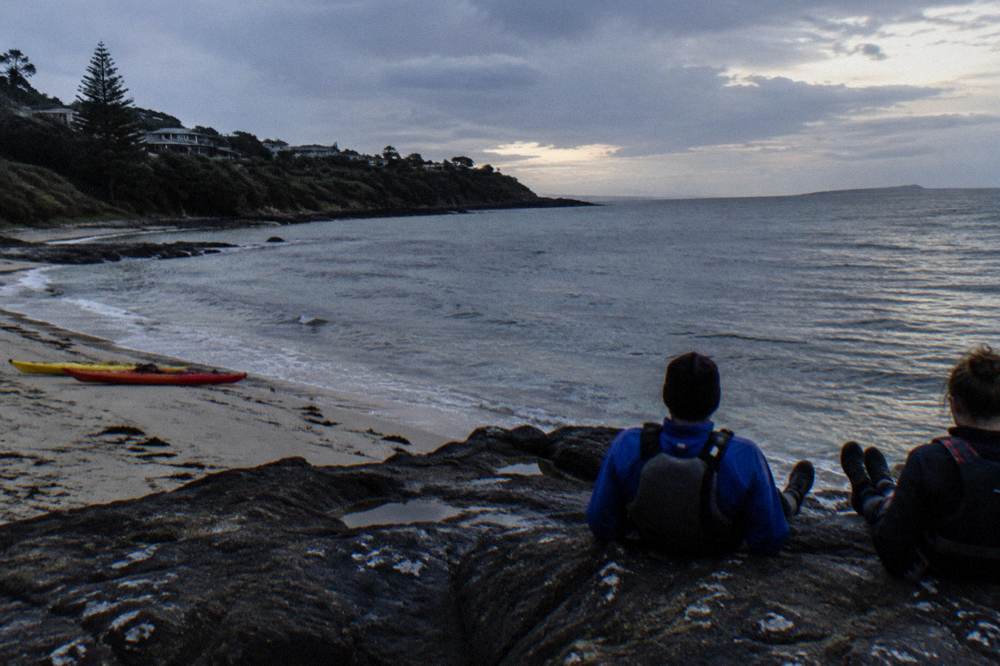
The numbers exist, and they belong to one company. Social Nature Movement says Waiake Beach does not operate above 5 m/s wind or 2.4 mm rain, and Okura above 8 m/s or 2.4 mm rain. Those ceilings explain why the same operator can run from one bay and not another on the same night. The plankton the tours seek accumulate at the surface when the sea is calm, so a cancellation threshold is not just a comfort rule. Chop works against both the organism and the viewer.
Canoe & Kayak Adventures gives weather cancellation a defined outcome: a different date or a full refund, in the operator's wording, with minimum numbers applying to departures. Auckland Sea Kayaks states that the final call is often made on the day, and that if conditions are unsafe it may move customers, reschedule, or give a full refund where no alternative exists. None of this is a glow guarantee in disguise. A night can pass every weather test and still show nothing.
Buyers should also separate operator cancellation from their own. Every one of the nine tours covered here states a full refund when cancelled at least 24 hours before the start, in booking-page wording. That is the window for changing one's own mind. The weather rules above govern the operator's decision, and the two clocks tick independently. The article on night kayak safety on a guided glow paddle covers what the operators supply on the water, including the lifejacket rules Maritime NZ sets for paddle craft.
What Happens If An Auckland Glow Tour Sees Nothing?
On the Canoe & Kayak Adventures tour, a free repeat tour follows if the guide confirms on the night that no bioluminescence was seen. On the other operators' tours, no repeat offer is stated, and the booking pages promise nothing. Every one of the nine tours states a full refund for cancellations made at least 24 hours before the start, but that refund window is a different thing from a no-glow outcome.
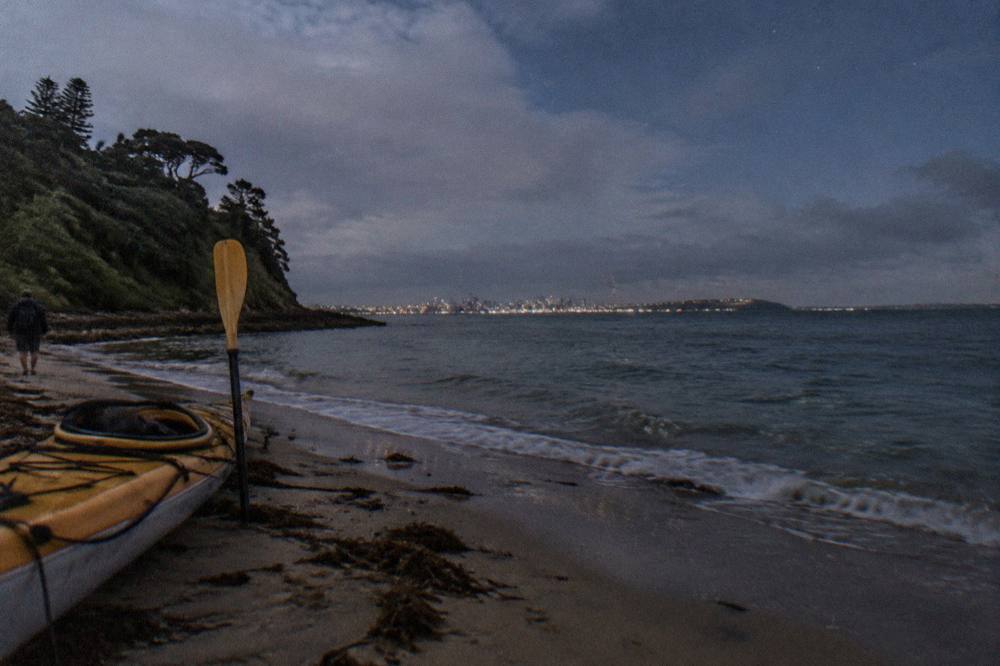
The repeat-tour offer is the most concrete answer any Auckland operator gives to this article's question, and it deserves careful reading. It is conditional on the guide's confirmation on the night, it covers the glow rather than the enjoyment of the paddle, and its terms are the operator's. Someone who books the Canoe & Kayak Adventures bioluminescence tour, a 2 hour North Shore paddle from $67.52, is buying a trip with a defined fallback. Someone who books a Social Nature Movement or Auckland Sea Kayaks night is buying the paddle itself, with the glow as an unbacked possibility.
That difference is worth weighing honestly rather than as a verdict. The Social Nature Movement glow paddle is the most reviewed trip of its kind in the city, 4.9 across 329 reviews at $53, and reviews of that size describe many nights out, not one. The Rangitoto sunset tour pairs a full evening, a BBQ dinner and a paddle home beneath the night sky with its "sometimes" chance of plankton. Neither offers a free second night. A reader deciding between them can line up the figures in the Auckland glow tour comparison or think through the timing question in how far ahead to book.
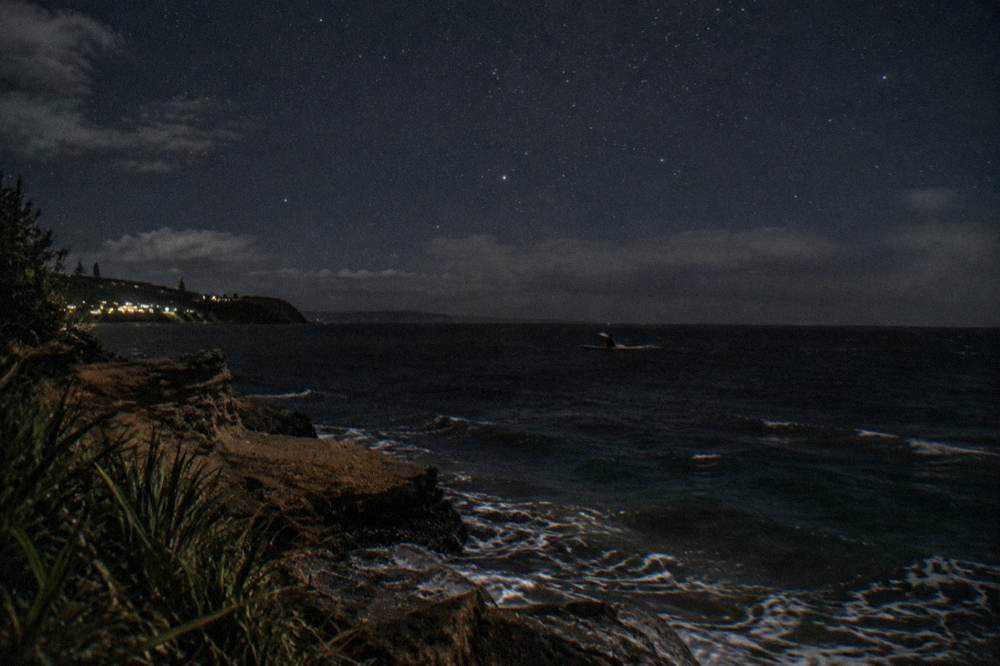
There is also a fair way to frame a no-glow night before it happens. The tour still delivers a guided paddle after dark, a North Shore shoreline at night, and gear and guidance that the operator supplies. What it cannot deliver on demand is a single-celled organism that flashes for 80 milliseconds when stirred. The reader who would feel cheated by a dark night should weigh the repeat offer and the price difference. The reader who would enjoy the paddle anyway has more options, and the operators' own wording supports that calculation.
Do The Longer Auckland Night Paddles Change The Odds?
They change the shape of the evening more than the promise. The seven-hour Tiritiri Matangi trip lists "a chance to see bioluminescent plankton" on its return paddle, and the Rangitoto sunset tour says bioluminescence is "sometimes" seen, but both are sold as dinner, wildlife and harbour experiences first. The dedicated two-hour glow paddles remain the trips actually built around the plankton.
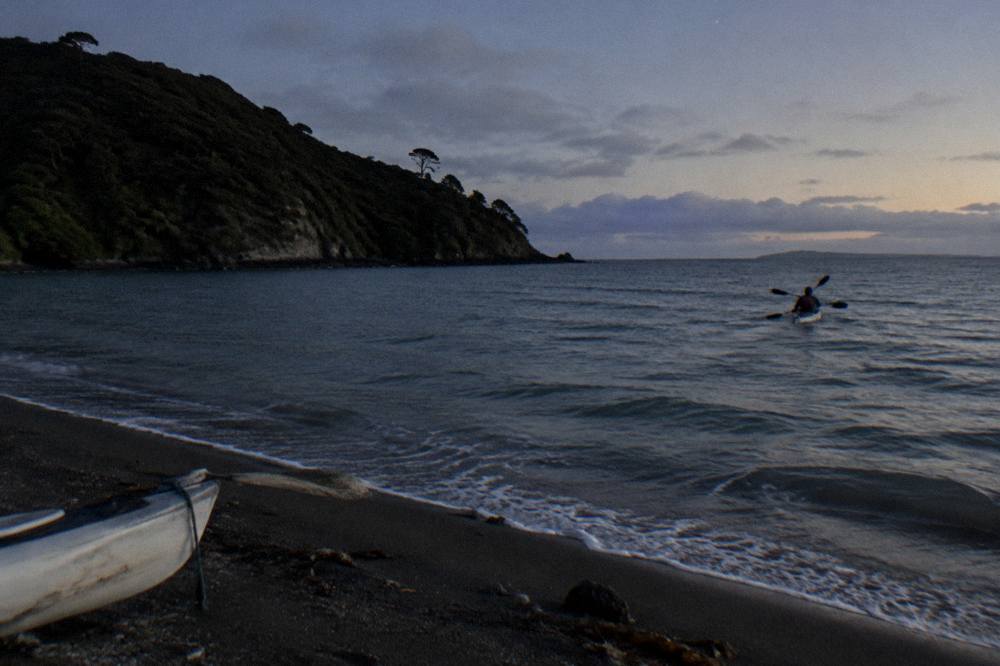
The Tiritiri Matangi trip deserves its own description, because it is easy to misfile. It is a seven-hour Social Nature Movement journey, from $139 per person, with no rating yet on its booking page. It includes an evening sea kayak journey, a visit to Tiritiri Matangi Island, a sunset grazing platter with drinks, a guided nocturnal walk, and a return paddle with a chance of bioluminescent plankton. Pickup is included, with two options chosen at booking, a 75-minute van ride and drop-offs at Te Haruhi Bay and the Sky Tower. Comparing its price with a two-hour glow paddle is the wrong arithmetic: it is a dinner and wildlife trip that happens to end on the water at night.
The Rangitoto sunset trips sit in a similar frame with different furniture. Auckland Sea Kayaks runs the evening from its base at St Heliers Bay, 384 Tamaki Drive, with a BBQ dinner and a paddle back after dark; one booking page shows 4.9 across 179 reviews from $139.02 for 6 hours 30 minutes, and the page's twin for the same trip shows 4.8 across 85 reviews from $116 for 7 hours. The operator's bioluminescence wording, "sometimes" seen and never guaranteed, belongs to this tour. There is also a pre-booked free shuttle from the Auckland War Memorial Museum for the Rangitoto departures, with limited seats.
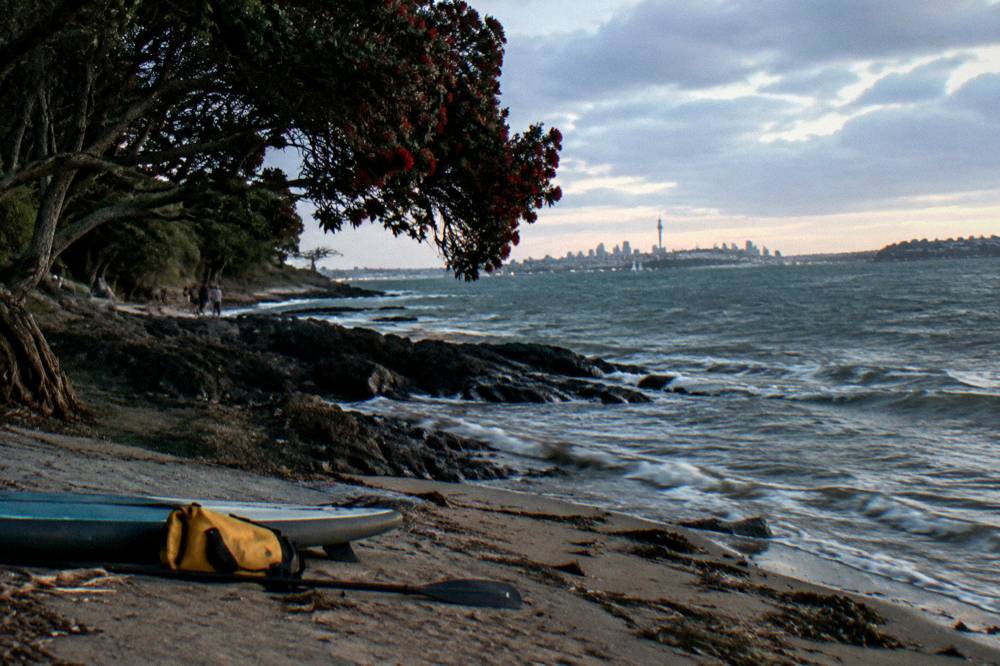
The City Lights tours from Westhaven Marina are the clearest case of category over chance. They make no bioluminescence claim at all. They are night paddles on the sheltered Waitemata Harbour with the city lit up behind the kayaks, one from $82.27 for about 2.5 hours rated 4.8 across 28 reviews, and its twin page showing the same trip from $73 for 2 hours rated 5.0 across 15 reviews. A glow-seeker who books one of these has bought the wrong product, through no fault of the operator.
A reader can place every option on one spectrum. At one end sits the dedicated glow paddle, short, cheap, moon-restricted, sometimes backed by a repeat offer. In the middle sits the long dinner trip that ends with a chance of plankton. At the other end sits a city night paddle that never mentions them. The glow gets likelier in intent as the price falls, and the evening gets bigger as it rises. The collection of tours on this site exists to keep those distinctions honest.
Common Questions About Seeing The Glow
Will Every Bioluminescence Kayak Tour See The Glow?
No. No Auckland operator promises a sighting. Canoe & Kayak Adventures says bioluminescence "can never be guaranteed", Social Nature Movement says the organisms "vary naturally", and Auckland Sea Kayaks says glow is "sometimes" seen on its sunset tour only.
Does Any Auckland Operator Offer A Free Repeat Tour?
Yes, one. Canoe & Kayak Adventures offers a free repeat tour if the guide confirms on the night that no bioluminescence was seen on its 2 hour North Shore glow tour. The terms are the operator's.
Can A Bright Moon Stop A Tour From Running?
For Social Nature Movement, yes: it runs no tour when the moon is in the sky above 50 percent illumination, so gaps in its calendar are intentional. Canoe & Kayak Adventures recommends new moon or later-moonrise nights but does not cancel for the moon. Auckland Sea Kayaks has no moon rule.
Can I Get A Refund If My Tour Runs But Sees Nothing?
Not from the booking terms. All nine tours state a full refund only when cancelled at least 24 hours before the start. A completed tour with no glow is covered only by the Canoe & Kayak Adventures repeat offer.
Do The Longer Tours Promise More Glow?
No. The seven-hour Tiritiri Matangi trip lists "a chance to see bioluminescent plankton" on its return paddle, and the Rangitoto sunset tour says glow is "sometimes" seen. Both are sold as dinner and wildlife experiences, not as glow tours.
What Actually Creates The Glow In The Water?
Single-celled organisms called dinoflagellates, most often Noctiluca scintillans, popularly the "Sea Ghost" or "Fire of Sea". The cells flash mostly blue-green when the water around them is disturbed by a paddle stroke, a swimmer or waves, and each flash lasts about 80 milliseconds. A circadian clock controls the reaction, which occurs only at night. Auckland Council scientist Dr Megan Carbines describes the species as a non-toxic dinoflagellate that often forms bright blooms around the coast in summer.