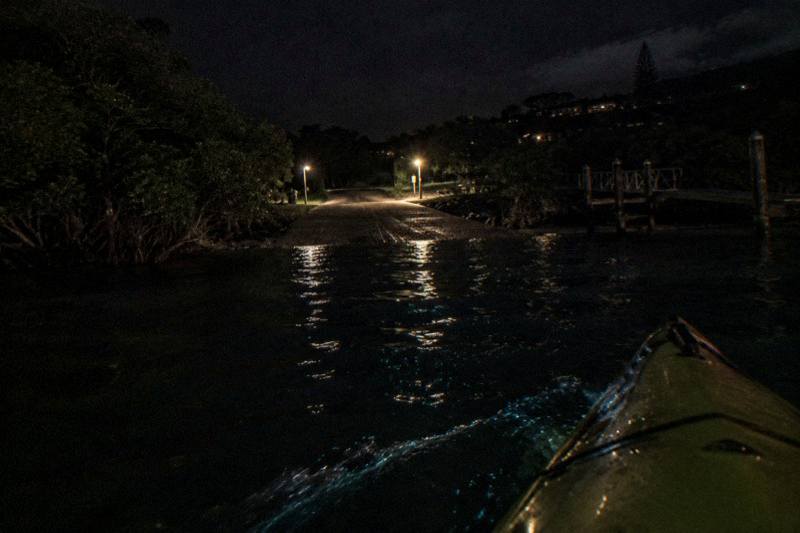
Moon Phase And A Bioluminescence Kayak Tour: Why Dark Nights Matter
Moonlight is the single variable a bioluminescence kayaker can plan around, and the three Auckland operators treat it very differently. Here is what each one says, plus the computed new and full moon dates for the season ahead.
Short answer
Moonlight dims the visibility of bioluminescence, so dark nights matter. Social Nature Movement runs no tour when the moon is in the sky above 50 percent illumination, from Okura Boat Ramp or Waiake Beach. Canoe & Kayak Adventures recommends booking near a new moon or on later moonrise nights on the North Shore. Auckland Sea Kayaks states no moon rule at all.
Moonlight decides how much of the night sky's light competes with the water, and for a bioluminescence kayaker that competition is the whole game. The glow is produced by living organisms in the surface water, and it is faint compared with any source of light in the sky. A bright moon does not switch the organisms off, it washes them out, the way a streetlight washes out the stars. That is the physics behind every piece of operator advice on the subject, and it is why a reader checking the moon is really deciding which night to book the kayak tour.
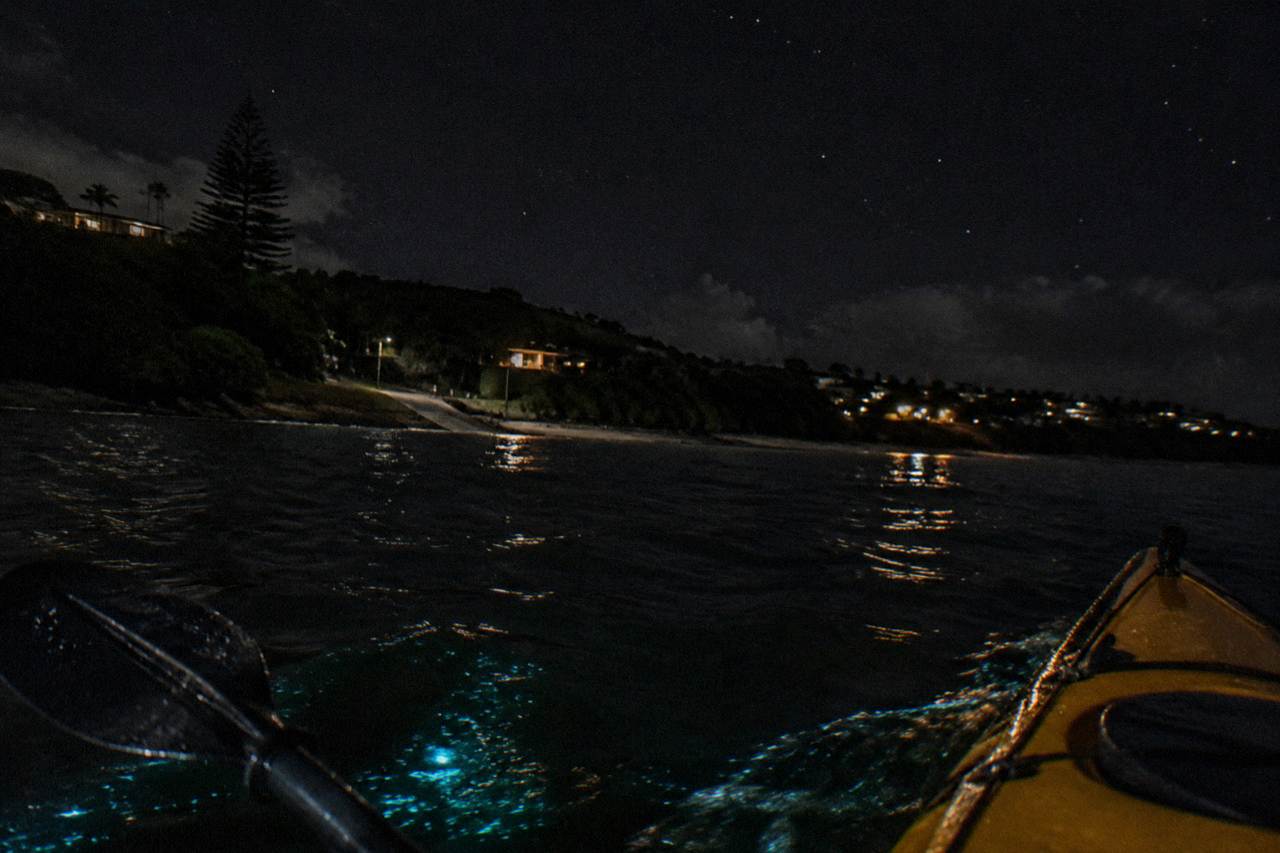
The mechanics are well documented. Bioluminescence in dinoflagellates is triggered by mechanical disturbance, a paddle stroke, a wave, the hull of a kayak, and the light itself is produced by a chemical reaction inside the cell, on the dinoflagellate group that includes the sea sparkle seen around New Zealand. A flash lasts about 80 milliseconds and is mostly blue-green. Nothing in that process depends on the moon. What depends on the moon is whether a human eye, dark-adapted or not, can pick the flash out against the background light, and a moonlit sea raises that background substantially.
Around Auckland the operators are candid about this, and they are candid in three different ways. One refuses to run tours under a bright moon at all. One runs tours on any operable night but tells customers plainly that the glow shows more subtly when the moon is brighter. The third says nothing about the moon at all, because the tours it runs around the city waterfront are not sold on a bioluminescence promise. This guide sets out each position in the operator's own words, gives the computed new and full moon dates for the season ahead, and connects the calendar to the actual tours departing from Okura, Waiake, the North Shore, St Heliers Bay and Westhaven Marina.
Why Does Moonlight Affect A Bioluminescence Kayak Tour In Auckland?
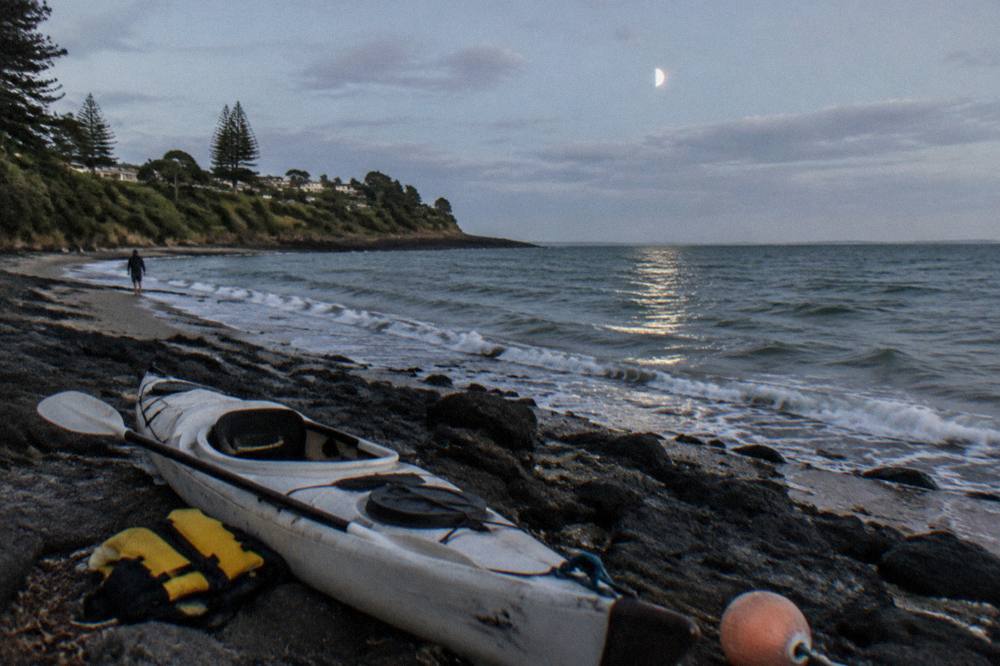
Moonlight raises the background brightness of the sea and the sky, which makes the blue-green flash of disturbed organisms harder to pick out, so darker nights give the glow more visual contrast even though the organisms themselves flash just the same. Auckland's three glow-tour operators each treat that fact differently, from a firm operating rule to softer guidance to no mention at all, and knowing which applies to a tour shapes which night is worth booking.
The starting point is the organism. The sea sparkle recorded in Hauraki Gulf bloom events, Noctiluca scintillans, is a single-celled dinoflagellate that drifts with the current and accumulates at the surface when the sea is calm. Auckland Council environmental scientist Dr Megan Carbines, quoted by Local Matters, described it as "a non-toxic dinoflagellate, which often forms bright blooms around the coast in summer" and noted that "when disturbed, it also emits a burst of light, often seen when swimmers or boats move through the water at night." She also linked blooms to rising water temperature combined with calm conditions that let cells accumulate, which is a seasonal point rather than a lunar one. A fuller treatment of the season question sits in the best time for a bioluminescence kayak tour guide.
The moon, by contrast, is not a biological variable at all. It is an optical one. Earth Sciences New Zealand's voyage captions from a research cruise off the Chatham Rise put the mechanism plainly: "At night, Noctiluca scintillans cells phosphoresce when disturbed", giving the species its popular names, "Sea Ghost" and "Fire of Sea". Those nicknames describe a light that is real but dim, produced on demand when shear stress hits the cell. Against a moonless sky that dim light reads strongly. Against a moon at high illumination the same flash is competing with reflected moonlight across the whole surface of the water, and the contrast drops.
No public agency gives a moon effect for Auckland waters specifically, so any guidance on the subject comes from the operators themselves. Social Nature Movement goes furthest and builds the moon into its calendar. Canoe & Kayak Adventures runs regardless but tells customers what a bright moon does to the view. Auckland Sea Kayaks, whose night products are the City Lights paddles on the Waitemata Harbour and the Rangitoto sunset tour, states no moon rule, and its sunset tour's own bioluminescence wording is limited to saying the glow is "sometimes" seen, "typically October to April", and can never be guaranteed. The sections below take each position in turn.
What Is The Social Nature Movement 50 Percent Moon Rule At Okura And Waiake?
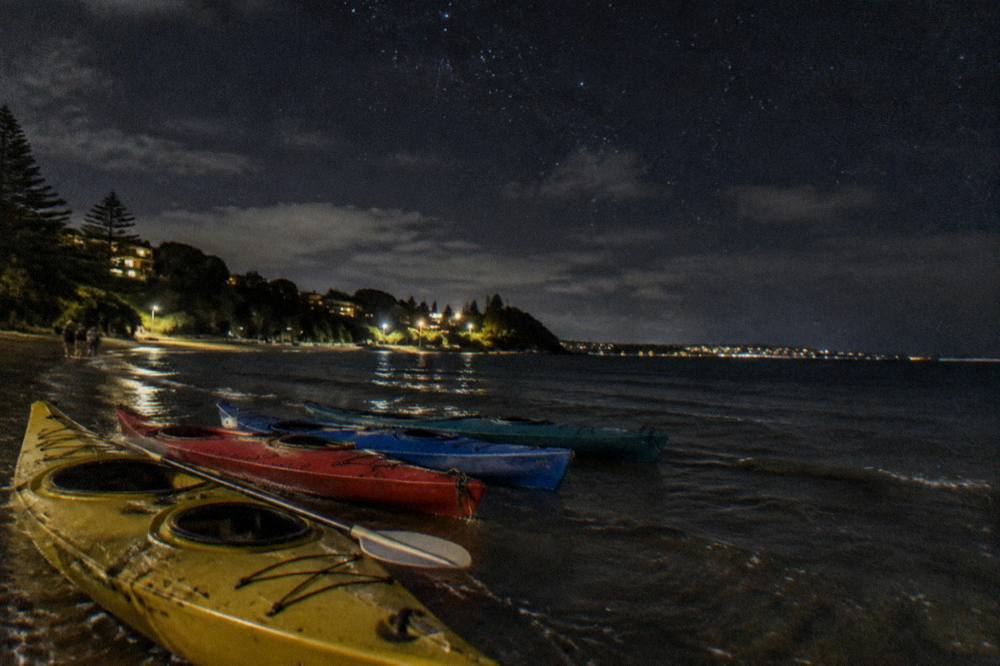
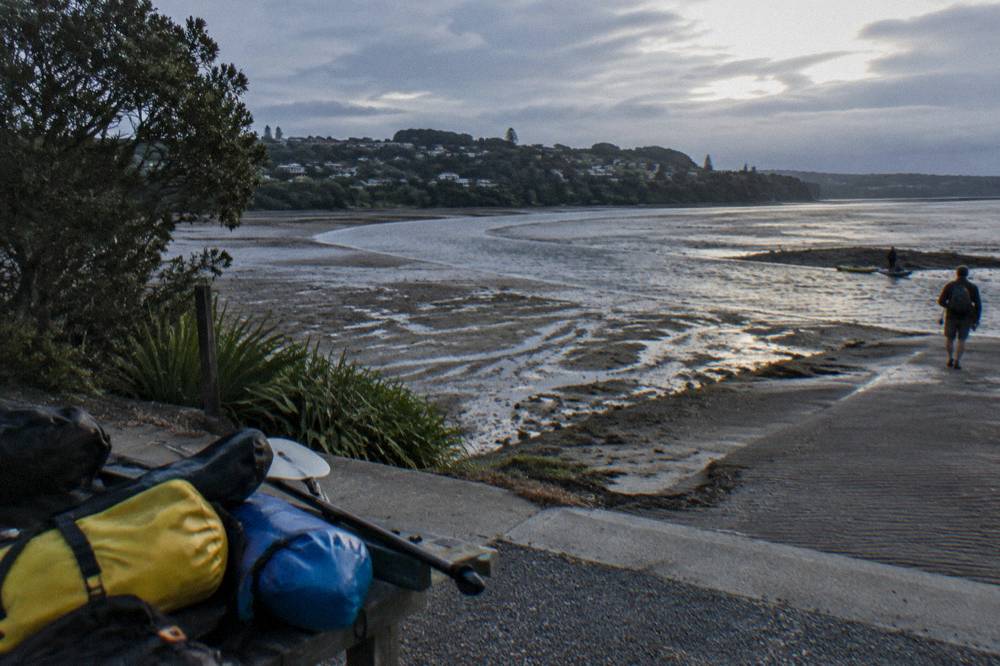
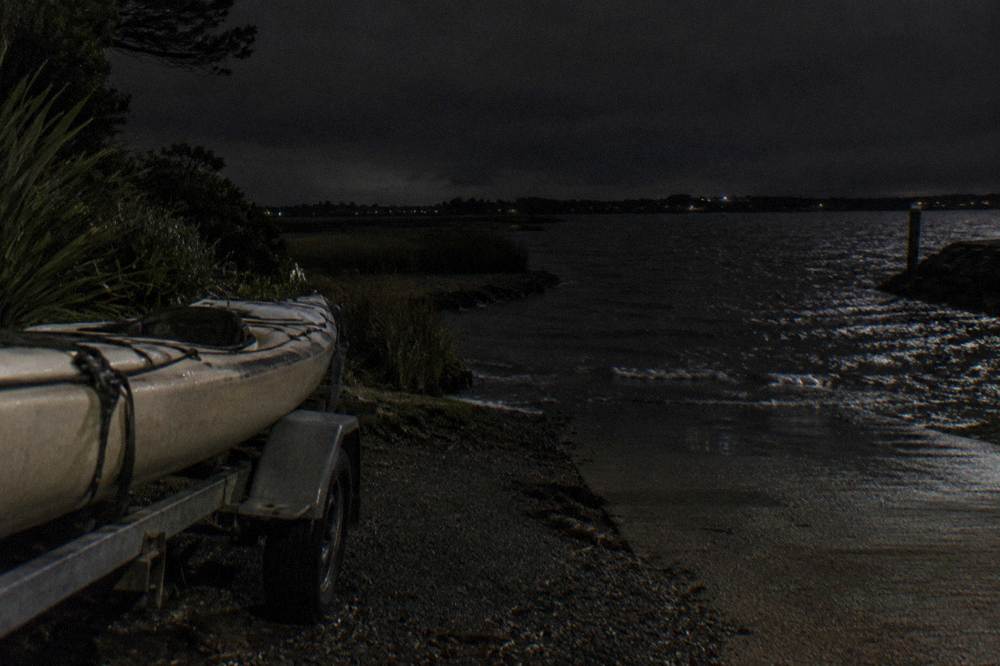
Social Nature Movement does not operate when the moon is in the sky at more than 50 percent illumination, so its calendar deliberately shows gaps around brighter nights. The rule applies to its glow tours from Okura Boat Ramp or Waiake Beach, the two North Shore launches it links to the tide, and it is the only hard moon rule among Auckland's bioluminescence operators.
The operator's own wording is specific: "we do not operate when the moon is in the sky and at more than 50% illumination, as excessive moonlight can significantly reduce the quality and visibility of the bioluminescence, so gaps in our availability are intentional." Two things in that sentence matter for a reader planning around the moon. The first is the threshold, 50 percent illumination, and the second is the qualifier "in the sky": a moon that is more than half lit but has not yet risen does not spoil the darkness, which is why the operator's gaps follow the moon's rising and setting times rather than the phase alone.
The same operator's season statement is separate from the moon rule and should not be merged with it. Social Nature Movement says the peak Auckland bioluminescence season is October to April, and that the glow is best viewed during warmer months on dark, moonless nights. It also says the organisms vary naturally and can never be guaranteed, moon or no moon. The moon rule raises the odds of good viewing conditions, it does not promise a sighting, and the operator says the glow varies naturally.
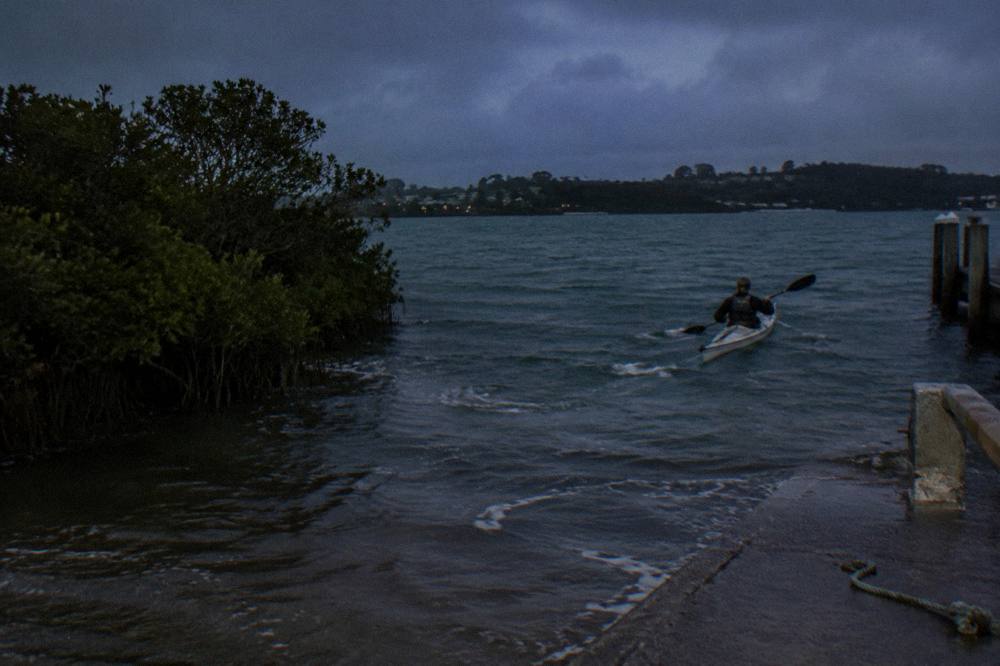
The tours the rule governs are the 2 hour glow paddle from Okura Boat Ramp at the end of Okura River Road or Waiake Beach, from $62.42 per person, rated 5.0 across 46 reviews on one booking page, and the same trip sold on a second booking page as a 1.5 to 2 hour paddle from $53 per person, rated 4.9 across 329 reviews, which is the most reviewed tour covered on this site. Both pages describe one trip with two prices, and the moon rule is the operator's, so it applies either way. Weather limits sit alongside it: tours only proceed in calm conditions, Waiake does not operate above 5 m/s wind or 2.4 mm rain, Okura above 8 m/s or 2.4 mm rain.
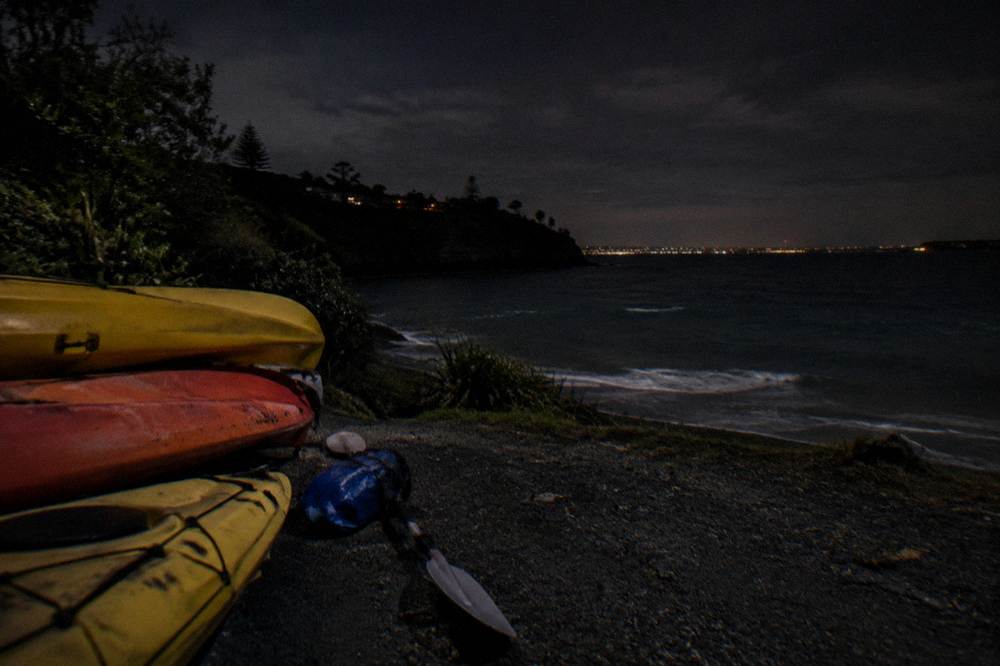
For transport, the operator runs an optional paid add-on called the Bio-Bus from near the Sky Tower, meeting one hour before the start, a 30 minute one-way ride per the operator's own page. There is no free hotel pickup on any tour covered here. The practical moon takeaway for this operator is simple: the availability calendar has already absorbed the moon rule, so any bookable date is a date the operator considers dark enough, and a reader who wants the darkest possible night can still cross-check the new moon dates further down this page before choosing.
What Does Canoe & Kayak Adventures Say About New Moon Nights On The North Shore?
Canoe & Kayak Adventures has no moon-based blackout, it runs its 2 hour glow tours from a North Shore spot emailed before 10 AM on the day, but it recommends booking near a new moon or on nights with a later moonrise, because a brighter moon makes the glow more subtle while still visible, and in November to April the operator says the glow is often strong enough to enjoy on most nights.
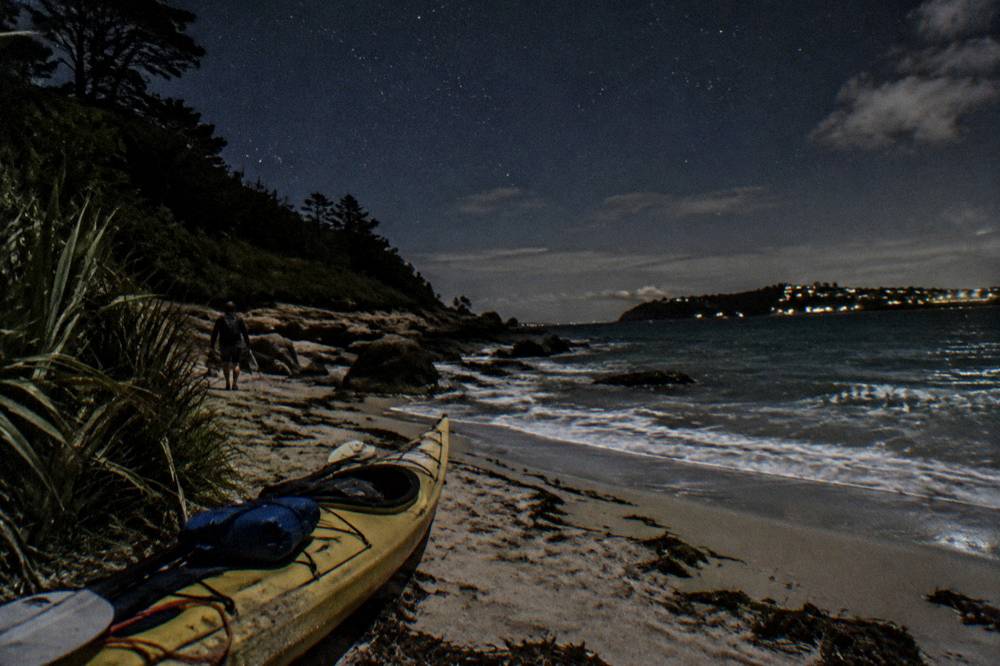
The operator's moonlight notice reads: "Moonlight affects this tour and how brightly you will see bioluminescence. When the moon is brighter, the glow can be more subtle, but still visible. We recommend booking near a new moon or on nights with later moonrise." That is advice, not a rule. Where Social Nature Movement removes dates from its calendar, Canoe & Kayak Adventures leaves the decision with the customer and tells them what the trade-off is. A reader who can only travel on a waxing gibbous weekend can still book; a reader with flexibility is being pointed at the new moon.
The seasonal line belongs to the same operator and its tours only: "In November-April, the glow is often strong enough to enjoy on most nights. These popular dates do fill fast, so booking ahead is a good idea." The operator also repeats the honesty that runs through this whole subject, that bioluminescence is a natural event and can never be guaranteed, and backs it with a specific offer: if the guide confirms on the night that no glow was seen, the operator gives a free repeat tour. The terms of that offer are the operator's, and the confirmation has to come from the guide on the night.
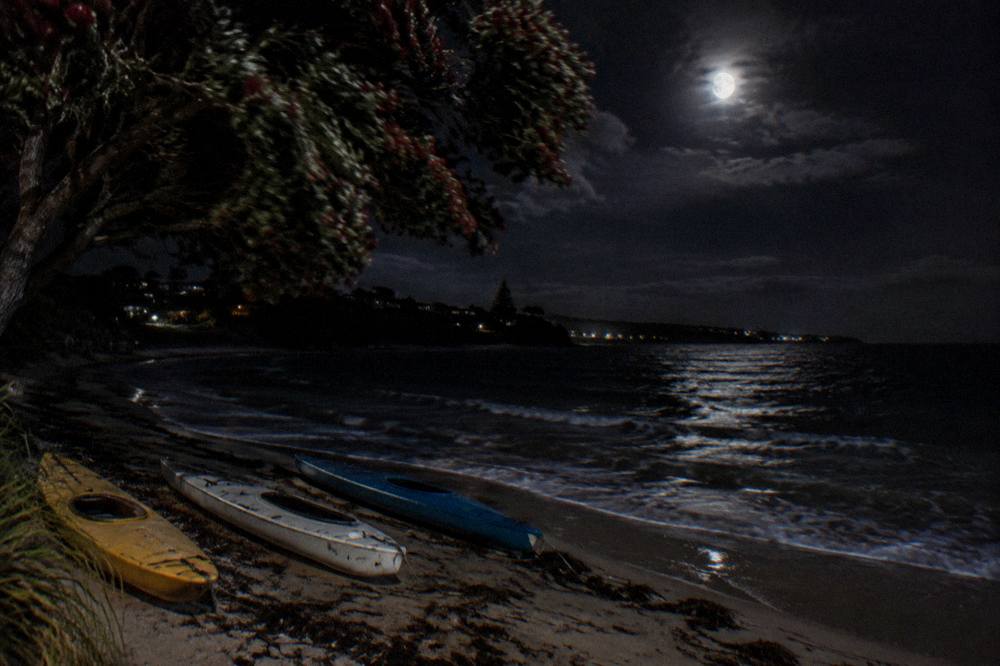
The trips behind the advice are sold on two booking pages. One shows a 2 hour paddle from $67.52 per person, rated 4.1 across 207 reviews, with a group max of 24 and a start spot on the North Shore emailed before 10 AM on the tour day. The other page for the same trip shows from $66 per person, rated 4.5 across 67 reviews, states a minimum age of 7, a 120 kg weight limit, and that hotel pickup is not included. The operator's own page adds detail the booking pages do not carry: ages 11 and over accompanied by an adult, one guide to six guests, and a request to tell the operator if a paddler is over 120 kg. The meeting spot is never published in advance beyond the morning email, so a moon-checking reader should also watch their inbox that morning.
Does Auckland Sea Kayaks Have A Moon Rule On The Waitemata Harbour?
Auckland Sea Kayaks states no moon rule for any of its tours. Its City Lights night paddles from Westhaven Marina make no bioluminescence promise at all, and for its Rangitoto sunset tour from St Heliers Bay the operator says only that bioluminescence is "sometimes" seen, "typically October to April", and can never be guaranteed, so the moon plays no part in how those trips are scheduled.
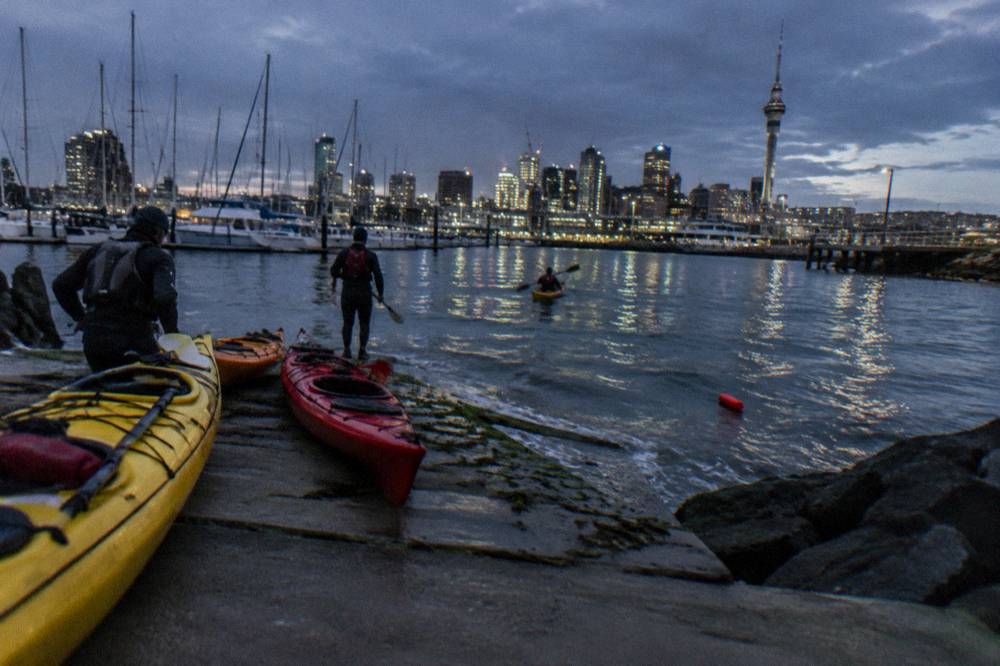
This is the third position on the moon, and it is the absence of one. The operator, running since 2010 as an audited certified adventure activity operator, sells two night products. The City Lights paddles depart from the boat ramp at Westhaven Marina, Z Pier, and are exactly what the name says: a night paddle looking at the lit city across the sheltered Waitemata Harbour. A bright moon is irrelevant to that product, and a dark night is not the point of it either. The 2.5 hour version with snacks runs from $82.27 per person, rated 4.8 across 28 reviews, with a group max of 8.
The sunset product is different. The Rangitoto trips paddle out from the operator base at 384 Tamaki Drive, St Heliers Bay, land for a BBQ dinner, and return after dark; one booking page describes paddling back beneath the stars. One page shows 6 hours 30 minutes from $139.02 per person, rated 4.9 across 179 reviews, group max 8; the other shows 7 hours from $116 per person, rated 4.8 across 85 reviews, minimum age 14 and a 125 kg weight limit on that page. The operator runs a pre-booked free shuttle from the Auckland War Memorial Museum for its Rangitoto tours, with limited seats.
On bioluminescence, the operator's wording about its sunset tour is that the glow is "sometimes" seen, "typically October to April", and can never be guaranteed. That is a season statement attached to one tour, not a moon rule, and it must not be stretched into one. A reader whose heart is set on the glow should treat the Rangitoto sunset tour as a dinner and island trip that may include a natural light show on the paddle home, and treat the dedicated glow paddles from Okura, Waiake and the North Shore as the products built around the phenomenon.
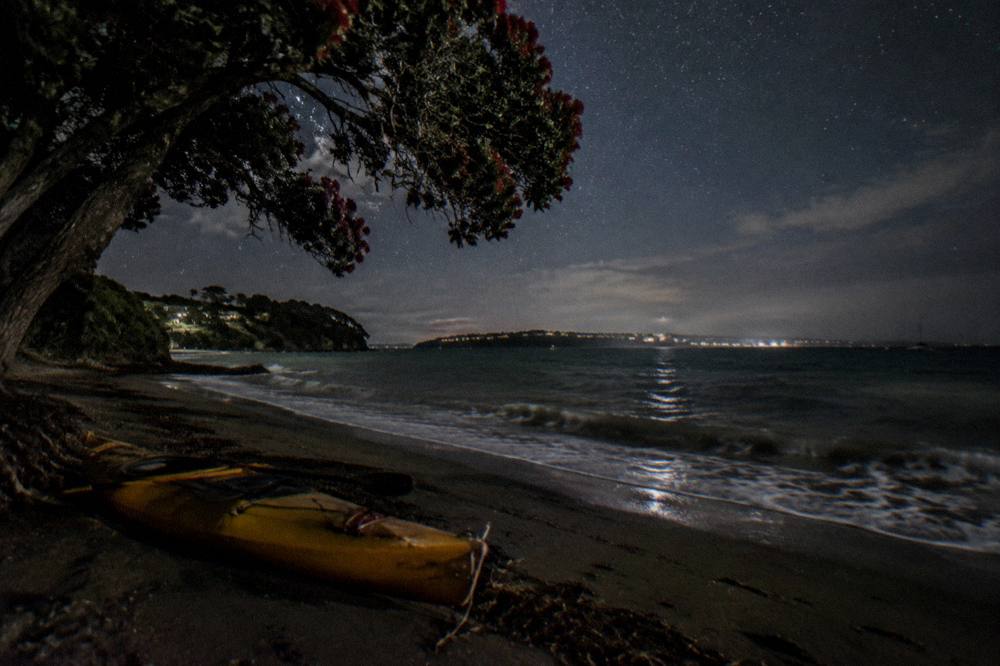
A night paddle of any kind carries gear the moon question touches only lightly. Auckland Sea Kayaks fits an all-round white navigation light on each kayak, and Social Nature Movement's glow pages list a personal flotation device with a safety light. What a kayak actually shows after dark, lights and all, is covered separately in the night kayaking lights guide.
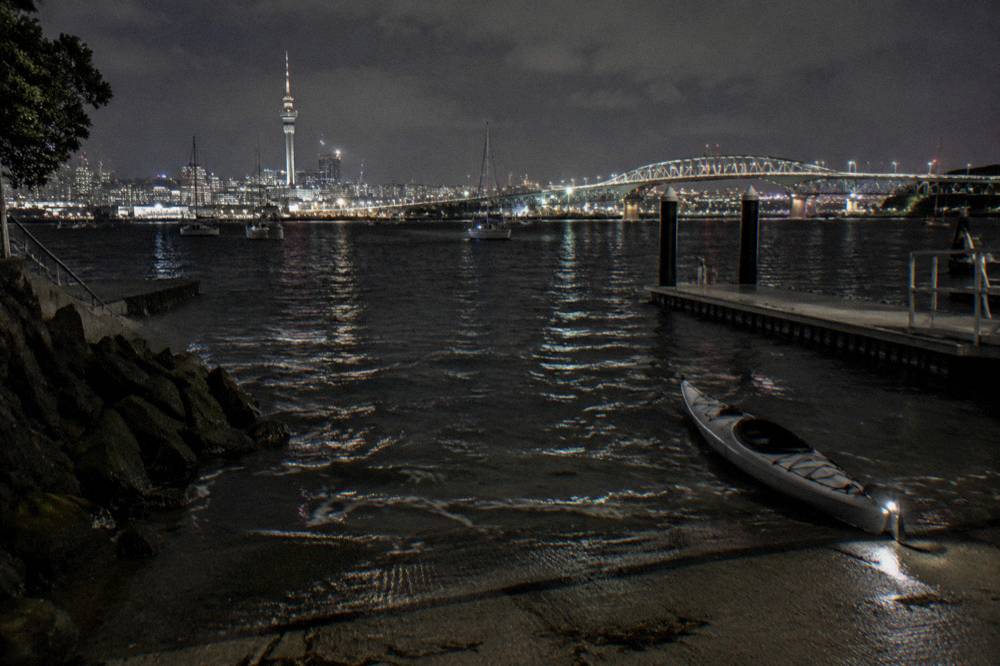
Which New And Full Moon Dates Fall Across The Auckland Season?
The new moon dates computed from US Naval Observatory data for Auckland run 9 November 2026, 9 December 2026, 8 January 2027, 7 February 2027, 8 March 2027 and 7 April 2027 through the warm months, with full moons on 25 November 2026, 24 December 2026, 23 January 2027, 21 February 2027, 22 March 2027 and 21 April 2027. No date is a guaranteed dark or glow night, the dates simply map the calendar.
The table below is the planning backbone for anyone matching a booking calendar against the moon. The dates are computed from US Naval Observatory data, converted to Auckland local time. A new moon means the moon is between Earth and the sun and contributes no light to the night sky. A full moon means it is opposite the sun and, in the hours it is up, it is fully lit. Between those extremes the moon's illumination and its rising time both matter, which is why the Social Nature Movement rule is written around a moon being in the sky above 50 percent illumination rather than around the phase name alone. Readers wanting to compute rise and set times for a specific date can do the same with the US Naval Observatory's sun and moon calculator.
| Month | New Moon | Full Moon |
|---|---|---|
| November 2026 | 9 Nov 2026 | 25 Nov 2026 |
| December 2026 | 9 Dec 2026 | 24 Dec 2026 |
| January 2027 | 8 Jan 2027 | 23 Jan 2027 |
| February 2027 | 7 Feb 2027 | 21 Feb 2027 |
| March 2027 | 8 Mar 2027 | 22 Mar 2027 |
| April 2027 | 7 Apr 2027 | 21 Apr 2027 |
| May 2027 | 6 May 2027 | 20 May 2027 |
| June 2027 | 5 Jun 2027 | 19 Jun 2027 |
| July 2027 | 4 Jul 2027 | 19 Jul 2027 |
| August 2027 | 2 Aug 2027 | 17 Aug 2027 |
| September 2027 | 1 Sep and 30 Sep 2027 | 16 Sep 2027 |
| October 2027 | 30 Oct 2027 | 16 Oct 2027 |
How to read the table honestly. A new moon date itself is not automatically the darkest full night, because on the exact new moon the moon sets with the sun and the following nights carry a thin crescent that sets early, leaving long dark stretches. A full moon is not uniformly bright either, since it rises at sunset and sets at sunrise, so a late-evening tour before moonrise on a waning moon can still fall in genuine darkness. That later-moonrise logic is precisely what Canoe & Kayak Adventures points at with its advice. What the table cannot tell anyone is whether the organisms will be present in visible numbers on a given night; Social Nature Movement says the glow varies naturally, while Canoe & Kayak Adventures says it can never be guaranteed.
How Dark Does An Auckland Night Get, And When?
Full darkness, astronomical dusk, arrives in Auckland at 9:49 pm on 15 November, 10:27 pm on 15 December and 10:29 pm on 15 January, computed from date and location, with sunset as early as 5:11 pm by midwinter. These are sky facts, not tour start times, and the operators set their own schedules, but they frame how much genuinely dark water a summer night offers.
The darkness table below is computed for the Auckland CBD waterfront from US Naval Observatory sunset and civil twilight data, with astronomical dusk computed from date and location, on the 15th of each month. It matters to a moon planner because the glow story needs two kinds of darkness to line up: the sun has to be far enough down, and the moon has to be absent or dim. In midsummer Auckland, astronomical dusk arrives close to 10:30 pm, so a night that is both post-dusk and pre-moonrise may not begin until late. In autumn the same alignment arrives hours earlier, with full dark at 7:22 pm on 15 April.
| Date | Sunset | End Of Civil Twilight | Full Dark (Computed) |
|---|---|---|---|
| 15 Nov 2026 | 8:08 pm | 8:37 pm | 9:49 pm |
| 15 Dec 2026 | 8:36 pm | 9:07 pm | 10:27 pm |
| 15 Jan 2027 | 8:42 pm | 9:12 pm | 10:29 pm |
| 15 Feb 2027 | 8:18 pm | 8:46 pm | 9:53 pm |
| 15 Mar 2027 | 7:41 pm | 8:07 pm | 9:08 pm |
| 15 Apr 2027 | 5:56 pm | 6:22 pm | 7:22 pm |
| 15 May 2027 | 5:23 pm | 5:50 pm | 6:52 pm |
| 15 Jun 2027 | 5:11 pm | 5:40 pm | 6:43 pm |
Two cautions travel with this table. First, daylight saving: summer time, UTC+13, began 27 September 2026 and ends 4 April 2027, so the clock times shift with it as shown. Second, none of these times is a tour start time. The operators set their own schedules, and the Social Nature Movement pages note that tours after the first of the night run 1.5 hours rather than 2, a scheduling detail that pairs naturally with how dark the sky is at each departure. The darker end of the evening is where the contrast lives, and contrast is the currency of this whole subject.
Which Tour Should You Book Around The Moon In Auckland?
For a glow-focused reader the dedicated bioluminescence paddles are the match: the Social Nature Movement trips from Okura or Waiake from $53 per person on one booking page, and the Canoe & Kayak Adventures 2 hour paddle from $66 on its other page, both already moon-aware in different ways. Readers wanting a longer night out should weigh the 7 hour Tiritiri Matangi trip, from $139, which lists a return paddle with a chance of bioluminescent plankton.
The comparison table puts the night options side by side using only the booking-page figures. Prices are USD from-prices per person, and where a trip is sold on two booking pages both prices are shown for one and the same trip. The Tiritiri Matangi trip is a dinner, wildlife and night-walk journey with a return paddle that offers a chance of plankton light, not a 2 hour glow paddle, so it sits in its own row and should not be price-compared with the short paddles as if it were the same product.
| Tour | Operator | Duration | From (USD) | Rating And Reviews | Start Point |
|---|---|---|---|---|---|
| Okura Or Waiake Start, 2 Hours | Social Nature Movement | 2 hours | $62.42 | 5.0 across 46 reviews | Okura Boat Ramp or Waiake Beach |
| Optional Bio-Bus, 1.5 To 2 Hours (same trip, second page) | Social Nature Movement | 1.5 to 2 hours | $53 | 4.9 across 329 reviews | Chosen at booking |
| North Shore Start, 2 Hours | Canoe & Kayak Adventures | 2 hours | $67.52 | 4.1 across 207 reviews | North Shore, spot emailed on the day |
| No Hotel Pickup, 2 Hours (same trip, second page) | Canoe & Kayak Adventures | 2 hours | $66 | 4.5 across 67 reviews | North Shore, spot emailed on the day |
| Tiritiri Matangi, 7 Hours | Social Nature Movement | 7 hours | $139 | No rating shown yet | Pickup options chosen at booking |
| St Heliers Start, Rangitoto BBQ | Auckland Sea Kayaks | 6 hours 30 minutes | $139.02 | 4.9 across 179 reviews | St Heliers Bay |
| Rangitoto BBQ, 7 Hours (same trip, second page) | Auckland Sea Kayaks | 7 hours | $116 | 4.8 across 85 reviews | St Heliers Bay |
Matching tour to moon is then a two-question exercise. Question one: does the operator already account for the moon? For the Social Nature Movement paddles the answer is yes, its calendar excludes nights the moon rules out, so any available date is operator-vetted for darkness, and a reader can refine further with the new moon table above. For the Canoe & Kayak Adventures paddle the answer is no, it runs on operable nights and hands the trade-off to the customer, so the new moon and later-moonrise advice becomes the reader's job to apply. Question two: is bioluminescence the point of the night at all? For the Rangitoto sunset trips and the City Lights paddles it is not the headline, and the moon question fades accordingly.
The featured trip on this page, the 2 hour Social Nature Movement paddle from Okura Boat Ramp or Waiake Beach, is the one whose whole calendar is built on the moon. Readers deciding how early to lock a date around a chosen new moon window will find the booking-lead question covered in the how far ahead to book guide, and the direct question of whether a bright moon cancels a tour in the does a bright moon cancel a bioluminescence kayak tour post. Inline, Check availability for the dates the operator has left open.
What If The Moon Or The Weather Changes Your Plans?
All nine tours give a full refund when cancelled at least 24 hours before the start, per booking-page wording, and the operators' weather limits handle the rest. Social Nature Movement proceeds only in calm conditions under its wind and rain caps, Canoe & Kayak Adventures offers a different date or a full refund on weather cancellations, and Auckland Sea Kayaks works within strict wind and sea limits, with the final call often made on the day.
The moon rarely changes plans on its own, because the moon-aware operator has already built it into the calendar and the moon-tolerant operator runs anyway. Weather is the bigger variable, and each operator states its own position. Social Nature Movement tours only proceed in calm conditions, with the numeric wind and rain caps at its two launches quoted earlier. Canoe & Kayak Adventures says weather cancellation means a different date or a full refund, with minimum numbers applying to on-demand departures. Auckland Sea Kayaks says its trips operate within strict wind and sea limits, the final call is often made on the day, and if conditions are unsafe the operator may move a booking, reschedule it, or give a full refund if there is no alternative.
The Canoe & Kayak Adventures free repeat offer deserves its own sentence, because it is the industry's clearest answer to the natural uncertainty of the phenomenon: if the guide confirms on the night that no bioluminescence was seen, the customer gets a free repeat tour, on the operator's terms. No other operator on this page matches it in writing. Social Nature Movement instead structures darkness in advance through its moon and weather rules, and Auckland Sea Kayaks keeps its sunset-trip wording to "sometimes" seen and never guaranteed.
For paddlers on a shorter city night out, the moon question barely registers, and the two Westhaven Marina paddles are the products to weigh. The Sweet Treat, 2 Hours option runs from $73 per person, rated 5.0 across 15 reviews with a group max of 9, and its longer twin with snacks runs from $82.27, rated 4.8 across 28. Both are night paddles in the city with no bioluminescence claim, both meet at the Westhaven Marina boat ramp, and both carry the same 24 hour free-cancellation wording as the rest.
One more planning layer sits outside the operators entirely. From 9 October 2026, everyone on board a recreational craft six metres or less must wear a properly fitted lifejacket while the craft is underway, and Maritime NZ lists kayaks and paddleboards among the craft covered, with compliance handled by an educational approach over the coming months. On guided tours the operators supply and fit the gear, so the rule changes nothing a guest has to do, but it is part of the legal background to night paddling that sits quietly behind every departure. Guidance for paddle craft also stresses dressing for the water temperature and checking the marine forecast, both of which the operators' own clothing lists and weather limits already reflect.
The moon, then, is the one planning variable a reader fully controls before booking. Pick an operator whose moon policy suits the flexibility of the trip, cross-check the chosen week against the new moon table, and let the operator's own weather and calendar rules handle everything that follows. That is the whole discipline, and the companion guide on this site carries the tour-by-tour detail for each launch around the region.
Common Questions About Moon Phase And A Bioluminescence Kayak Tour
Why Does Moonlight Affect A Bioluminescence Kayak Tour?
Moonlight raises the background brightness of sea and sky, reducing the visual contrast of the organisms' blue-green flash. The organisms flash the same way regardless of the moon, but a human eye picks the light out more easily under a dark sky, which is why the operators plan around dark nights.
Does A Bright Moon Cancel A Bioluminescence Kayak Tour In Auckland?
Only under Social Nature Movement's rule: it runs no tour when the moon is in the sky at more than 50 percent illumination, so gaps in its calendar are intentional. Canoe & Kayak Adventures runs under a bright moon but says the glow can be more subtle, and recommends nights near a new moon or with a later moonrise. Auckland Sea Kayaks states no moon rule.
When Is The New Moon In Auckland Over The Season?
Computed from US Naval Observatory data, new moons fall on 9 November 2026, 9 December 2026, 8 January 2027, 7 February 2027, 8 March 2027 and 7 April 2027, continuing monthly through 30 October 2027. The full table is above. A new moon date is not a guaranteed dark or glow night.
Which Auckland Operator Has A Moon Rule?
Social Nature Movement is the only one. Its 50 percent illumination rule shapes the calendar for its Okura Boat Ramp and Waiake Beach glow tours. Canoe & Kayak Adventures offers new moon advice instead of a rule, and Auckland Sea Kayaks says nothing about the moon for its City Lights and Rangitoto sunset tours.
Does The Moon Affect The City Lights Night Kayak Tours?
Not in any way the operator states. The City Lights paddles from Westhaven Marina are night paddles on the Waitemata Harbour with no bioluminescence claim, and Auckland Sea Kayaks states no moon rule, so the calendar for those tours follows demand and conditions rather than lunar darkness.
Is Bioluminescence Guaranteed On A Dark Night?
No. Social Nature Movement says bioluminescence varies naturally. Canoe & Kayak Adventures says it can never be guaranteed, on any night, dark or moonlit. A dark night improves viewing conditions when the organisms are present; it does not make them present. Canoe & Kayak Adventures offers a free repeat tour if the guide confirms none was seen on the night.