Can You Bring A Phone On A Bioluminescence Kayak Tour?
Yes, you can bring a phone on an Auckland bioluminescence kayak tour. Here is what each operator states about phones, waterproof cases, dry bags and photographing the glow.
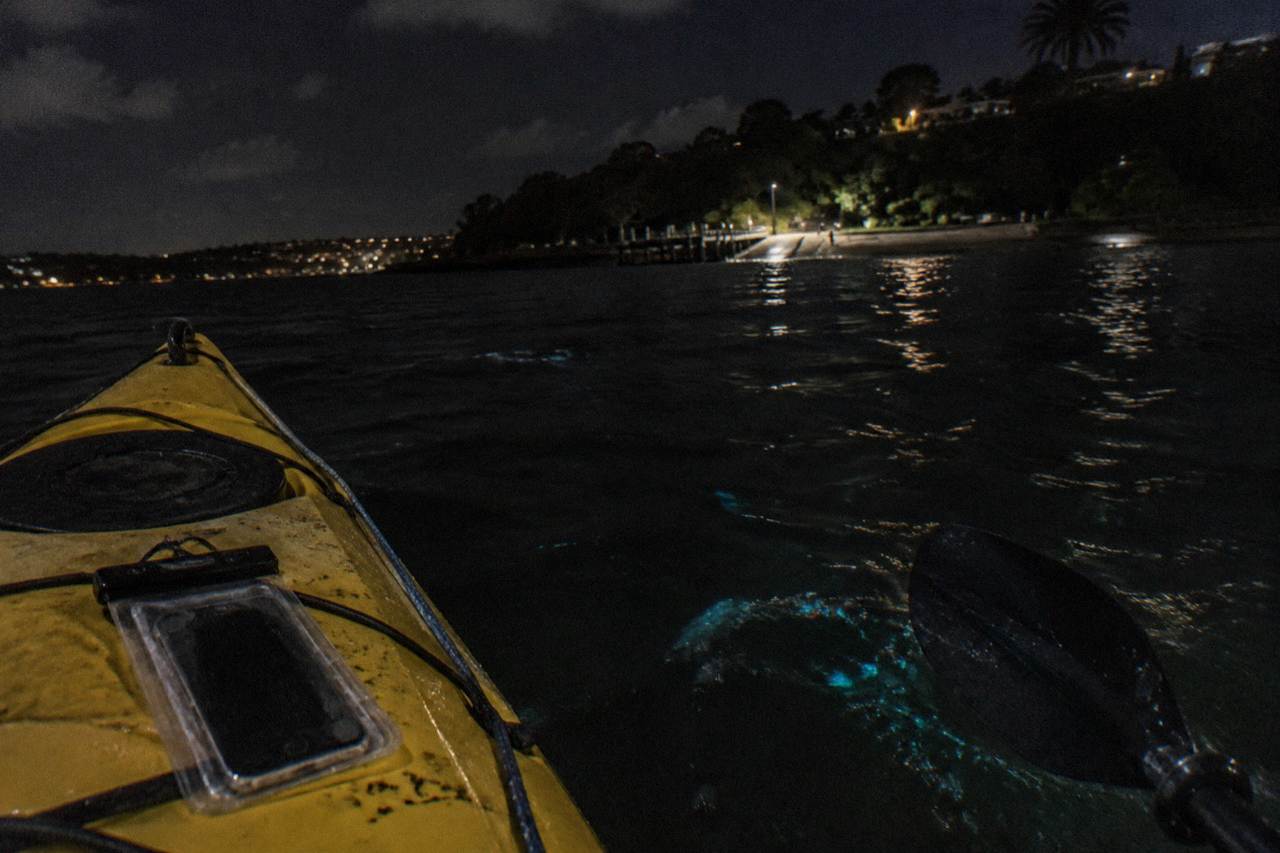
A phone is allowed on the Auckland night kayak tours covered here, and two of the three operators state phone guidance directly. Auckland Sea Kayaks supplies dry bags and a phone pocket on the life jacket for its City Lights tour and encourages a phone, GoPro or camera in a waterproof case at the guest's own risk. Social Nature Movement recommends a waterproof phone case and warns the glow is genuinely hard to photograph.
Yes, and none of the three Auckland operators bans one. Auckland Sea Kayaks goes furthest, supplying dry bags and a phone pocket on the life jacket on its City Lights tour and encouraging a phone or camera in a waterproof case at the guest's own risk. Social Nature Movement recommends a waterproof phone case for photos. No booking page promises a photo of the glow.
The question matters more on this kind of tour than on a daytime paddle, for two reasons. First, the water: "kayaking is a wet sport", in Canoe & Kayak Adventures' own words, and a night paddle in Auckland means spray, dripping paddles and a sit-down in a cockpit that may hold seawater. Second, the light: the bioluminescent glow that these tours chase is produced by single-celled organisms that flash when the water is disturbed, and as the Wikipedia article on bioluminescence explains, dinoflagellate light is mostly blue-green, triggered by mechanical disturbance, and each flash lasts about 80 milliseconds. A phone is the one piece of gear that both suffers from the water and struggles with the light, which is why the operators address it at all.
The glow itself comes mostly from dinoflagellates, the group that includes the species behind many coastal blooms. Auckland Council environmental scientist Dr Megan Carbines, quoted by Local Matters, describes one of them, Noctiluca scintillans, as "a non-toxic dinoflagellate, which often forms bright blooms around the coast in summer. When disturbed, it also emits a burst of light, often seen when swimmers or boats move through the water at night." That burst is what a phone camera is up against.
The tours covered here are the nine guided paddles on this site: the dedicated bioluminescence trips from the North Shore, the sunset-to-night paddles on the Waitemata Harbour, and the City Lights tours from Westhaven Marina. All are guided, all state a full refund when cancelled at least 24 hours before the start, and all of them can be booked with a phone in your pocket if you plan for the water.
Which Auckland Night Kayak Operators Say You Can Bring A Phone?
Only Auckland Sea Kayaks states gear built for one: dry bags and a phone pocket on the life jacket on its City Lights tour, with phones, GoPros or cameras in a waterproof case encouraged at the guest's own risk. Social Nature Movement recommends a waterproof phone case. Capturing that blue glow on camera is harder than it looks, so the guide to photographing bioluminescence from a kayak explains what phones and cameras can realistically record after dark.
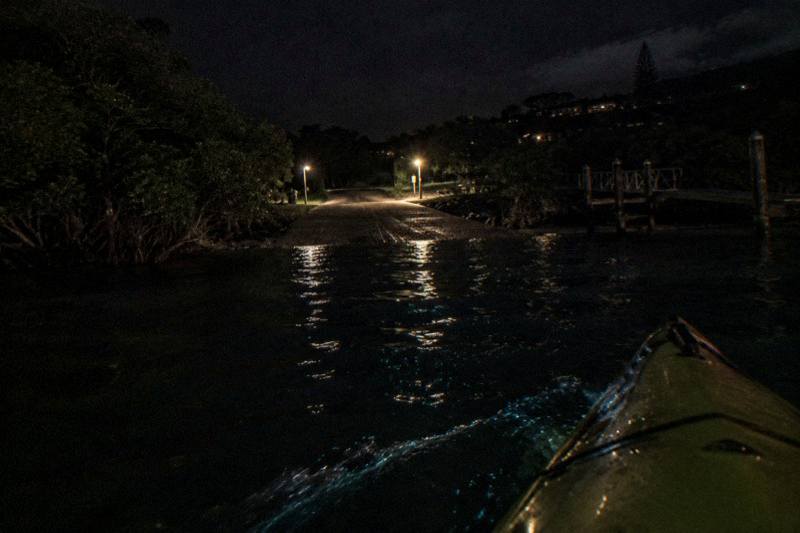
The clearest statement comes from Auckland Sea Kayaks, whose City Lights tour departs from the boat ramp at Westhaven Marina, Z Pier. The operator says dry bags are supplied, the life jacket carries a phone pocket, and phones, GoPro cameras or ordinary cameras are encouraged in a waterproof case, at the guest's own risk. Every kayak carries an all-round white navigation light at the rear, and guides carry marine VHF radios and first aid, so the phone is a camera and not a safety device on that paddle.
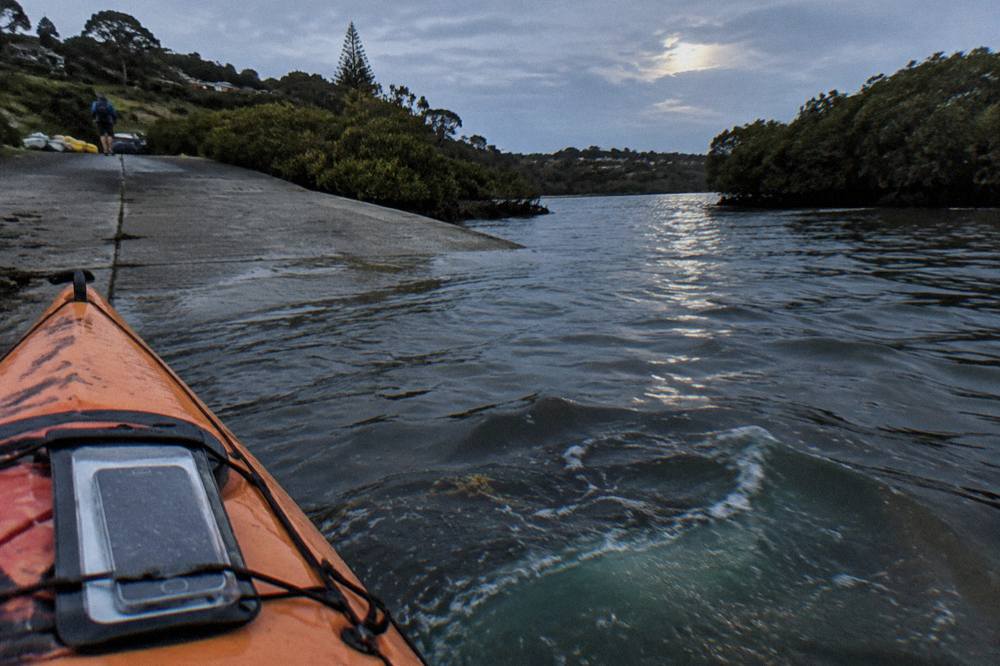
Social Nature Movement, which launches its bioluminescence tour from Okura Boat Ramp or Waiake Beach, says photographing the glow is challenging and needs specialised camera settings, and recommends a waterproof phone case for photos. Its bring list, the operator's own, includes a thin merino or thermal shirt, a fleece or woollen jumper, a rain-proof jacket, a warm beanie, a towel, a torch, water shoes, personal medication and a water bottle. The waterproof case recommendation sits alongside that list, aimed at people who want to try for a photo.
Canoe & Kayak Adventures, running bioluminescence tours from a North Shore spot emailed before 10 AM on the day, lists kayaks, safety equipment and tuition in its equipment line, so anything you photograph with, you carry yourself.
| Operator | What it states about phones and cameras | Tour it applies to |
|---|---|---|
| Auckland Sea Kayaks | Dry bags supplied, phone pocket on the life jacket, phone or camera in a waterproof case encouraged at the guest's own risk | City Lights night tours, Westhaven Marina |
| Social Nature Movement | Recommends a waterproof phone case; says the glow is hard to photograph and needs specialised camera settings | Bioluminescence tours, Okura Boat Ramp or Waiake Beach |
| Canoe & Kayak Adventures | Not stated | Bioluminescence tours, North Shore spot emailed on the day |
Once your phone is safely packed away, the next question is whether first-time paddlers can handle the trip, and a beginner's guide to joining a bioluminescence kayak tour lays out what each operator expects in terms of ages, weights and experience.
The Canoe & Kayak Adventures bioluminescence tour is a 2 hour North Shore glow paddle, from $67.52 per person, rated 4.1 across 207 reviews on the booking page covered here. The operator's guarantee is worth reading exactly: "Bioluminescence is a natural event and can never be guaranteed, but we plan every trip around the best conditions and it's very rare not to see at least one type. If you don't see any on your tour, as confirmed by your guide on the night, we'll give you a free repeat tour."
Will A Phone Survive Salt Water And Spray On The Waitemata Harbour?
Nobody promises that. Auckland Sea Kayaks, the operator whose tours paddle the sheltered Waitemata Harbour, puts the risk plainly: phones and cameras come in a waterproof case at the guest's own risk, even though dry bags and a life-jacket phone pocket are supplied.
The Waitemata Harbour is where Auckland Sea Kayaks runs both its City Lights tours and its Rangitoto sunset trips, and the operator describes that paddling as being on sheltered water. Sheltered is not dry. A double paddle blade drips, waves from other craft wash over decks, and a sit-on-top kayak is designed to let water drain through, which means water sits where you sit. The City Lights tour runs about 2.5 hours from $82.27 per person on one booking page, and its twin, a 2 hour version with a sweet treat, runs from $73 with a 5.0 rating across 15 reviews.
Maritime NZ's paddle craft guidance frames the environment without any marketing softness: dress for the water temperature, because cold water shock and hypothermia can kill, carry two waterproof ways to call for help, and check the marine paddle craft safety advice before you go. The water is what your phone is in, not just near. A phone in a naked pocket on any of these paddles is a phone at real risk, and the operators' gear lists reflect that without ever promising survival.
The Social Nature Movement launches at Okura and Waiake sit on the North Shore rather than the harbour, and the operator's weather limits are its own: tours only proceed in calm conditions, Waiake does not operate above 5 m/s wind or 2.4 mm rain, Okura above 8 m/s or 2.4 mm rain. Calm conditions still mean wet hands, wet clothing and a wet kayak floor. The waterproof case recommendation on the operator's page is written for exactly that reality.
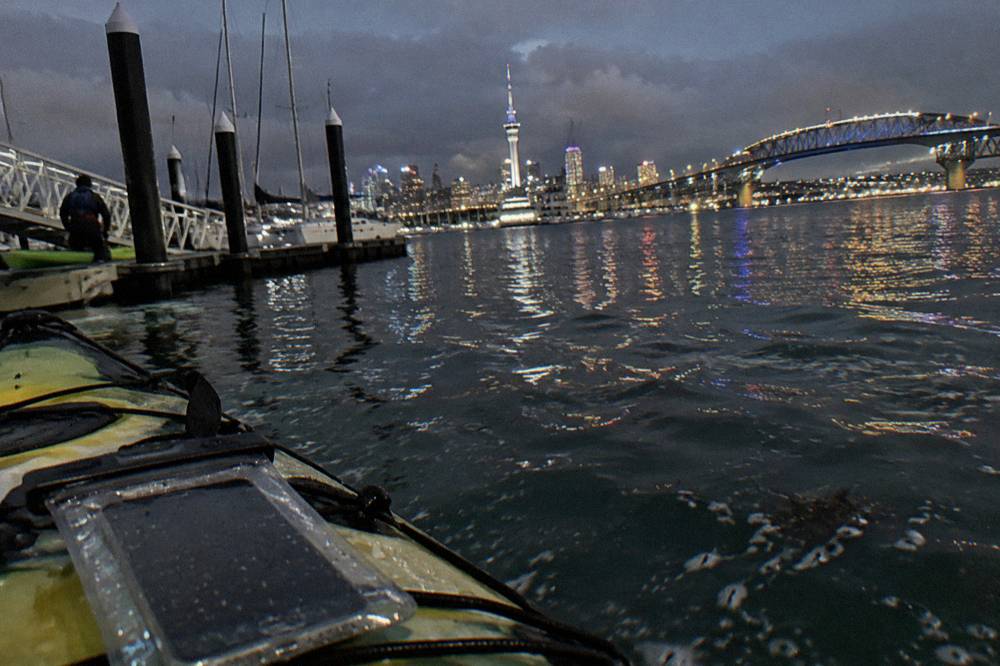
Can A Phone Actually Photograph The Bioluminescent Glow?
Sometimes, with luck and settings, and no operator promises otherwise. Social Nature Movement says the glow is challenging to photograph and needs specialised camera settings, recommending only a waterproof phone case. The light is blue-green, triggered by disturbance, and each flash lasts about 80 milliseconds, which is a difficult target for a phone sensor in near darkness.
The physics is the honest starting point. The organisms flash when the water around them is sheared or disturbed, a paddle stroke, a hull, a hand, and the flash is brief. A phone flash is white light, and white light, phone screens included, temporarily ruins the dark-adapted vision needed to pick out bioluminescence in the water. Social Nature Movement's advice, that photographing the glow needs specialised camera settings, is the operator being straight about the same problem.
What tends to work better on a phone is video rather than stills, and capturing the disturbed water rather than trying to frame a whole bay: the wash off a paddle, the trail behind a kayak, the flicker around a hand in the water. Nobody on any of these tours should book expecting a wall-worthy photo. The experience is the thing; the photo, if it comes, is a bonus.
The other operators do not publish photography advice for the glow, which is consistent with their tours. Auckland Sea Kayaks makes no bioluminescence promise on its City Lights tours at Westhaven Marina at all, and says only that bioluminescence is "sometimes" seen on its Rangitoto sunset tour, "typically October to April", and can never be guaranteed. A camera brings a phone onto a night paddle; the glow, where it appears at all, brings the reason to try the photo. For a fuller treatment of the camera problem, the photographing the glow from a kayak guide goes deeper on settings and cases.
Where Should A Phone Go During The Paddle From Okura Or Waiake?
On the Auckland Sea Kayaks tours, the stated answer is the supplied dry bag or the life-jacket phone pocket. On the Social Nature Movement trips from Okura Boat Ramp or Waiake Beach, the operator's recommendation is a waterproof phone case. The case choice is yours.
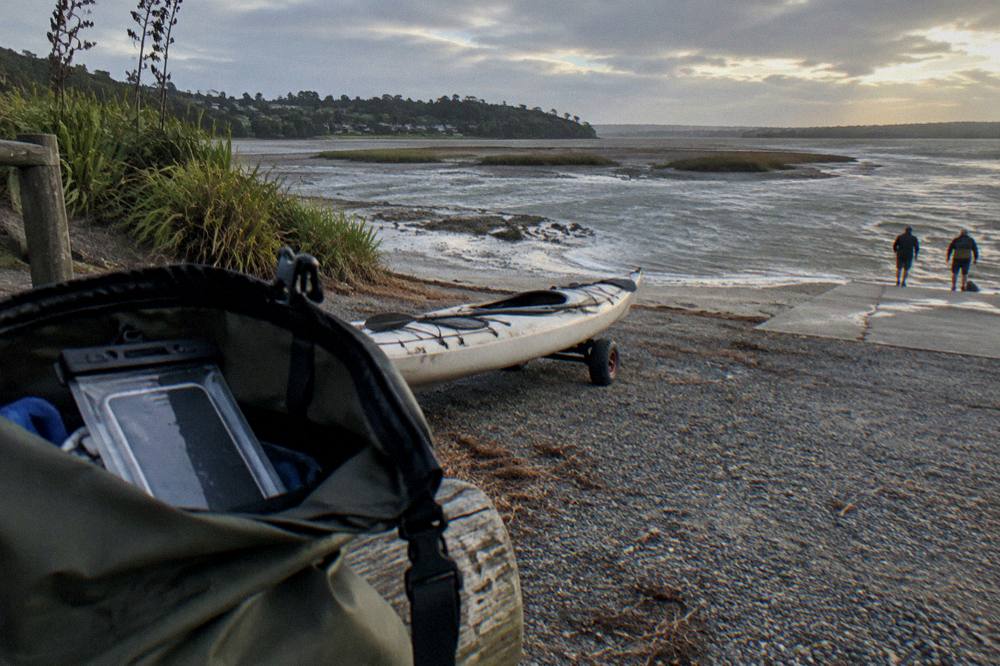
The two Social Nature Movement launch sites work differently, and the operator links the choice to the tide: Okura Boat Ramp at 1 Okura River Road at high tide, Waiake Beach at low tide, with the operator calling both locations equally good. The tour start point is selected at booking on one booking page, and the twin page lists both launches. There is an optional paid add-on called the Bio-Bus from near the Sky Tower, meeting one hour before the start, a 30 minute one-way ride per the operator, and it exists because the launches sit on the North Shore rather than in the city.
Once on the water, the operator's stated kit for the bioluminescence tour is kayak, paddle and a personal flotation device with a safety light, and the FAQ says all participants wear lights and reflective gear. A phone in a waterproof case, per the operator's recommendation, travels in a pocket that closes or a pouch that clips, not loose in a kayak's cockpit. The Canoe & Kayak Adventures trips run from a North Shore meeting spot emailed before 10 AM on the tour day, with a stated ratio of one guide to six guests, and the operator's equipment line is kayaks, safety equipment and tuition.
| Tour | From (USD, per person) | Duration | Where it starts | Phone-relevant gear stated |
|---|---|---|---|---|
| Social Nature Movement, glow paddle | $53 | 1.5 to 2 hours | Chosen at booking | Waterproof phone case recommended by the operator |
| Canoe & Kayak Adventures, glow paddle | $67.52 | 2 hours | North Shore, spot emailed on the day | Not stated |
| Auckland Sea Kayaks, City Lights | $82.27 | About 2.5 hours | Westhaven Marina | Dry bags supplied, phone pocket on the life jacket |
| Auckland Sea Kayaks, Rangitoto sunset | $139.02 | 6 hours 30 minutes | St Heliers Bay | BBQ dinner and hot drink included |
Note what the table does not say. Prices are from figures per person on the booking pages named here, and several of these trips are sold on two booking pages each with different prices; the Rangitoto sunset trip, for example, shows from $116 on its twin page. The Social Nature Movement trip is the most reviewed tour on this site, 4.9 across 329 reviews on one booking page, and the same trip shows 5.0 across 46 reviews at $62.42 on the other. Ages, weights and group caps vary by page and operator, so check the booking page for the trip you actually select.
The Rangitoto sunset tour earns its place in this conversation because it is the longest phone-carrying window of any tour here: 6 hours 30 minutes from St Heliers Bay, returning after dark, with a BBQ dinner and a hot drink included and groups capped at 8. Its booking page shows 4.9 across 179 reviews. It is not a bioluminescence tour, and its booking pages make no bioluminescence promise, but the operator's "sometimes" line about the sunset tour is what it is: an honest maybe, "typically October to April".
What Else Should You Bring On An Auckland Night Kayak Tour?
Warm layers top every list. Social Nature Movement's bring list names a thermal shirt, a fleece or woollen jumper, a rain-proof jacket, a beanie, a towel, a torch, water shoes, medication and a water bottle. Maritime NZ's advice adds the reasoning: dress for the water temperature, because cold water shock and hypothermia can kill.
Night paddles in Auckland happen in whatever the season delivers, and sea temperatures are coolest in winter and warmest in late summer. The glow tours run in the dark by definition, and the darkness arrives early or late depending on the month: on 15 November 2026 at the Auckland waterfront, sunset is at 8:08 pm, civil twilight ends at 8:37 pm and full dark, computed from date and location, falls at 9:49 pm; by 15 June 2027, sunset is 5:11 pm and full dark 6:43 pm. The operators set their own start times, but every glow tour finishes well after dark.
The lifejacket rules matter here too. From 9 October 2026, everyone on board a recreational craft six metres or less must wear a properly fitted lifejacket while the craft is underway, under a Maritime NZ rule change that lists kayaks and paddleboards among the craft covered, with compliance handled by an educational approach over the coming months. Life jackets are supplied or included on several of the tours here, so the rule costs a guest nothing extra on those. The full gear picture, layer by layer, is in the what to wear on a night kayak tour guide.
A torch appears on Social Nature Movement's bring list, and the operator's kit includes a personal flotation device with a safety light, with the FAQ noting all participants wear lights and reflective gear. Auckland Sea Kayaks fits an all-round white navigation light at the rear of every kayak. Those are the only light facts the operators publish, and they are enough: a night paddle on these tours is lit by the operator's gear plus whatever you carry.
Does A Phone Spoil The Dark On A Bioluminescence Tour?
A bright screen can, and the operators' behaviour shows they think so. Social Nature Movement refuses to run when the moon is in the sky at more than 50 percent illumination, because excessive moonlight reduces the visibility of the bioluminescence, and runs participants in lights and reflective gear rather than floodlit cockpits. No operator publishes a screen-brightness rule.
The moon policy is worth quoting, because it shows how seriously one operator takes darkness: "we do not operate when the moon is in the sky and at more than 50% illumination, as excessive moonlight can significantly reduce the quality and visibility of the bioluminescence, so gaps in our availability are intentional." That is Social Nature Movement's rule alone, for its own tours. Canoe & Kayak Adventures takes a softer line: "Moonlight affects this tour and how brightly you will see bioluminescence. When the moon is brighter, the glow can be more subtle, but still visible. We recommend booking near a new moon or on nights with later moonrise." Auckland Sea Kayaks has no moon rule at all.
The practical read for a phone user is simple. If an operator cancels its own tours around a half-lit moon, a phone screen at full brightness in a kayak is working against the same visibility the tour exists for. Dimming the screen, using night mode or red-shift filters where the phone offers them, and keeping the phone pocketed except for a photo attempt costs nothing and protects the darkness for everyone in the group. The new moon dates for the season ahead are published on this site's moon guide alongside the fuller explanation.
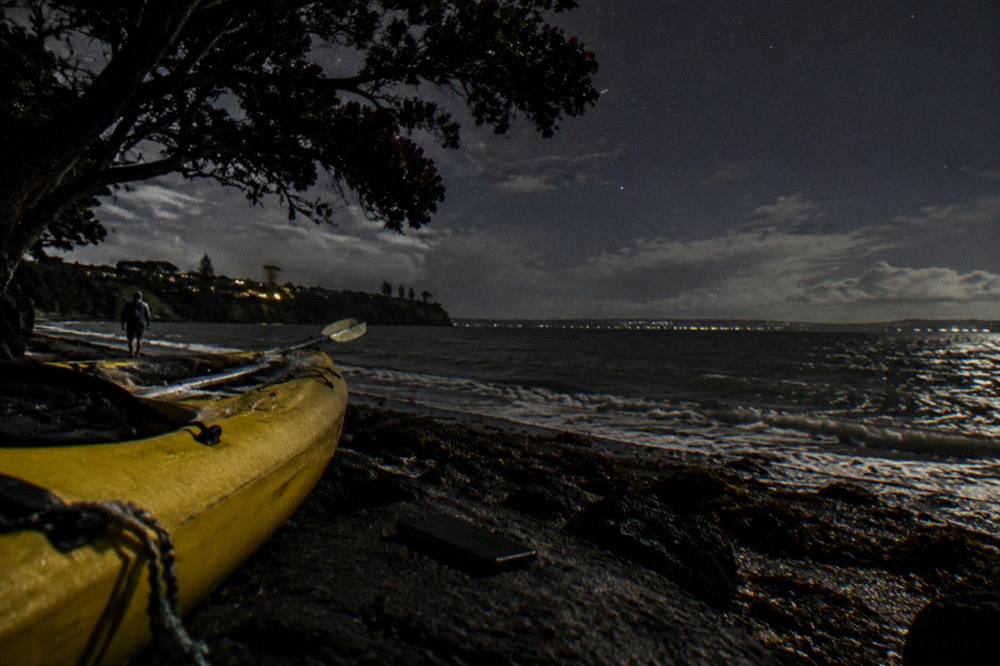
None of this is a rule handed down by an operator, and it should not be presented as one. It is the reasonable conclusion of reading their own darkness policy. The glow, when it appears, is produced by organisms that flash on disturbance, and dinoflagellate bioluminescence occurs only at night, controlled by a circadian clock, per Wikipedia's summary of the science. Darkness is the medium the tour works in.
What About The Longer Trips, Like The Tiritiri Matangi Paddle?
The 7 hour Tiritiri Matangi trip is a dinner, wildlife and night-walk tour, not a 2 hour glow paddle, and it should not be compared with them on price. It runs from $139 per person, includes pickup chosen at booking, a sunset grazing platter with drinks and a guided nocturnal walk, and lists a return paddle with a chance to see bioluminescent plankton. It has no rating yet.
For a phone, that trip is a different problem: seven hours means battery, not just water. There is no stated charging arrangement on the booking page, so the same waterproof case logic applies plus whatever power bank and dry storage a guest brings. Bioluminescence is a chance on the return paddle, never a promise. No booking page for the 9 tours covered here guarantees a sighting, and the only operator guarantee among them is Canoe & Kayak Adventures' free repeat tour if the guide confirms no glow was seen.
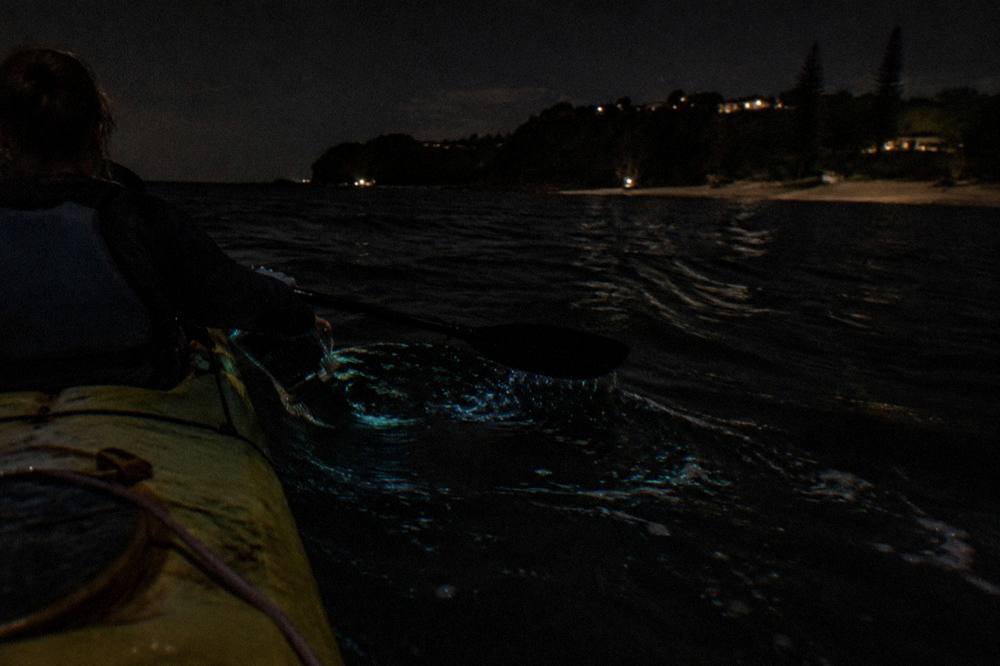
The other long night option is the Rangitoto sunset trip from St Heliers Bay, which crosses to an island, serves a BBQ dinner and paddles home after dark; one booking page states the paddle home is beneath the stars. Both long trips reward a phone as a camera and a torch of last resort, and both punish an unprotected one. The dedicated glow paddles, from $53 for the most reviewed trip on this site, are shorter, cheaper and entirely built around the dark water.
Common Questions About Bringing A Phone On A Night Kayak Tour
Can You Bring A Phone On A Bioluminescence Kayak Tour?
Yes. Auckland Sea Kayaks supplies dry bags and a life-jacket phone pocket on its City Lights tour and encourages a phone or camera in a waterproof case at the guest's own risk; Social Nature Movement recommends a waterproof phone case. No operator bans a phone.
Will The Operator Supply A Waterproof Case?
Not on the trips covered here. Auckland Sea Kayaks supplies dry bags and a phone pocket on the life jacket for City Lights, but where a waterproof case is recommended, the advice is aimed at gear you bring yourself.
Can A Phone Photograph The Bioluminescent Glow?
Sometimes, with difficulty. Social Nature Movement says photographing the glow is challenging and needs specialised camera settings, and recommends a waterproof phone case. The light is blue-green, triggered by disturbance, and each flash lasts about 80 milliseconds.
Does A Bright Phone Screen Affect The Glow?
There is no operator rule about screens. Social Nature Movement does cancel its own tours when the moon is in the sky at more than 50 percent illumination, because excessive moonlight reduces the visibility of the bioluminescence, which is the strongest signal any operator gives about protecting darkness.
Do Any Auckland Night Tours Include Dinner?
Yes. The Rangitoto sunset trips include a BBQ dinner with drinks, and the 7 hour Tiritiri Matangi trip includes a sunset grazing platter with drinks and a guided night walk, from $139 per person.
Is There Anywhere To Charge A Phone On The Water?
No tour states charging facilities. On the 2 hour paddles battery drain is minimal, but on the 6.5 to 7 hour trips a charged power bank in a dry bag is the practical answer.