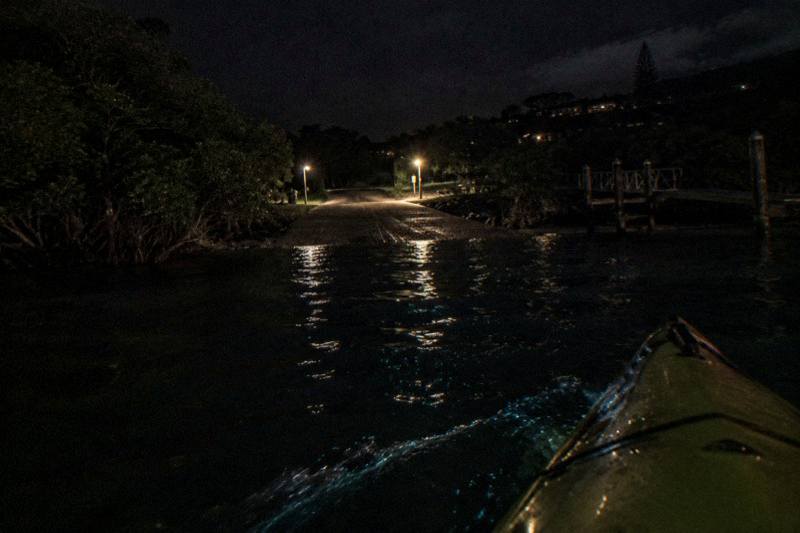
Photographing Bioluminescence From A Kayak: What Phones And Cameras Capture
Bioluminescence photography from a kayak is hard, and every Auckland operator that mentions cameras says so in cautious terms. Here is what each operator states about phones and cameras on the water, what darkness and moonlight do to a night shot, and which of the night paddles covered here gives a photographer the most to work with.
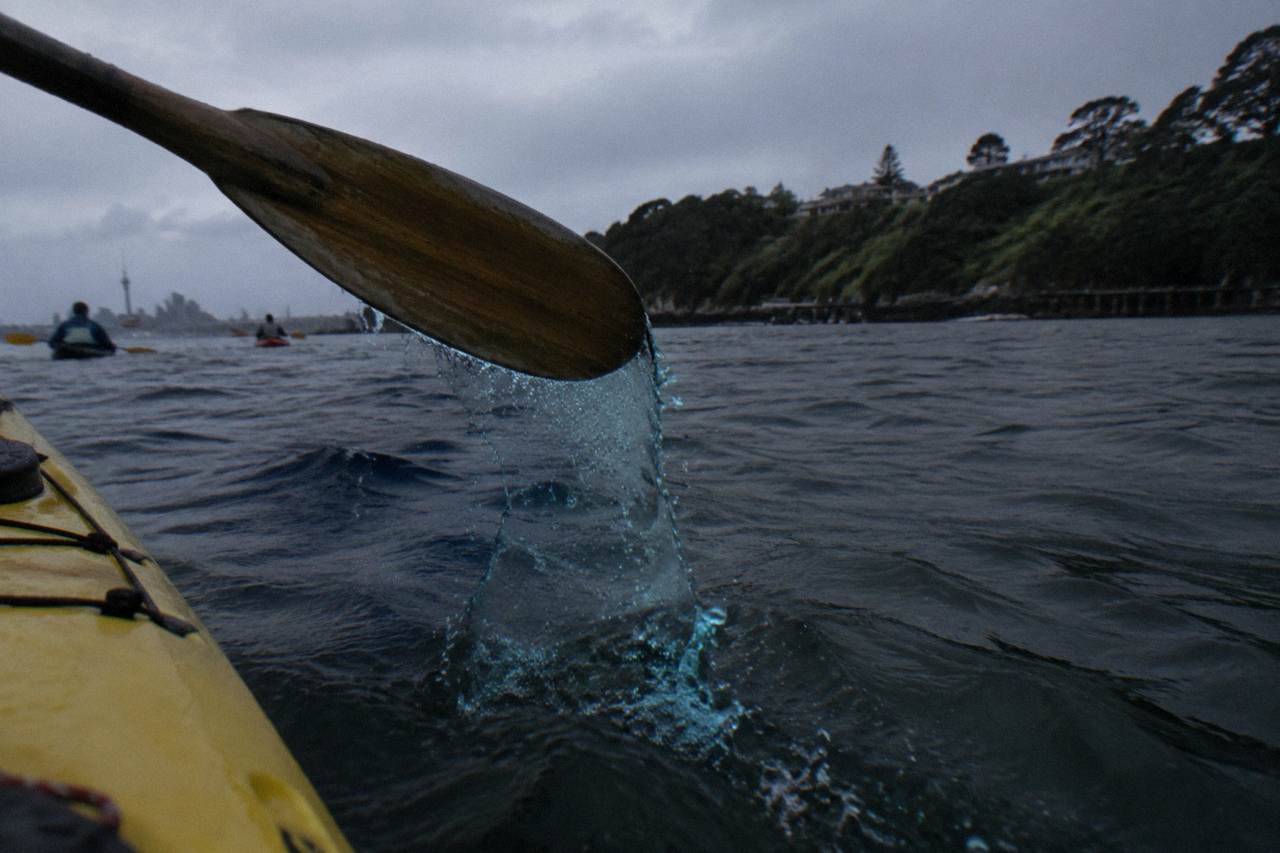
Short answer
A phone can capture bioluminescence from a kayak only with long handheld settings and luck, and Social Nature Movement says the glow needs specialised camera settings to photograph well. It recommends a waterproof phone case. Auckland Sea Kayaks supplies dry bags and lets guests carry a phone or GoPro in a waterproof case at their own risk.
Bioluminescence photography is the one part of a glow paddle that no operator oversells. The guides running Auckland's night kayaks are happy to describe what the water does, but the moment the subject turns to pictures, the wording tightens. Social Nature Movement says outright that the glow is challenging to photograph and needs specialised camera settings. Auckland Sea Kayaks supplies dry bags, fits a phone pocket to its life jackets and lets guests bring a phone or GoPro in a waterproof case at their own risk. Camera questions aside, a night paddle raises a separate practical question worth settling before you launch, namely whether a kayak needs its own lights after dark.
That caution is grounded in physics rather than modesty. The light itself comes from single-celled organisms, Noctiluca scintillans and other dinoflagellates, which flash for roughly 80 milliseconds when the water around them is disturbed. A camera has to gather that brief, dim, blue-green light from a moving kayak on a moving sea, at night. Here is what each operator says about their own tours, what Auckland's darkness and moon conditions allow, and how the three kinds of night paddle covered here differ for anyone hoping to bring images home. The mechanics of the glow itself are covered in What Makes The Water Glow, and the organism behind it in Noctiluca Scintillans, Sea Sparkle And The Night Kayak.
Can A Phone Capture Bioluminescence From A Kayak On Auckland's North Shore?
A phone can capture bioluminescence from a kayak, but only as a dim, grainy record rather than the bright trails seen in shared images, and no Auckland operator promises a photo. Social Nature Movement says the glow is challenging to photograph and needs specialised camera settings, and recommends a waterproof phone case. The phone's job on the water is to survive; anything it records is a bonus.
The honest starting point is what the light actually is. Wikipedia summarises the science: dinoflagellate bioluminescence is mostly blue-green, is triggered by mechanical disturbance such as a paddle stroke, a wave or a boat, is controlled by a circadian clock and occurs only at night. A flash lasts about 80 milliseconds. The popular "burglar alarm" hypothesis holds that the flash exists to startle predators. None of that is secret, yet it explains why the photos that circulate online are rare: they are long exposures from stable cameras, often repeated many times to get one keeper.
A phone handheld on a kayak faces three problems at once. The light is faint, so the camera wants a long exposure. The kayak is moving, so a long exposure smears. And the photographer's hands are wet, cold and working a paddle between shots. Social Nature Movement's advice cuts through all of this: the operator says photographing the glow is challenging, it needs specialised camera settings, and it recommends a waterproof phone case for photos. That is a recommendation to protect the phone first and treat the picture as uncertain.
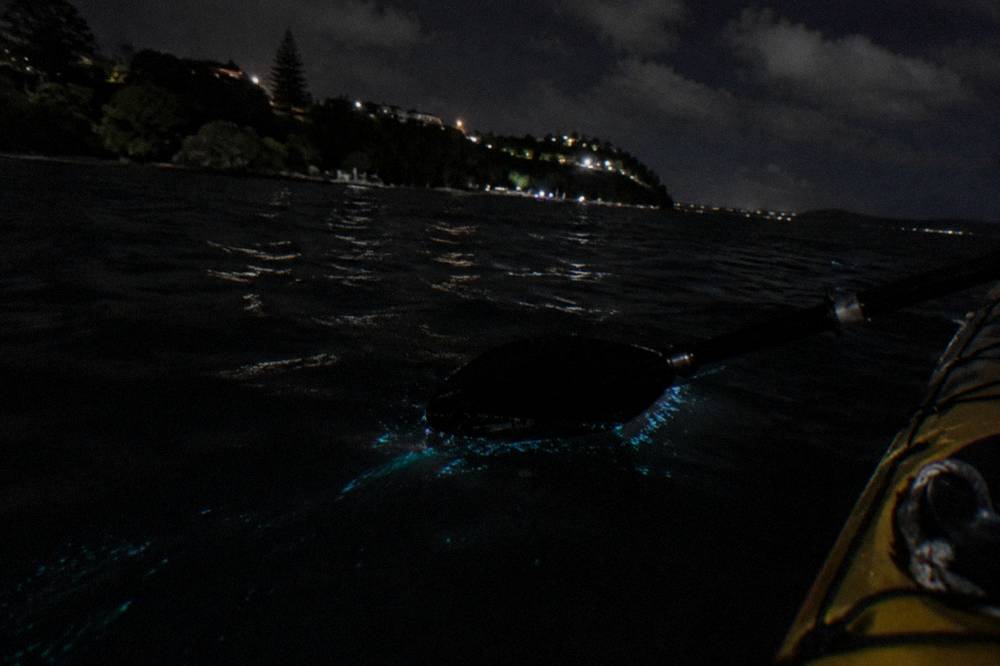
The other operators are similarly reserved. Auckland Sea Kayaks goes further on logistics: on its City Lights tours every kayak carries an all-round white navigation light at the rear, dry bags are supplied, and the life jacket has a phone pocket. The operator encourages phones, GoPro or a camera in a waterproof case, at the guest's own risk.
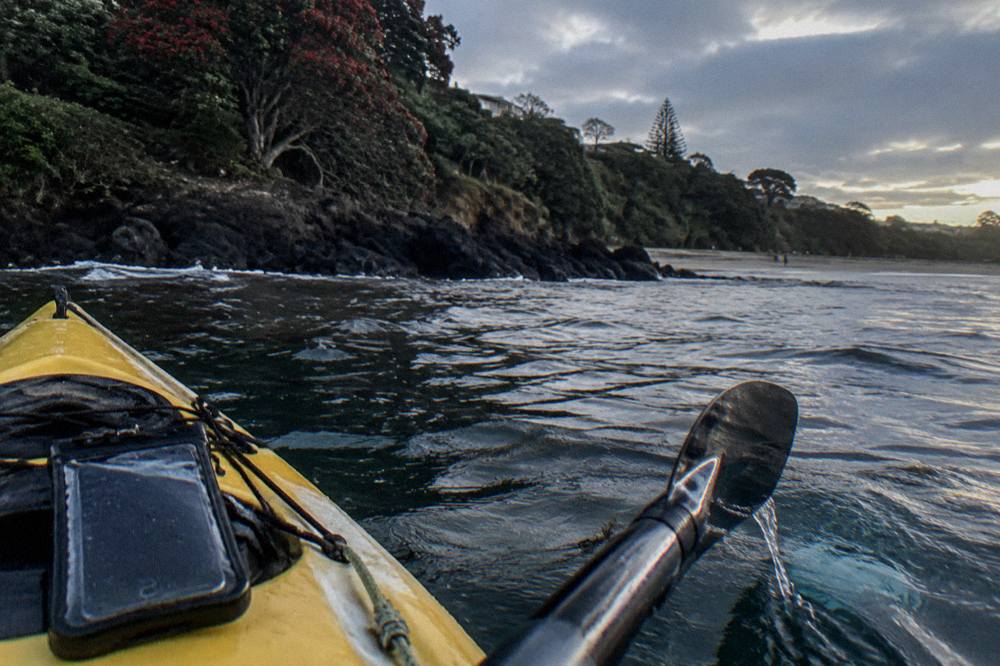
None of that adds up to a promised image. What it adds up to is permission, protection and a real chance, on a calm night, of recording something. Readers deciding between bringing a phone at all may want the companion piece on bringing a phone on a bioluminescence kayak tour, which works through the same operator statements from a gear angle.
What Do The Auckland Operators Say About Cameras On Their Night Tours?
On camera gear: Social Nature Movement recommends a waterproof phone case and warns the glow is hard to photograph, and Auckland Sea Kayaks supplies dry bags and a life jacket phone pocket, with phones and cameras carried at the guest's own risk. No operator supplies camera equipment. For the full picture on what is permitted, the guide to bringing a phone on a bioluminescence kayak tour covers waterproof cases, dry bags and photographing the glow across Auckland operators.
The three operators selling the nine tours covered here take slightly different approaches to cameras, and the differences are worth knowing before a booking. Social Nature Movement, which runs the dedicated glow paddles from Okura Boat Ramp or Waiake Beach plus the seven-hour Tiritiri Matangi trip, is the most direct about difficulty. Its position is that the glow needs specialised camera settings, so a waterproof phone case is the practical recommendation.
Canoe & Kayak Adventures, which has run kayak tours since 1994 and is still owned by an original founder, keeps its two-hour glow paddle simple. Its guide ratio is one guide to six guests, which means help is close at hand, and its booking page for the tour includes tuition among the inclusions. The meeting spot is emailed before 10 AM on the day of the tour.
Auckland Sea Kayaks, operating since 2010 as an audited certified adventure activity operator, is the most gear-forward. On its City Lights tours from Westhaven Marina every kayak carries an all-round white navigation light, guides carry marine VHF radios and first aid, dry bags are supplied and the life jacket includes a phone pocket. Its Rangitoto sunset tours, which return after dark and include a BBQ dinner, also carry navigation lights on each kayak.
| Operator | Night tours | Camera and phone statement | Protective gear stated |
|---|---|---|---|
| Social Nature Movement | Glow paddles from Okura or Waiake, 1.5 to 2 hours; Tiritiri Matangi trip, 7 hours | Glow is challenging to photograph, needs specialised camera settings; waterproof phone case recommended | Kayak, paddle, personal flotation device with safety light |
| Canoe & Kayak Adventures | North Shore glow paddle, 2 hours | Not stated | Kayaks, safety equipment, tuition |
| Auckland Sea Kayaks | City Lights from Westhaven Marina, 2 to 2.5 hours; Rangitoto sunset from St Heliers Bay, 6.5 to 7 hours | Phones, GoPro or camera encouraged in a waterproof case, at the guest's own risk | Check the booking page |
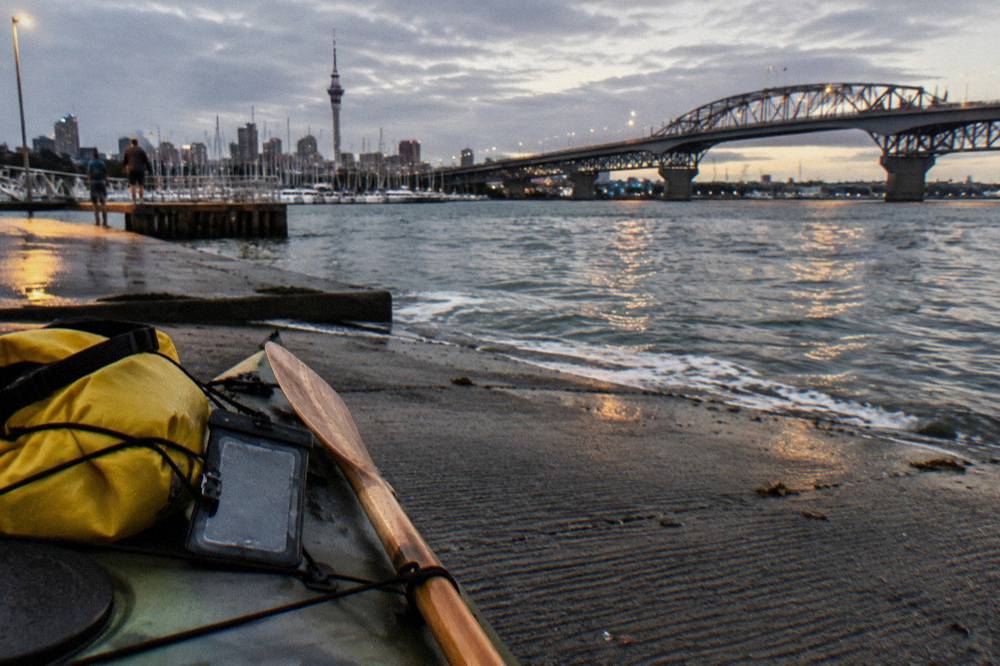
For photographers comparing trips, the dedicated glow paddles are the ones where the water itself is the subject. Among the tours on this site, three stand out for different reasons: the established North Shore glow paddle, the most-reviewed glow tour, and the Rangitoto sunset trip for its dark-sky return paddle.
What Should You Bring To Photograph A Glow Paddle At Okura Or Waiake?
For a glow paddle at Okura or Waiake, bring a phone in a waterproof case as Social Nature Movement recommends, warm layered clothing from the operator's own bring list, and little else: the tour supplies the kayak, paddle and personal flotation device with safety light, and no operator supplies camera gear or promises a photograph.
Social Nature Movement publishes a specific bring list, and it reads like a list written by people who stand on cold beaches at night: a thin merino or thermal shirt, a fleece or woollen jumper, a rain-proof jacket, a warm beanie, a towel, a torch, water shoes, personal medication and a water bottle. The operator's camera advice sits alongside it: photographing the glow is challenging, it needs specialised camera settings, and a waterproof phone case is recommended for photos.
The waterproof case matters more than the camera inside it. The operator's own fitness note for its tours is blunt about the environment, and Auckland Sea Kayaks states a version of the same truth for its harbour paddles: the water is right there, and the gear has to survive it. Maritime NZ's paddle craft guidance, which applies to any kayaker, says to dress for the water temperature, because cold water shock and hypothermia can kill, and to carry two waterproof ways to call for help. A phone in a case can be one of those ways.
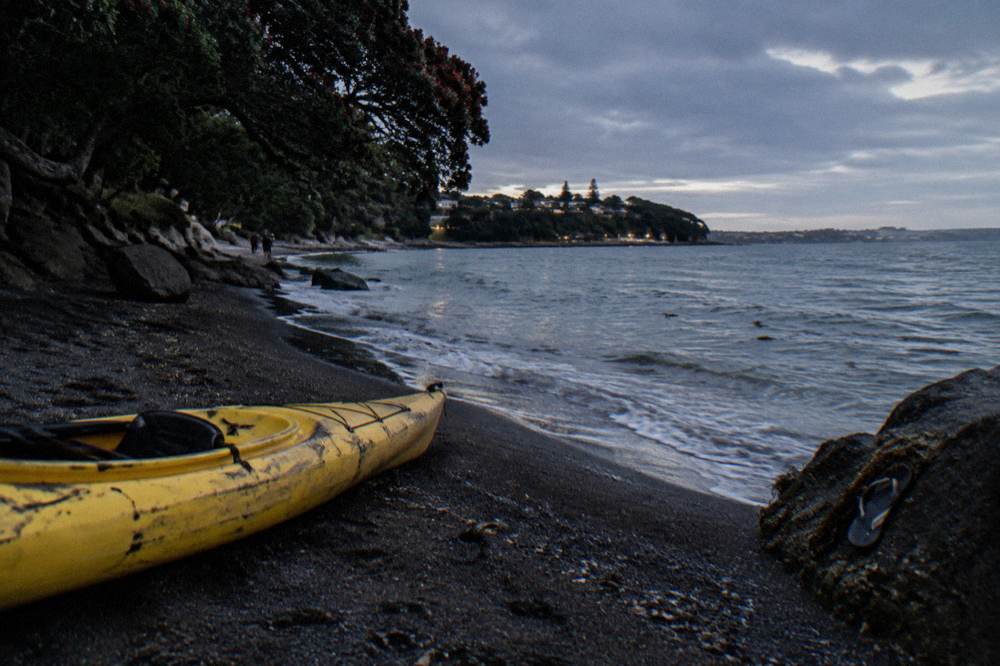
Canoe & Kayak Adventures frames the same preparation from the other side. Its operator notes say "Kayaking is a wet sport", ask guests to be able to walk nonstop for 30 minutes and to sit on the ground and get up unaided. Its booking page includes kayaks, safety equipment, tuition and a one-to-six guide-to-guest ratio among the inclusions. The start point is a North Shore spot emailed before 10 AM on the day.
| Item | Source of the advice | Why it matters for photography |
|---|---|---|
| Waterproof phone case | Social Nature Movement recommendation | The operator's stated protection for the only camera most paddlers carry |
| Thermal shirt, fleece, rain-proof jacket, beanie | Social Nature Movement bring list | Cold hands do not hold a phone steady |
| Torch | Social Nature Movement bring list | Handling gear on a dark beach before and after the paddle |
| Dry bag and phone pocket | Auckland Sea Kayaks, City Lights | Stated protection for phones on its Westhaven Marina tours |
The glow paddle that lists a camera on its own recommended items page is the one most photographers end up comparing against the alternatives: the Bioluminescence Kayak Tour running since 1994, from $67.52 per person, rated 4.1 across 207 reviews on one booking page, with the same trip on its second booking page at from $66 rated 4.5 across 67 reviews. Both pages describe the same two-hour North Shore paddle, and both state free cancellation with a full refund at least 24 hours before the start.
How Dark Does The Night Need To Be For Bioluminescence Photography In Auckland?
Full dark in Auckland, computed from date and location, falls between about 6:43 pm in midwinter and 10:29 pm in midsummer, and the glow only shows at night because dinoflagellate bioluminescence follows a circadian clock. Operators set their own start times, so the practical move is choosing a month whose darkness arrives at an hour that suits the paddle.
The Auckland times below are computed from date and location for the Auckland CBD waterfront, using US Naval Observatory sunset and civil twilight figures, with astronomical dusk calculated from the same inputs. Astronomical dusk is the moment the sky stops brightening the horizon, which is roughly when a long exposure stops picking up blue sky haze. These are not tour start times; the operators set their own.
| Date | Sunset | End of civil twilight | Full dark, computed |
|---|---|---|---|
| 15 Nov 2026 | 8:08 pm | 8:37 pm | 9:49 pm |
| 15 Dec 2026 | 8:36 pm | 9:07 pm | 10:27 pm |
| 15 Jan 2027 | 8:42 pm | 9:12 pm | 10:29 pm |
| 15 Feb 2027 | 8:18 pm | 8:46 pm | 9:53 pm |
| 15 Mar 2027 | 7:41 pm | 8:07 pm | 9:08 pm |
| 15 Apr 2027 | 5:56 pm | 6:22 pm | 7:22 pm |
| 15 May 2027 | 5:23 pm | 5:50 pm | 6:52 pm |
| 15 Jun 2027 | 5:11 pm | 5:40 pm | 6:43 pm |
| 15 Jul 2027 | 5:23 pm | 5:51 pm | 6:54 pm |
| 15 Aug 2027 | 5:46 pm | 6:13 pm | 7:13 pm |
| 15 Sep 2027 | 6:11 pm | 6:37 pm | 7:37 pm |
| 15 Oct 2027 | 7:37 pm | 8:03 pm | 9:06 pm |
Two patterns matter for photographers. First, summer darkness is late: in January the sky does not reach full dark until 10:29 pm, so a midsummer glow paddle is a genuinely late night. Second, the shoulder and winter months bring darkness forward to a civilised hour, with April at 7:22 pm and June at 6:43 pm. Social Nature Movement says the peak Auckland bioluminescence season is October to April, and the two windows overlap at the edges of that season, when darkness arrives early enough to photograph. Daylight saving runs to 4 April 2027, which shifts the clock times above by an hour once it ends.
The reason darkness matters at all is the organism's own schedule. Wikipedia's summary of dinoflagellate bioluminescence notes it is controlled by a circadian clock and occurs only at night, and that the light accumulates at the surface when the sea is calm. Auckland Council environmental scientist Dr Megan Carbines, quoted by Local Matters, described Noctiluca scintillans as a non-toxic dinoflagellate that forms bright blooms around the coast in summer and emits a burst of light when disturbed. Whether it shows on any given night can never be guaranteed, as Canoe & Kayak Adventures states.
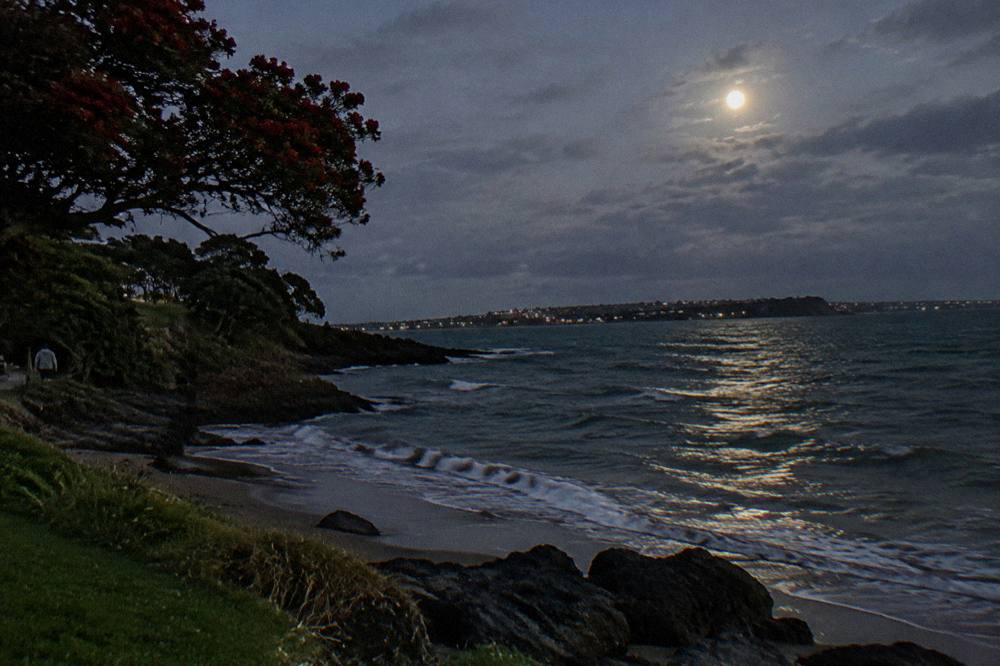
Among the glow paddles, the one with the largest review pool is the Social Nature Movement night kayak tour, from $53 per person, rated 4.9 across 329 reviews on its main booking page, with its twin page showing 5.0 across 46 reviews at from $62.42. The tour runs 1.5 to 2 hours, starts at a point chosen at booking, includes a guide, kayak and equipment, personal flotation device and a safety light beacon.
Does A Bright Moon Ruin Bioluminescence Photos In Auckland?
A bright moon washes out both the glow and any photograph of it, which is why Social Nature Movement refuses to run its tours when the moon is in the sky above 50 percent illumination, and Canoe & Kayak Adventures recommends booking near a new moon or on nights with a later moonrise. Auckland Sea Kayaks sets no moon rule at all.
Each operator's moon position belongs to that operator alone. Social Nature Movement's rule is the strictest: "we do not operate when the moon is in the sky and at more than 50% illumination, as excessive moonlight can significantly reduce the quality and visibility of the bioluminescence, so gaps in our availability are intentional." For a photographer, that rule does some of the planning automatically, because the calendar of a tour that enforces it is already a calendar of darker nights.
Canoe & Kayak Adventures takes an advisory line rather than a rule: "Moonlight affects this tour and how brightly you will see bioluminescence. When the moon is brighter, the glow can be more subtle, but still visible. We recommend booking near a new moon or on nights with later moonrise." Auckland Sea Kayaks states no moon rule for any of its tours, including the Rangitoto sunset paddle that returns in the dark.
New moon dates computed from US Naval Observatory data, in Auckland local time, give the calendar anchor: 9 November and 9 December 2026, 8 January, 7 February, 8 March and 7 April 2027 through the stated peak season, then 6 May, 5 June, 4 July, 2 August, 1 September, 30 September and 30 October 2027. Full moons fall on 25 November 2026, 24 December 2026, 23 January 2027 and monthly thereafter. These are dates only: no date is a guaranteed dark night, and clouds, haze and the moon's own rise time all vary. The full picture is in Moon Phase And A Bioluminescence Kayak Tour.
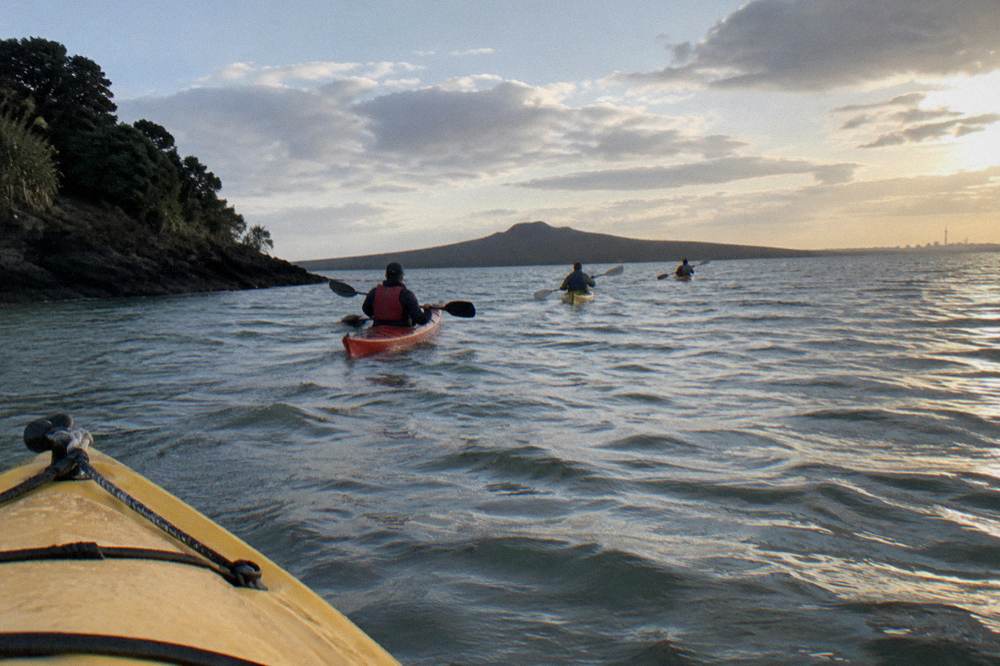
A photographer reading the operator statements together reaches a simple conclusion: the Social Nature Movement calendar enforces darkness, the Canoe & Kayak Adventures calendar advises it, and the Auckland Sea Kayaks sunset tour makes its own dark on the water after sunset regardless of the moon. None of the three promises the glow, and Canoe & Kayak Adventures states that "Bioluminescence is a natural event and can never be guaranteed", with a free repeat tour offered if the guide confirms none was seen.
Where On The Waitemata Harbour Can You Photograph After Dark?
Auckland Sea Kayaks offers two night paddles with photographable subjects beyond the glow: the City Lights tours from Westhaven Marina, from $73 and from $82.27 per person on their two booking pages, and the Rangitoto sunset tours from St Heliers Bay, from $116 and from $139.02, which paddle back beneath the night sky after a BBQ dinner.
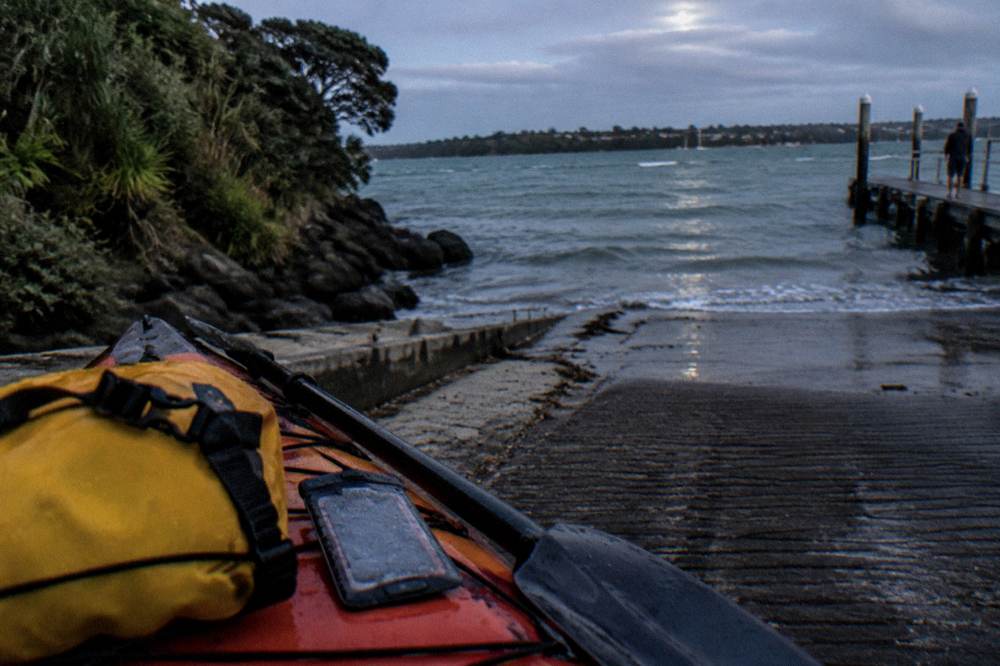
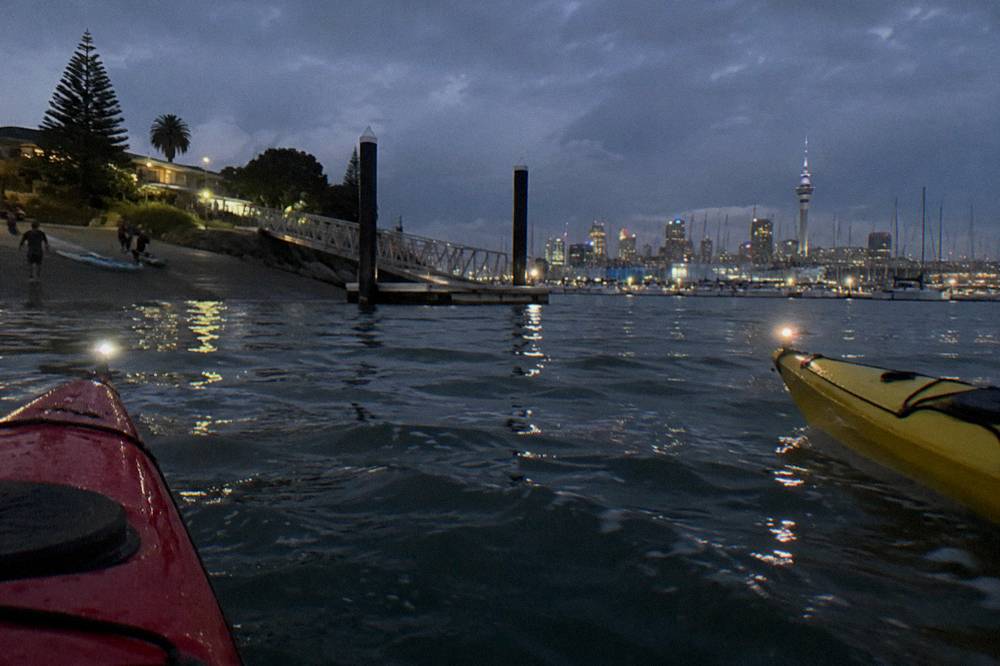
The City Lights tours make no bioluminescence promise, and that is the point: the subject is Auckland lit up at night, seen from the sheltered Waitemata Harbour. The two-hour version, from $73 per person, is rated 5.0 across 15 reviews and caps groups at nine; the 2.5-hour version, from $82.27, is rated 4.8 across 28 reviews, caps groups at eight and includes snacks. Both meet at the Westhaven Marina boat ramp, and both state free cancellation with a full refund at least 24 hours before the start.
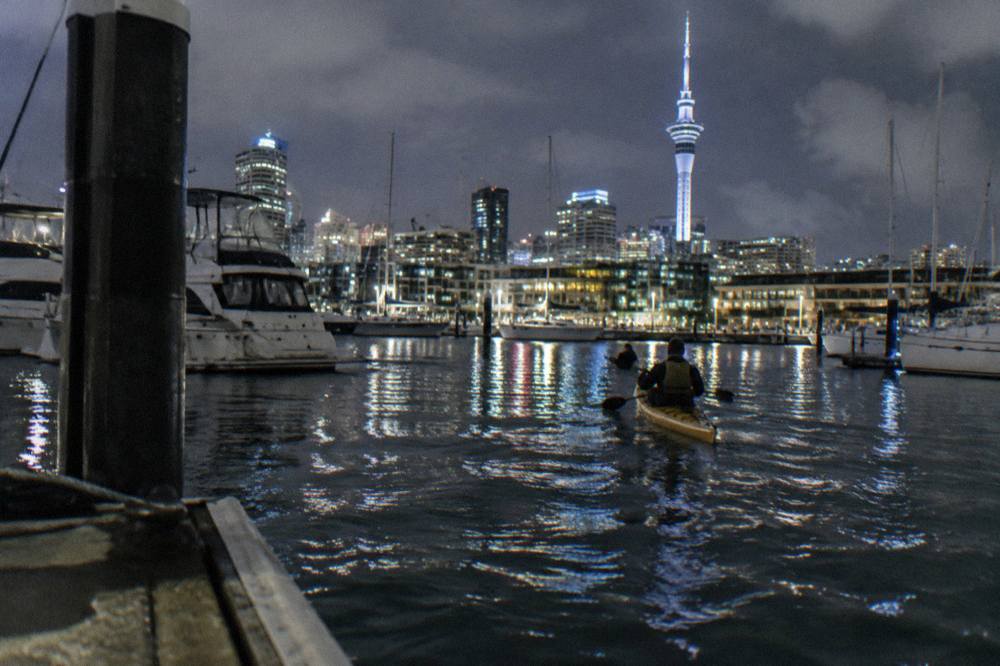
For a photographer, the City Lights setup is the most forgiving on this site. The operator states that paddling is on the sheltered Waitemata Harbour, that every kayak carries an all-round white navigation light at the rear, that dry bags are supplied and the life jacket has a phone pocket, and that guides carry marine VHF radios and first aid. A city skyline holds still, which is more than a flash of plankton ever does, and the operator encourages phones, GoPro or a camera in a waterproof case at the guest's own risk.
The Rangitoto sunset tours answer a different photographic brief: golden hour on the volcano, a BBQ dinner, then a paddle home after dark. The six-and-a-half-hour version from St Heliers Bay is from $139.02 per person, rated 4.9 across 179 reviews, capped at eight guests, with a BBQ dinner and hot drink included. The seven-hour version is from $116, rated 4.8 across 85 reviews, with a BBQ dinner plus hot and cold drinks, a stated minimum age of 14 and a 125 kg weight limit. Its booking page describes paddling back "beneath the stars". The operator says bioluminescence is "sometimes" seen on this sunset tour, "typically October to April", and can never be guaranteed.
The shorter and cheaper of the two City Lights pages suits a first night shoot best: a two-hour paddle, from $73 per person, a sweet treat included, and a group cap of nine.
How Do You Protect A Camera Or Phone On A Night Kayak Tour?
Protection on the water comes from the operator's stated gear plus the guest's own case: a waterproof phone case on Social Nature Movement tours, dry bags and a life jacket phone pocket on Auckland Sea Kayaks tours, and careful packing on the Canoe & Kayak Adventures paddle. At sea, Maritime NZ guidance says to dress for the water temperature and carry two waterproof ways to call for help.
The starting rule is the operator's own. Social Nature Movement recommends a waterproof phone case for photos, and notes alcohol and drugs are not allowed on its tours, which keeps the water around a photographer comparatively predictable. Auckland Sea Kayaks supplies dry bags and builds a phone pocket into the life jacket, and its guidance is explicit that cameras travel at the guest's own risk. Canoe & Kayak Adventures names no waterproof case, so protecting the device is the guest's job.
The national safety framework backs all of this up. From 9 October 2026, everyone on board a recreational craft six metres or less must wear a properly fitted lifejacket while the craft is underway, and Maritime NZ lists kayaks among the craft covered, with compliance handled through an educational approach over the coming months. The same authority's lifejacket guidance sits behind flotation policy on the water; where a booking page lists a life jacket the operator supplies it, and Auckland Sea Kayaks and Social Nature Movement both state a light on the gear.
| Tour (operator) | From, per person | Duration | Stated camera protection | Meet point |
|---|---|---|---|---|
| North Shore glow paddle (Canoe & Kayak Adventures) | $66 to $67.52 across its two booking pages | 2 hours | No case stated | North Shore spot emailed before 10 AM on the day |
| Glow paddle (Social Nature Movement) | $53 to $62.42 across its two booking pages | 1.5 to 2 hours | Waterproof phone case recommended | Okura Boat Ramp or Waiake Beach, chosen at booking |
| City Lights (Auckland Sea Kayaks) | $73 to $82.27 across its two booking pages | 2 to 2.5 hours | Dry bags supplied, phone pocket on life jacket | Westhaven Marina boat ramp |
| Rangitoto sunset (Auckland Sea Kayaks) | $116 to $139.02 across its two booking pages | 6.5 to 7 hours | Check the booking page | St Heliers Bay, 384 Tamaki Drive |
A spare thought for the seventh hour: the Tiritiri Matangi trip is a seven-hour Social Nature Movement journey from $139 per person, new on its booking page with no rating shown, including a sunset kayak, a guided night walk, a grazing platter with drinks and a return paddle with a chance to see bioluminescent plankton. Pickup is included, with two options chosen at booking, and the stated minimum age is 12. It is not a two-hour glow paddle and should not be compared with one on price; for a photographer it is a full evening of subjects, of which plankton is only the last.
Which Auckland Night Paddle Suits A Photographer Best?
Photographers chasing the glow itself can choose a dedicated bioluminescence paddle, from $53 per person, a tour type focused on the phenomenon; those wanting night images of the city can pick the City Lights tour from $73, which paddles past the lit skyline; and those wanting both dusk and dark can pick the Rangitoto sunset tour from $116, which returns by kayak after dinner with the final leg in the dark. Check each booking page for current departure details.
The choice reduces to what the camera is pointed at. The four dedicated glow pages, two trips across two operators, are about disturbed water flashing blue-green in the dark. Canoe & Kayak Adventures states the glow can never be guaranteed, and Social Nature Movement says it varies naturally. Canoe & Kayak Adventures adds a free repeat tour if the guide confirms none was seen, and says that in November to April the glow is "often strong enough to enjoy on most nights". Social Nature Movement says its peak season is October to April. Those are the season statements, each attached to its own operator, and neither is a promise of a photograph.
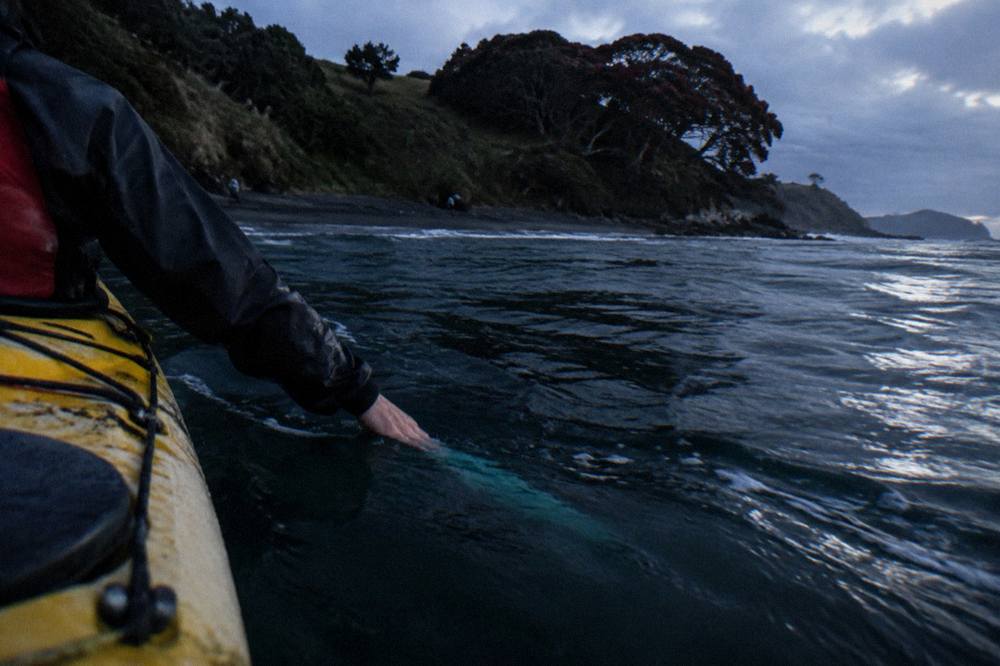
The City Lights tours trade the uncertainty for a fixed subject. Auckland's skyline does not flash for 80 milliseconds and vanish; it stays lit all night, and the paddle sits on the sheltered Waitemata Harbour with navigation lights on every kayak. The trade is that there is no bioluminescence claim at all on these booking pages. The Rangitoto sunset tours sit between the two: a golden-hour crossing, a meal, then a night return on which the operator says bioluminescence is "sometimes" seen, "typically October to April".
Budget and duration frame the decision. The glow paddles run $53 to $67.52 per person for 1.5 to 2 hours. The City Lights pair runs $73 to $82.27 for 2 to 2.5 hours. The Rangitoto pair runs $116 to $139.02 for 6.5 to 7 hours with dinner included, and the Tiritiri Matangi trip runs $139 for 7 hours with a grazing platter. All nine state a full refund when cancelled at least 24 hours before the start. More on costs is in Bioluminescence Kayak Tour Prices In Auckland.
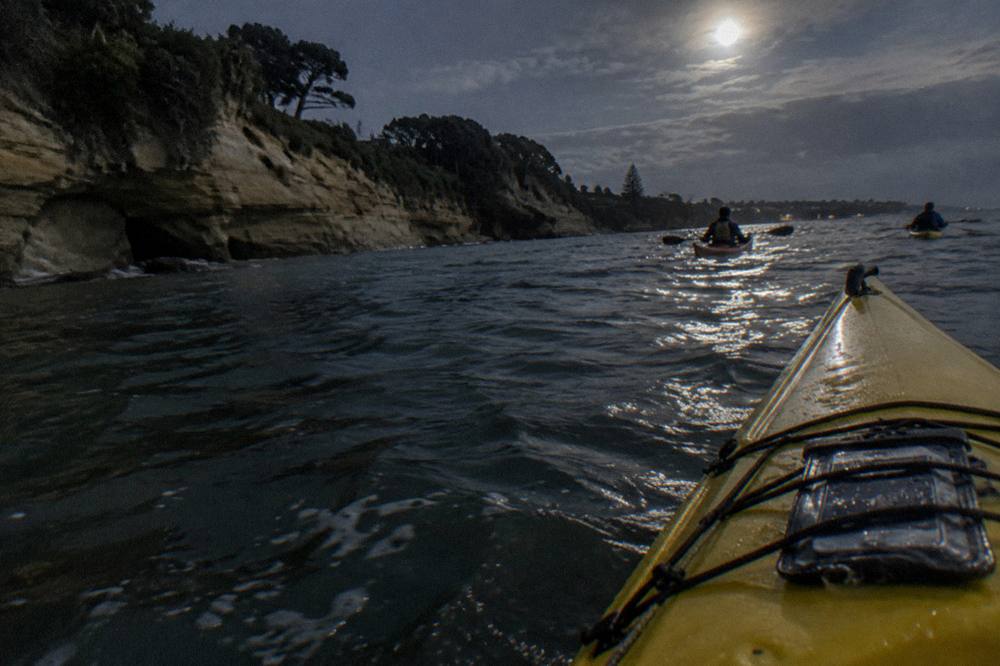
Whichever trip it is, this site holds the full set of nine tours and the planning pages around them, from what to wear on a night kayak tour to how far ahead to book. The photographic constants across all of it: waterproof the device, trust the operator's gear statements over any general advice, and treat any glow captured as a genuine bonus rather than the point of the night.
Common Questions About Photographing Bioluminescence
Can A Phone Photograph Bioluminescence From A Kayak?
Sometimes, with difficulty. Social Nature Movement says the glow is challenging to photograph, needs specialised camera settings, and recommends a waterproof phone case. A handheld phone on a moving kayak captures the glow only as a dim record on a good night, and no operator promises a photo.
Do The Auckland Tours Supply Camera Equipment?
No operator supplies camera equipment. Auckland Sea Kayaks supplies dry bags and a phone pocket on its life jackets. Social Nature Movement recommends a waterproof phone case.
Does Moonlight Affect Bioluminescence Photos?
Yes, and one operator enforces it: Social Nature Movement does not run tours when the moon is in the sky above 50 percent illumination. Canoe & Kayak Adventures recommends booking near a new moon or on nights with a later moonrise. Auckland Sea Kayaks sets no moon rule.
What Time Does It Get Dark Enough In Auckland?
Full dark, computed from date and location for the Auckland waterfront, falls between about 6:43 pm in mid-June and 10:29 pm in mid-January. Operators set their own tour start times, so check the booking page for the time of a specific date.
Which Tour Is Best For Night Photography If The Glow Does Not Show?
The City Lights tours from Westhaven Marina photograph Auckland's lit skyline from the sheltered Waitemata Harbour, a subject that holds still regardless of plankton. They make no bioluminescence claim on their booking pages.
Can You Bring A GoPro On An Auckland Night Kayak Tour?
Auckland Sea Kayaks explicitly encourages phones, GoPro or a camera in a waterproof case, at the guest's own risk, on its tours. The other operators' pages name phones and cameras; check the booking page of the specific tour before packing.