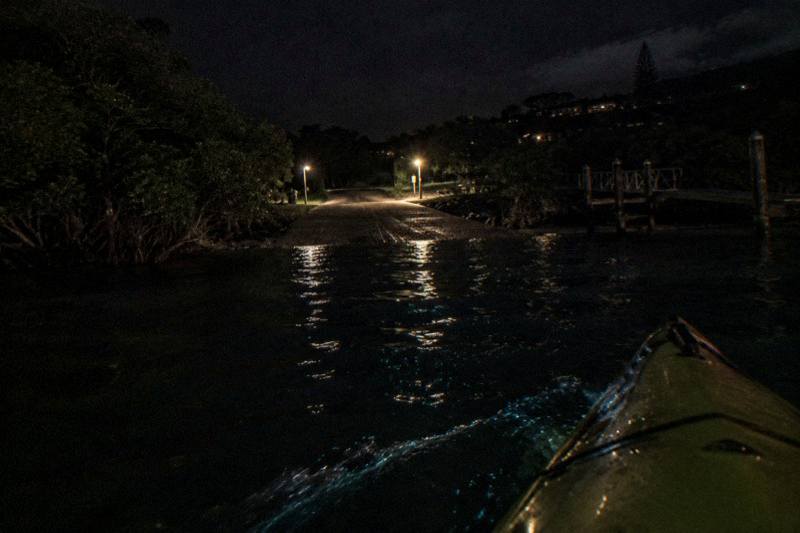
What To Wear On A Night Kayak Tour In Auckland
Night kayaking around Auckland puts clothing choices to work in a different way from a daytime paddle: darkness, spray and the water temperature all shape what ends up on your body. This guide sets out what the operators themselves say about layers, footwear and supplied equipment for the nine guided tours covered on this site.
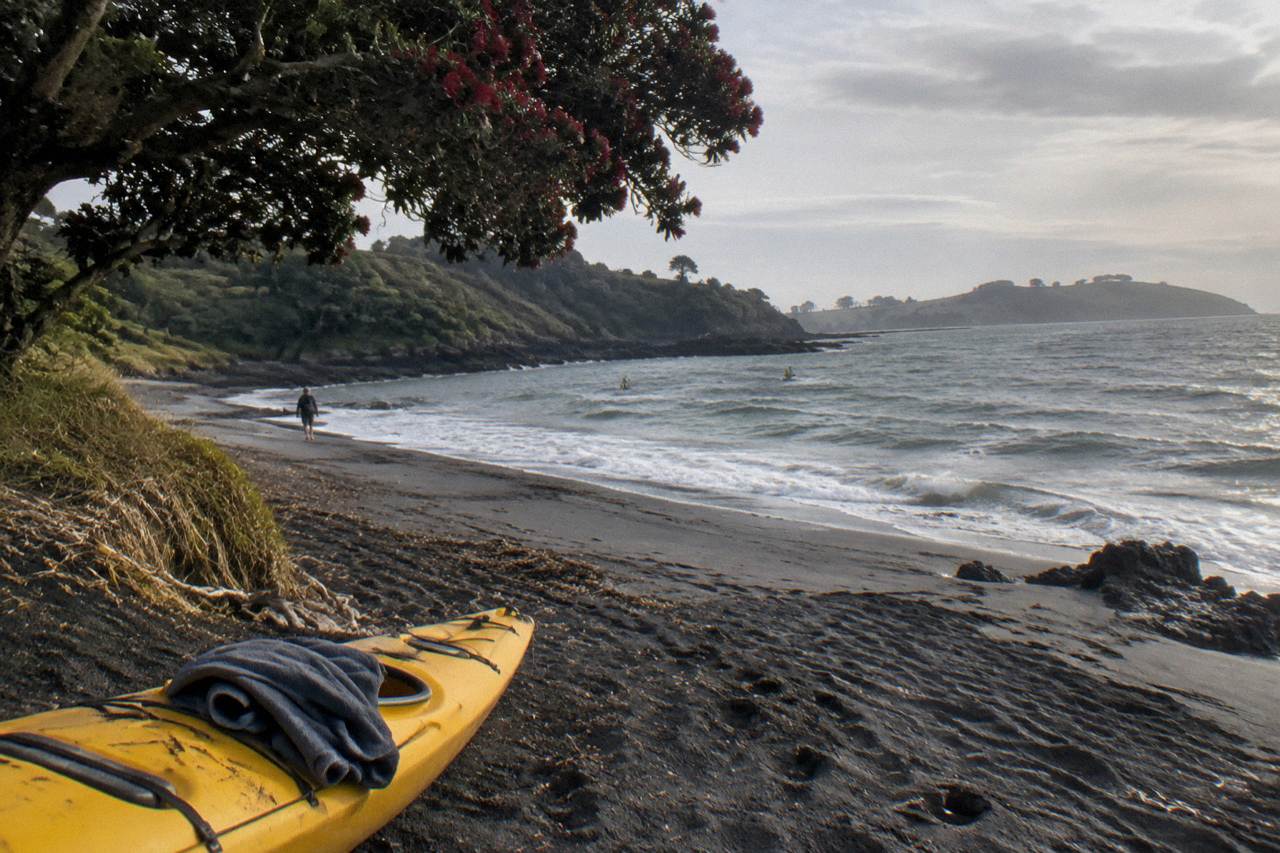
Short answer
Dress in warm layers topped with a rain-proof jacket, wear water shoes, and bring a towel and a torch: that is the basis of Social Nature Movement's own bring list. Canoe & Kayak Adventures calls kayaking a wet sport, and Maritime NZ advises dressing for the water temperature. The tours supply kayaks, with life jackets included where stated.
Auckland's guided night paddles launch from four different kinds of place: the Okura Boat Ramp and Waiake Beach on the North Shore, a North Shore spot that Canoe & Kayak Adventures emails to guests before 10 AM on the tour day, St Heliers Bay on the Tamaki Drive waterfront, and Westhaven Marina next to the city. What unites them is darkness, spray and a body of water that stays cool even when the summer air does not. Getting the outfit right is mostly about layers, and the operators themselves say so in unusually direct terms.
This guide pulls together every clothing and equipment statement the operators publish for the nine tours covered on this site, adds the safety guidance Maritime NZ gives paddle craft, and matches each item to the launch point where it matters. Most night paddles run about two hours, while the Rangitoto sunset trips take six and a half to seven. For the wider picture of glow paddles versus city night paddles, see the companion piece on night kayak versus bioluminescence tours.
What Should You Wear On A Night Kayak Tour In Auckland?
The working answer is a layering system: a thin merino or thermal shirt against the skin, a fleece or woollen jumper over it, and a rain-proof jacket on top, with a warm beanie, water shoes, a towel, a torch, personal medication and a water bottle. That is Social Nature Movement's published bring list for its bioluminescence tour, and it is the most specific clothing advice any of the three operators gives. Because the kayak and safety gear are supplied by the operator, clothing is the main thing left to sort out yourself, and the guide to staying warm on a night kayak tour walks through how to get every layer right.
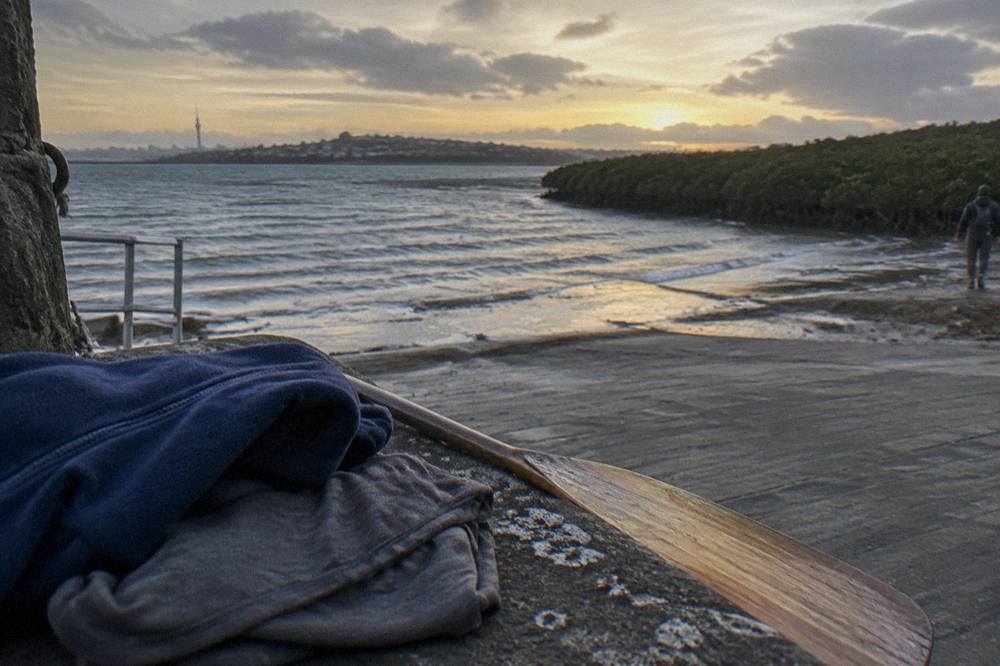
The list rewards a closer read. Every item on it solves a problem specific to a two hour paddle after dark on Auckland's North Shore estuaries. The merino or thermal base layer keeps working if it gets damp, which matters on a wet sport. The fleece adds trapped warmth that a single thick jacket would not. The rain-proof jacket does two jobs: it blocks spray from the paddle and it cuts the wind that comes off the water once the sun is down, and on the Waitemata Harbour in particular that wind can turn a mild evening cold within an hour.
The beanie is there to keep heat in, and the water shoes matter because the launches are working boat ramps and beaches rather than manicured paths. Okura Boat Ramp sits at the end of Okura River Road, Waiake Beach is a sandy North Shore bay, and the Westhaven Marina boat ramp at 79 Westhaven Drive is concrete underfoot with paid parking around Z Pier. Footwear that can get wet and still grip is the practical choice at all of them.
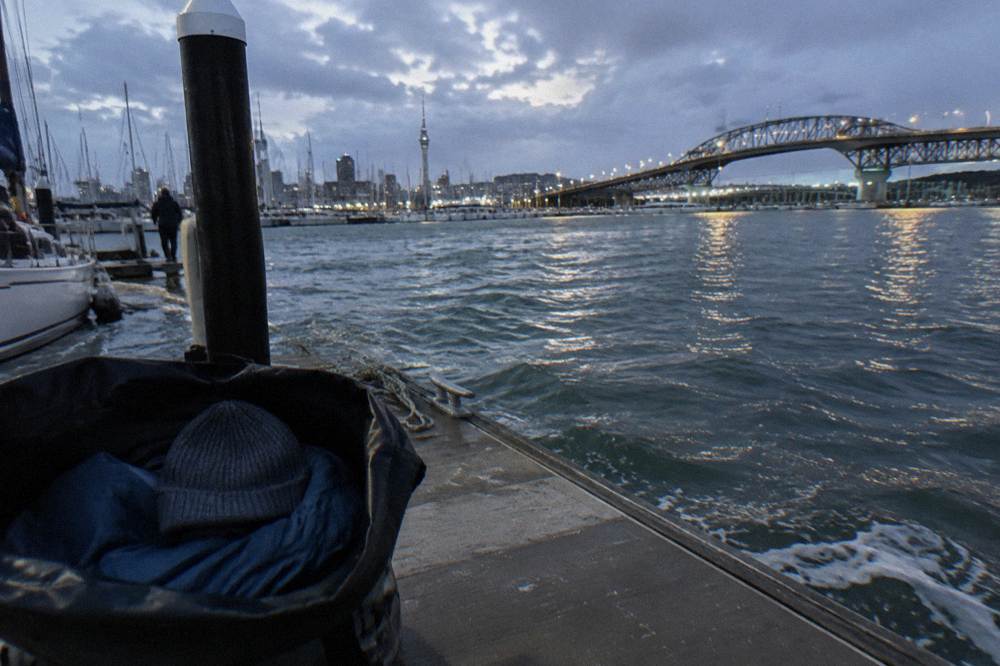
The torch on the list is the operator's own recommendation for its guests, and it appears as an item to bring rather than something supplied. What the operator does supply for its glow tour is the kayak, the paddle and a personal flotation device with a safety light. For a fuller walk through what actually causes the glow on these paddles, the science page on what makes the water glow covers the organisms involved.
A useful mental model is to plan for two temperatures: the evening air temperature at the launch and the water temperature underneath you. Maritime NZ's guidance for paddle craft is explicit that the second one matters more, because cold water shock and hypothermia can kill regardless of how warm the air felt at the car park. Sea temperatures around Auckland are coolest in winter and warmest in late summer, and the water does not care what the forecast maximum was.
Why Does Dressing For The Water Temperature Matter On The Waitemata Harbour?
Maritime NZ tells paddle craft users to dress for the water temperature, not the air temperature, because cold water shock and hypothermia can kill. Its paddle craft guidance also asks kayakers to carry two waterproof ways to call for help and to check the marine weather forecast before heading out. Those three lines are the national safety baseline under every clothing choice on this page.
The distinction is easy to state and easy to ignore. On a February evening in Auckland the air at St Heliers Bay can still be warm at 8:30 pm, with sunset on 15 February 2027 at 8:18 pm and full dark not until 9:53 pm, computed from date and location for the Auckland waterfront. The water below the kayak behaves on a different calendar. It peaks in late summer and bottoms out in winter, and it changes far more slowly than the air does, which is why a warm night can still end in a cold paddler if the layers are wrong.
The operators each set their own weather limits, and the strictest published numbers come from Social Nature Movement: its tours only proceed in calm conditions, with Waiake not operating above 5 m/s wind or 2.4 mm rain, and Okura above 8 m/s or 2.4 mm rain. Auckland Sea Kayaks operates within strict wind and sea limits and says the final call is often made on the day. None of that replaces clothing: a calm night still involves spray, a wet seat and heat loss. Anyone new to paddling after dark can get up to speed with the guide to night kayaking for first-time paddlers on a guided tour, which covers what tours include, who can join, where they start, and what they cost.
| Layer job | Why it matters at night | Operator or authority wording |
|---|---|---|
| Base layer | Keeps insulating when damp | Social Nature Movement: thin merino or thermal shirt |
| Mid layer | Traps warmth without bulk | Social Nature Movement: fleece or woollen jumper |
| Outer layer | Blocks spray and wind | Social Nature Movement: rain-proof jacket |
| Head cover | Reduces heat loss | Social Nature Movement: warm beanie |
| Feet | Grip on wet ramps and sand | Social Nature Movement: water shoes |
| Drying off | Warmth after the paddle | Social Nature Movement: towel |
| Seeing and being seen | Darkness at the launch | Social Nature Movement: torch |
Canoe & Kayak Adventures puts the same point more bluntly: "Kayaking is a wet sport." That three word sentence, from the operator's own information for its bioluminescence tour, is the honest summary of why the layering list looks like a tramping list rather than a beach list. Its tour also asks that participants be able to walk nonstop for 30 minutes and to sit on the ground and get up unaided, which hints at the physical shape of the evening: you will be sitting low, on and near wet things, for the full two hours.
The safety theme continues in a rule change that took effect on 9 October 2026: everyone on board a recreational craft six metres or less must wear a properly fitted lifejacket while the craft is underway, and Maritime NZ lists kayaks and paddleboards among the craft covered, subject to existing exceptions, with compliance handled by an educational approach in the early months. What that means for clothing is simple and practical: whatever you wear needs to sit comfortably under a life jacket, so bulky outer garments that bunch at the shoulders are the wrong call.
What Do You Wear For The Okura Or Waiake Glow Paddle?
For the Okura Boat Ramp and Waiake Beach launches, the full Social Nature Movement bring list applies: thermal base, fleece or wool, rain-proof jacket, beanie, towel, torch, water shoes, medication and a water bottle. The tour runs about two hours, from $62.42 per person on this booking page, and is rated 5.0 across 46 reviews.
The two launches are chosen with the tide, and the operator calls both locations equally good: Okura at high tide, Waiake at low tide. The practical clothing consequence is that either launch can mean wet feet before the kayak is even floating, which is exactly why water shoes rather than sneakers are on the list. The same trip is also sold on a second booking page at from $53 per person with a rating of 4.9 across 329 reviews, where the start point is chosen at booking and the booking page states a 120 kg weight limit.
The optional Bio-Bus add-on, a paid transfer from near the Sky Tower with a 30 minute one-way ride per the operator, changes the clothing plan a little: you meet the bus an hour before the tour start, which means carrying your towel and dry layers rather than leaving them in a car. The operator also notes that photographing the glow is challenging and needs specialised camera settings, and recommends a waterproof phone case, which is a clothing adjacent point worth catching here rather than later. Its FAQ adds that all participants wear lights and reflective gear on the water.
Social Nature Movement links its own tours to a season: the operator says peak Auckland bioluminescence season is October to April, and its moon rule is firm, with no tours when the moon is in the sky at more than 50 percent illumination. That rule shapes which nights exist on the calendar, and the darker those nights are, the more the warm layers matter, because the glow-friendly part of the calendar and the cooler part overlap at both ends.
Is The North Shore Glow Paddle With Canoe & Kayak Adventures A Wet Sport?
Yes, in the operator's own words: "Kayaking is a wet sport." Canoe & Kayak Adventures runs a 2 hour bioluminescence tour from a North Shore spot emailed before 10 AM on the day, from $67.52 per person on one booking page and $66 on the other, with 1 guide to 6 guests and kayaks, safety equipment and tuition supplied.
The wet sport line is not a warning so much as a packing instruction. It pairs with the operator's fitness notes, the request to tell the operator if a guest is over 120 kg, and its age rule of 11 and over accompanied by an adult, with younger children welcome only after contacting the operator. One of its booking pages states a minimum age of 7 and a 120 kg limit. The operator has run kayak tours since 1994 and is still owned by an original founder, and its equipment statement covers kayaks, safety equipment and tuition, which leaves clothing entirely in the guest's hands.
Because the exact North Shore spot arrives by email on the morning of the tour, the safest approach is to have the outfit ready the night before rather than planning around a specific beach. The generic North Shore kit is the same layering system described above. The operator's moonlight notice is worth reading before booking: "Moonlight affects this tour and how brightly you will see bioluminescence. When the moon is brighter, the glow can be more subtle, but still visible. We recommend booking near a new moon or on nights with later moonrise."
That moonlight notice is clothing relevant in one narrow sense: the operator also says that in November to April the glow is "often strong enough to enjoy on most nights", and those months are the months when a paddler is most tempted to underdress, because a warm evening hides how quickly heat drains over two hours on the water after dark. The free repeat tour offer, which applies only when the guide confirms on the night that no bioluminescence was seen, is Canoe & Kayak Adventures' own answer to the fact that the glow, as that operator puts it, can never be guaranteed.
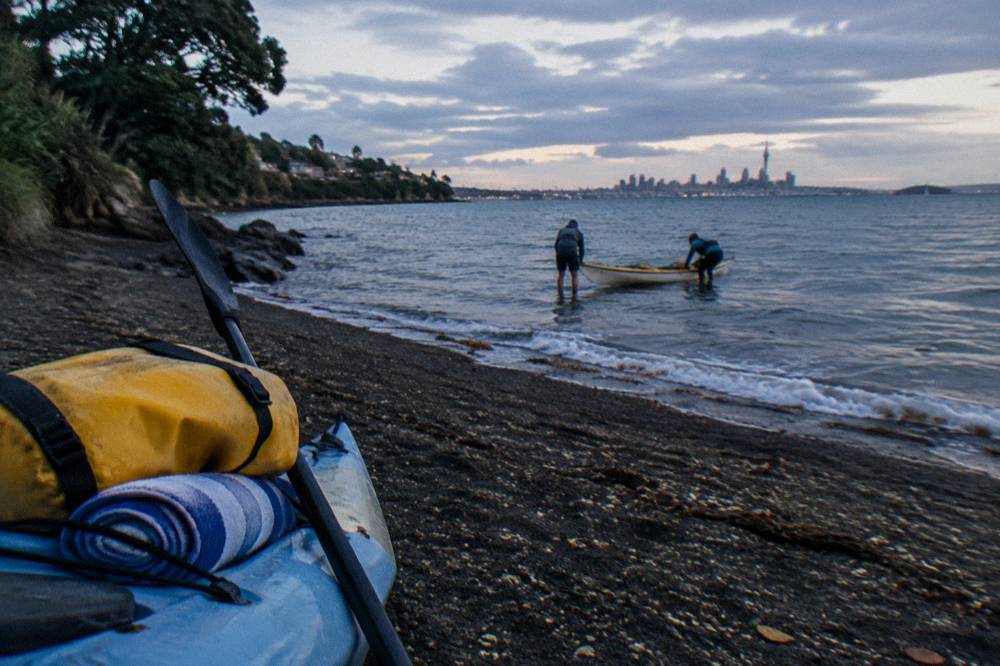
The simplest division of labour on any of these tours: the operator brings the boat, the paddle and the safety gear, and the guest brings the warm, dry human.
What Should You Wear On The Rangitoto Sunset Paddle From St Heliers Bay?
Auckland Sea Kayaks runs its Rangitoto sunset tour from its base at 384 Tamaki Drive, St Heliers Bay, for 6 hours 30 minutes on one booking page and 7 hours on the other, from $139.02 and $116 per person respectively, with a BBQ dinner supplied. That is an evening that starts in sunshine and ends after dark, so the outfit has to cover both.
This is the longest paddle in the group covered here, and the one where the layers earn their keep most obviously. The tour returns after dark, the booking page for the 7 hour version describes paddling home beneath the night sky and across the Waitemata Harbour beneath the stars, and every kayak carries an all-round white navigation light at the rear on the operator's city tours, with navigation lights on each kayak for the sunset tour as well. Guides carry marine VHF radios and first aid.
The operator's stated requirements for its tours give a clothing steer without naming fabrics: guests should weigh 120 kg or less per the operator page (the 7 hour booking page states 125 kg), fit a seat about 65 cm wide, be able to stay seated up to 45 minutes at a time, and have basic spoken English. Staying seated in one stretch for that long on a cooling harbour is precisely the situation a thermal base layer and a windproof outer are built for. The operator says bioluminescence is "sometimes" seen on this sunset tour "typically October to April" and can never be guaranteed; that line belongs to the sunset tour only.
The Rangitoto tours also have a transport wrinkle: the operator runs a pre-booked free shuttle from the Auckland War Memorial Museum atrium, departing 30 minutes before the tour with limited seats, and no hotel pickup is included. A shuttle guest packs differently again, since everything for before, during and after the paddle travels with them. A small dry bag is standard practice for that, and the operator supplies dry bags and a phone pocket on the life jacket for its city tours.
| Tour and start | Duration | From USD per person | Rating and reviews | Food or drink on the booking page | Age on the booking page |
|---|---|---|---|---|---|
| St Heliers Start, Rangitoto BBQ, St Heliers Bay | 6 hours 30 minutes | $139.02 | 4.9 across 179 reviews | BBQ dinner and hot drink | Check the booking page |
| Rangitoto BBQ, 7 Hours, St Heliers Bay | 7 hours | $116 | 4.8 across 85 reviews | BBQ dinner, hot and cold drinks | 14 |
| 2.5 Hours, Snacks, Westhaven Marina | About 2.5 hours | $82.27 | 4.8 across 28 reviews | Snacks | Check the booking page |
| Sweet Treat, 2 Hours, Westhaven Marina | 2 hours | $73 | 5.0 across 15 reviews | Sweet treat | Check the booking page |
The dinner rows deserve a clothing note: a BBQ dinner on the island means standing around while food cooks, which is a different heat balance from paddling. A beanie and an extra mid layer in a dry bag cover that gap on every sunset tour in this group. The operators set their own start times, so check the tour's times against the computed sunset and dusk figures for your date.
What Do You Wear For A City Lights Paddle From Westhaven Marina?
The City Lights tours leave from the boat ramp at Westhaven Marina, Z Pier, where the operator asks guests to arrive 10 minutes early and look for the bright yellow kayaks and the van, with paid parking around Z Pier and Westhaven. The 2.5 hour version costs from $82.27 per person, the 2 hour Sweet Treat version from $73, and both are night paddles on the sheltered Waitemata Harbour with no bioluminescence claim.
The city paddles are the most beginner-shaped evenings in the group in one clothing sense: they never leave the harbour, and the operator describes the paddling as being on the sheltered Waitemata Harbour. Sheltered is not dry. The same layering logic applies, with the addition that these tours run closest to the lit city, so a torch matters less for finding the group and more for the walk back to the car park afterward. The operator's City Lights age guidance is 12 and over with an adult.
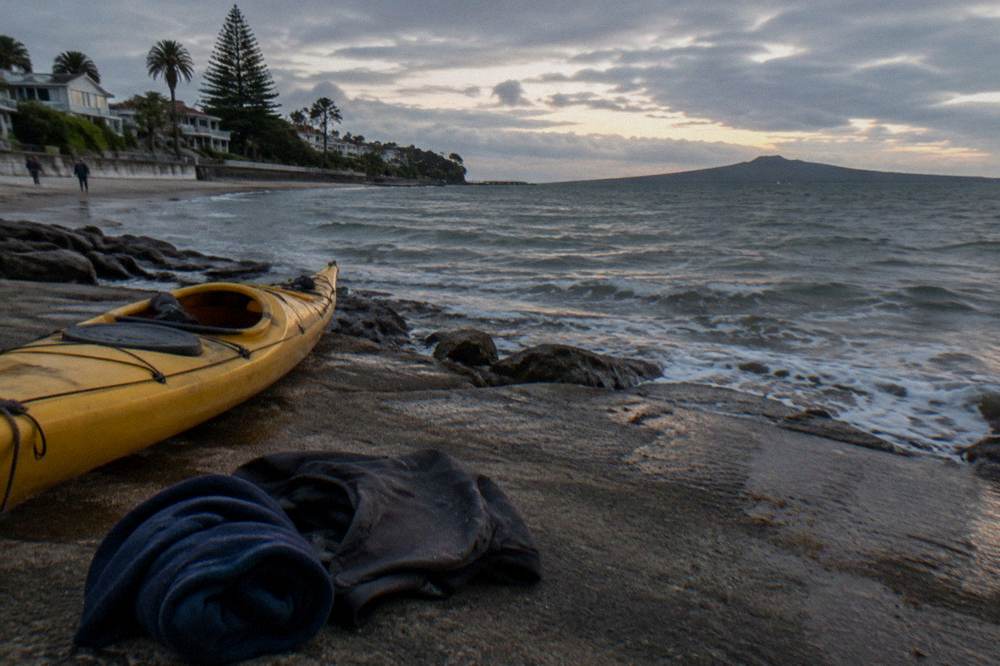
The Sweet Treat booking page supplies a life jacket and a sweet treat, and states that hotel pickup is not included. Its 2.5 hour twin supplies snacks, kayaking and safety equipment and experienced guides. Both ask guests to bring a phone, GoPro or camera in a waterproof case at the guest's own risk, and both supply dry bags and a phone pocket on the life jacket, which makes the Westhaven paddles the most camera-friendly evenings here, a point the guide on photographing bioluminescence from a kayak picks up for the glow tours.
| Launch point | Tours using it | What the ground is like | Clothing item that earns its place |
|---|---|---|---|
| Okura Boat Ramp, 1 Okura River Road | Okura Or Waiake Start, 2 Hours | Boat ramp at the end of Okura River Road | Water shoes |
| Waiake Beach | Okura Or Waiake Start, 2 Hours | Sandy North Shore bay | Water shoes, towel |
| North Shore spot emailed before 10 AM | Canoe & Kayak Adventures glow tours | Confirmed on the day | Full layering system ready the night before |
| St Heliers Bay, 384 Tamaki Drive | Rangitoto sunset tours | Operator base on the waterfront | Extra mid layer for the beach BBQ |
| Westhaven Marina, Z Pier, 79 Westhaven Drive | City Lights tours | Concrete boat ramp, paid parking | Grippy footwear and a dry bag |
Because these launch points sit in different corners of the city, the guide to Auckland bases near each night kayak launch helps you pick a spot that keeps the late return short.
Westhaven is also the launch where the new lifejacket rule is most visible in practice, since the marina is a working waterfront with other craft around: from 9 October 2026, everyone on a recreational craft six metres or less must wear a properly fitted lifejacket while underway. The tour operators fit the lights and issue the gear; the guest's job is simply to wear clothing that sits well underneath it.
How Late Does Full Dark Come, And Why Does That Change The Outfit?
On the Auckland waterfront, computed from date and location, full dark arrives at 9:49 pm on 15 November 2026, at 10:29 pm on 15 January 2027, and not until 7:22 pm on 15 April 2027. Summer nights give up their heat slowly on the water, but the gap between a warm sunset and a cold paddle home is where the layering system does its work.
The numbers come from US Naval Observatory sunset and civil twilight data with astronomical dusk computed from date and location, and the operators set their own start times, so the table below is a planning aid rather than a schedule. The clothing point it carries: on a midsummer night the tour may launch in daylight and land three hours later in full dark, and the air temperature can fall a long way across that window.
| Date, Auckland waterfront | Sunset | End of civil twilight | Full dark, computed |
|---|---|---|---|
| 15 Nov 2026 | 8:08 pm | 8:37 pm | 9:49 pm |
| 15 Dec 2026 | 8:36 pm | 9:07 pm | 10:27 pm |
| 15 Jan 2027 | 8:42 pm | 9:12 pm | 10:29 pm |
| 15 Feb 2027 | 8:18 pm | 8:46 pm | 9:53 pm |
| 15 Mar 2027 | 7:41 pm | 8:07 pm | 9:08 pm |
| 15 Apr 2027 | 5:56 pm | 6:22 pm | 7:22 pm |
Daylight saving covers all but the April row, with summer time (UTC+13) in force from 27 September 2026 to 4 April 2027. The April row needs attention: an April glow paddle can start in daylight and finish well after dark, with the autumn air cooling faster than any summer night.
The moon calendar matters to the glow operators in different ways. Social Nature Movement has the hard rule above. Canoe & Kayak Adventures instead recommends booking near a new moon or on nights with later moonrise, and new moon dates computed from US Naval Observatory data include 9 December 2026, 8 January 2027 and 7 February 2027. Auckland Sea Kayaks has no moon rule at all. The guide on moon phase and the glow works through what each operator says in detail.
What Do The Tours Supply, And What Stays Your Job?
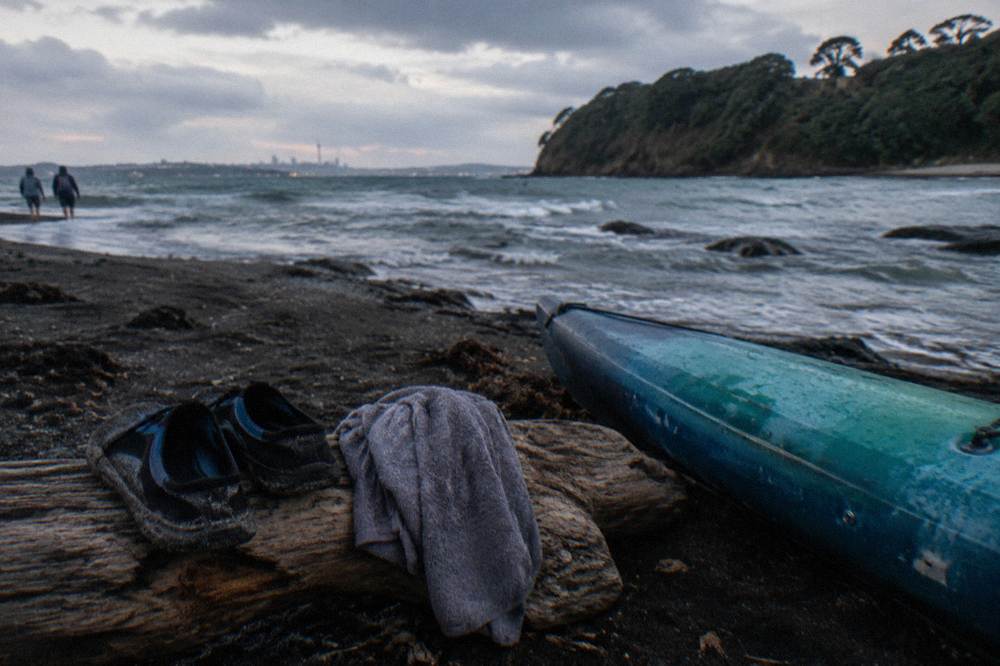
Every tour covered here supplies the kayak and paddle, all nine are guided paddles with no rentals among them, and life jackets are listed on four of the booking pages. Clothing, footwear, towel and dry layers are your job on every tour: the operators' own bring lists treat the outfit as the guest's.
The clean division is worth stating plainly because it prevents both overpacking and underpacking. The operator brings the boat, the blade, the safety gear and the guide. The guest brings the warm mammal and its layers. Where a booking page states an inclusion, the table below shows it; where it does not, the cell says to check the booking page rather than guessing.
| Tour | Supplied on the booking page | Food or drink stated | Free cancellation stated |
|---|---|---|---|
| Okura Or Waiake Start, 2 Hours | Life jacket, kayak, paddle | Check the booking page | Yes, 24 hours |
| Optional Bio-Bus, 1.5 To 2 Hours | Guide, kayak and equipment, PFD, safety light beacon | Check the booking page | Yes, 24 hours |
| North Shore Start, 2 Hours | Kayaking and safety equipment, tuition, 1 to 6 guide-guest ratio | Check the booking page | Yes, 24 hours |
| No Hotel Pickup, 2 Hours | Kayak rental, local guide, safety gear, tuition | Check the booking page | Yes, 24 hours |
| Tiritiri Matangi, 7 Hours | Kayaking equipment, guide, creature spotting equipment, guided night walk | Sunset luxury grazing platter with drinks | Yes, 24 hours |
Every one of the nine tours states a full refund when cancelled at least 24 hours before the start. The Canoe & Kayak Adventures repeat-tour offer applies only when that operator's guide confirms no bioluminescence was seen on the night, and its terms are the operator's.
One trip in the table stands apart and deserves its own clothing note. The Tiritiri Matangi trip is a 7 hour dinner, wildlife and night-walk experience from $139 per person with pickup included through two options chosen at booking, and its return paddle offers a chance to see bioluminescent plankton. It is not a 2 hour glow paddle and should not be packed like one: it involves a 75 minute van ride, a guided nocturnal walk on an island, and a minimum age of 12 stated on the booking page. The night walk alone argues for proper shoes rather than sandals, and the island hours argue for more layers than any other trip here.
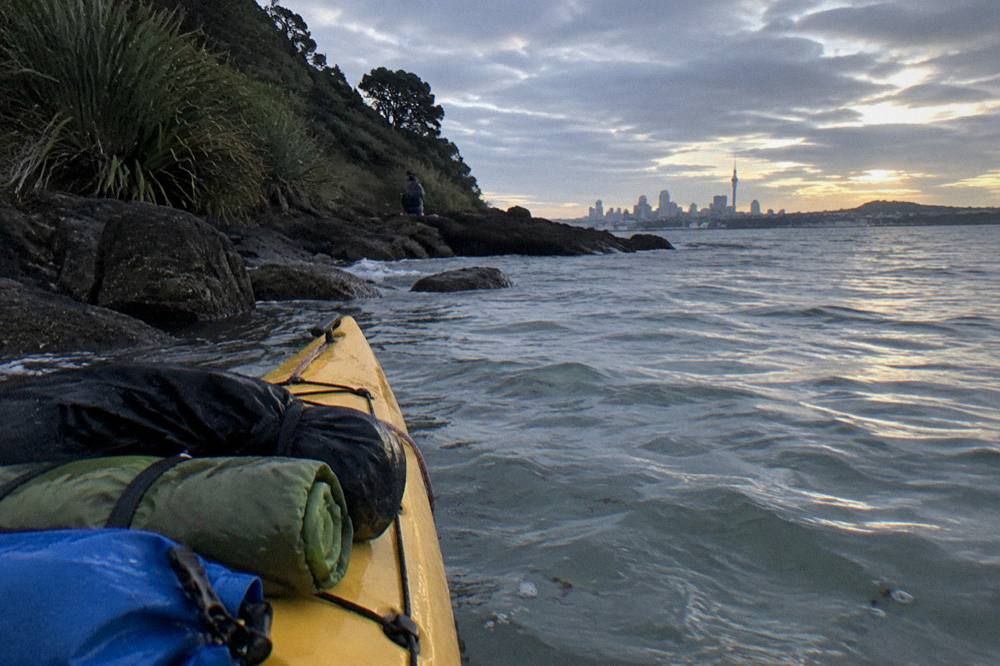
No booking page for any of the nine tours promises a sighting of the glow, and the two glow operators hedge in their own words: Canoe & Kayak Adventures says it can never be guaranteed, Social Nature Movement says the bioluminescence varies naturally. Dressing well is the one part of the evening fully inside a guest's control, which is why the packing list deserves as much attention as the date. More on that mindset in will every tour see the glow, and on the broader case for the trip in is bioluminescence kayaking worth it.
The tour pages and planning guides sit together on this site, so the outfit can be matched to the specific launch and date before anything is booked.
Common Questions About What To Wear On A Night Kayak Tour In Auckland
What Should You Wear On A Night Kayak Tour In Auckland?
A thin merino or thermal base layer, a fleece or woollen jumper, a rain-proof jacket, a warm beanie, water shoes, a towel and a torch: that is Social Nature Movement's own bring list, and it works as the template for every launch in this group. Add personal medication and a water bottle.
Why Dress For The Water Temperature And Not The Air Temperature?
Because cold water shock and hypothermia can kill, in Maritime NZ's own guidance for paddle craft, which advises dressing for the water temperature, carrying two waterproof ways to call for help and checking the marine forecast. Sea temperatures around Auckland are coolest in winter and warmest in late summer, whatever the evening air is doing.
What Footwear Works At The Auckland Launch Points?
Water shoes, on Social Nature Movement's bring list. The launches include a boat ramp at the end of Okura River Road, the sandy Waiake Beach, the concrete ramp at Westhaven Marina and the St Heliers Bay base, and every one of them is wet underfoot at some point in the evening.
Are Life Jackets Supplied On These Tours?
Life jackets appear on the included lists of several tours, including the Social Nature Movement glow paddle, the 7 hour Rangitoto sunset tour and the 2-hour City Lights page, and from 9 October 2026 everyone on a kayak must wear a properly fitted lifejacket while underway. Wear layers that sit comfortably under one.
What Should You Wear On The Rangitoto Sunset Tour In Particular?
The same layering system plus an extra mid layer in a dry bag: the tour runs 6 hours 30 minutes to 7 hours from St Heliers Bay, includes a BBQ dinner on the beach and returns after dark, so it spans daylight, dusk and full dark in a single trip.
Can You Bring A Phone Or Camera On A Night Kayak Tour?
Yes, though protection is your job. Social Nature Movement recommends a waterproof phone case for its glow tour. On the City Lights paddles the operator supplies dry bags and a phone pocket on the life jacket, and Auckland Sea Kayaks' own City Lights page asks guests to bring a phone, GoPro or camera in a waterproof case at the guest's own risk.