Can You Touch The Water On A Bioluminescence Kayak Tour?
Whether you can touch the water on an Auckland bioluminescence kayak tour, what triggers the glow, and what the operators say about wet hands, splash and paddle strokes.
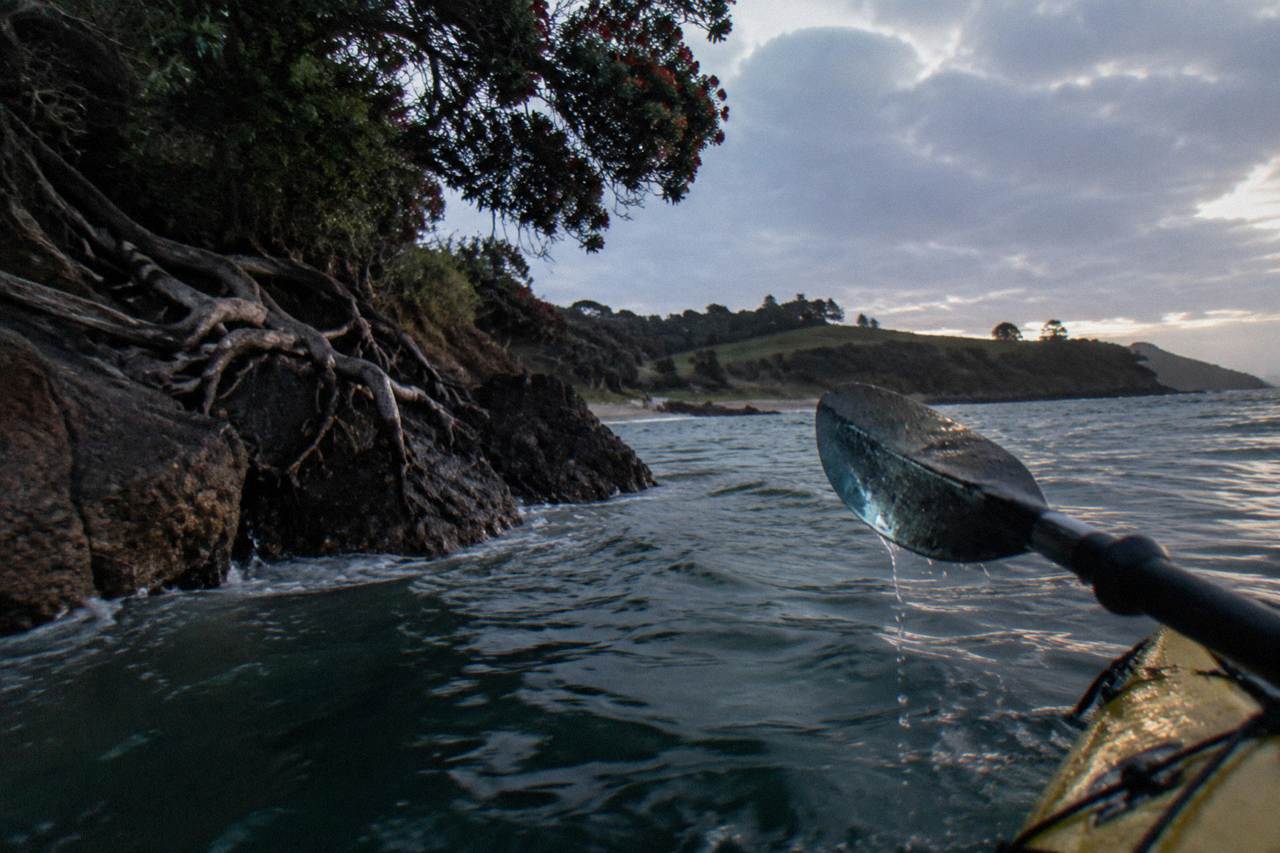
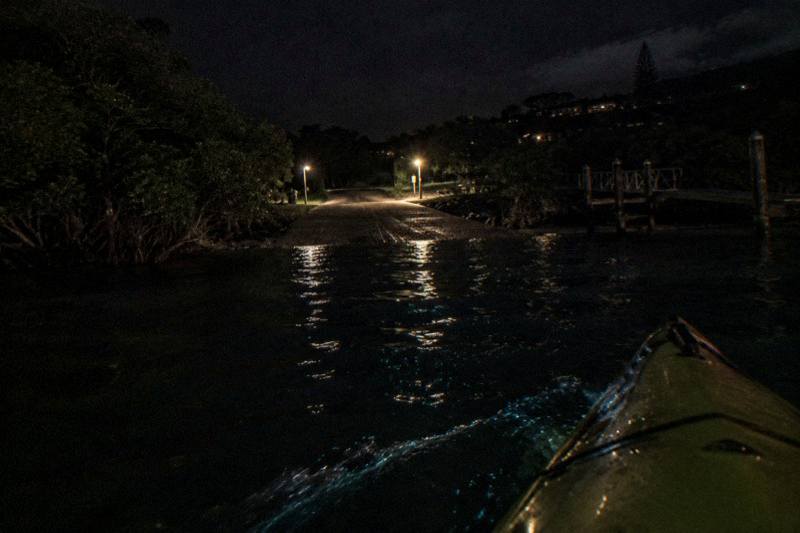
No Auckland bioluminescence booking page says touching the water is allowed or banned, so the honest answer is that the guide on the night decides, and the question is worth asking at the launch. What is documented is the mechanism: the glow comes from single-celled organisms that flash when the water around them is disturbed, and a paddle stroke, a boat hull or a hand all count as disturbance. Canoe & Kayak Adventures puts it plainly in its own words: "Kayaking is a wet sport." Nobody paddles two hours on the North Shore with dry sleeves.
That single fact drives most of what follows. The water is not a museum exhibit behind glass. It is the medium the tour moves through, and every stroke of the paddle stirs it. The narrower version is practical: whether fingers can trail in it, whether it can be splashed or scooped up, and whether any of that leads to trouble. None of the nine Auckland night-kayak booking pages states a policy on those things, which means the answer belongs to the guide standing on the beach beside you, and guides set rules for reasons that change with the night: the tide, the group, the sea state and the route.
Is The Glow Triggered By Touching The Water Around Auckland?
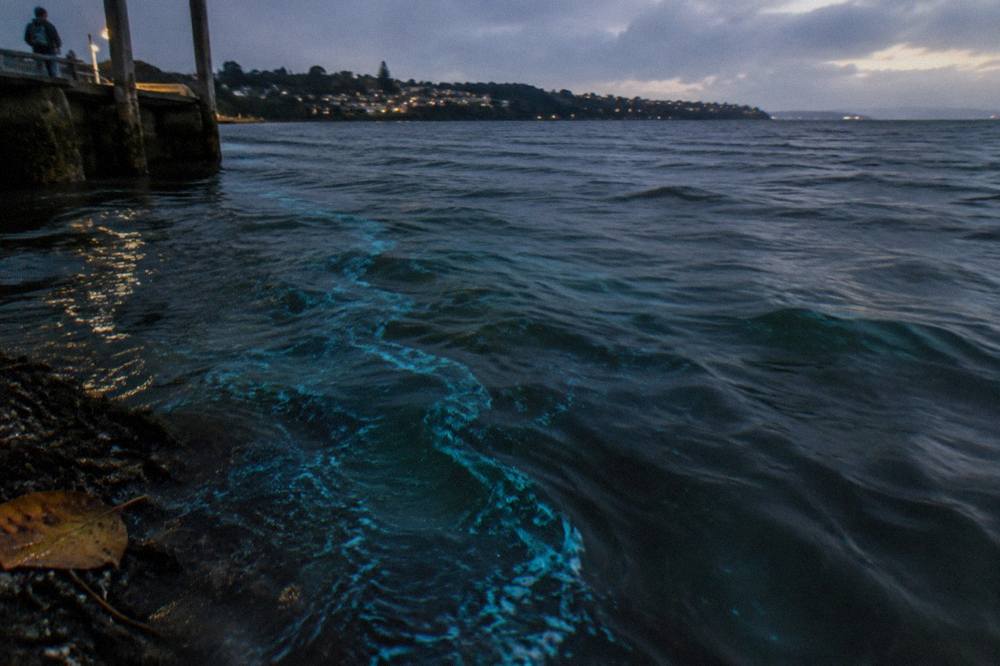
Yes, in the mechanical sense. The organisms that create the glow flash in response to physical disturbance, so touching the water will indeed set off the effect, but your hand is only one source of that disturbance among many others that produce the same reaction. Auckland Council environmental scientist Dr Megan Carbines described the mechanism in an interview with a local newspaper: the organism "is a non-toxic dinoflagellate, which often forms bright blooms around the coast in summer. When disturbed, it also emits a burst of light, often seen when swimmers or boats move through the water at night." A paddle, a hull and a hand sit in exactly the same category.
The species most often behind the effect is Noctiluca scintillans, a single-celled dinoflagellate that drifts with the current and carries the popular names "Sea Ghost" and "Fire of Sea". Earth Sciences New Zealand, formerly NIWA, describes it as "a harmless, non-photosynthetic dinoflagellate species of alga" whose cells "phosphoresce when disturbed". Wikipedia's summary of the science adds the detail that matters here: the light is produced by mechanical stimulation, a flash lasts about 80 milliseconds, and the cells accumulate at the surface when the sea is calm. That last point is why a calm Auckland night can hold the glow near the top of the water column, within reach of anything that breaks the surface.
This is also why no operator promises a sighting. Social Nature Movement says the organisms on its tours "vary naturally"; Canoe & Kayak Adventures says bioluminescence "can never be guaranteed". A hand in the water can only trigger what is already there. It cannot conjure a bloom that has drifted elsewhere, and no booking page for any Auckland night paddle claims otherwise. The general background on how living light works is worth a read before the tour, if only to calibrate expectations.
One more nuance from the science is worth carrying: dinoflagellate bioluminescence is controlled by a circadian clock and occurs only at night, and the leading hypothesis for why the cells flash at all is the "burglar alarm" idea, that the flash draws attention to whatever is disturbing them. The glow is not a decoration put on for paddlers. It is a defence response, which is a useful thing to know when deciding how much churn to add to the water yourself.
What Do Auckland Operators Say About Hands In The Water?
Nothing definitive. None of the Auckland operators' booking pages states a rule that allows or forbids putting your hands in the water, so the published material stays silent on the point, and the only practical instruction on the matter comes from your guide on the night. What the operators do publish is equipment, safety and behaviour guidance, and that is the closest thing to an official position. Social Nature Movement lists what to bring, including a torch, water shoes and a towel, which tells you the operator expects paddlers to end the night damp. Its tours proceed "only in calm conditions", and alcohol and drugs are not allowed.
Canoe & Kayak Adventures is blunter. Its own fitness guidance asks that paddlers be able to walk nonstop for 30 minutes and sit on the ground and get up unaided, and its summary line, "Kayaking is a wet sport", appears in the operator's own material. The operator also runs a tight ratio of 1 guide to 6 guests, which means a guide is close enough to correct a paddler's behaviour quickly if a hand in the water becomes a problem for the group. Its moonlight notice recommends booking near a new moon or on nights with a later moonrise, because "when the moon is brighter, the glow can be more subtle, but still visible".
The right move is simple: ask before launch. A guide deciding a route across Okura or off Waiake Beach at a given tide has reasons that no article can predict, and the answer may differ between the first kayak and the last. This site's guide to safety on a guided bioluminescence paddle covers what operators do state about gear, lights and conditions, and it is worth reading alongside this page. The short version on touching: no published rule, so the guide's word governs, and asking costs nothing.
Do You Get Wet On A Night Kayak Tour On The Waitemata Harbour?
Yes, almost certainly a little. Operators plan for it, and that planning signals what to expect: every Auckland night tour in this category supplies kayaks and safety gear, and two operators publish bring lists or equipment details that assume damp clothes, so some dampness on a Waitemata Harbour night paddle is simply part of the deal. Auckland Sea Kayaks, which paddles the sheltered Waitemata Harbour from Westhaven Marina and St Heliers Bay, supplies life jackets and dry bags on its tours, fits a navigation light on each kayak for its harbour and sunset paddles, and encourages a phone or camera in a waterproof case at the guest's own risk. Dry bags exist on those tours because wet things happen.
On the dedicated glow paddles, Social Nature Movement supplies a personal flotation device with a safety light, and its bring list runs to a thin merino or thermal shirt, a fleece or woollen jumper, a rain-proof jacket, a warm beanie, a towel, a torch, water shoes, personal medication and a water bottle. A towel on the list is the operator's own answer to this section's question. The site's broader guide to what to wear on a night kayak tour in Auckland works through the layers in detail.
Maritime NZ's paddle-craft advice sits behind all of this: dress for the water temperature, because cold water shock and hypothermia can kill, carry two waterproof ways to call for help, and check the marine forecast. The national rule that applies from 9 October 2026 requires everyone on a recreational craft six metres or less, kayaks included among the craft listed, to wear a properly fitted lifejacket while underway, with compliance handled by an educational approach in the early months. The tour operators issue the jackets; the law is summarised by Maritime NZ's lifejacket pages.
So the wetness question and the touching question are really the same question from different ends. Sea kayaking at night puts water on paddles, on spray decks, on sleeves and occasionally on everything. Nobody books one of these tours expecting to stay dry, and the operators' own published guidance assumes the opposite. What the guidance does not do is license swimming, splashing games or reaching over the side: those are separate acts from getting damp, and none of the booking pages mentions them.
Can Kids Touch The Water On A North Shore Glow Paddle?
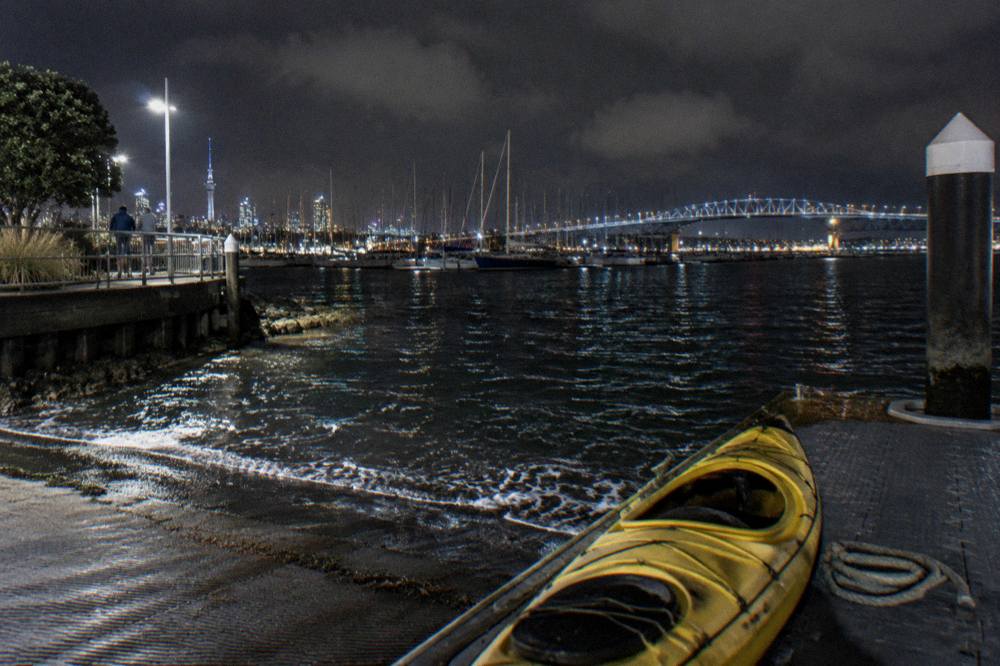
No North Shore glow paddle operator publishes a rule about kids touching the water, so the written policies neither forbid nor allow it. The answer comes down to two steps: confirm your child clears that operator's age threshold on the tour's booking page, then ask the guide on the night whether touching the water is fine. Age limits are set by each operator, so check the booking page before you book. Social Nature Movement's operator page sets 13 and over for its glow tour. Canoe & Kayak Adventures sets 11 and over accompanied by an adult, with younger children welcome only after contacting the operator, and one of its booking pages adds not suitable under 7. Auckland Sea Kayaks sets 12 and over with an adult for its City Lights paddle and 14 and over for its Rangitoto sunset tour.
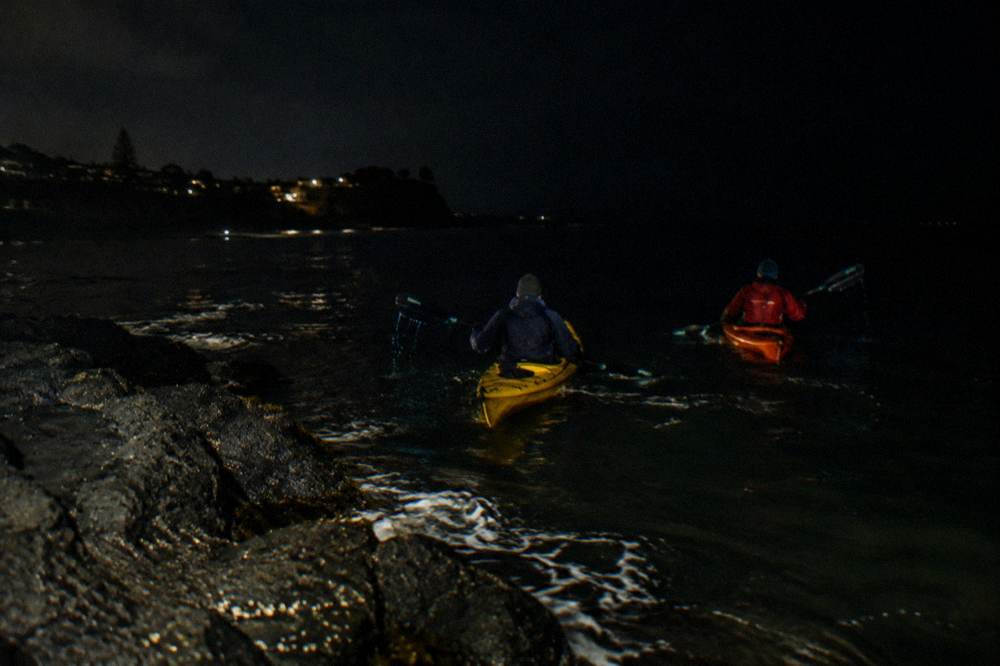
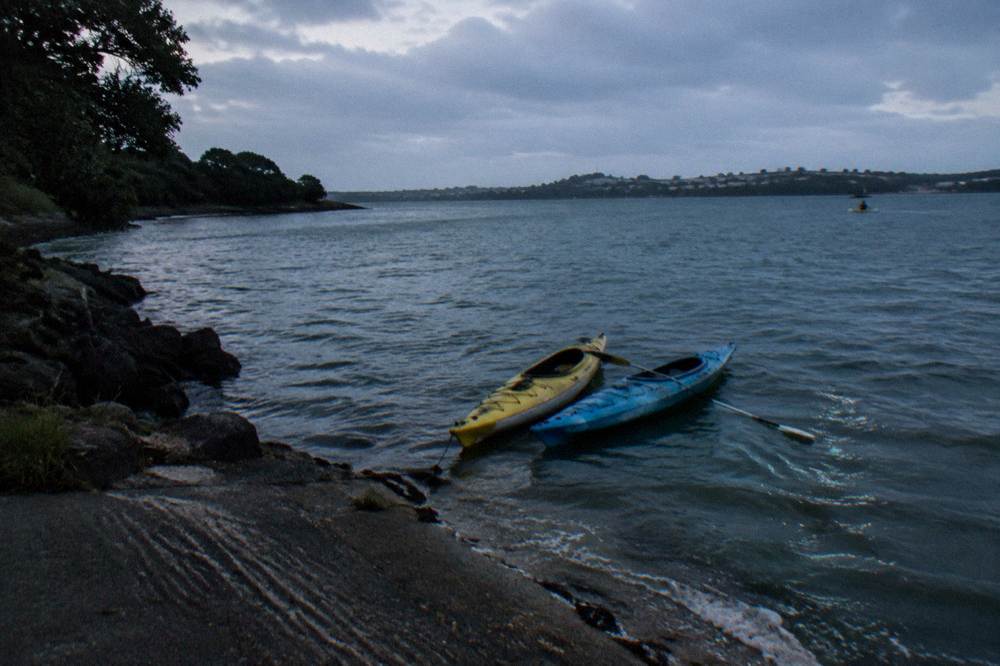
The North Shore launches matter here too, because they are where the dedicated glow paddles go out. Social Nature Movement launches at Okura Boat Ramp or Waiake Beach, tide dependent, and the operator says both locations are equally good: Okura at high tide, Waiake at low tide. Canoe & Kayak Adventures emails the exact North Shore spot before 10 AM on the tour day. The site's guide to the Okura and Waiake launch points explains what each start means for the evening, and its piece on night kayak tours with kids in Auckland works through the age thresholds tour by tour.
For a child on the water, the practical reality is that small hands want to touch the glowing thing, and the glow responds when they do. That is the whole appeal. The disciplined version is to let the guide set the moment and the place, keep hands inside the boat unless invited, and let the paddle do the stirring. A guide steering six guests at one-to-six ratio, as Canoe & Kayak Adventures does, can orchestrate that far better than a parent guessing from the back seat of a double kayak, and nothing about any published age rule changes the physics of how the glow behaves. Everything else covered here is indexed on this site.
What About Phones And Cameras Near The Glowing Water?
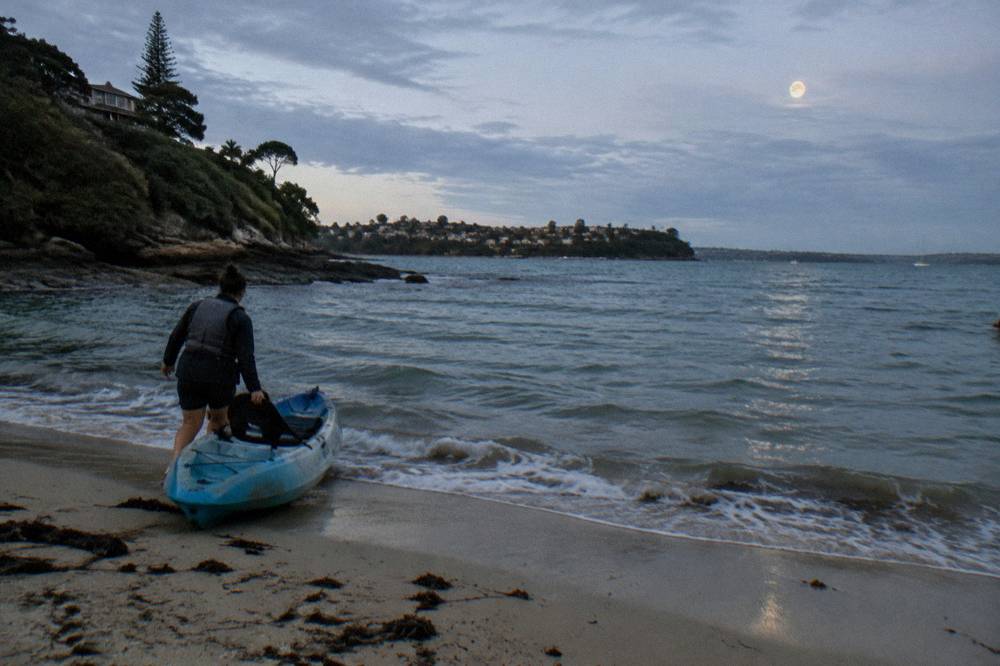
Yes, you can bring phones and cameras near the glowing water, but keep them protected: the only operator statement on photography says the glow is hard to capture and needs specialised camera settings, and that same operator recommends a waterproof phone case, so waterproof your gear or leave it ashore. Social Nature Movement is the one Auckland glow operator that addresses cameras directly, saying photographing the glow is challenging and recommending a waterproof case for photos. Auckland Sea Kayaks, on its harbour tours, supplies dry bags and a phone pocket on the life jacket, and says cameras and phones come aboard at the guest's own risk.
The reason the photography advice doubles as touching advice is light. A camera flash or a bright phone screen can flatten a dark-adapted group's night vision in a second, and a phone held low over the water is a phone one wave away from the wet sport the operators describe. The glow itself photographs badly because it is dim, blue-green and 80 milliseconds long per cell flash; a phone held in a wet hand photographs worse. If the plan is to trail fingers and shoot video at the same time, expect neither to work well and check the phone's fate with the guide first.
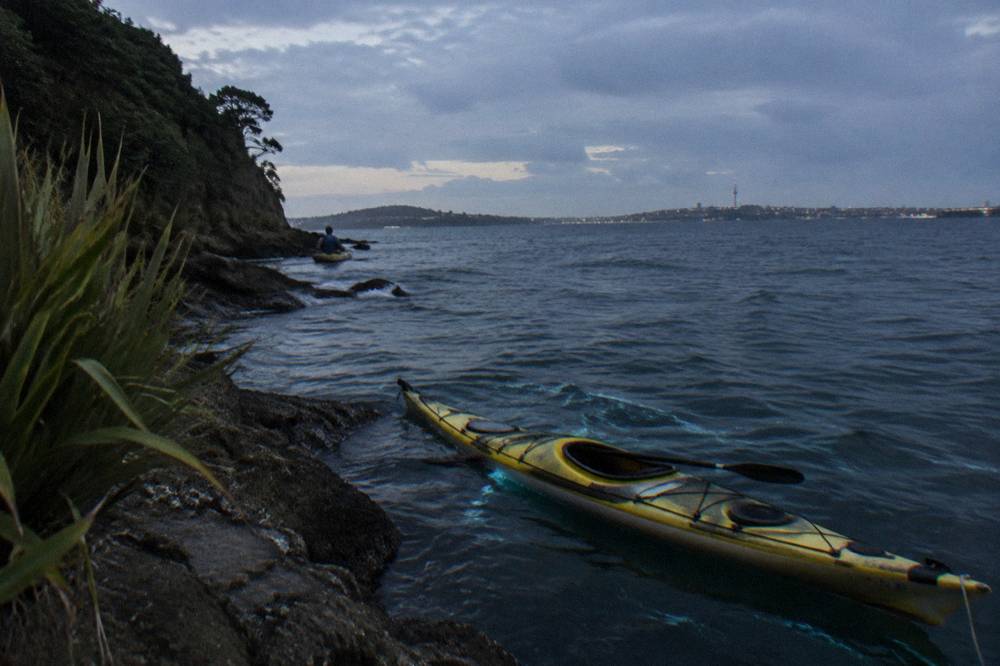
The site's longer guide to photographing bioluminescence from a kayak covers settings, cases and what to realistically expect from a phone sensor at night. The short safety-minded version for this question: the water is where the phone goes to die, the case is the cheap insurance, and the guide is the person who knows whether tonight's conditions forgive a low-held lens.
Which Auckland Night Paddle Suits A Curious Paddler?
The dedicated bioluminescence tours are the ones built around the glow, and they are also the cheapest nights on the water among the tours covered here: from $53 per person for the most-reviewed glow paddle, against $139.02 for the longest Rangitoto sunset dinner trip. The glow tours run about 2 hours. The sunset tours run 6 hours 30 minutes to 7 hours with a BBQ dinner. The City Lights paddles run about 2 to 2.5 hours around Westhaven Marina and make no bioluminescence claim. Different nights, different purposes.
| Tour | Operator | Duration | From, per person | Rating and reviews | Start |
|---|---|---|---|---|---|
| Optional Bio-Bus, 1.5 To 2 Hours | Social Nature Movement | 1.5 to 2 hours | $53 | 4.9 across 329 reviews | Chosen at booking |
| Okura Or Waiake Start, 2 Hours | Social Nature Movement | 2 hours | $62.42 | 5.0 across 46 reviews | Okura Boat Ramp or Waiake Beach |
| North Shore Start, 2 Hours | Canoe & Kayak Adventures | 2 hours | $67.52 | 4.1 across 207 reviews | North Shore, spot emailed on the day |
| No Hotel Pickup, 2 Hours | Canoe & Kayak Adventures | 2 hours | $66 | 4.5 across 67 reviews | North Shore, spot emailed on the day |
| Sweet Treat, 2 Hours | Auckland Sea Kayaks | 2 hours | $73 | 5.0 across 15 reviews | Westhaven Marina |
| St Heliers Start, Rangitoto BBQ | Auckland Sea Kayaks | 6 hours 30 minutes | $139.02 | 4.9 across 179 reviews | St Heliers Bay |
A note on those rows: several trips are each sold on two booking pages at different prices and ratings, and the table shows one page per trip. The same trip may appear elsewhere at a different from-price, which is normal, not an error. Every tour in the table states a full refund when cancelled at least 24 hours before the start, in the booking pages' own wording. No tour includes free hotel pickup, though the Social Nature Movement glow tour offers a paid Bio-Bus add-on from near the Sky Tower, and the Tiritiri Matangi dinner trip includes pickup options chosen at booking.
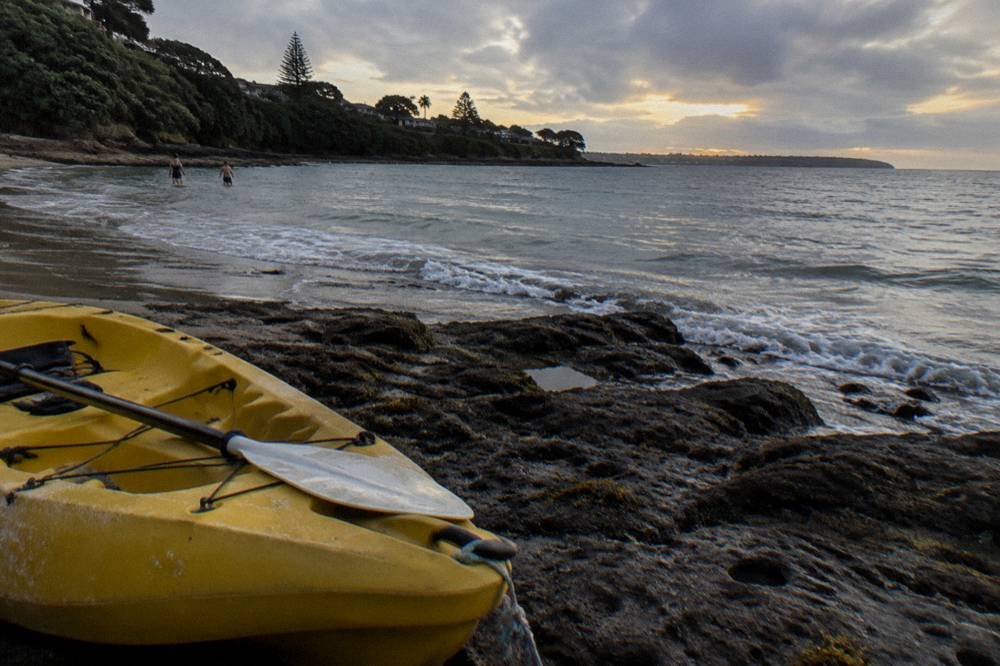
For a paddler whose main interest is the glowing water itself, the two-hour glow paddles from Okura, Waiake or the emailed North Shore spot are the direct match. The Okura Or Waiake Start tour from Social Nature Movement, from $62.42 per person, is the site's featured pick and the one to check dates on first; the same operator's other booking page for the identical trip shows 4.9 across 329 reviews at $53, and choosing between the two pages is a matter of price and start-point clarity. Canoe & Kayak Adventures brings the free repeat-tour offer, which applies only when the guide confirms on the night that no bioluminescence was seen, and the operator's own season note that in November to April the glow is "often strong enough to enjoy on most nights", a statement that belongs to that operator alone.
The sunset and City Lights options answer different questions. The Rangitoto sunset tour from St Heliers Bay is a dinner evening with a paddle home after dark, on which Auckland Sea Kayaks says bioluminescence is "sometimes" seen, "typically October to April", and never guaranteed. The City Lights tours paddle the lit harbour from Westhaven Marina and promise city views, not glow. A curious paddler who wants hands near luminous water should book the thing that is about luminous water.
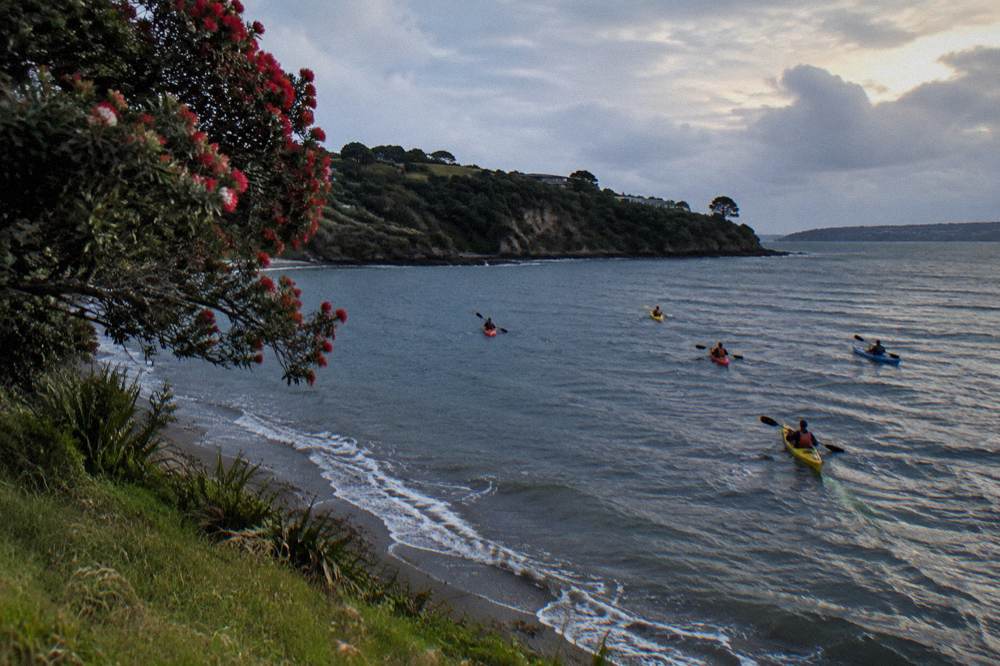
Does The Moon Change Whether Touching The Water Shows Anything?
Yes, the moon matters. It changes the visibility of any glow produced when you touch the water, and one Auckland operator treats that seriously enough to cancel around it: Social Nature Movement runs no tours when the moon is in the sky above 50 percent illumination. The operator's own words: "we do not operate when the moon is in the sky and at more than 50% illumination, as excessive moonlight can significantly reduce the quality and visibility of the bioluminescence, so gaps in our availability are intentional." Canoe & Kayak Adventures still runs tours on brighter nights but recommends booking near a new moon or on nights with a later moonrise. Auckland Sea Kayaks publishes no moon rule for its tours.
This matters to the touching question because Canoe & Kayak Adventures says moonlight leaves the glow 'more subtle, but still visible', so a hand in the water can still spark under a bright moon. The glow is real either way; the backdrop is not. New moon dates for the year ahead, computed from US Naval Observatory data and converted to Auckland time, include 9 November 2026, 9 December 2026, 8 January 2027, 7 February 2027 and 8 March 2027, with the pattern continuing monthly. The site's dedicated guide to the moon phase and a bioluminescence kayak tour lays out the full calendar and what each operator does with it.
Two cautions keep the honest version of this advice intact. First, no date is a guaranteed dark or glow-generous night: clouds, tide, season and the organisms' own numbers all move the outcome, and the operator season statements, October to April for Social Nature Movement and November to April for Canoe & Kayak Adventures, are each attributed to that operator alone. Second, availability gaps on a booking calendar are sometimes the moon rule working as designed, not sold-out nights. Dark-skies arithmetic, not demand, closes those dates.
The touching angle survives all of this intact. On any night the tour actually runs, the physics does not change: disturb the water, disturb the cells, and any cells present flash for about 80 milliseconds. What changes with the moon, the season and the calm is how much of that flash a dark-adapted eye can pick up from the seat of a kayak, and whether a trailing hand writes a visible line or an invisible one.
Common Questions About Touching The Water On A Bioluminescence Kayak Tour
Can You Touch The Water On A Bioluminescence Kayak Tour?
No Auckland booking page states a rule either way, so the guide on the night decides. Ask at the launch. The glow responds to disturbance, and a hand counts, but no operator publishes a policy on hands in the water.
Will Touching The Water Make The Glow Brighter?
Touching can only trigger what is already in the water. Noctiluca scintillans flashes when disturbed, in bursts of about 80 milliseconds, but it cannot be summoned by more churn, and no booking page promises a sighting on any night.
Is It Safe To Put Your Hand In Bioluminescent Water In Auckland?
The council scientist quoted on the species calls it a non-toxic dinoflagellate. Safety on the night is about sea state, warmth and staying in the kayak, not the water's chemistry. Dress for the water temperature and follow the guide's instructions.
Can You Swim In The Glowing Water On A Tour?
None of the Auckland tours includes swimming, and this article's sources say nothing that licenses it. The published activities are paddling, and on the Tiritiri Matangi trip, a guided night walk. Ask the guide about anything beyond the paddle.
Do You Get Wet On A Bioluminescence Kayak Tour?
Expect damp clothes at minimum. Canoe & Kayak Adventures states "Kayaking is a wet sport", and Social Nature Movement's bring list includes a towel, water shoes and warm layers. All the tours supply kayaks and safety gear.
Can You Scoop Up Glowing Water Or Take Some Home?
No booking page mentions scooping or taking water, and the organisms drift with the current, accumulate when calm and flash only at night, so a jar shows nothing by morning. Ask the guide before putting anything in the water or taking anything out.