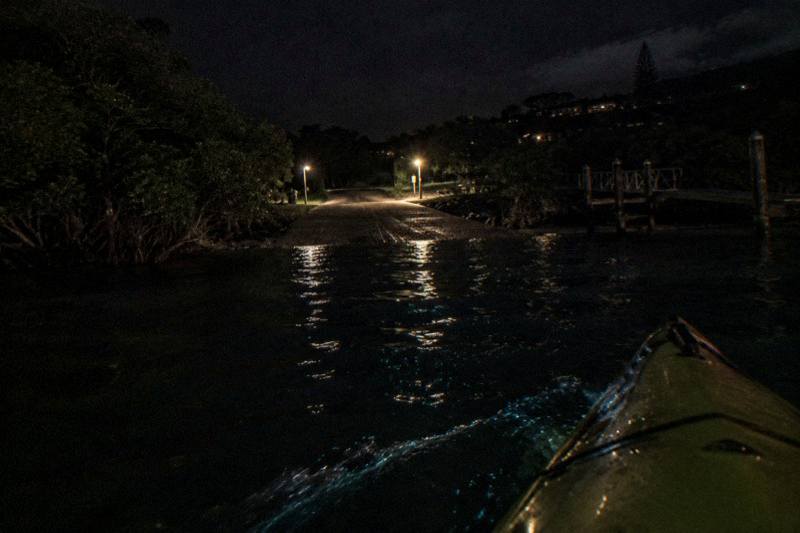
Okura And Waiake Bioluminescence Kayak Launches: Where The Night Paddles Start
Two small North Shore launch points carry Auckland's dedicated bioluminescence kayak tours: Okura Boat Ramp at the end of Okura River Road, and Waiake Beach. The operator picks between them with the tide.
Short answer
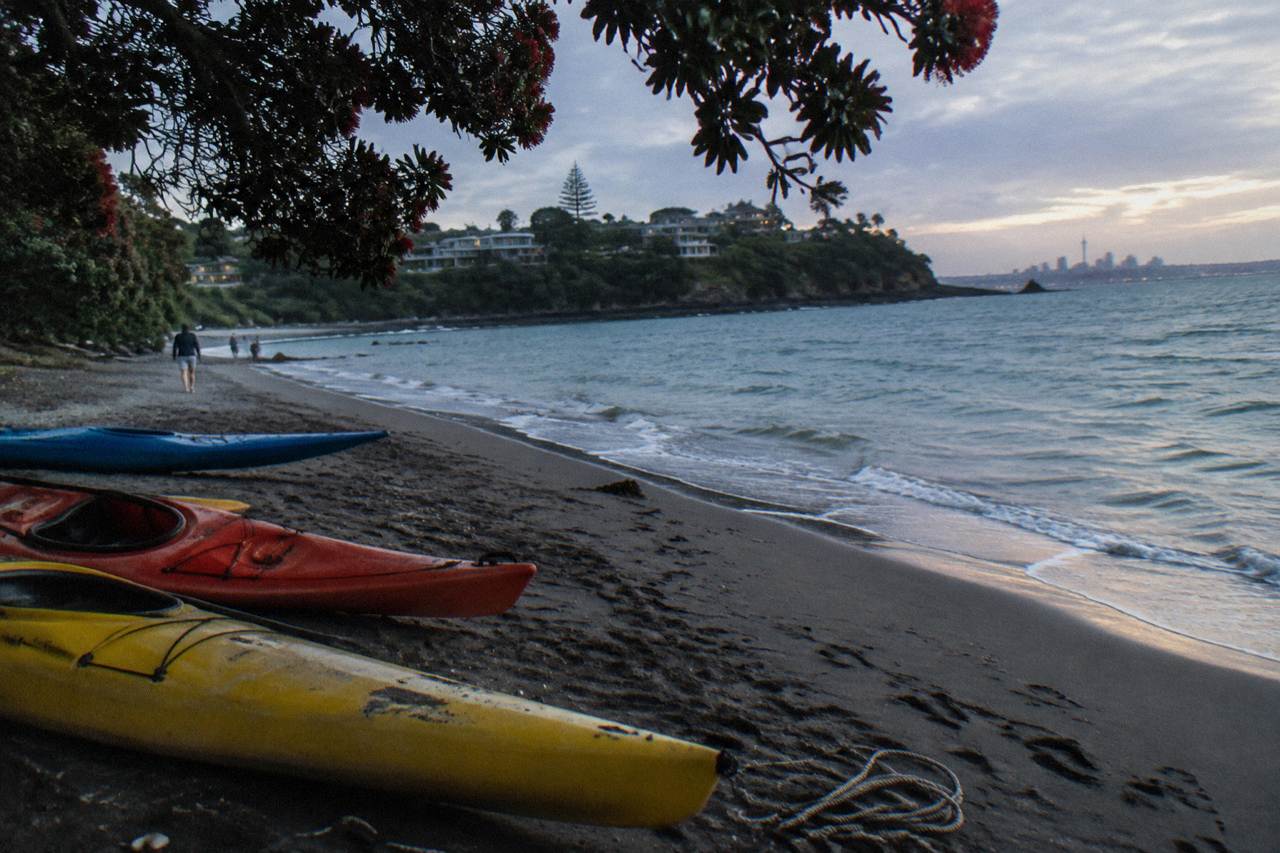
Okura Boat Ramp (1 Okura River Road, Okura) and Waiake Beach are the two Social Nature Movement launch points for its bioluminescence kayak tour, from $62.42 per person for 2 hours, 5.0 across 46 reviews. The operator links the choice to the tide: Okura at high tide, Waiake at low tide, and calls both locations equally good.
Auckland's dedicated bioluminescence kayak tours do not leave from the city waterfront. They leave from two small spots on the North Shore's northeastern edge: Okura Boat Ramp, at the end of Okura River Road, and Waiake Beach, a little further north. Both belong to one operator, Social Nature Movement, and the choice between them is not the paddler's to make on the night. The operator ties it to the tide.
That single fact answers most of the practical questions a reader has when a confirmation email says "Okura" or "Waiake" and nothing else. This page sets out where each launch sits, why the tide switches them, what weather closes each one, how to reach them without a car of your own, and what the tours that use them cost and include. The nine tours here span bioluminescence night paddles, sunset-to-night crossings and city lights kayaking.
Where Do The Okura And Waiake Launches Sit On Auckland's North Shore?
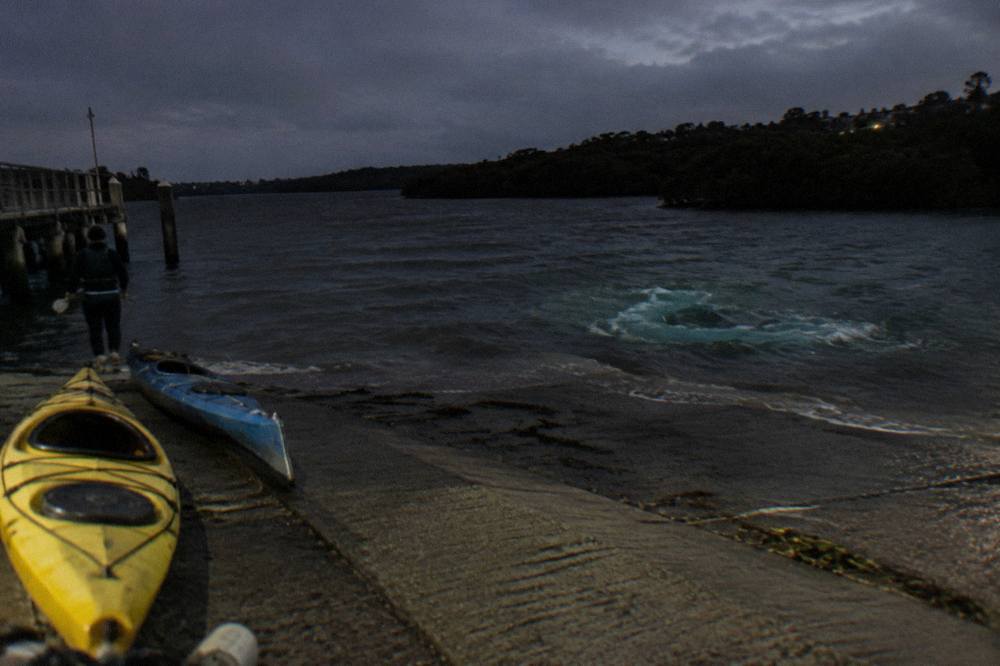
Both launches sit on Auckland's North Shore coast northeast of the harbour bridge, roughly half an hour's drive from the city centre, and both serve the same Social Nature Movement bioluminescence paddle rather than a fleet of different operators. Okura Boat Ramp is at 1 Okura River Road, Okura, at the end of the road. Waiake Beach is the alternative on the same coast. No other operator covered on this site runs from either spot.
Okura is the more obscure of the two names. The boat ramp sits where the Okura River meets the coast, at the end of Okura River Road, an address the operator lists on its own page and on the booking page.
The contrast with the rest of the site's tours is worth drawing clearly, because the geography does the sorting. The City Lights night paddles run from Westhaven Marina, on the Waitemata Harbour beside the city. The Rangitoto sunset trips leave from St Heliers Bay, at 384 Tamaki Drive, also on the Waitemata. The dedicated glow paddles are the ones that leave the lit-up harbour behind for the North Shore coast. A reader who wants the deeper background on the wider picture can start with the site's overview of bioluminescent kayak tours in Auckland and work outward.
One booking page for the Social Nature Movement paddle names both launch points explicitly. The other booking page for the same trip names neither and shows the start point only as chosen at booking. Both pages sell one trip, so the difference is presentation, not product. A reader who books through either page could stand on either beach by the end of it, depending on the tide on the night.
| Tour | Operator | Start point | Duration | From (USD, per person) |
|---|---|---|---|---|
| Okura Or Waiake Start, 2 Hours | Social Nature Movement | Okura Boat Ramp or Waiake Beach | 2 hours | $62.42 |
| Optional Bio-Bus, 1.5 To 2 Hours | Social Nature Movement | Chosen at booking | 1.5 to 2 hours | $53 |
| North Shore Start, 2 Hours | Canoe & Kayak Adventures | North Shore, spot emailed on the day | 2 hours | $67.52 |
| St Heliers Start, Rangitoto BBQ | Auckland Sea Kayaks | St Heliers Bay | 6 hours 30 minutes | $139.02 |
The Canoe & Kayak Adventures glow paddle also launches from the North Shore, but from a spot the operator emails out before 10 AM on the day of the tour, so it is not a fixed public launch the way Okura and Waiake are. The site's guide to tides and bioluminescence launch points covers how that moving start compares with these fixed ones.
Why Does The Tide Decide Between Okura Boat Ramp And Waiake Beach?
Social Nature Movement links the launch choice directly to the tide: it launches at Okura at high tide and at Waiake at low tide, and in the operator's words both locations are equally good. Paddlers do not pick the beach; the conditions of the night pick it, and the operator confirms which one applies.
The operator's own explanation is short and worth repeating in close to its own terms: both locations are equally good, Okura at high tide, Waiake at low tide. That is the whole decision rule as published. There is no published tide table, no threshold, and no rule that says one venue glows more than the other. The glow itself comes from organisms in the water, and the operator is explicit that they vary naturally.
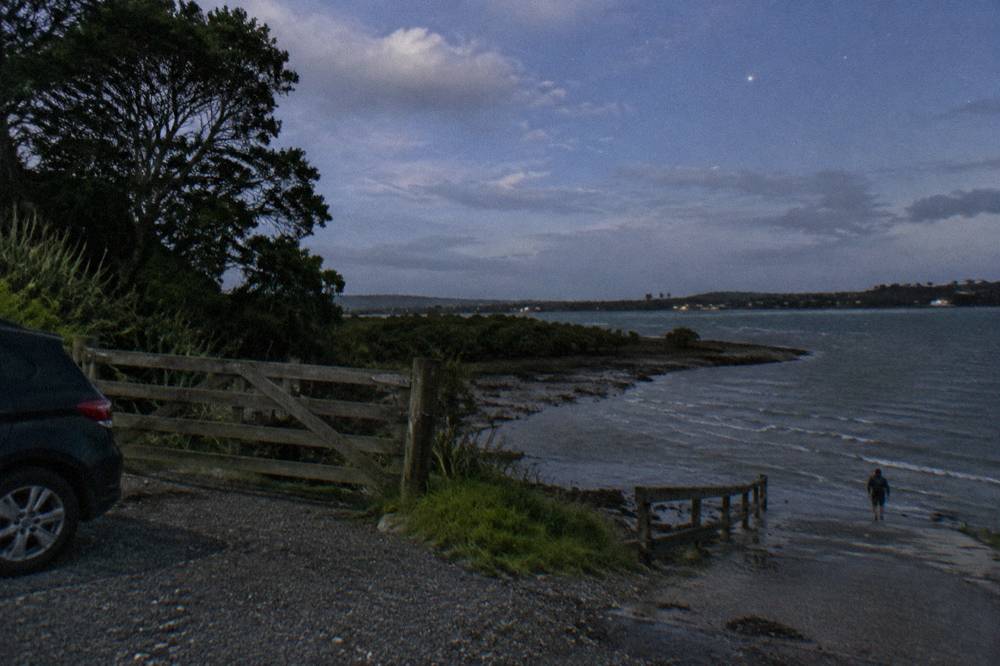
Why would a tide matter at all? The general mechanism of the glow is well documented and does not depend on any operator's claim. The light most paddlers are chasing comes from Noctiluca scintillans, a single-celled dinoflagellate that flashes when mechanically disturbed, with each flash lasting about 80 milliseconds, and which accumulates at the surface when the sea is calm (Wikipedia's entry on the species describes the mechanism). Auckland Council environmental scientist Dr Megan Carbines, quoted by Local Matters, describes it as a non-toxic dinoflagellate that often forms bright blooms around the coast in summer and emits a burst of light when disturbed. The same article calls Mahurangi and the Hibiscus Coast long known bioluminescence hotspots, a judgement that belongs to the newspaper, not the council.
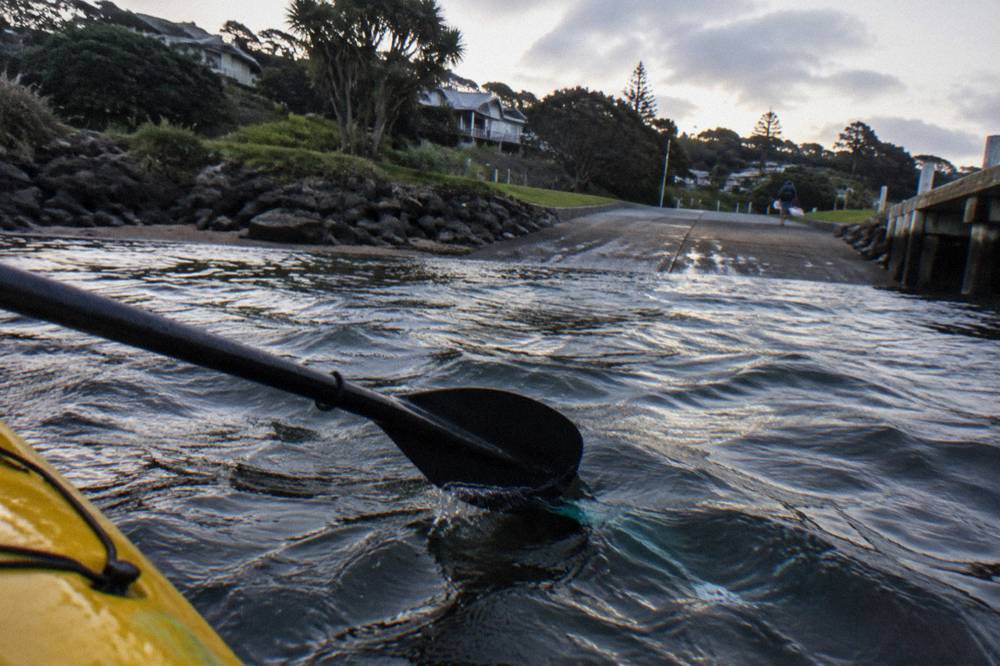
For a paddler standing on whichever beach the night has produced, none of that science is actionable. What is actionable is this: no booking page promises a sighting, and the operator says the organisms vary naturally. The tide chooses the ramp. The water chooses everything else.
Readers planning around darkness rather than water can use the site's page on the best time for a bioluminescence kayak tour in Auckland, and the darker-skies detail on the moon phase and the glow paddle.
What Are The Weather Limits At Each Okura And Waiake Launch?
Social Nature Movement runs these tours only in calm conditions, and its published limits differ by launch: Waiake does not operate above 5 m/s wind or 2.4 mm rain, while Okura does not operate above 8 m/s wind or the same 2.4 mm rain. In plain terms, the wind limit is looser at Okura than at Waiake, and rain closes both at the same threshold.
Those numbers come from the operator, and they are the only weather figures any operator on this site publishes for a glow paddle. They matter to a reader in two ways. First, a cancelled night is a possibility worth planning around, not an anomaly. Second, the two launches are not identical in tolerance, so a night that works at Okura might not run at Waiake.
The operator says tours only proceed in calm conditions. When a night is called off, every booking page on this site states a full refund when the cancellation is made at least 24 hours before the start, and operator-initiated cancellations follow the operator's own arrangements. Checking the marine forecast before the night is standard advice in any case: Maritime NZ's paddle craft guidance lists checking the marine weather forecast among the basics for anyone heading out on a kayak.
| Launch | Wind limit | Rain limit | Notes |
|---|---|---|---|
| Waiake Beach | Above 5 m/s, no tour | Above 2.4 mm, no tour | Operator wording |
| Okura Boat Ramp | Above 8 m/s, no tour | Above 2.4 mm, no tour | Operator wording |
| Either launch | Calm conditions only | Calm conditions only | Tours only proceed in calm conditions, operator wording |
How Do You Get To Okura Or Waiake From Central Auckland?
There is no free hotel pickup on any tour covered on this site, and the one transport link to these launches is Social Nature Movement's optional paid add-on, the Bio-Bus, which meets near the Sky Tower one hour before the start and takes about 30 minutes each way. Check the booking pages for the Bio-Bus fare before you book.
The Bio-Bus is the practical answer for a visitor without a car. The operator runs it from a meeting point near the Sky Tower, with guests told to meet one hour before the tour start, and the operator describes the ride as 30 minutes one way. It is an add-on at checkout rather than part of the base fare, so the from-price of the tour does not include it. Neither booking page names the transport option in its title; the glow tour page offers it as a checkout add-on, while the Okura or Waiake start page shows the same underlying trip with the launch points named instead.
Everything else about reaching the coast is the reader's own arrangement. The site's guide to getting to a launch from central Auckland walks through the options for each of the North Shore starts, including the emailed-spot trips, without inventing fares or schedules.
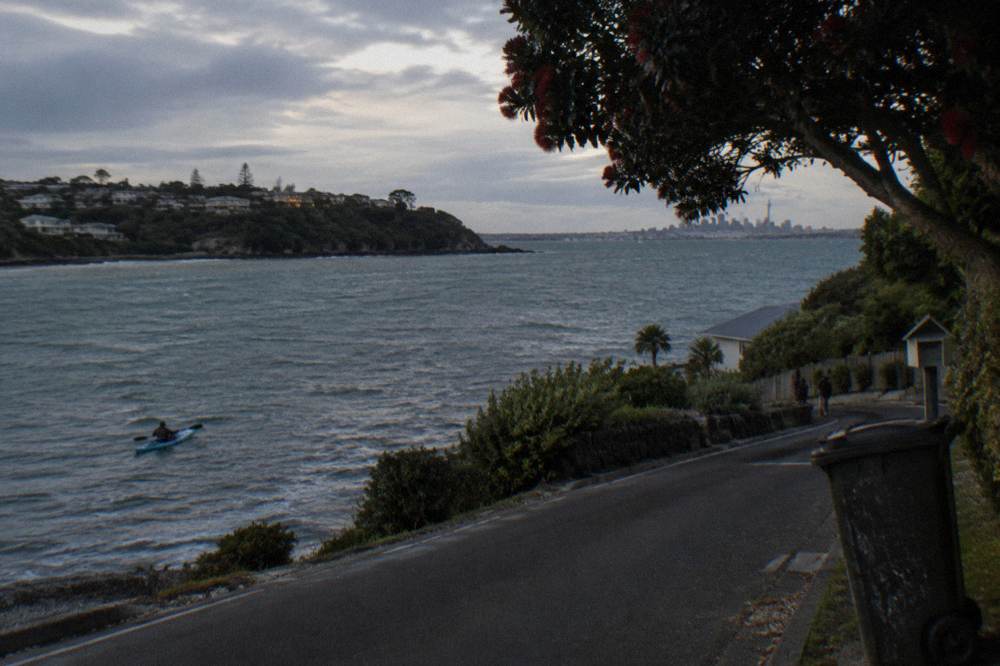
A contrast helps set expectations. Auckland Sea Kayaks, for its Rangitoto sunset tours from St Heliers Bay, runs a pre-booked free shuttle from the Auckland War Memorial Museum. Social Nature Movement's equivalent is paid, optional, and runs from near the Sky Tower. The Tiritiri Matangi trip, the same operator's 7-hour dinner and wildlife evening, includes pickup outright, with two pickup options chosen at booking, a 75-minute van ride, and drop-offs at Te Haruhi Bay and the Sky Tower. That trip is a different animal entirely: a sunset kayak, a guided nocturnal walk and a grazing platter with drinks, with a return paddle the booking page describes as offering a chance to see bioluminescent plankton. It is not a 2-hour glow paddle and has no rating yet.
What Do The Tours From These Launches Cost And Include?
The Okura or Waiake start page is priced from $62.42 per person for a 2-hour paddle, rated 5.0 across 46 reviews, kayak and paddle included, free cancellation to 24 hours before. The same trip on its second booking page shows from $53 per person, 4.9 across 329 reviews, and that page is the most reviewed tour on this site.
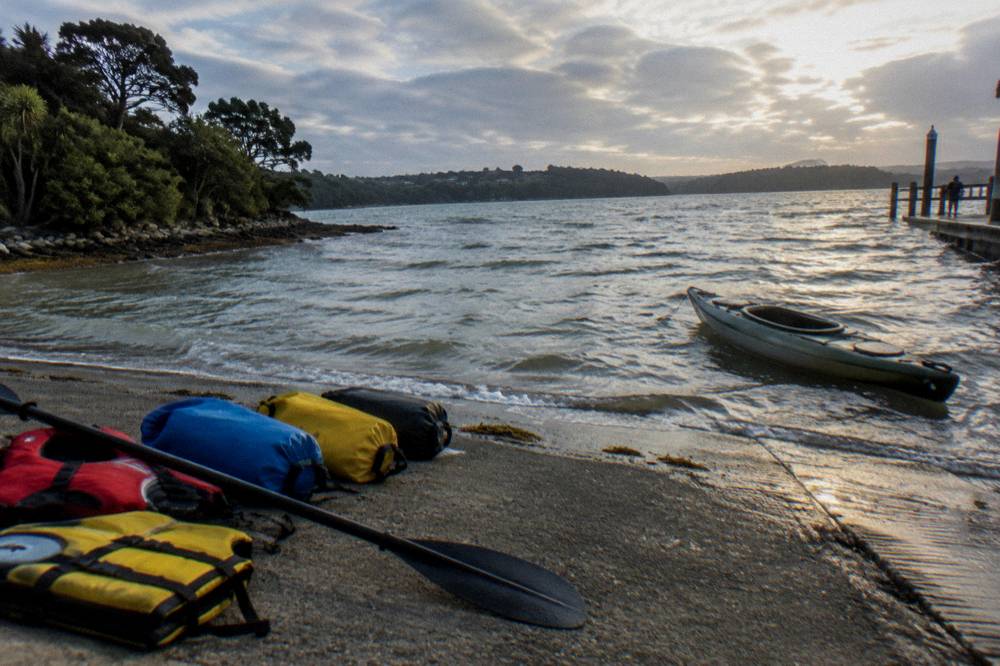
Those two prices belong to one trip on two booking pages, so they should be read as two shop windows, not two products. The site's guide to bioluminescence kayak tour prices in Auckland sets out the full spread: the cheapest per-person from-price on the site is $53, the highest is the $139.02 Rangitoto sunset trip, and the median across the nine tours is $73.
What the booking pages state as included is modest and concrete. The Okura or Waiake page includes the kayak and paddle. The second page adds a guide, a personal flotation device with a safety light, and a safety light beacon, and states a 120 kg weight limit. Neither page states hotel pickup, a minimum age, or food and drink; the operator's own page, separate from the booking pages, gives ages 13 and over. The operator lists what to bring: thin merino or thermal shirt, fleece or woollen jumper, rain-proof jacket, warm beanie, towel, torch, water shoes, personal medication, water bottle.
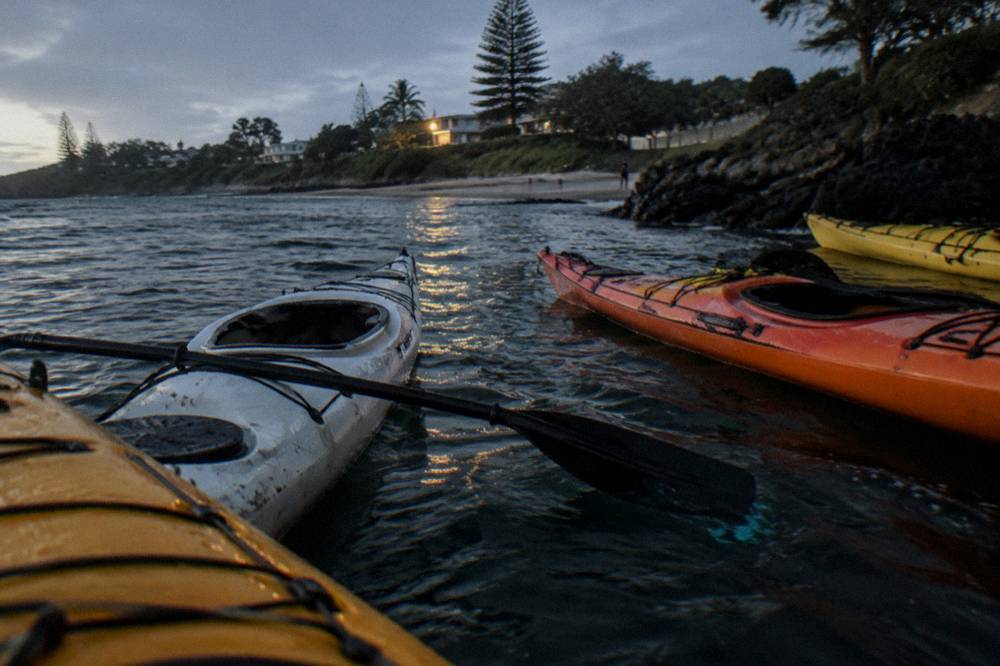
For anyone comparing the glow paddles side by side, the Canoe & Kayak Adventures trip runs 2 hours from $67.52, rated 4.1 across 207 reviews, with tuition and a 1 guide to 6 guest ratio, and that operator offers a free repeat tour if the guide confirms no bioluminescence was seen. No repeat-tour offer is stated for Social Nature Movement; its equivalent honesty is the moon rule and the calm-conditions limit, both covered below. For live dates on that trip, Check availability; the fuller comparison of Auckland's glow tours covers the rest.
| Launch or start | Tours using it | Operator | Duration | From (USD, per person) | Included on the booking page |
|---|---|---|---|---|---|
| Okura Boat Ramp or Waiake Beach | Glow paddle | Social Nature Movement | 2 hours | $62.42 | Kayak and paddle |
| Chosen at booking (Bio-Bus page) | Same glow paddle | Social Nature Movement | 1.5 to 2 hours | $53 | Guide, kayak and equipment, PFD with safety light |
| North Shore, spot emailed on the day | Glow paddle | Canoe & Kayak Adventures | 2 hours | $67.52 | Kayaking and safety equipment, tuition, 1 to 6 ratio |
| Westhaven Marina boat ramp | City Lights paddle | Auckland Sea Kayaks | About 2.5 hours | $82.27 | Kayaking and safety equipment, guide, snacks |
| St Heliers Bay, 384 Tamaki Drive | Rangitoto sunset paddle | Auckland Sea Kayaks | 6 hours 30 minutes | $139.02 | BBQ dinner, hot drink, guide, group max 8 |
Because the launches are on the North Shore, the guide to Auckland accommodation near the glow paddle launch points helps you pick a base that keeps the late-night return short.
Every one of the nine tours states a full refund when cancelled at least 24 hours before the start, in the booking pages' own wording. That is the cancellation story for the Okura and Waiake paddle, and it is worth knowing before committing to a specific night rather than after.
| Tour | Rating and reviews | Group max | Weight limit (booking page) | Free cancellation (24 hours) |
|---|---|---|---|---|
| Okura Or Waiake Start, 2 Hours | 5.0 across 46 reviews | Not stated | Check the booking page | Yes |
| Optional Bio-Bus, 1.5 To 2 Hours | 4.9 across 329 reviews | Check the booking page | 120 | Yes |
| North Shore Start, 2 Hours | 4.1 across 207 reviews | 24 | Check the booking page | Yes |
| Tiritiri Matangi, 7 Hours | No rating yet | Check the booking page | 120 | Yes |
| St Heliers Start, Rangitoto BBQ | 4.9 across 179 reviews | 8 | Check the booking page | Yes |
How Do Dark Skies And The Moon Shape These Launches?
Social Nature Movement has the only hard moon rule among the operators here: it does not run when the moon is in the sky at more than 50 percent illumination, so gaps in its calendar are intentional, not sold out. Canoe & Kayak Adventures only recommends booking near a new moon or on later-moonrise nights, and Auckland Sea Kayaks publishes no moon rule at all.
The moon rule is the reason an availability calendar for these launches looks patchy around full moon. The operator's own words: "we do not operate when the moon is in the sky and at more than 50% illumination, as excessive moonlight can significantly reduce the quality and visibility of the bioluminescence, so gaps in our availability are intentional." A reader scanning dates and finding holes should read them as the rule working, not as demand.
New moon dates, computed from US Naval Observatory data, fall on 9 November 2026, 9 December 2026, 8 January 2027, 7 February 2027 and 8 March 2027 across the coming summer, with full moons on 25 November 2026, 24 December 2026 and 23 January 2027. The glow is never promised on any night, and the operators set their own start times. Readers who want the sun-and-moon arithmetic can compute times for any date with the US Naval Observatory's sun and moon calculator.
Darkness arrives late in an Auckland summer, which is part of why these paddles feel so different from the harbour tours. Computed from date and location for the Auckland waterfront, sunset on 15 December 2026 is 8:36 pm, the end of civil twilight is 9:07 pm, and full astronomical dark does not arrive until 10:27 pm. By 15 April 2027 sunset is 5:56 pm and full dark 7:22 pm. Summer time (UTC+13) runs to 4 April 2027. None of these clock times is a tour start time; the operators set their own.
Are Okura And Waiake The Only Night Paddle Launches In Auckland?
No: the nine night kayak tours on this site run from five different start arrangements, and Okura and Waiake are just the pair that belongs to the dedicated Social Nature Movement glow paddle. Westhaven Marina carries the City Lights paddles, St Heliers Bay carries the Rangitoto sunset trips, and Canoe & Kayak Adventures emails its North Shore spot on the day.
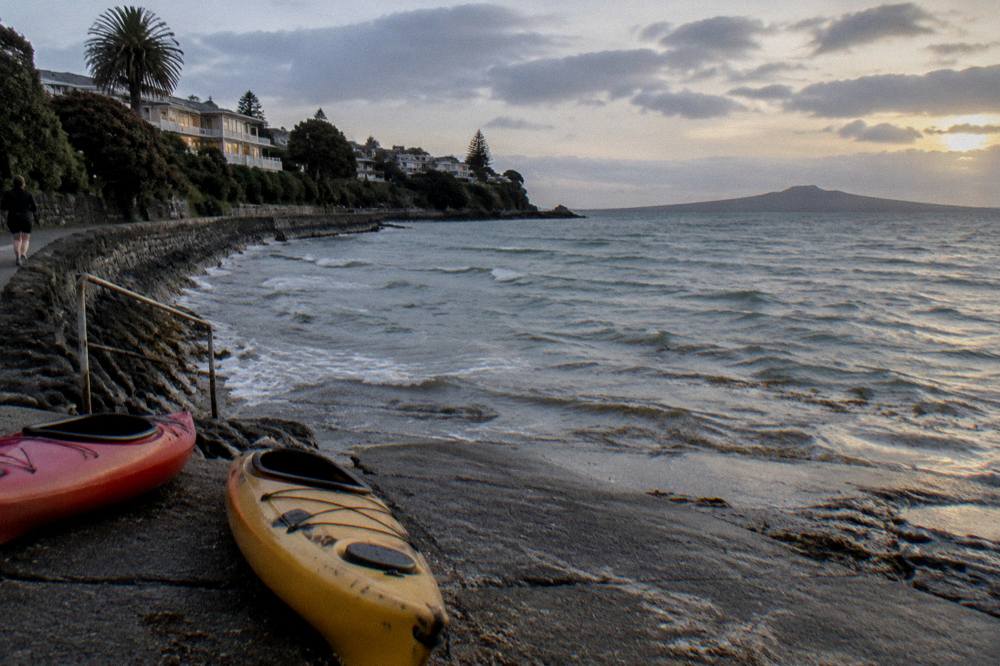
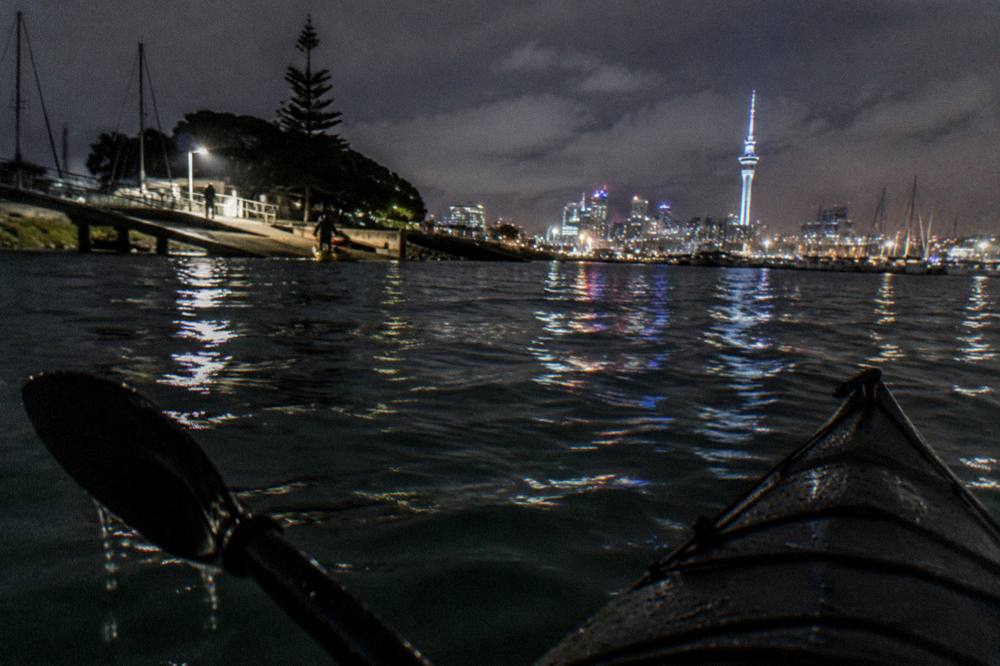
The spread matters because a reader hunting the glow sometimes books a night paddle that never claimed it. Only the dedicated glow tours, the two Social Nature Movement pages and the two Canoe & Kayak Adventures pages, are about bioluminescence. The City Lights paddles from Westhaven Marina make no bioluminescence promise; they are night paddles through the lit city waterfront, one from $82.27 rated 4.8 across 28 reviews with snacks, the other from $73 rated 5.0 across 15 reviews with a sweet treat. The Rangitoto sunset trips make no bioluminescence promise on their booking pages either, though the operator says bioluminescence is "sometimes" seen on its sunset tour, "typically October to April", and can never be guaranteed, a line that belongs to the sunset tour alone.
One safety note ties all the launches together, whatever the water holds. From 9 October 2026, everyone on board a recreational craft six metres or less must wear a properly fitted lifejacket while the craft is underway, under a change Maritime NZ says covers kayaks and paddleboards among other craft, with compliance handled by an educational approach in the months after (Maritime NZ's announcement sets out the change). On the tours here that is already the practice: the Social Nature Movement pages list a personal flotation device with safety light among the inclusions, and Auckland Sea Kayaks supplies life jackets on its trips.
Common Questions About Okura And Waiake Launches
Where Do The Okura And Waiake Bioluminescence Launches Actually Start?
Okura Boat Ramp is at 1 Okura River Road, Okura, at the end of the road. Waiake Beach is the alternative on the same North Shore coast. Social Nature Movement uses both for its bioluminescence kayak tour, from $62.42 per person for 2 hours.
Do I Choose Between Okura And Waiake When I Book?
Not as a preference. The operator links the choice to the tide: Okura at high tide, Waiake at low tide, and both locations are equally good in its words. One booking page names both launch points; the other shows the start point only as chosen at booking.
Can I Get A Pickup To The Okura Or Waiake Launch?
No tour on this site includes free hotel pickup. Social Nature Movement offers an optional paid add-on, the Bio-Bus, meeting near the Sky Tower one hour before the start, with a ride the operator describes as 30 minutes one way. No fare is published on the booking pages.
What Weather Cancels A Night At These Launches?
The operator runs only in calm conditions. Waiake does not operate above 5 m/s wind or 2.4 mm rain; Okura does not operate above 8 m/s wind or the same 2.4 mm rain. Cancellations at least 24 hours before the start carry a full refund on every booking page on this site.
Is The Glow Guaranteed From Okura Or Waiake?
No. The operator says the organisms vary naturally, and no booking page promises a sighting. The operator's season wording is that peak Auckland bioluminescence season is October to April.
Why Are There Gaps In The Availability Calendar?
Social Nature Movement does not operate when the moon is in the sky at more than 50 percent illumination, because excessive moonlight can reduce the visibility of the bioluminescence. The operator says the gaps in availability are intentional.