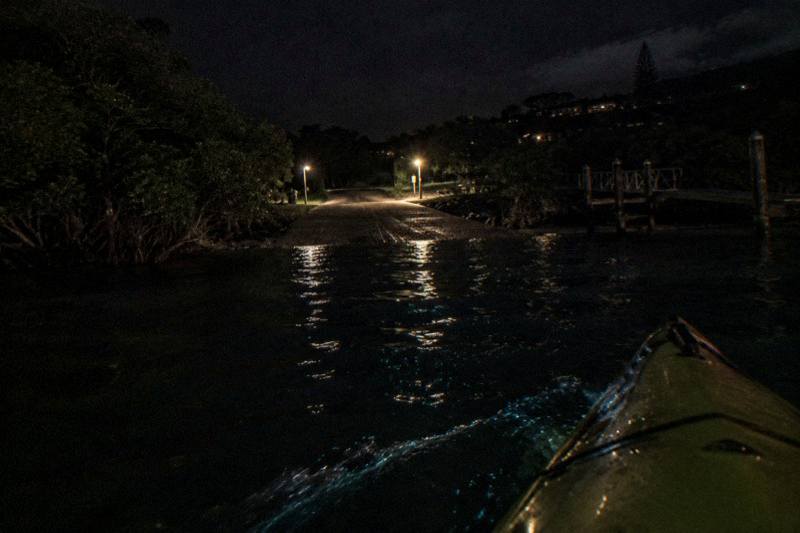
Do I Have To Have Lights On My Kayak At Night?
Who supplies the lights on Auckland night and bioluminescence kayak tours, what each operator fits, and why a white light rides at the rear of a kayak after dark.
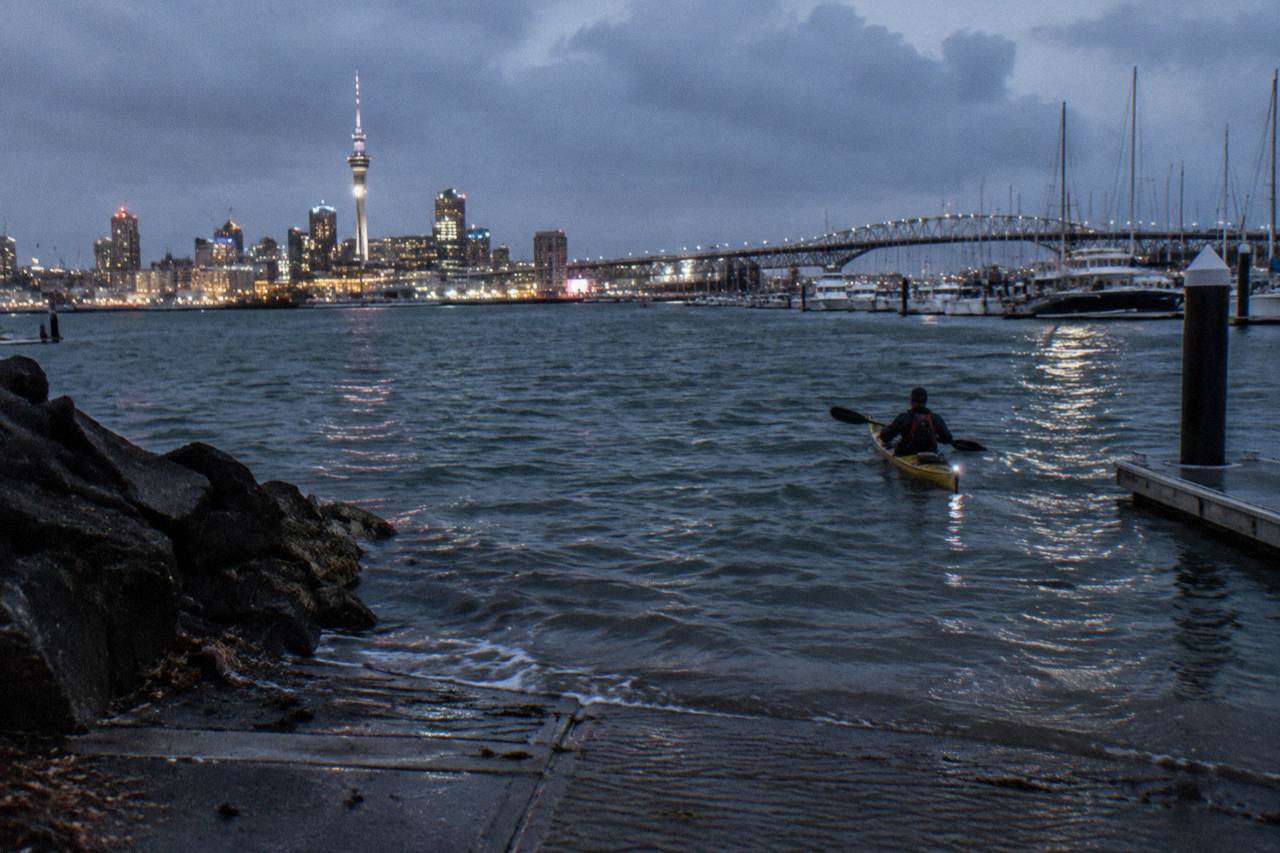
On the guided tours covered here, the operator supplies the lighting, so a guest does not need to bring or fit a kayak light. Social Nature Movement issues a personal flotation device with a safety light, and Auckland Sea Kayaks fits an all-round white navigation light at the rear of every kayak. Canoe & Kayak Adventures provides kayaks and safety equipment on its glow paddles. The question matters most for someone paddling alone, and for that reader the answer sits with official guidance rather than with any tour operator. Maritime New Zealand publishes paddle craft advice covering lights, visibility and carrying two waterproof ways to call for help, and that guidance is the reference to read before a solo night paddle. On a booked tour the lighting story is simpler: the operator fits and issues the gear, and the guest's job is to wear what is handed over and to follow the guide.
The distinction matters because the three operators in Auckland's night kayak scene handle lighting differently, and each approach matches the water being paddled. Social Nature Movement runs its bioluminescence tours from Okura Boat Ramp or Waiake Beach on the North Shore, and its flotation devices carry safety lights, with the operator's FAQ adding that all participants wear lights and reflective gear. Auckland Sea Kayaks paddles the Waitemata Harbour from Westhaven Marina on its City Lights tour and from St Heliers Bay on its Rangitoto sunset trips, and every kayak carries an all-round white navigation light at the rear, with guides carrying marine VHF radios and first aid. Canoe & Kayak Adventures runs North Shore glow tours from a spot emailed before 10 AM on the day, with kayaks, safety equipment and tuition included.
The City Lights tour from Westhaven Marina is the one built around Auckland's own illumination, paddling the harbour at night with the city glowing on the water. The Social Nature Movement glow paddle is the most reviewed night tour of the nine covered here, at 4.9 across 329 reviews and from $53 per person. The Canoe & Kayak Adventures tour, from $67.52 on one booking page, has run under an operator that dates its touring history to 1994.
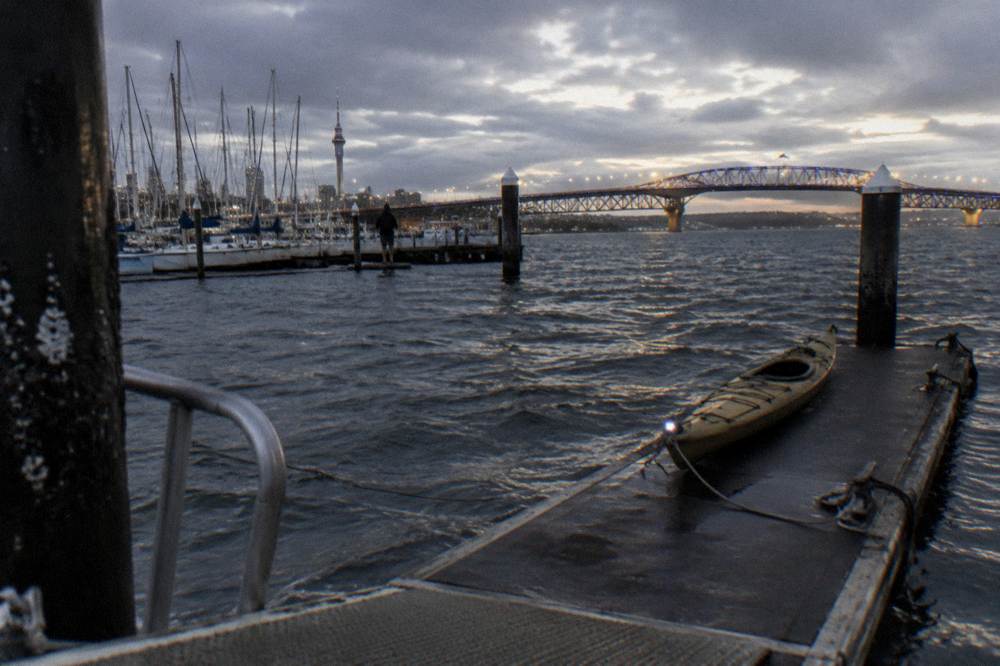
What Lights Do The Auckland Night Tours Provide?
Social Nature Movement provides a personal flotation device with a safety light on its glow tours, and its FAQ says all participants wear lights and reflective gear. Auckland Sea Kayaks fits an all-round white navigation light on the rear of every kayak and supplies life jackets and dry bags. Canoe & Kayak Adventures lists kayaks, safety equipment and tuition as included on its bioluminescence tours. None of the nine tours asks a guest to bring a kayak light. What differs is where the light sits: on the person with one operator, on the boat with another. That difference is worth understanding before choosing a tour, because it shapes what the night looks like from the water.
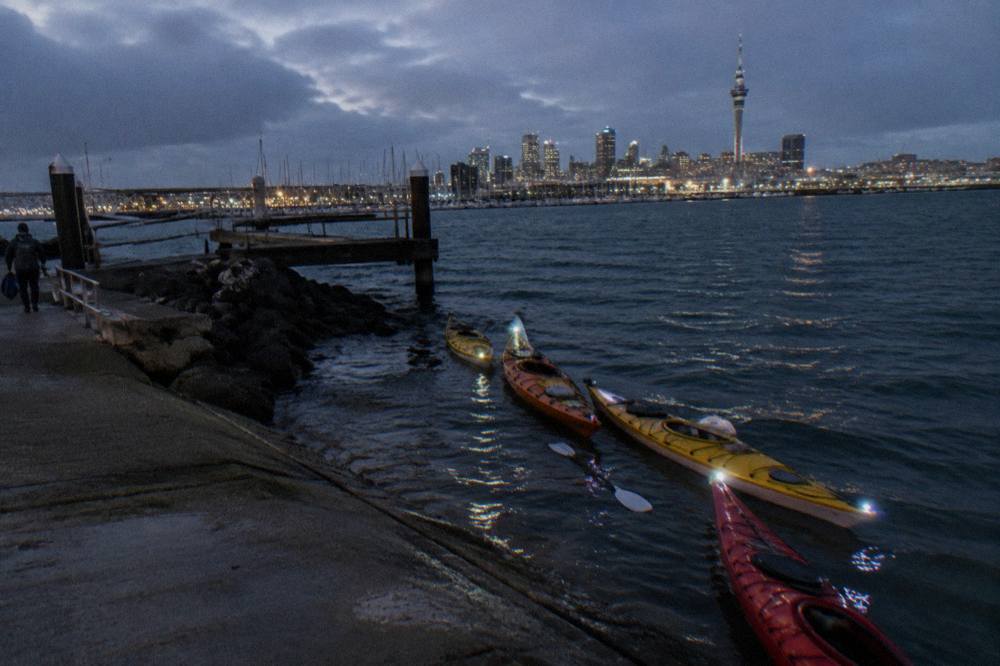
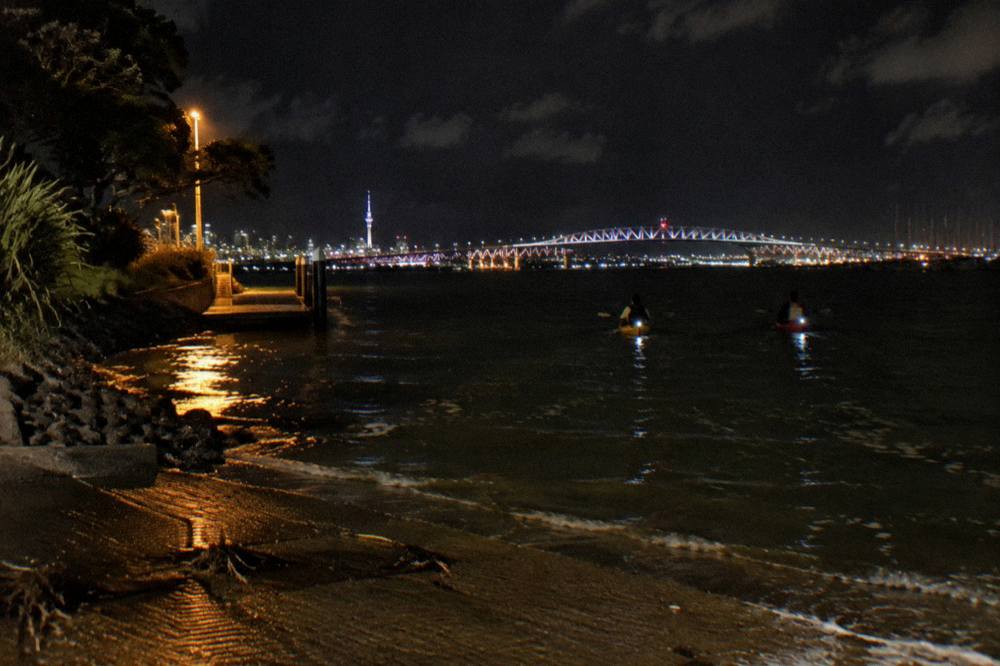
The Auckland Sea Kayaks approach is the most visible. On its City Lights tour, which departs from the boat ramp at Westhaven Marina, Z Pier, every kayak carries an all-round white navigation light at the rear, and the operator notes that guides carry marine VHF radios and first aid. That tour runs about 2.5 hours from $82.27 per person, rated 4.8 across 28 reviews, with snacks included and a group max of 8. The same operator's Rangitoto sunset tour, departing from its base at 384 Tamaki Drive in St Heliers Bay, also fits navigation lights on each kayak for the paddle back after dark. Readers who want the full picture of that harbour paddle can see the Auckland City Lights night paddle, and the planning detail is gathered in the City Lights night kayak Auckland guide.
The Social Nature Movement approach puts the light on the guest. Its glow tours, sold at 1.5 to 2 hours and from $53 per person on one booking page, include a personal flotation device with a safety light, and the operator's FAQ states plainly that all participants wear lights and reflective gear and that tours only proceed in calm conditions. The operator's own bring list adds a torch among personal items, alongside a thin merino or thermal shirt, a fleece or woollen jumper, a rain-proof jacket, a warm beanie, a towel, water shoes, personal medication and a water bottle. The torch is on the bring list as the operator's suggestion, not as gear the tour fails to supply.
| Tour (operator) | Light the operator provides | Other gear stated on the booking page |
|---|---|---|
| Auckland City Lights Night Kayaking Tour (Auckland Sea Kayaks) | All-round white navigation light on every kayak | Kayaking and safety equipment, snacks, guide |
| Sunset & Night Sea Kayak Tour to Rangitoto Island (Auckland Sea Kayaks) | Navigation lights on each kayak | Kayak and paddle, life jacket, BBQ dinner, drinks |
| Night Kayak Tour in Glowing Bioluminescent Waters (Social Nature Movement) | Safety light on the personal flotation device | Guide, kayak and equipment, PFD |
| Bioluminescence Kayak Tour, Est. 1994 (Canoe & Kayak Adventures) | Safety equipment as stated | Kayaks, tuition, guide, group max 24 |
A reader booking any of these tours can leave the lighting question at the door. What each operator states is stated on its own booking page, and the table above carries only what those pages and operator pages say.
Why Does A Kayak Carry A White Light After Dark?
A white light on a kayak makes the craft visible to other boats, and on Auckland's guided night tours it is part of how the operator runs a group on shared water. Auckland Sea Kayaks fits an all-round white navigation light at the rear of every kayak so each paddler can be seen on the Waitemata Harbour. The harbour is a working port with ferries, yachts and launches moving at night, and a low, dark kayak is hard to spot from a wheelhouse. A light at the stern raises the craft's visibility without blinding the paddler or washing out the view. The same logic explains why Social Nature Movement puts lights on people rather than only on boats: a light on the flotation device moves with the paddler wherever they turn.
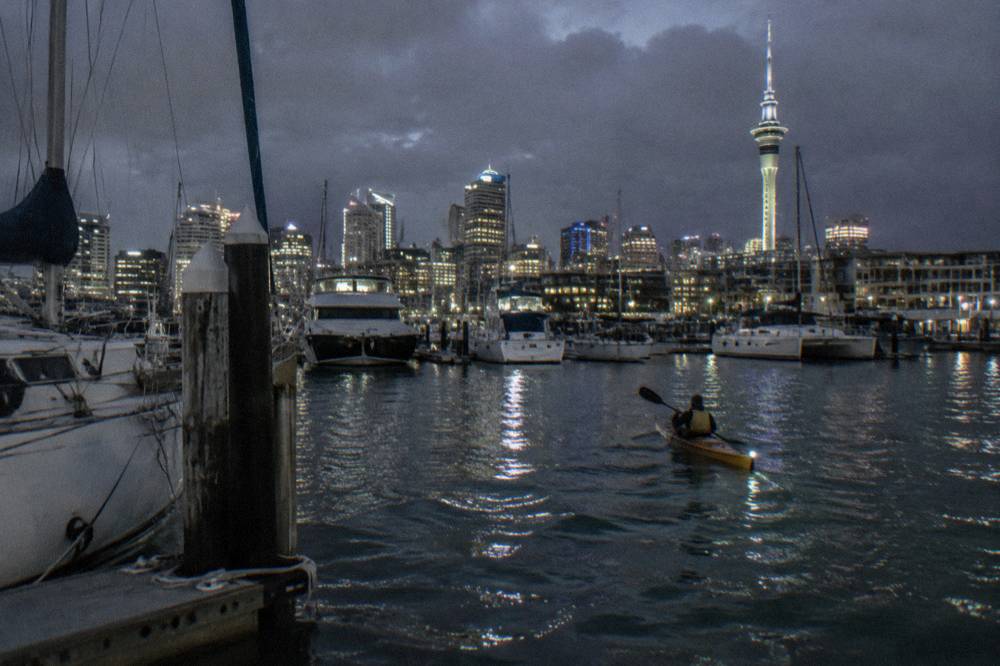
The science of seeing at night explains the rest. Bright white light makes the faint glow harder to see for everyone within its arc. A dim marker light, by contrast, keeps a group findable while leaving night vision alone. Readers curious about the light in the water itself can start with what makes the water glow on a bioluminescence kayak tour, where the dinoflagellate mechanism is unpacked. The short version: the blue-green flash of bioluminescence is produced by living organisms responding to disturbance, and bright light makes that faint glow harder to see.
That is why the guided tours treat lighting as an operator decision rather than a guest choice. The guide sets the light plan for the group, the gear arrives fitted or issued at the start point, and the paddler's part is to keep it running and follow the group. Auckland Sea Kayaks, on its own City Lights page, also notes that it supplies dry bags and a phone pocket on the life jacket, and that it encourages a phone, GoPro or camera in a waterproof case at the guest's own risk, which is a photography question rather than a visibility one.
The Rangitoto sunset tour shows the lighting question at its most practical. The trip departs St Heliers Bay, lands on the island for a BBQ dinner, and paddles back across the harbour after dark with navigation lights on each kayak, a crossing the booking page describes as paddling home beneath the night sky. That tour runs 7 hours from $116 per person, rated 4.8 across 85 reviews, with a minimum age of 14 and a 125 kg weight limit stated on its booking page.
Does A Light Ruin The Bioluminescence At Okura And Waiake?
The glow that bioluminescence tours go looking for is dim, blue-green and easily drowned out by any bright white light, so on the Okura and Waiake glow paddles the operator manages lighting for the whole group. Social Nature Movement states that tours only proceed in calm conditions and that all participants wear lights and reflective gear. The flash itself lasts about 80 milliseconds per cell, produced by mechanical stimulation when a paddle or a wave disturbs the water, as described for Noctiluca scintillans, the single-celled organism Auckland Council's environmental scientist Dr Megan Carbines described in 2021 as a non-toxic dinoflagellate that often forms bright blooms around the coast in summer and emits a burst of light when disturbed. A torch swept across that scene does not add safety so much as subtract the thing everyone came to see.
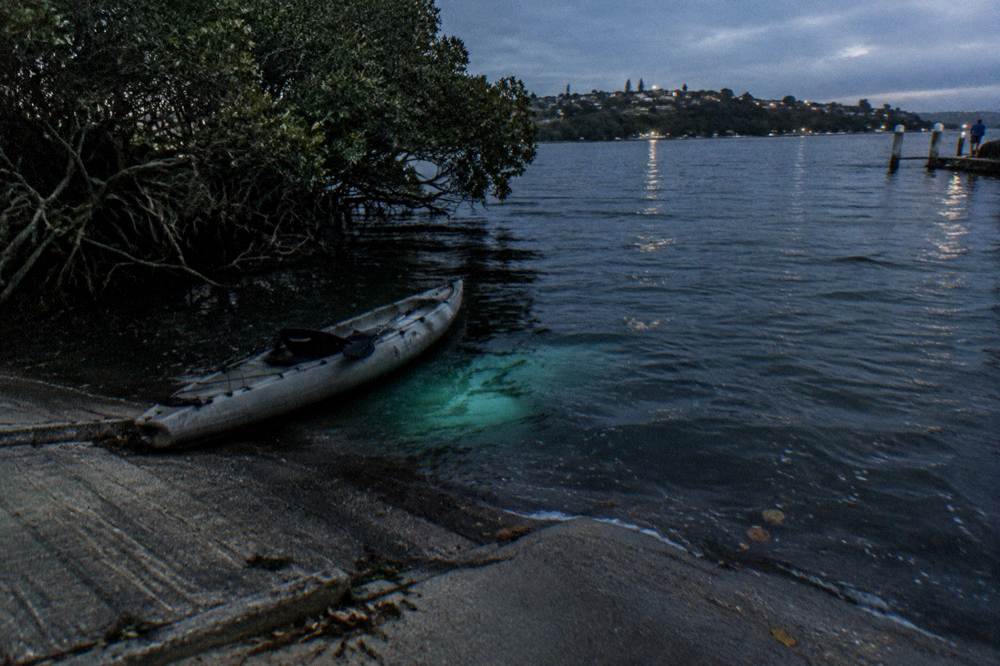
This is also why the moon matters so much on these tours, and why the operators word their moon policies so carefully. Social Nature Movement does not operate when the moon is in the sky at more than 50 percent illumination, in the operator's words, because excessive moonlight can significantly reduce the quality and visibility of the bioluminescence, and it says gaps in its availability are intentional. Canoe & Kayak Adventures goes the other way on policy but the same way on physics: it runs in any moon, but recommends booking near a new moon or on nights with a later moonrise, because when the moon is brighter the glow can be more subtle, though still visible. If moonlight alone can soften the glow, a white beam pointed at the water can end it. The moon rules are each operator's own and apply only to its tours; the deeper planning picture is in the moon phase and bioluminescence kayak tour guide.
Photography collides with the same problem. Social Nature Movement says photographing the glow is challenging and needs specialised camera settings, and recommends a waterproof phone case for photos. A phone flash is exactly the kind of light that ruins both the scene and the paddler's night vision, which helps explain the operator's advice on specialised camera settings and a waterproof phone case. Auckland Sea Kayaks encourages cameras at the guest's own risk and supplies the dry bags to carry them.
No booking page among the nine tours promises a sighting, and Canoe & Kayak Adventures says outright that it can never be guaranteed. The lights question is separate from that honesty: the tours are built so that if the organisms are present, the group's lighting plan will not be the reason nobody sees them.
What About Paddling Alone At Night Around Auckland?
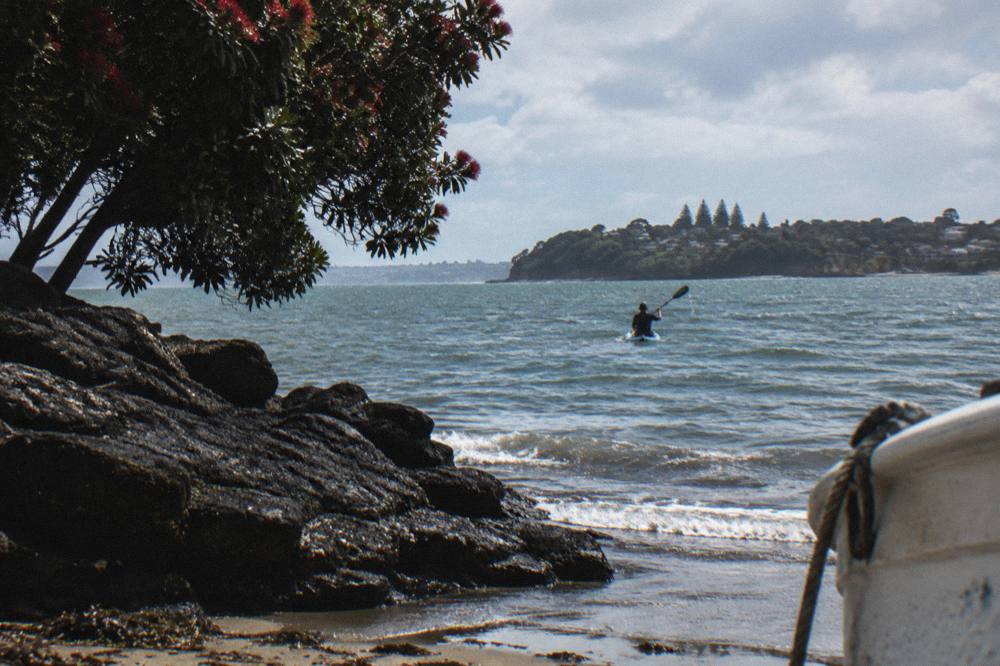
The tours covered here are all guided, so a solo paddle after dark calls for the official guidance: Maritime New Zealand's paddle craft advice covers visibility, dressing for the water temperature, carrying two waterproof ways to call for help, and checking the marine forecast. From 9 October 2026, Maritime New Zealand also requires everyone on a recreational craft six metres or less to wear a properly fitted lifejacket while underway. Kayaks and paddleboards are among the craft covered. Compliance is handled through an educational approach in the following months, as explained on the Maritime NZ lifejacket change page. For lighting specifically, the reference to read is the Maritime NZ paddle craft guidance, which is written for independent paddlers rather than tour guests.
| Situation | Who handles lighting | What to read |
|---|---|---|
| Guided glow tour, Okura or Waiake (Social Nature Movement) | Operator issues PFD with safety light; participants wear lights and reflective gear | The tour's booking page |
| Guided City Lights tour, Westhaven Marina (Auckland Sea Kayaks) | White navigation light fitted to every kayak | The tour's booking page |
| Guided Rangitoto sunset tour, St Heliers Bay (Auckland Sea Kayaks) | Navigation lights on each kayak for the return after dark | The tour's booking page |
| Independent night paddle | The paddler | Maritime NZ paddle craft guidance |
The guided tours exist partly because night paddling alone is genuinely demanding. Darkness compresses navigation to what can be lit, the water is cold even in late summer, and a capsize far from shore is a different event at 10 PM than at midday. Maritime NZ's guidance to dress for the water temperature exists because cold water shock and hypothermia can kill, and its advice to carry two waterproof ways to call for help exists because one phone in one pocket is one capsize away from useless. The tours sidestep all of this with guides, radios, fitted lights and group management, which is why every one of the nine covered here is a guided paddle and none is a rental.
Which Auckland Night Tour Should A Light-Conscious Paddler Choose?
A reader who wants the fullest lighting setup should look at Auckland Sea Kayaks: every kayak carries a white navigation light, guides carry VHF radios and first aid, and dry bags and life jackets are supplied. A reader chasing the glow itself should look at the Social Nature Movement paddle, from $53 and rated 4.9 across 329 reviews, or the Canoe & Kayak Adventures tour with its 1 guide to 6 guests ratio and free repeat offer. The choice is less about safety, since Social Nature Movement and Auckland Sea Kayaks state their lighting for their groups, and more about what the night is for: city lights on the Waitemata, or a dark shoreline where the water itself might answer the paddle.
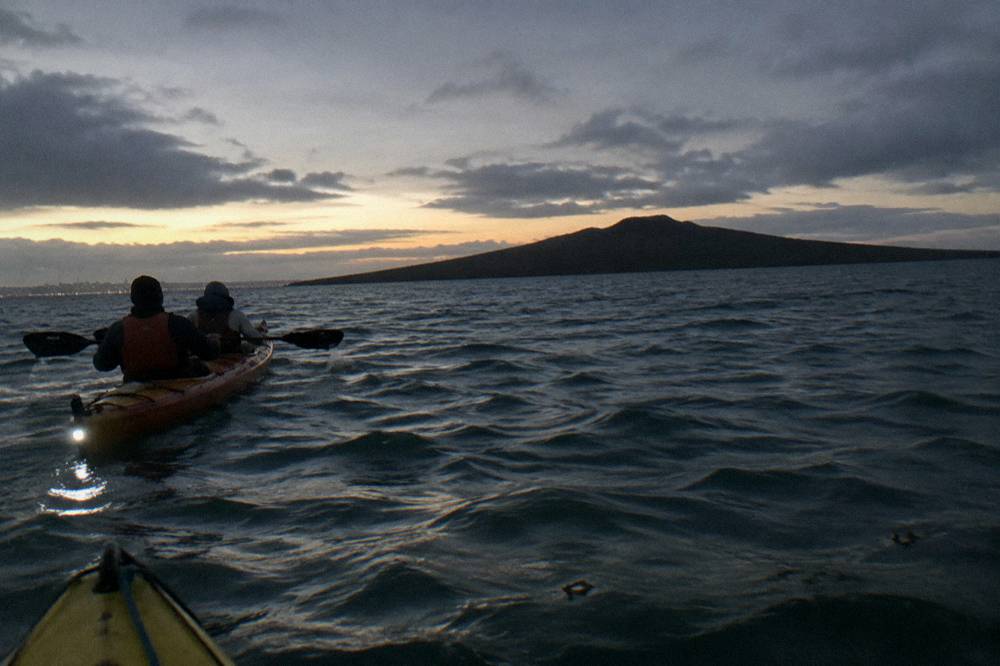
The City Lights tour is the natural pick for anyone whose question about lights started with the skyline. It departs Westhaven Marina, runs about 2.5 hours from $82.27 per person with a group max of 8, includes snacks, and is rated 4.8 across 28 reviews. Its twin booking page sells the same trip as a 2 hour version with a sweet treat, from $73 and rated 5.0 across 15 reviews, though only one of the two pages should be booked. The operator's requirements include a maximum weight of 120 kg, a seat about 65 cm wide, the ability to stay seated up to 45 minutes at a time, and basic spoken English, with operator ages of 12 and over accompanied by an adult.
The glow tours answer a different itch. The Social Nature Movement paddle at Okura or Waiake puts a safety light on each paddler and goes looking for organisms that flash when disturbed, with the operator attributing what paddlers see to dinoflagellates most commonly. Canoe & Kayak Adventures adds a distinctive promise structure: if the guide confirms no bioluminescence was seen, the operator gives a free repeat tour, though the event itself can never be guaranteed. Both are 2 hour class paddles on the North Shore, and the comparison is laid out in the Auckland bioluminescence kayak tours compared guide.
There is also a longer option that braids lighting, wildlife and dinner into one trip. Social Nature Movement's Tiritiri Matangi tour runs 7 hours from $139 per person and has no rating yet. It includes a sunset kayak, a visit to the island, penguins, a guided nocturnal walk, a sunset luxury grazing platter with drinks, and a return paddle the booking page describes as offering a chance to see bioluminescent plankton. Pickup is included, with two options chosen at booking, and the trip states a minimum age of 12 and a 120 kg weight limit. It is a wildlife and dinner expedition rather than a dedicated glow paddle, so it should not be price-compared against the 2 hour tours.
Booking ahead ties the whole lighting question together in the end. Canoe & Kayak Adventures says that in November to April the glow is often strong enough to enjoy on most nights, in its words, and that these popular dates fill fast, so booking ahead is a good idea. Social Nature Movement's calendar carries intentional gaps around bright moon phases. Every one of the nine tours states a full refund when cancelled at least 24 hours before the start, so an early booking costs little in flexibility. This page is one piece of the planning picture gathered across this site, where the tours, the launches and the science each have a page of their own.
Common Questions About Kayak Lights At Night
Do I Have To Have Lights On My Kayak At Night?
Where the booking or operator page states it, the operator supplies the lighting: a safety light on the flotation device with Social Nature Movement, a white navigation light on every Auckland Sea Kayaks kayak, and safety equipment with Canoe & Kayak Adventures. An independent paddler should read Maritime NZ's paddle craft guidance before deciding.
Do The Tours Provide Life Jackets Too?
Yes. Auckland Sea Kayaks supplies life jackets and dry bags, Social Nature Movement's PFD carries a safety light, and Canoe & Kayak Adventures includes safety equipment. From 9 October 2026 Maritime NZ requires a properly fitted lifejacket on recreational craft six metres or less while underway.
Should I Bring A Torch On A Bioluminescence Tour?
Social Nature Movement lists a torch on its own bring list, alongside warm layers, water shoes and a towel, as the operator's suggestion. A bright beam pointed at the water can spoil both the glow and the group's night vision, so on the water the lighting plan belongs to the guide.
Can A Light Ruin The Bioluminescence?
A strong white light can wash out the blue-green flash, which lasts about 80 milliseconds per cell. Social Nature Movement skips nights when the moon is above 50 percent illumination for the same reason, and Canoe & Kayak Adventures recommends new moon or later moonrise nights.
Which Tour Has The Most Visible Lighting Setup?
Auckland Sea Kayaks fits an all-round white navigation light at the rear of every kayak on both its City Lights tour from Westhaven Marina and its Rangitoto sunset tour from St Heliers Bay, and its guides carry marine VHF radios and first aid.
Can I Cancel If The Conditions Look Wrong?
Every one of the nine tours states a full refund when cancelled at least 24 hours before the start, in the booking pages' own wording. Tours themselves only proceed in conditions each operator judges safe, and each operator's weather limits are its own.