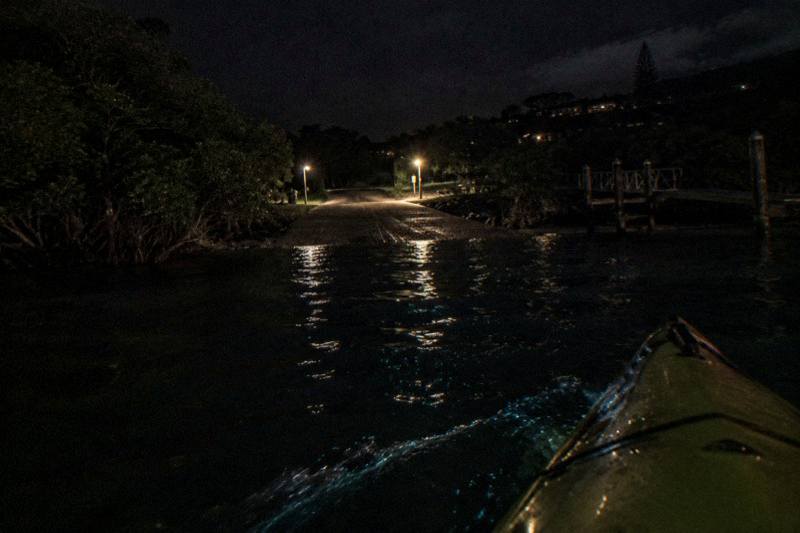
What Makes The Water Glow On A Bioluminescence Kayak Tour: Plankton Explained
The glow paddlers chase around Auckland comes from single-celled organisms that flash when the water around them moves. Here is what they are, why a kayak triggers them, and what each Auckland tour actually says about the phenomenon.
Short answer
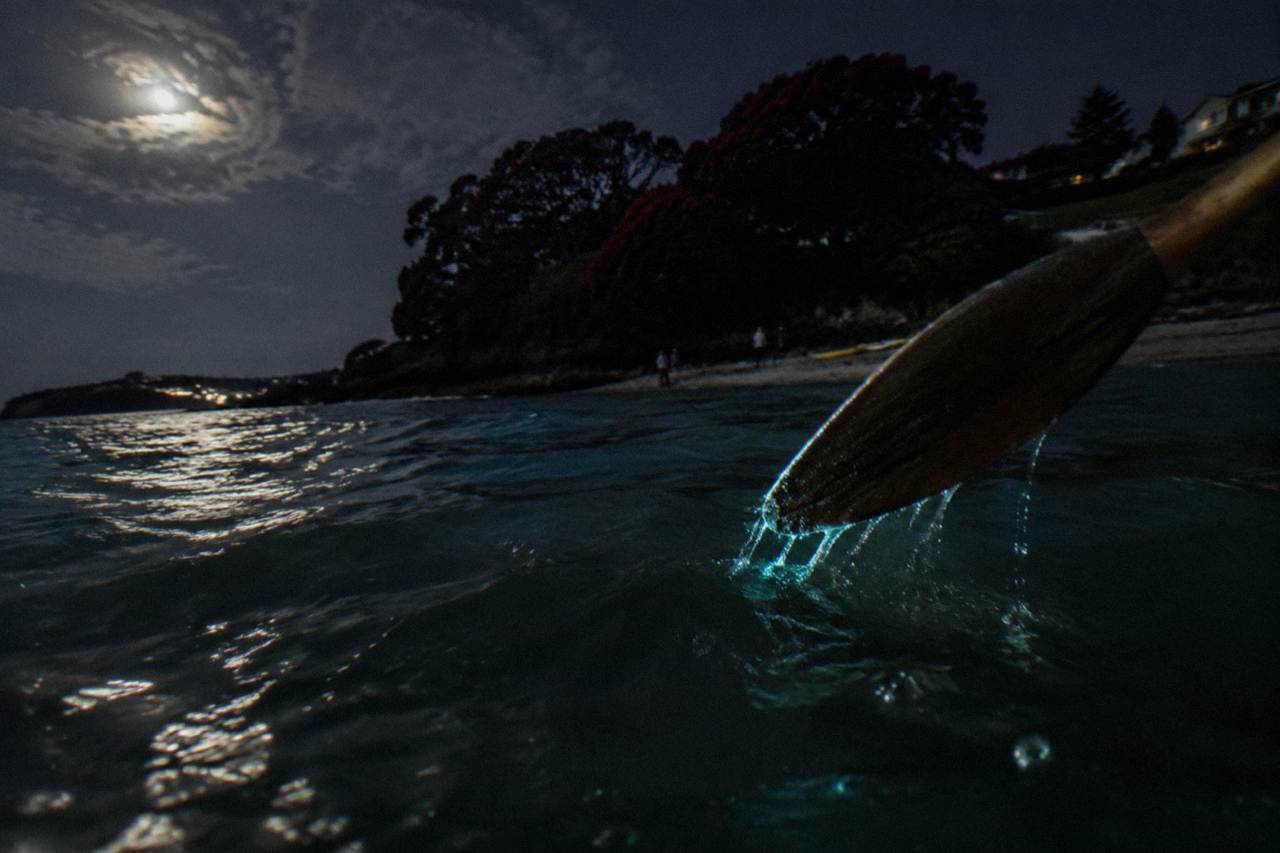
The glow is bioluminescent plankton, mostly dinoflagellates such as Noctiluca scintillans, single-celled organisms that emit a roughly 80 millisecond blue-green flash when disturbed by shear stress. A paddle blade, a hull or a wave triggers the light. It happens only at night, and Auckland glow tours run from $53 per person.
The water off Auckland's North Shore can flash blue-green around a paddle stroke on a still night. The cause is not pollution, reflected city light or a trick of the eye. It is plankton: single-celled organisms that produce their own light when the water around them is disturbed. Earth Sciences New Zealand, formerly NIWA, documented the species responsible during October 2002 bloom events in the Hauraki Gulf, and Auckland Council's own environmental scientist has described the same organism forming bright blooms around the coast in summer. This page explains the mechanism in plain language, why a kayak is a good way to trigger it, and what each Auckland operator actually promises about it, which is less than the photos suggest. If you're curious how long those flashes actually hold up across a full night paddle, the guide to how long the glow lasts on a bioluminescence kayak tour explains what to realistically expect on the water.
The short version: the glow is real, the science is well understood, and no tour can promise a sighting. Canoe & Kayak Adventures says it in writing: the glow can never be guaranteed. What a tour does promise is a guided paddle on the water where the organisms live, at night, with the gear and the timing chosen to give the phenomenon a chance. For a broader look at what these trips involve, start with the guide to what a glow paddle actually is.
What Is The Glow In Auckland's Water?
The glow is bioluminescence produced by dinoflagellates, single-celled plankton, above all Noctiluca scintillans, an organism Earth Sciences New Zealand described during the 2002 Hauraki Gulf blooms as "a harmless, non-photosynthetic dinoflagellate species of alga". Each cell drifts with the current and, when disturbed at night, emits a short flash of blue-green light. Blooms can tint the sea pink or red by day and glow when stirred after dark.
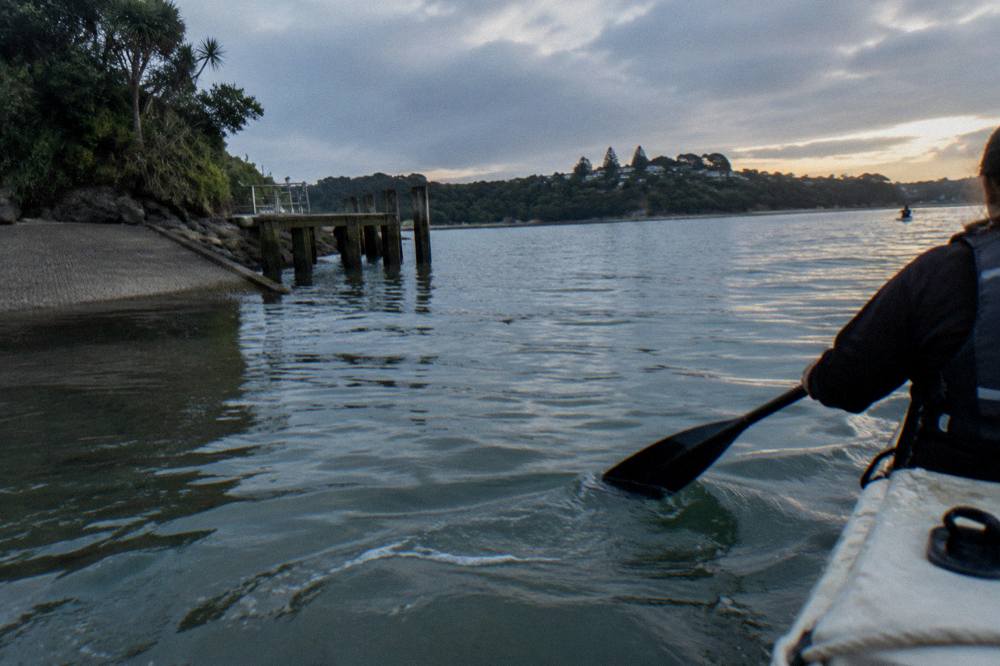
That is the whole trick, and it is a chemical one. Inside the cell, a light-producing reaction fires when the cell surface is deformed by shear stress, the sideways tug of moving water. According to Wikipedia's article on the species, a single cell measures roughly 400 to 1500 micrometres, and a flash lasts about 80 milliseconds, far too brief to see as anything but a spark. Multiply that spark by the millions of cells in a bloom and a paddle stroke becomes a streak of light.
The species has earned popular names for the effect. NIWA voyage captions give "Sea Ghost" and "Fire of Sea", recorded during research off the Chatham Rise, and note that "at night, Noctiluca scintillans cells phosphoresce when disturbed". Those captions describe the mechanism, not any Auckland sighting, but the same organism is the one New Zealand agencies name when coastal waters glow.
Auckland has its own record. Dr Megan Carbines, an environmental scientist at Auckland Council, was quoted in Local Matters in December 2021 explaining that the species "is a non-toxic dinoflagellate, which often forms bright blooms around the coast in summer. When disturbed, it also emits a burst of light, often seen when swimmers or boats move through the water at night." She added that rising water temperature "is conducive to these sorts of blooms if combined with calm conditions allowing them to accumulate." The same article, speaking for itself rather than the council, calls Mahurangi and the Hibiscus Coast places "long been known as bioluminescence hotspots". The deeper background on dinoflagellate light lives in the Wikipedia overview of the group.
| Question about the glow | What the science says | Who says it |
|---|---|---|
| What produces the light? | Noctiluca scintillans, a non-toxic dinoflagellate | Auckland Council scientist, Wikipedia |
| How is it triggered? | Mechanical disturbance, shear stress on the cell | Wikipedia, Earth Sciences New Zealand captions |
| How long is a flash? | About 80 milliseconds | Wikipedia |
| What colour is it? | Mostly blue-green | Wikipedia |
| When does it occur? | At night only, controlled by a circadian clock | Wikipedia |
| Does it happen by day? | Blooms can tint the surface pink or red by day | Earth Sciences New Zealand |
Science explains how the glow happens, but it says little about how often you will actually catch it, and the guide to how rare bioluminescence sightings on a kayak tour are covers what Auckland operators and a council scientist report.
One point of careful wording: the council scientist's "non-toxic" is the supported claim, and this page sticks to it. No agency publishes a temperature threshold, a nutrient level or a moon effect for Auckland water.
Why Does A Paddle Blade Light Up Okura And Waiake?
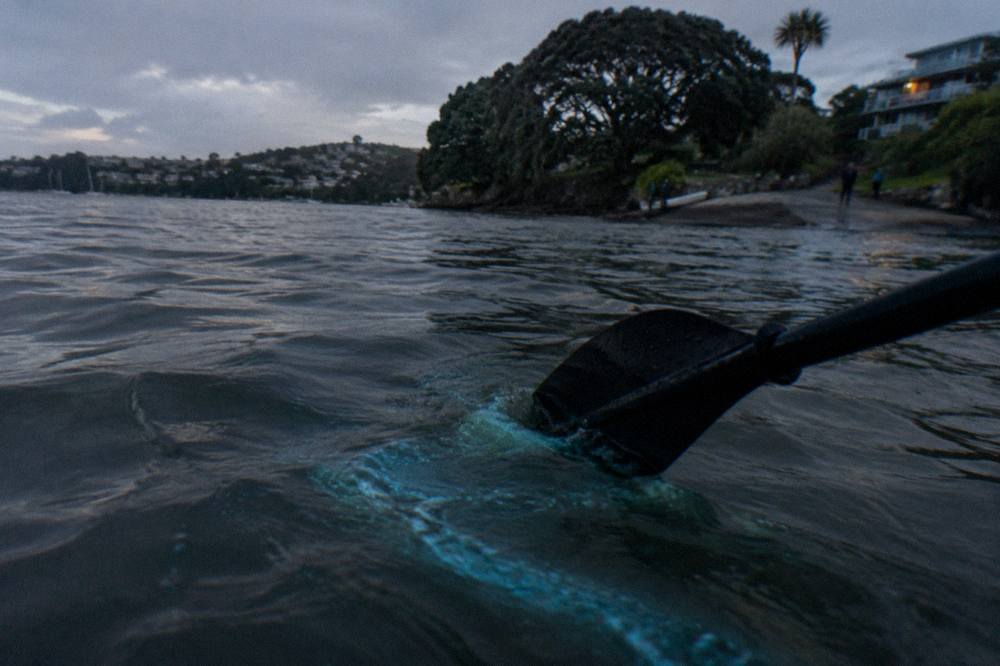
A paddle blade is a shear-stress machine. Every stroke pushes water aside, and that deformation is exactly the mechanical trigger that fires a dinoflagellate's flash. Around Okura and Waiake, where Social Nature Movement launches its glow tours, each stroke, drip and hull wake can draw light from the drifting cells.
The chain of cause and effect is short. The cell feels the tug of moving water, a chemical reaction fires, light leaves the cell, and the flash dies in a fraction of a second. A kayak produces that trigger constantly and gently: blades entering and leaving the water, eddies spinning off the bow, droplets falling from lifted paddles. A boat engine or a swimmer does the same thing, as the council scientist's quote notes, but a kayak does it quietly, slowly and close to the surface, where the cells gather.
Wikipedia's summary of dinoflagellate bioluminescence adds two details that matter to a paddler. The light is controlled by a circadian clock and occurs only at night, which is why every glow tour runs after dark. And the leading hypothesis for why the cells flash at all is the "burglar alarm" idea: a flash when disturbed may draw larger predators toward whatever is stirring the water, turning the plankton's light into a distraction aimed at its own attackers. The glow that looks like magic to a paddler reads as a defence mechanism to a biologist.
Social Nature Movement, the operator that launches at Okura Boat Ramp at the end of Okura River Road or at Waiake Beach, says the two spots are tide-dependent and "both locations are equally good", Okura at high tide and Waiake at low. The tides that choose between them are covered in the guide to tides and the launch points. Its 2 hour glow paddle, the Okura Or Waiake Start, is rated 5.0 across 46 reviews and runs from $62.42 per person, with kayak, paddle and life jacket included and free cancellation up to 24 hours before the start. The same trip sold on its other booking page, the Optional Bio-Bus version, runs 1.5 to 2 hours, from $53, rated 4.9 across 329 reviews, and carries a guide, a personal flotation device with safety light and a safety light beacon.
A reader curious about the plankton is exactly the audience for a guided glow paddle, and the Okura Or Waiake start is the natural one: two North Shore beaches, two hours on the water where the cells accumulate, and an operator whose own website explains the organisms in detail.
When Do The Plankton Glow: Only After Dark Around Auckland?
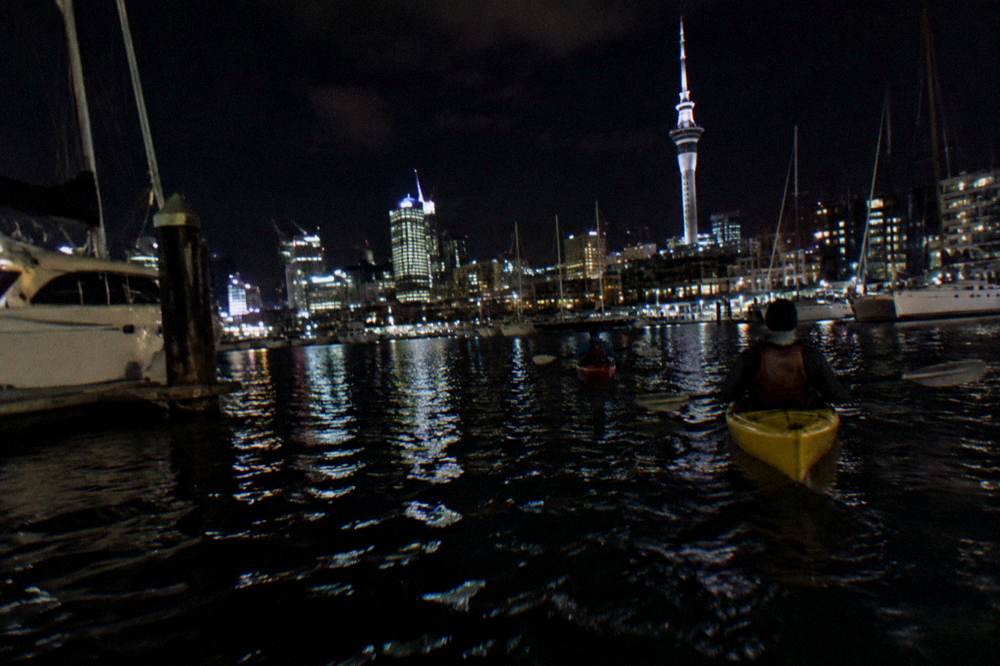
Yes. Dinoflagellate bioluminescence is controlled by a circadian clock and occurs only at night, so the flash a paddler sees is a strictly after-dark event. Around Auckland in mid-December, computed sunset on the CBD waterfront is 8:36 pm and full astronomical dark arrives at 10:27 pm, which is why glow tours finish well into the evening rather than at dusk.
The table below is computed from date and location, using US Naval Observatory sunset and civil twilight figures, with astronomical dusk derived from them. These are sky conditions, not tour start times: the operators set their own schedules.
| Date | Sunset | End of civil twilight | Full dark, computed |
|---|---|---|---|
| 15 Nov 2026 | 8:08 pm | 8:37 pm | 9:49 pm |
| 15 Dec 2026 | 8:36 pm | 9:07 pm | 10:27 pm |
| 15 Jan 2027 | 8:42 pm | 9:12 pm | 10:29 pm |
| 15 Mar 2027 | 7:41 pm | 8:07 pm | 9:08 pm |
| 15 May 2027 | 5:23 pm | 5:50 pm | 6:52 pm |
| 15 Jul 2027 | 5:23 pm | 5:51 pm | 6:54 pm |
| 15 Sep 2027 | 6:11 pm | 6:37 pm | 7:37 pm |
| 15 Oct 2027 | 7:37 pm | 8:03 pm | 9:06 pm |
Two things follow from the clock. In summer, dark comes late, so a glow paddle means a late night, and summer time, UTC+13, runs from 27 September 2026 to 4 April 2027. The seasonal question is unpacked properly in the guide to the best time for a glow paddle.
The plankton do not care about the clock on the wall, only about whether their internal rhythm says it is night, and that rhythm keys to daylight, not to tour schedules.
What Else Glows Besides Plankton On A North Shore Night Paddle?
Dinoflagellates are the headline of the glow, and the movement of a paddle in the water is enough to set them off.
The general phenomenon, light produced by living things, is covered in the Wikipedia article on bioluminescence, which spans fireflies, deep-sea fish and plankton alike.
For a reader comparing trips, the useful distinction is between organisms that bloom near the surface and everything else that flashes on contact. Noctiluca accumulates at the surface when the sea is calm, per Wikipedia, which is why wind matters as much as darkness: rough water disperses the cells, and Social Nature Movement states wind and rain limits for its launches. Social Nature Movement says tours proceed only in calm conditions, with Waiake not operating above 5 m/s wind or 2.4 mm rain, and Okura above 8 m/s or 2.4 mm rain. That is the operator's own operating policy, in its own words.
The wider comparison between glow paddles and glow worm trips, a different organism entirely, is drawn in the guide comparing the two. Glow worms are larvae in caves and banks; bioluminescent plankton are drifting cells in open water, triggered by motion.
Can The Plankton Glow Be Seen From Every Auckland Kayak Tour?
No. Of the nine tours covered on this site, only the four dedicated glow paddles are built around the plankton. The Tiritiri Matangi dinner trip lists a chance of it on its return paddle, Auckland Sea Kayaks says bioluminescence is "sometimes" seen on its Rangitoto sunset tour, and its City Lights tours make no bioluminescence claim at all. No booking page promises a sighting.
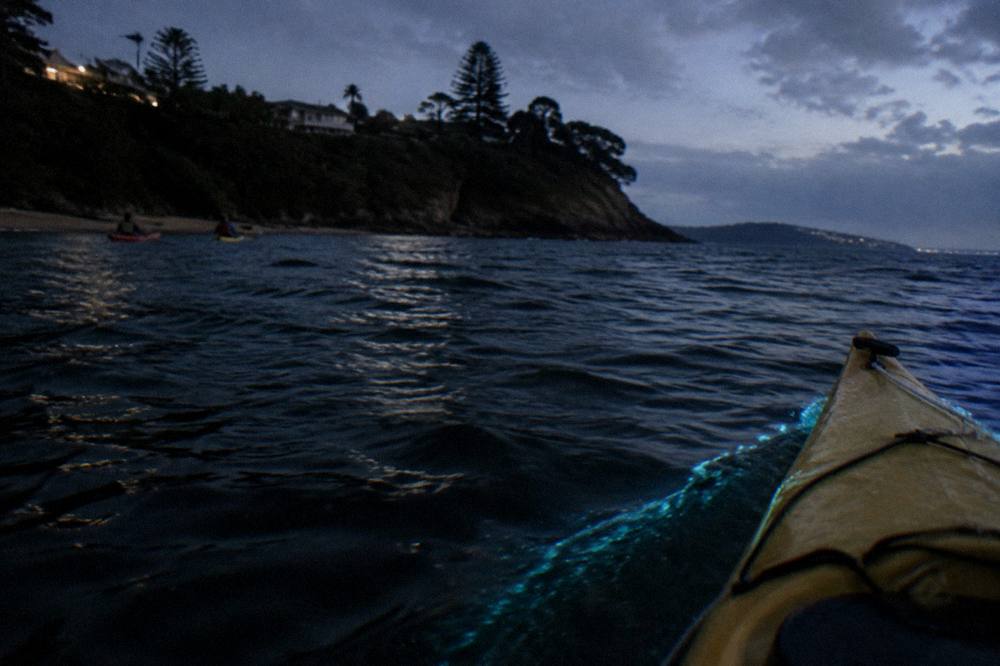
That spread matters when booking, because the words "night kayak" do not always mean a glow tour. The two City Lights paddles from Westhaven Marina are night trips under Auckland's skyline, and their appeal is the lit-up waterfront, not plankton. The Rangitoto sunset tours paddle home after dark across the Waitemata Harbour, and Auckland Sea Kayaks says bioluminescence is "sometimes" seen on the sunset trip, "typically October to April", and can never be guaranteed, a line that belongs to the sunset tour only. The 7 hour Tiritiri Matangi trip is a dinner, wildlife and night-walk trip whose return paddle offers a chance of bioluminescent plankton, and it is priced and planned as a full-day expedition, not as a 2 hour glow paddle. If you would rather chase the glow without a guide, the guide to seeing bioluminescence from a kayak without a tour covers what that really takes, from finding dense plankton to handling a night paddle safely.
| Tour | Operator | From, per person | Duration | Bioluminescence claim |
|---|---|---|---|---|
| Okura Or Waiake Start, 2 Hours | Social Nature Movement | $62.42 | 2 hours | Dedicated glow tour |
| Optional Bio-Bus, 1.5 To 2 Hours | Social Nature Movement | $53 | 1.5 to 2 hours | Dedicated glow tour |
| North Shore Start, 2 Hours | Canoe & Kayak Adventures | $67.52 | 2 hours | Dedicated glow tour |
| No Hotel Pickup, 2 Hours | Canoe & Kayak Adventures | $66 | 2 hours | Dedicated glow tour |
| Tiritiri Matangi, 7 Hours | Social Nature Movement | $139 | 7 hours | Chance of it on the return paddle |
| St Heliers Start, Rangitoto BBQ | Auckland Sea Kayaks | $139.02 | 6 hours 30 minutes | "Sometimes" seen, operator wording |
| City Lights, 2.5 Hours, Snacks | Auckland Sea Kayaks | $82.27 | About 2.5 hours | No claim |
Prices are per person, in the currency shown on each booking page, and each figure is that page's own from price. Four of these trips appear twice in the table because each is sold on two booking pages at different prices; they are one trip each, and an article should never card both pages. The comparison of all four dedicated glow paddles, start point by start point, is in the guide comparing Auckland's glow tours.
The dedicated glow paddles split by launch style. Social Nature Movement names two beaches, Okura Boat Ramp or Waiake Beach, chosen with the tide, or on one booking page simply at booking. Canoe & Kayak Adventures emails the exact North Shore spot before 10 AM on the day of the tour, with a guide ratio of one to six and tuition included. Its North Shore Start, 2 Hours is rated 4.1 across 207 reviews, and the same trip on its other booking page, the No Hotel Pickup version, is rated 4.5 across 67 reviews with a minimum booking age of 7 and a 120 kg limit stated on that page.
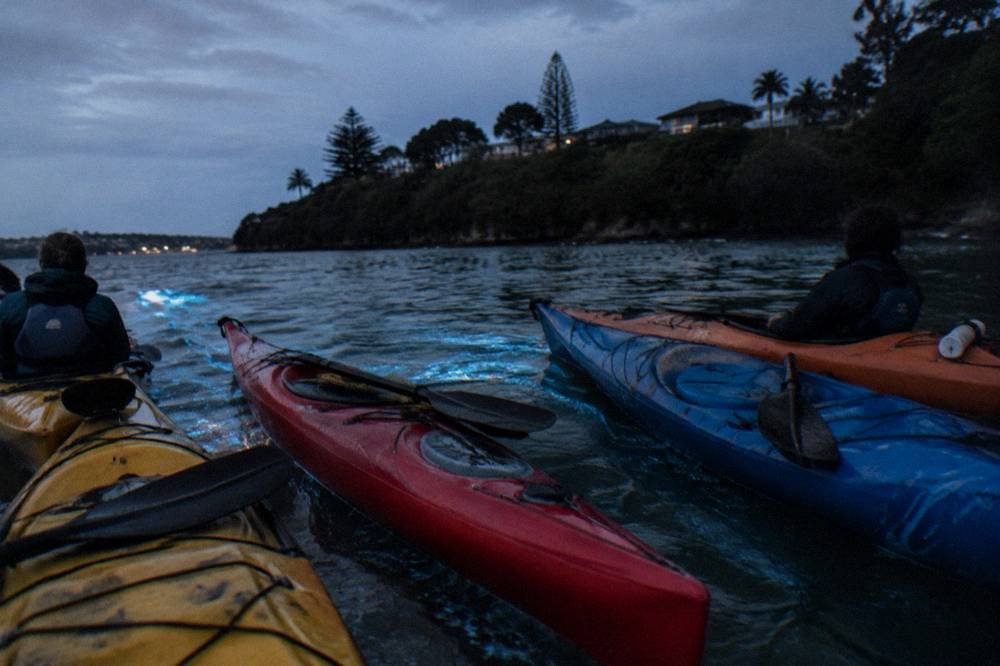
Does A Bright Moon Change The Plankton Glow?
Moonlight does not switch the plankton off, but it competes with the flash. Social Nature Movement runs no tours when the moon is in the sky above 50 percent illumination, and Canoe & Kayak Adventures recommends booking near a new moon or on nights with a later moonrise. Auckland Sea Kayaks states no moon rule. Each policy belongs to its operator alone.
The physics is contrast. An 80 millisecond blue-green spark is faint against a moonlit sea and brighter against black water. Canoe & Kayak Adventures puts it plainly: "Moonlight affects this tour and how brightly you will see bioluminescence. When the moon is brighter, the glow can be more subtle, but still visible." Social Nature Movement goes further and simply does not run trips under a bright moon, saying "gaps in our availability are intentional". The result is visible in any availability calendar: missing dates that look sold out are often just bright-moon nights.
New moon dates computed from US Naval Observatory data, converted to Auckland local time, include 9 November 2026, 9 December 2026, 8 January 2027, 7 February 2027 and 8 March 2027, with full moons falling on 25 November 2026, 24 December 2026 and 23 January 2027 in the same window. A date is a date, not a promise of darkness or of a sighting; cloud, tide and the organisms themselves all vary. The moon question, including how each operator's calendar behaves, is covered fully in the guide to moon phases and glow tours.
Why Is A Kayak A Good Way To Trigger Bioluminescent Plankton?
A kayak disturbs the water slowly, quietly and close to the surface, exactly where calm conditions let Noctiluca accumulate, so nearly every movement of blade and hull is a trigger. Social Nature Movement says the organisms vary naturally, so no tour can promise a sighting, but a guided paddle is the most direct way to put a paddle into the bloom.
Compare the alternatives. A boat engine stirs the water violently and passes in seconds. A swimmer triggers the flash but is in the water, at night, in a harbour, which is not a safe plan. A kayak sits in the middle: enough motion to light the water, enough control to pause and watch the glow trail fade, and a guide who knows the coastline. Maritime NZ's guidance for paddle craft, dress for the water temperature, carry two waterproof ways to call for help and check the marine forecast, applies to any independent paddler, and a guided tour handles all three; from 9 October 2026, everyone on a recreational craft six metres or less, kayaks included, must wear a properly fitted lifejacket while underway, and life jackets are stated as included on some tours here only, so check the booking page for yours.
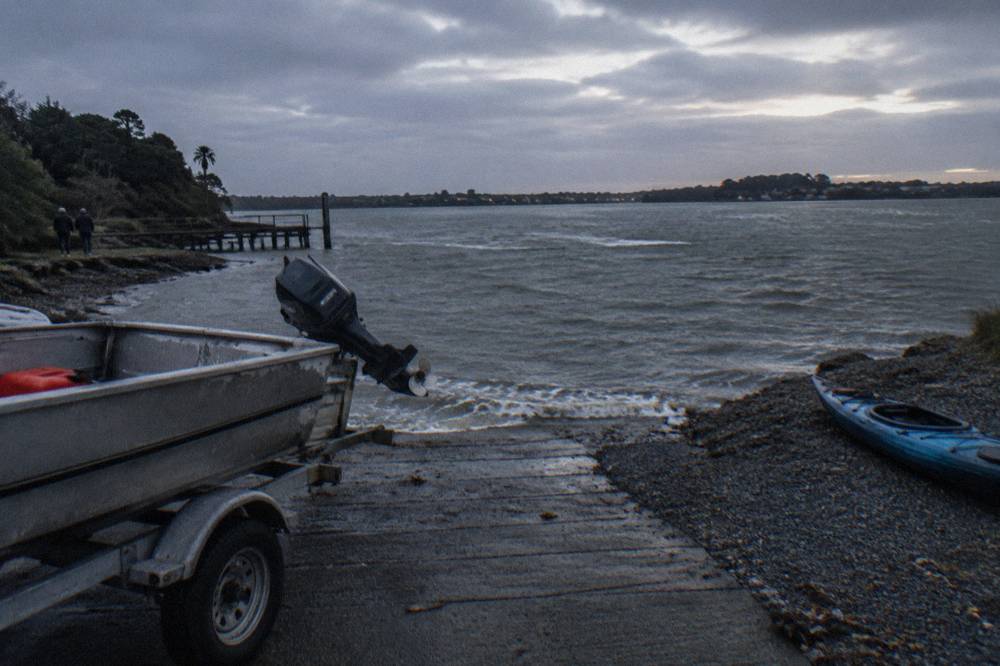
Photographing the glow is another matter. Social Nature Movement says photographing it is challenging and needs specialised camera settings, and recommends a waterproof phone case. The reality of plankton light, a burst that lasts 80 milliseconds and reads as a smear on a handheld phone, is why the genuinely useful souvenir from a glow paddle is memory rather than pixels. What is known about cameras on these trips is gathered in the guide to photographing the glow.
For anyone weighing whether the experience justifies a late night and a drive to a North Shore beach, the honest framing is this: the science is certain, the organism is documented in the Hauraki Gulf, the tours run where it accumulates, and the sighting itself can never be guaranteed. Canoe & Kayak Adventures adds a concrete backstop: if the guide confirms no bioluminescence was seen, it offers a free repeat tour. Its full conditions and the wider review picture across all nine tours are laid out in the guide to glow tour reviews.
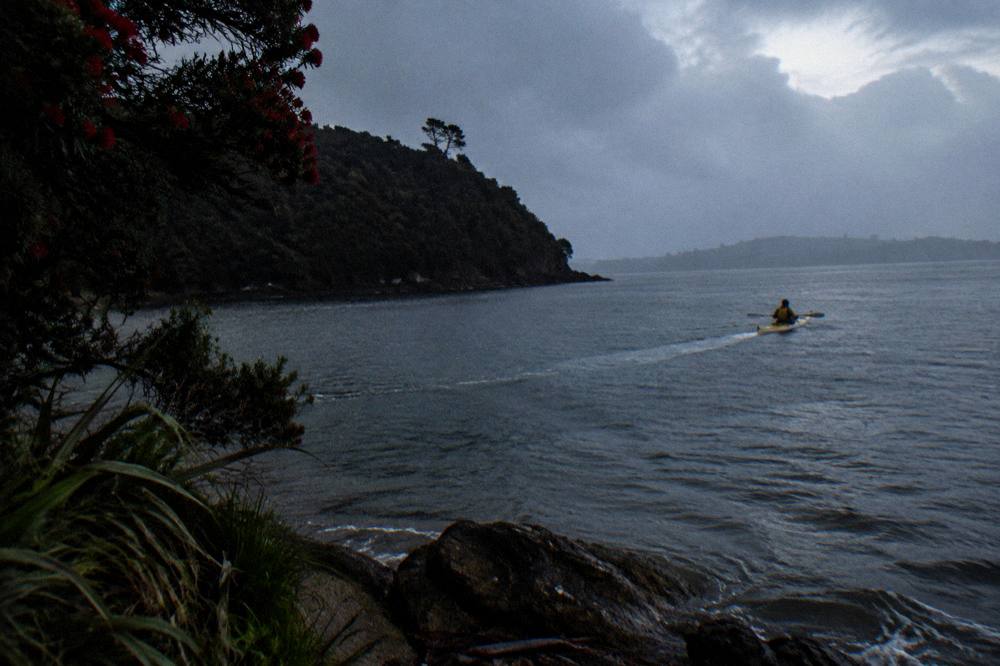
The Rangitoto sunset tour earns its place in that discussion because it is the longest paddle home in the dark on this site: Auckland Sea Kayaks describes kayaking home beneath the night sky as darkness falls across the Waitemata Harbour, from its base at St Heliers Bay, 384 Tamaki Drive, with a BBQ dinner before the return. Rated 4.8 across 85 reviews, from $116 per person, it is a sunset dinner trip first and a dark-water paddle second, with bioluminescence only "sometimes" seen, in the operator's wording.
The City Lights paddle is the useful contrast at the other end: a night tour from Westhaven Marina that makes no plankton claim at all, because its subject is the skyline. A reader who wants the mechanism described on this page, cells flashing under a moving blade, books one of the four dedicated glow paddles. A reader who wants Auckland lit up at water level books City Lights. Knowing which of the two you are after is the whole booking decision, and this site exists to make that one distinction easy.
Common Questions About Bioluminescent Plankton
What Makes The Water Glow On A Bioluminescence Kayak Tour?
Dinoflagellates, single-celled plankton above all Noctiluca scintillans, emit a blue-green flash when disturbed. A paddle blade, a hull or a wave deforms the cell and fires the light, which lasts about 80 milliseconds. It happens only at night, and no tour can promise a sighting.
Is The Glowing Plankton In Auckland Toxic?
No. Auckland Council environmental scientist Dr Megan Carbines describes Noctiluca scintillans as "a non-toxic dinoflagellate", and Earth Sciences New Zealand called it harmless during the 2002 Hauraki Gulf bloom events. Blooms can tint the surface pink or red by day.
Does The Glow Happen In The Daytime Too?
The flash itself occurs only at night. Wikipedia notes that dinoflagellate bioluminescence is controlled by a circadian clock and occurs at night, which is why every glow tour runs after dark even when the organisms are present in the water.
Can A Bright Moon Stop The Plankton From Glowing?
The cells still flash, but moonlight competes with the light. Social Nature Movement runs no tours when the moon is in the sky above 50 percent illumination, and Canoe & Kayak Adventures recommends a new moon or a later moonrise. Auckland Sea Kayaks states no moon rule.
Do All Auckland Night Kayak Tours Go Looking For Plankton?
No. Only the four dedicated glow paddles are built around it. The Tiritiri Matangi dinner trip lists a chance of it on the return paddle, Auckland Sea Kayaks says it is "sometimes" seen on its sunset tour, and the City Lights tours make no bioluminescence claim.
What Happens If No Bioluminescence Is Seen On A Tour?
No booking page promises a sighting. Canoe & Kayak Adventures says that if the guide confirms no bioluminescence was seen, it offers a free repeat tour. Every tour on this site states a full refund when cancelled at least 24 hours before the start.