Why Can't You Swim In Bioluminescent Water On A Kayak Tour?
The Auckland glow tours are paddle trips, not swims. What the booking pages actually include, why lifejackets and cold water matter, and how the glow is seen from the kayak.
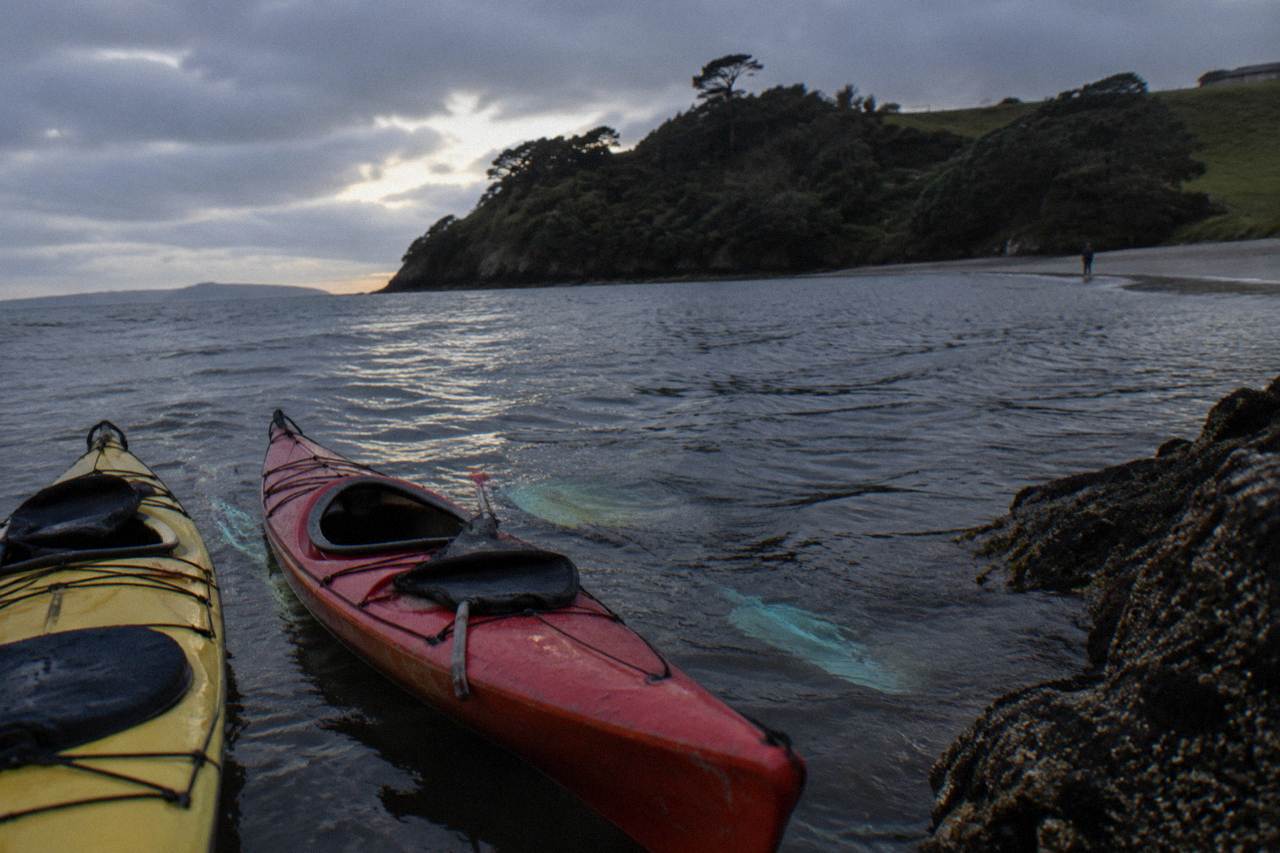
The premise deserves an honest answer: the Auckland glow tours are guided paddle trips, and none of their booking pages lists swimming as part of any tour. That is the short version, and the longer version runs through cold water, darkness, lifejackets and the way a kayak actually puts a paddler next to the glow without putting them in it. The organism behind most of the light, Noctiluca scintillans, is a single-celled dinoflagellate that flashes when the water around it is disturbed, which is exactly what a moving paddle does.
The straightforward reason is that these are guided kayaking tours, not swimming trips. Of the nine tours covered on this site, all nine are guided paddles, none includes swimming on its booking page. Swimming at night, off a North Shore beach or in the Waitemata Harbour, carries risks that the tours are simply not built to manage.
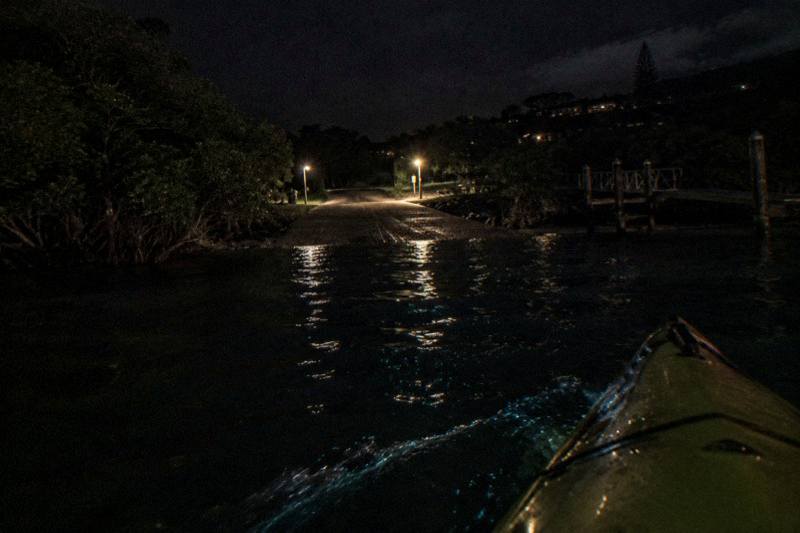
Every dedicated glow tour around Auckland is a two hour or shorter paddle. Social Nature Movement runs its bioluminescence tour from Okura Boat Ramp or Waiake Beach, and Canoe & Kayak Adventures runs its own from a North Shore spot emailed on the day. Neither booking page lists swimming among the inclusions, and the tours are built around the opposite experience: sitting low in a kayak, dragging a paddle through water that flashes where the blade stirs it. The glow is seen from the boat, close enough that paddle splashes light up, without anyone entering the water. For details on which North Shore launches these tours actually use and what each trip costs, the guide to Auckland bioluminescence kayak tours covers the practical side.
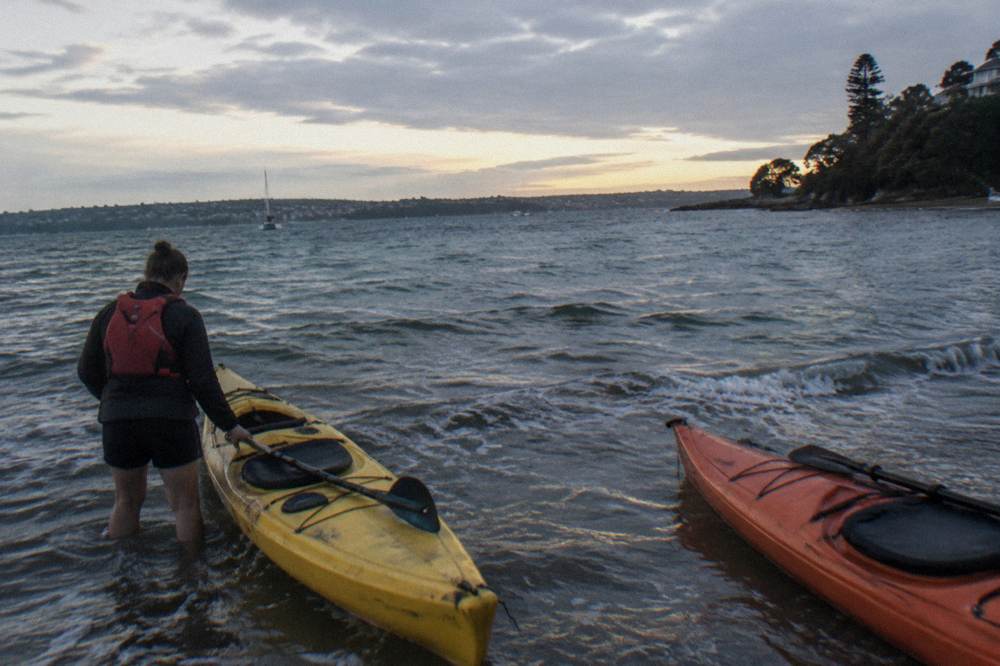
That is not a limitation unique to Auckland. The mechanism itself rewards staying in the craft: dinoflagellate light is triggered by mechanical disturbance, so a kayak moving through the water produces a continuous trail of flashes along its hull and paddle. A swimmer would produce one burst, then be floating in the dark, wet, some distance from shore, at night. The kayak is both the viewing platform and the safer place to be.
The three operators here each describe the glow as something that varies. Canoe & Kayak Adventures says bioluminescence "can never be guaranteed", and offers a free repeat tour if the guide confirms none was seen. Social Nature Movement says the organisms "vary naturally" and runs no tours when the moon is in the sky above 50 percent illumination. None of that changes the format: paddle out, paddle in the dark, paddle home.
For readers weighing which paddle fits, the comparison band below gathers the two tours this article leans on: the Social Nature Movement glow paddle and the Canoe & Kayak Adventures glow tour.
The rest of this page works through the sub-questions: whether the water is safe, what the tours include, why lifejackets are now a national rule, how cold the sea gets, whether it is simply too dark to swim, and how the glow reads from the seat of a kayak. The short version of every answer points the same way, toward staying in the boat.
Is The Glow Water Around Auckland Safe To Touch?
The organism most often behind the glow, Noctiluca scintillans, is described by an Auckland Council environmental scientist as a "non-toxic dinoflagellate". She told Local Matters it "often forms bright blooms around the coast in summer" and "emits a burst of light" when disturbed. Non-toxic to people is the finding; Wikipedia notes very dense blooms can harm fish through ammonium, a separate matter from swimming safety.
Dr Megan Carbines was quoted in Local Matters on 21 December 2021 explaining that Noctiluca scintillans "is a non-toxic dinoflagellate, which often forms bright blooms around the coast in summer. When disturbed, it also emits a burst of light, often seen when swimmers or boats move through the water at night." She added that rising water temperature "is conducive to these sorts of blooms if combined with calm conditions allowing them to accumulate." The same newspaper calls Mahurangi and the Hibiscus Coast places "long been known as bioluminescence hotspots", which is the newspaper's own description rather than the council's.
The water is not the reason tours skip swimming: the glow is not a toxin warning. The reasons are practical ones about night swimming in general, and they apply to any New Zealand harbour after dark. There is more on that in what touching the glow water involves, including the operators' own wording on hands and paddles.
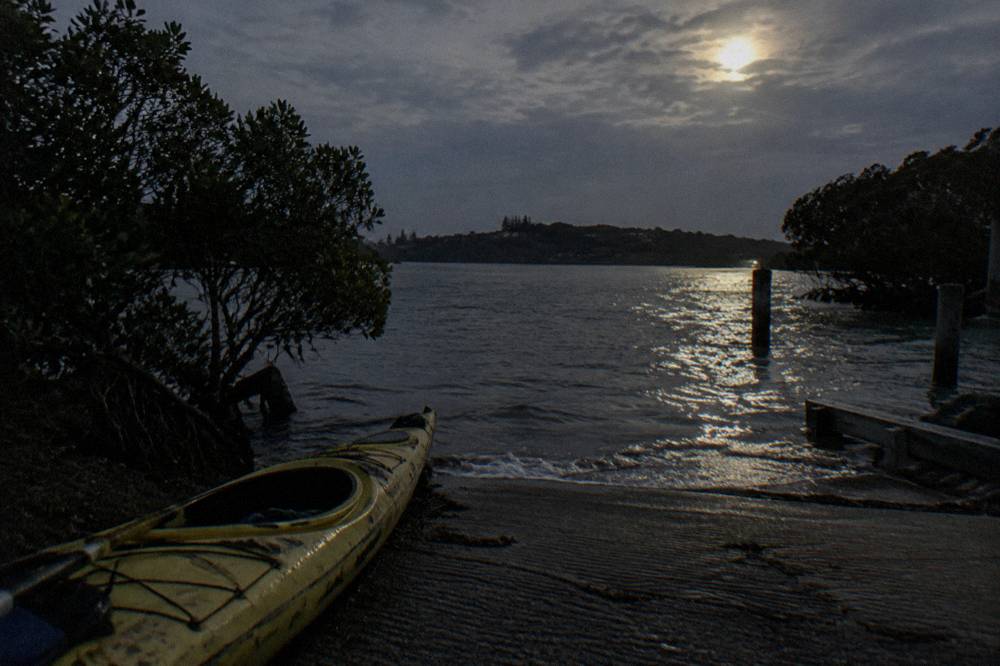
Earth Sciences New Zealand, formerly NIWA, has described Noctiluca scintillans as "a harmless, non-photosynthetic dinoflagellate species of alga", and its voyage captions note the popular names "Sea Ghost" and "Fire of Sea". The light comes from mechanical stimulation: a flash lasts roughly 80 milliseconds, and the cells accumulate at the surface when the sea is calm. Calm nights, in other words, are the nights tours prefer and the nights the glow concentrates, which is also why the operators watch the weather so closely.
Thinking about the paddle instead of the swim? The tours here state a full refund when cancelled at least 24 hours before the start, so there is room to change plans.
What Do The Auckland Night Tours Actually Include?
All nine tours covered here are guided paddles with kayak and equipment included. Four are dedicated bioluminescence tours from $53 to $67.52 per person, two are Rangitoto sunset-to-night paddles with dinner, two are City Lights night paddles from Westhaven Marina, and one is a seven hour Tiritiri Matangi dinner and wildlife trip. None lists swimming anywhere on its booking page.
The table below shows what each of the three tour families looks like side by side, using the "from" prices per person in USD that the booking pages state. Twins, the same trip sold on two booking pages, are shown once, with the second page's price noted where the tours covered here give it.
| Tour | Operator | Duration | From USD | Rating | Start point |
|---|---|---|---|---|---|
| Okura Or Waiake Start, 2 Hours | Social Nature Movement | 2 hours | $62.42 | 5.0 across 46 reviews | Okura Boat Ramp or Waiake Beach |
| Optional Bio-Bus, 1.5 To 2 Hours (same trip, second page) | Social Nature Movement | 1.5 to 2 hours | $53 | 4.9 across 329 reviews | Chosen at booking |
| North Shore Start, 2 Hours | Canoe & Kayak Adventures | 2 hours | $67.52 | 4.1 across 207 reviews | North Shore, spot emailed on the day |
| No Hotel Pickup, 2 Hours (same trip, second page) | Canoe & Kayak Adventures | 2 hours | $66 | 4.5 across 67 reviews | North Shore, spot emailed on the day |
| St Heliers Start, Rangitoto BBQ | Auckland Sea Kayaks | 6 hours 30 minutes | $139.02 | 4.9 across 179 reviews | St Heliers Bay |
| 2.5 Hours, Snacks | Auckland Sea Kayaks | About 2.5 hours | $82.27 | 4.8 across 28 reviews | Westhaven Marina |
What the glow tours share is the shape of the evening: a guide, kayaks and gear, a paddle in the dark, and a return to the same beach or ramp. Social Nature Movement includes a personal flotation device with a safety light on one booking page. Auckland Sea Kayaks states that every kayak on its tours carries an all-round white navigation light at the rear, and that guides carry marine VHF radios and first aid. These are the details of a paddle trip, and they leave no room for a swim stop.
The Canoe & Kayak Adventures glow tour pairs one guide with up to six guests and includes tuition. The operator says it has run kayak tours since 1994 and is still owned by an original founder. Its booking pages state kayak rental, a local guide, bioluminescence viewing, safety gear and tuition as the inclusions; transport is listed as not included on one page.
Social Nature Movement's glow paddle from Okura or Waiake is the featured bioluminescence kayak tour on this site for good reason: it is the dedicated two hour glow format this article is about, launched from two North Shore beaches chosen with the tide. Readers curious about the broader question can also check whether swimming skills matter on a night paddle.
Why Does Everyone Wear A Lifejacket On A Night Paddle?
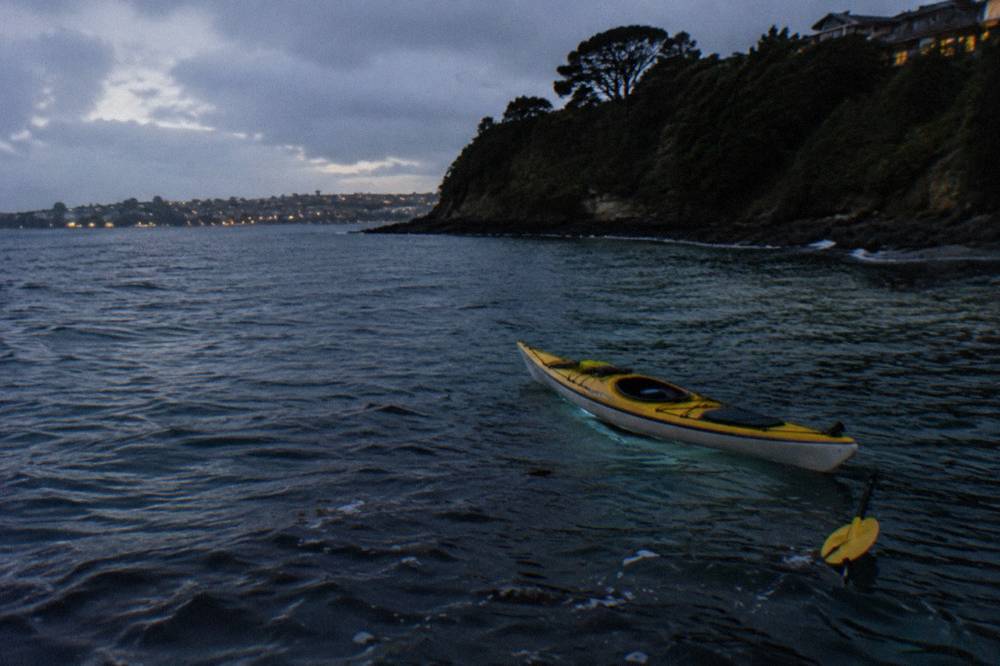
From 9 October 2026, everyone on board a recreational craft six metres or less must wear a properly fitted lifejacket while the craft is underway, and Maritime NZ lists kayaks among the craft covered. That national rule is the clearest single answer: a tour on the water at night is a wearing-a-lifejacket activity, and a lifejacket is worn for paddling, not for leaving the kayak to swim.
Maritime NZ announced the change as taking an educational approach over the coming months, "subject to existing exceptions". The operators here fit the rule into their tours already: Auckland Sea Kayaks supplies life jackets, Social Nature Movement's booking page includes a personal flotation device with a safety light, and Canoe & Kayak Adventures lists safety gear among its inclusions. There is a fuller walkthrough in night kayak safety on a guided glow paddle.
The wider safety picture is Maritime NZ's paddle craft guidance: dress for the water temperature, because cold water shock and hypothermia can kill; carry two waterproof ways to call for help; check the marine weather forecast. Every one of those three points argues against entering the water at night, deliberately, away from a boat.
A swimmer at night is also a swimmer the guide cannot easily see. The glow paddles run after full dark, sometimes with only a safety beacon or a navigation light marking each kayak, on water where the shore is a dark line. Staying in the kayak keeps every person attached to a floating, lit, guided platform. That is the design, and it is also the whole night-light story: the operators fit lights and issue the gear. Everything else covered here is indexed on this site.
How Cold Is The Sea On An Auckland Night Paddle?
No Auckland source gives a water temperature threshold for the glow, and the honest general statement is that sea temperatures around New Zealand are coolest in winter and warmest in late summer. What matters is Maritime NZ's warning that cold water shock and hypothermia can kill at any time of year, which is why the guidance is to dress for the water temperature, not the air temperature.
Social Nature Movement says peak Auckland bioluminescence season is October to April, and Canoe & Kayak Adventures says that in November to April the glow is "often strong enough to enjoy on most nights", its wording and its tours only. Warmer months do not mean warm water at night, and a paddler who stays in the kayak stays dry, which is the difference between an evening activity and an emergency.
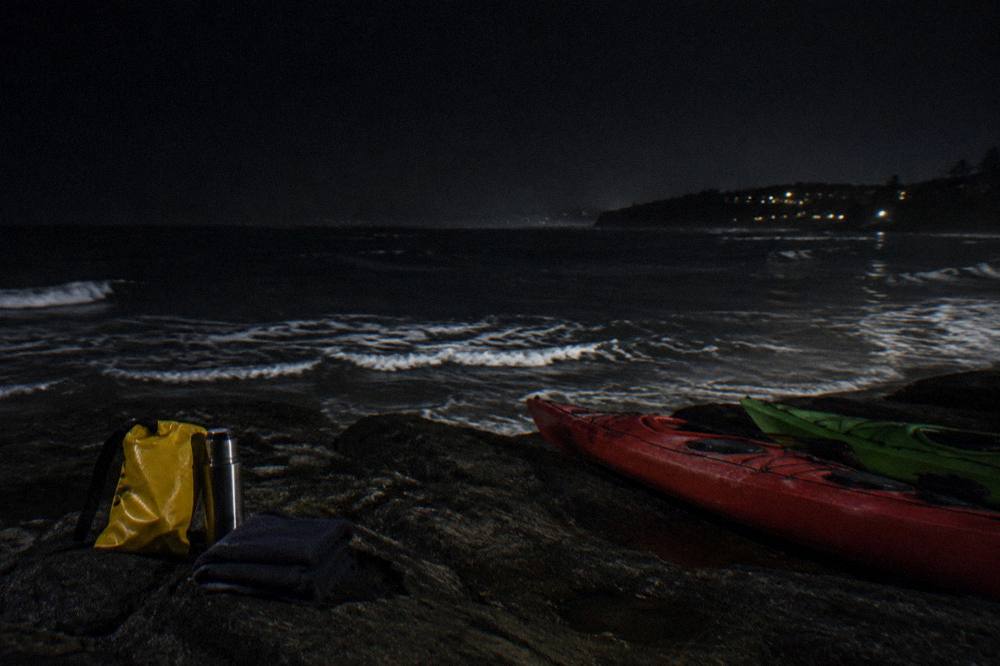
Social Nature Movement's own bring list reads like a cold-water briefing: thin merino or thermal shirt, fleece or woollen jumper, rain-proof jacket, warm beanie, towel, torch, water shoes, personal medication, water bottle. That is the operator's list, in the operator's own words. Canoe & Kayak Adventures puts it more bluntly: "Kayaking is a wet sport." Neither operator describes a trip where getting fully into the water is part of the plan.
The weather limits the operators set tell the same story from another angle. Social Nature Movement says tours only proceed in calm conditions: Waiake does not operate above 5 m/s wind or 2.4 mm rain, Okura above 8 m/s or 2.4 mm rain. Auckland Sea Kayaks operates within strict wind and sea limits, with the final call often made on the day. These are rules for keeping a group of kayakers safe on the surface, in conditions chosen precisely because the water is manageable from a boat.
Is It Simply Too Dark To Swim Off Okura Or Waiake?
Yes, by the clock. On 15 December 2026 at the Auckland waterfront, sunset is 8:36 pm, civil twilight ends at 9:07 pm, and full dark, astronomical dusk, arrives at 10:27 pm, all computed from date and location. The glow paddles run inside that darkness, and a swimmer in the same water is a head and shoulders visible only when the glow itself flashes.
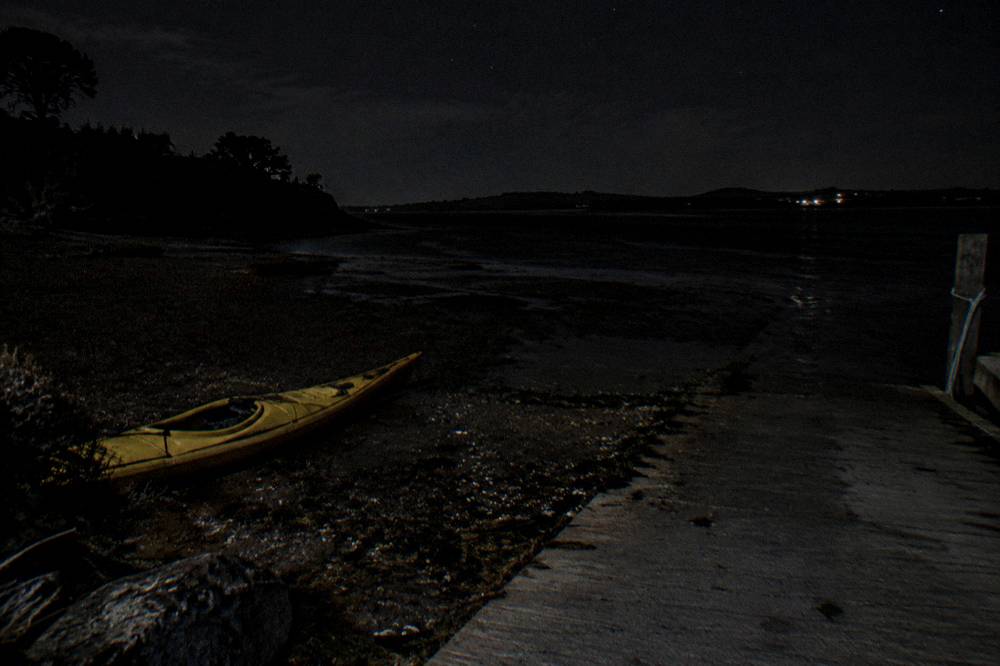
The full-dark times move across the year, computed from US Naval Observatory data and location. In midwinter, 15 June 2027, full dark arrives at 6:43 pm; in midsummer, 15 January 2027, at 10:29 pm. The operators set their own start times, so no clock time here is a tour time, but every tour's glow window sits inside the hours when there is no useful light left in the sky.
| Date | Sunset | Full dark, computed | New moon near that month |
|---|---|---|---|
| 15 Nov 2026 | 8:08 pm | 9:49 pm | 9 Nov 2026 |
| 15 Dec 2026 | 8:36 pm | 10:27 pm | 9 Dec 2026 |
| 15 Jan 2027 | 8:42 pm | 10:29 pm | 8 Jan 2027 |
| 15 Apr 2027 | 5:56 pm | 7:22 pm | 7 Apr 2027 |
| 15 Jul 2027 | 5:23 pm | 6:54 pm | 4 Jul 2027 |
| 15 Oct 2027 | 7:37 pm | 9:06 pm | 30 Oct 2027 |
The moon column matters more than it looks. Social Nature Movement does not operate when the moon is in the sky at more than 50 percent illumination, which is why gaps in its availability are intentional. Canoe & Kayak Adventures recommends booking near a new moon or on nights with a later moonrise. Moon dates in the table are computed from US Naval Observatory data, and no date is a guaranteed dark or glowing night.
Darkness is the point of the tour and the problem with the swim. A kayaker at night is lit by a beacon or navigation light, seated, and tracked by a guide whose job is the group. A swimmer at night is lit only when the water is disturbed, and a calm night, the kind tours prefer, is a night with almost nothing to see a swimmer by. Readers planning around the lunar cycle can dig into the moon phase and the glow paddle in more detail.
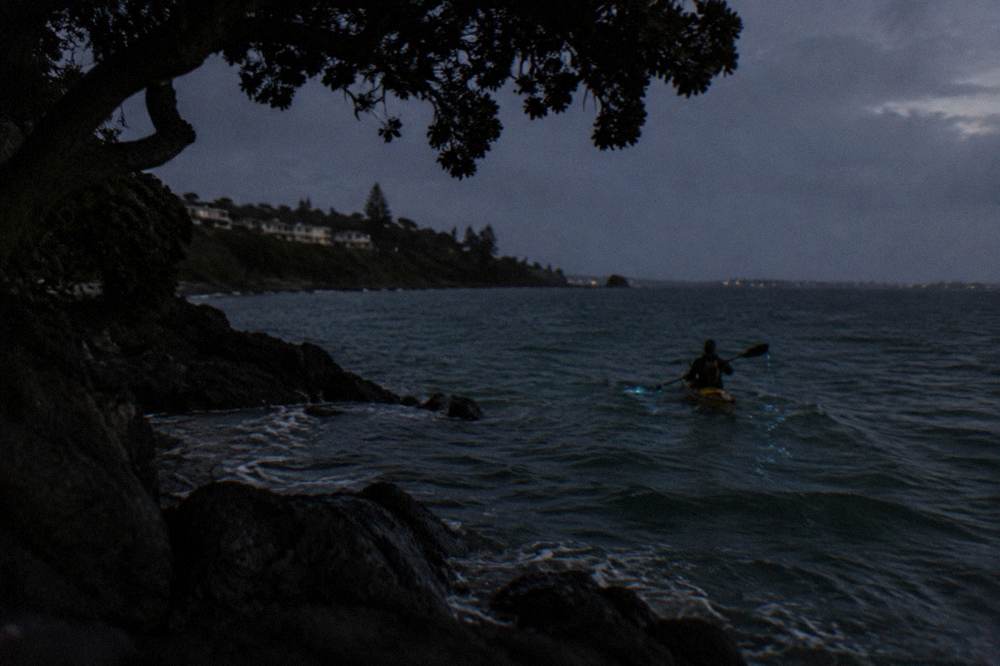
Can You See The Glow Without Getting In The Water?
Yes, and that is the entire format. The light is triggered by mechanical disturbance, so a paddle pulled through the water, a hull sliding through it, or a hand trailed over the side each produce flashes, while the person stays seated and dry. Wikipedia describes the flash as lasting about 80 milliseconds, blue-green in colour, and controlled by a circadian clock so it occurs only at night.
The kayak is a good instrument for this. It moves slowly and quietly, sits low enough that the water is within arm's reach, and keeps producing disturbance, and therefore light, for as long as it moves. A swimmer gets one dramatic moment of light and then a long dark float.
Photography is the one place the format shows a limit. Social Nature Movement says photographing the glow is challenging and needs specialised camera settings, and recommends a waterproof phone case for photos. Auckland Sea Kayaks encourages phones, GoPro or a camera in a waterproof case, at the guest's own risk. There is a longer treatment in photographing the glow from a kayak, and it confirms the same hierarchy: the camera goes on the paddle, the person stays in the seat.
For a different night-water experience with no bioluminescence claim at all, Auckland Sea Kayaks also runs the City Lights paddle from Westhaven Marina, from $82.27 for the 2.5 hour version, rated 4.8 across 28 reviews, with snacks included. It is the same stay-in-the-boat logic pointed at the Auckland skyline instead of the plankton.
The glow paddle this page features is the Social Nature Movement trip from Okura Boat Ramp or Waiake Beach, 2 hours, from $62.42 per person, rated 5.0 across 46 reviews, with the same trip on its second booking page at from $53 and 4.9 across 329 reviews. It includes a life jacket, kayak and paddle, and it states a full refund when cancelled at least 24 hours before the start. An optional paid add-on called the Bio-Bus runs from near the Sky Tower; check the booking page for the fare.
Common Questions About Swimming And Glow Tours
Why Can't You Swim In Bioluminescent Water On A Kayak Tour?
Because the tours are guided paddle trips, not swims. None of the nine tours covered here lists swimming on its booking page, all are guided paddles, and from 9 October 2026 a lifejacket must be worn on a kayak while underway. The glow is viewed from the kayak, where a paddle stirring the water produces the flashes.
Is Bioluminescent Water Toxic?
The organism behind most Auckland surface glow, Noctiluca scintillans, is described by an Auckland Council environmental scientist as a "non-toxic dinoflagellate". Wikipedia notes very dense blooms can harm fish through ammonium, which is a separate issue from people. The tours still do not include swimming.
Can You Touch The Water On A Glow Tour?
The booking pages here do not state a rule about touching the water. The format is a guided paddle with a lifejacket worn throughout. What the pages do state is the equipment: kayaks, paddles, flotation devices, and on some tours safety or navigation lights.
Do You Need To Be Able To Swim To Join?
The booking pages do not state a swimming requirement. The operators state other requirements instead, such as weight limits of 120 kg on some Social Nature Movement and Canoe & Kayak Adventures pages and 125 kg on one Auckland Sea Kayaks page, and minimum ages that vary by tour, such as 12 on the Tiritiri Matangi trip and 14 on one Rangitoto page.
Will The Tours Stop So People Can Get In The Water?
No booking page here describes a swim stop. The tours are point to point paddles: launch, paddle in the dark, return to the same beach or ramp. Social Nature Movement's trips run only in calm conditions and its calendar excludes nights when the moon is above 50 percent illumination.
Can The Glow Be Seen Without Being In The Water At All?
Yes. The light is triggered by mechanical disturbance of the water, so a paddle or hull moving through it produces flashes while the paddler stays seated. This is how every tour here works, and no booking page promises a sighting of any strength.