Glow Worm Kayak Tour Vs Bioluminescence Kayak Tour: Two Different Glows
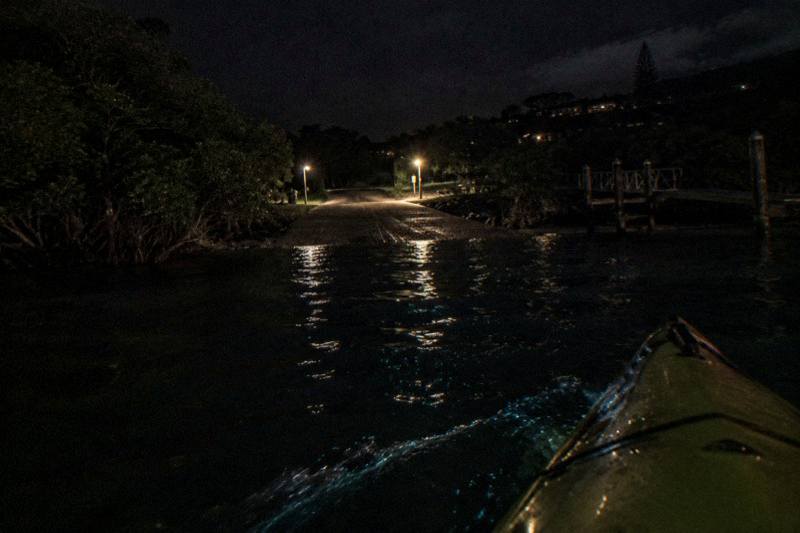
The two names get mixed up constantly, because both involve kayaks, darkness and something that shines. One glow hangs on a cave or bush wall and never moves. The other is drifting sea life that flashes when a paddle stirs it, which is what the Auckland tours on this site go out for.
Short answer
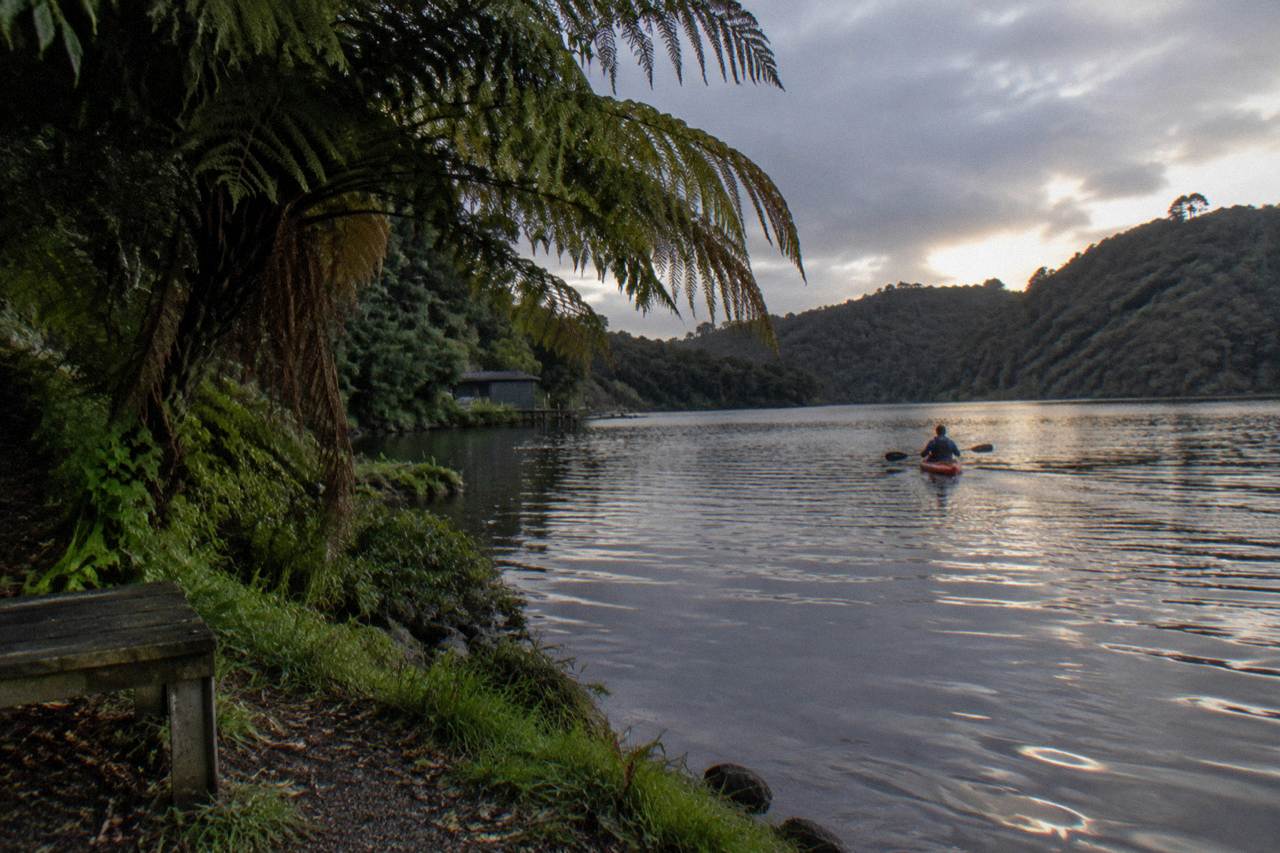
A glow worm kayak tour paddles to fixed glowing spots in caves and damp bush, where insect larvae shine from the walls. An Auckland bioluminescence kayak tour paddles coastal water where disturbed plankton can flash blue-green. The sea glow paddles here run about 2 hours from $53 per person; glow worm trips are a different kind of trip sold elsewhere.
The two names get mixed up constantly, because both involve kayaks, darkness and something that shines. One glow hangs in place, on cave ceilings and damp bush banks, produced by insect larvae that sit in fixed spots and shine steadily. The other lives in the water itself: drifting, microscopic organisms that flash when a paddle, a hull or a wave disturbs them. That second glow is what the Auckland tours covered here go out to look for, on the North Shore and around the Waitemata Harbour. This guide separates the two experiences honestly, then lays out the sea glow paddles you can actually book from Auckland, with prices, durations and start points from each booking page.
Is A Glow Worm Kayak Tour The Same As A Bioluminescence Kayak Tour?
No, and the difference matters more than the shared word "glow" suggests. Glow worms are insect larvae that produce light from fixed positions on cave walls and damp vegetation, so the glow hangs in place like a night sky. Bioluminescence in the sea comes from drifting plankton that flash on disturbance, so the light appears in the water around a moving paddle. Two different organisms, two different habitats, two different kinds of kayak trip.
Both are forms of bioluminescence in the broad sense: light made by living things through a chemical reaction. That is where the similarity in the experience ends. A glow worm site is a destination. You paddle or walk to it, look up at a ceiling or bank of steady pinpricks, and the glow does not follow you. It works in any weather the operator allows, because the larvae are on the wall whether or not the night is calm.
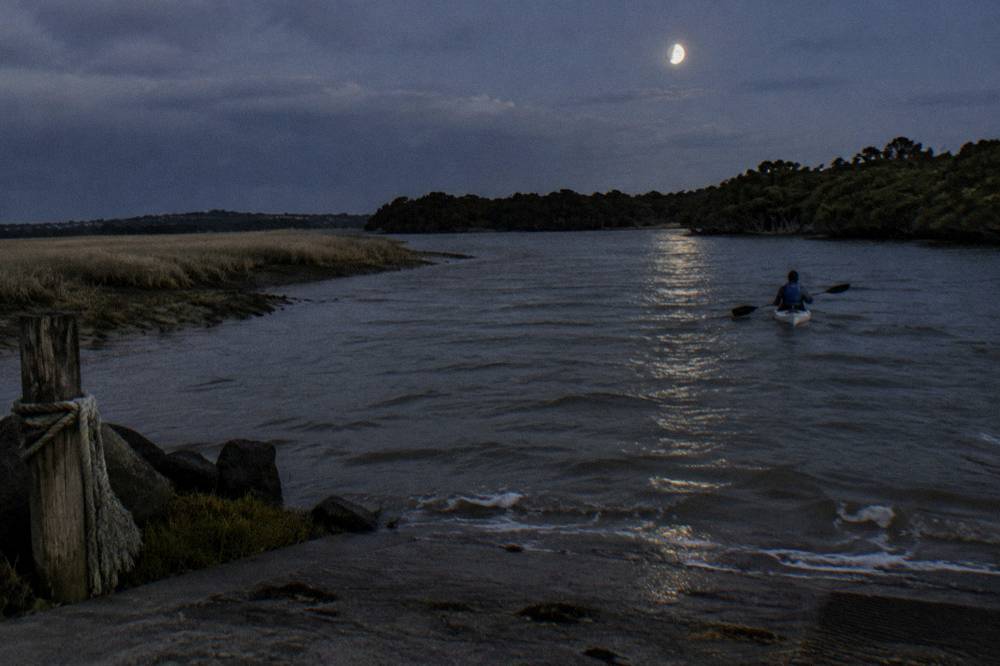
A sea glow paddle is the opposite. The light source is in the water column, distributed across wherever the plankton happen to have accumulated, and it responds to motion. Every paddle stroke, every drip and every eddy off the hull can trigger a flash. That makes the experience interactive rather than scenic, but it also makes it a natural event: Canoe & Kayak Adventures states plainly that bioluminescence can never be guaranteed, while Social Nature Movement describes the glow as something that varies naturally. No booking page promises a sighting, and none should be trusted if it did.
The trips are shaped differently too. Glow worm paddles, sold in other parts of New Zealand, are built around reaching a fixed site. The Auckland glow paddles on this site are 2 hour coastal tours on the North Shore, at Okura, Waiake or a spot emailed on the day, where the whole water surface is the attraction. For a deeper look at the science behind the sea version, the companion guide on what makes the water glow breaks down the organisms involved.
| Feature | Glow worm kayak trip | Auckland bioluminescence kayak tour |
|---|---|---|
| Light source | Insect larvae on cave walls and damp bush | Drifting plankton in seawater |
| Does the glow move | Fixed in place | Flashes when water is disturbed |
| Where it happens | Caves and damp bush gullies | Coastal sea water, Auckland North Shore and harbour |
| Sold on this site | No | Yes, 4 tours in this category |
| Can a sighting be promised | No | No, Canoe & Kayak Adventures says it can never be guaranteed |
What Actually Glows In The Water Off Okura And Waiake?
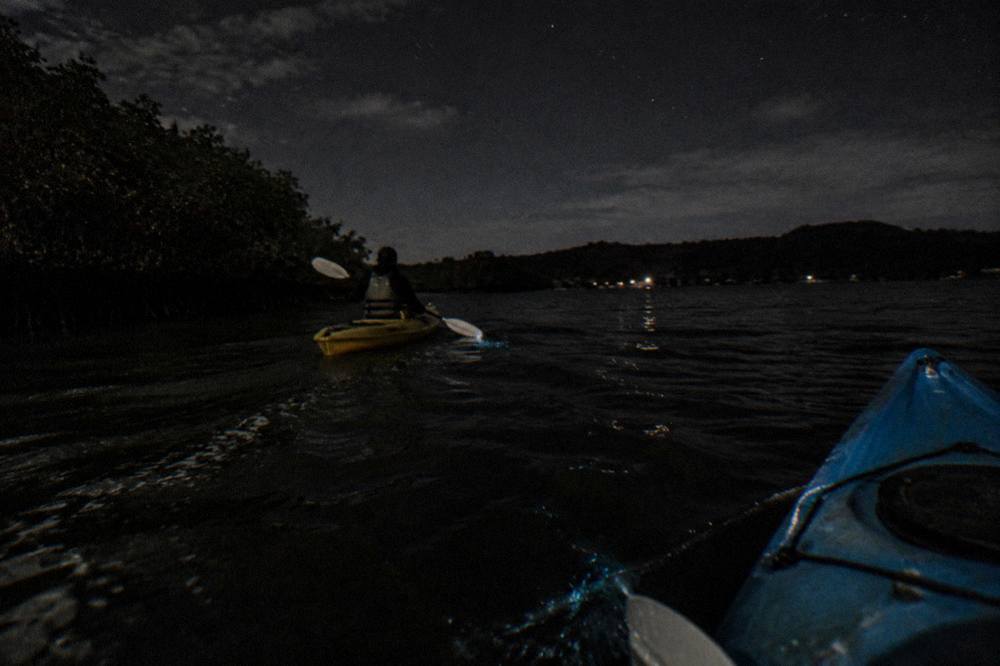
The organism most often behind the Auckland sea glow is a dinoflagellate, a single-celled drifting organism that flashes blue-green when mechanically disturbed. Wikipedia describes the best known species as 400 to 1500 micrometres across, drifting with the current, with a flash lasting roughly 80 milliseconds. Social Nature Movement, the operator launching from Okura Boat Ramp and Waiake Beach, names dinoflagellates as the most common surface glow.
The species behind most coastal New Zealand glow events is Noctiluca scintillans, known by the popular names "Sea Ghost" and "Fire of Sea". Earth Sciences New Zealand, formerly NIWA, describes it as a harmless, non-photosynthetic dinoflagellate species of alga, and its voyage captions note that at night the cells phosphoresce when disturbed. Auckland Council environmental scientist Dr Megan Carbines, quoted by Local Matters, called it a non-toxic dinoflagellate that often forms bright blooms around the coast in summer, emitting a burst of light when swimmers or boats move through the water at night.
Two properties of this organism shape the whole tour experience. First, the flash is triggered by shear stress, meaning motion: a paddle stroke, a dripping blade, the wake off a hull. The glow literally answers you. Second, the cells accumulate at the surface when the sea is calm, which is why Social Nature Movement states its tours only proceed in calm conditions, with specific wind and rain cut-offs at both its launch sites. The same calm-water accumulation is why warm, settled spells are when blooms build up along the coast, as the council scientist described.
That attribution matters, because the marine science on Auckland's bioluminescence centres on the dinoflagellates, while the wider creature list is the operator's own observation. For the distinction between this kind of night paddle and a general one, see night kayak vs bioluminescence kayak tour.
Which Auckland Tours Go Looking For The Sea Glow?
Four dedicated glow paddles run from Auckland, from $53 to $67.52 per person, all about 2 hours long and all on the North Shore. Social Nature Movement launches at Okura Boat Ramp or Waiake Beach, or at a spot chosen at booking, while Canoe & Kayak Adventures emails its North Shore spot before 10 AM on the day, and all four state a full refund when cancelled at least 24 hours before the start.
The four dedicated tours are the heart of this category, and each is one trip sold on two booking pages at different prices. The table below uses the page this site features, with the twin price noted where the same trip sells differently.
| Tour | Operator | From, USD per person | Rating and reviews | Duration | Start point |
|---|---|---|---|---|---|
| Okura Or Waiake Start, 2 Hours | Social Nature Movement | $62.42 | 5.0 from 46 reviews | 2 hours | Okura Boat Ramp or Waiake Beach |
| Optional Bio-Bus, 1.5 To 2 Hours | Social Nature Movement | $53 | 4.9 from 329 reviews | 1.5 to 2 hours | Chosen at booking |
| North Shore Start, 2 Hours | Canoe & Kayak Adventures | $67.52 | 4.1 from 207 reviews | 2 hours | North Shore, spot emailed on the day |
| No Hotel Pickup, 2 Hours | Canoe & Kayak Adventures | $66 | 4.5 from 67 reviews | 2 hours | North Shore, spot emailed on the day |
The cheapest sea glow paddle is the Social Nature Movement tour on its most-reviewed page, from $53 per person with a 4.9 rating across 329 reviews. The same trip on its other booking page shows 5.0 across 46 reviews at $62.42, a reminder that a trip's numbers depend on which page is doing the counting. The Canoe & Kayak Adventures pages split the same way: 4.1 across 207 reviews at $67.52 on one, 4.5 across 67 reviews at $66 on the other, for the same 2 hour North Shore paddle.
Beyond the dedicated glow tours, two adjacent experiences are worth knowing about, with one honest caveat: neither promises bioluminescence. The Tiritiri Matangi trip is a 7 hour dinner, wildlife and night-walk journey from $139 per person, with a return paddle offering "a chance to see bioluminescent plankton"; it has no rating yet and costs far more than a 2 hour glow paddle. The Rangitoto sunset tours from Auckland Sea Kayaks make no bioluminescence promise on their booking pages, though the operator says glow is "sometimes" seen on the sunset trip "typically October to April".
Should You Book A Glow Worm Trip Or An Auckland Sea Glow Paddle?
Choose by the kind of light experience you want, not by the word glow. A glow worm trip shows you a fixed, steady constellation of lights on a wall, while the Auckland sea glow paddle makes the water itself flash around your paddle on the coast, bookable from $53 per person.
The sea glow paddles are evening-length commitments: about 2 hours on the water, from the North Shore launches, with the operators setting their own start times around darkness. Every one of the nine tours covered here states a full refund when cancelled at least 24 hours before the start, which lowers the risk of locking in a date early in your trip planning. Free hotel pickup is not included on any of them, though the Social Nature Movement pages offer an optional paid add-on called the Bio-Bus from near the Sky Tower, meeting one hour before the start.
Glow worm trips, by contrast, are cave or bush experiences run by operators this site does not sell and can say little about. What can be said in general terms is that the larvae hang their glow in fixed spots, which changes the rhythm of the trip completely: you travel to the light, rather than stirring it up around you. Readers weighing whether the Auckland version delivers enough for the money can start with is bioluminescence kayaking worth it, which works through the honest case on both sides.
The Canoe & Kayak Adventures glow paddle is the natural first comparison for most readers: 2 hours, a stated 1 guide to 6 guest ratio, and an operator that has run kayak tours since 1994. Read more on the North Shore glow paddle tour page, or check availability for your dates.
How Much Does Each Glow Cost To Paddle?
The Auckland sea glow paddles run from $53 to $67.52 per person for about 2 hours, all four of them, with the median across the nine tours on this site at $73. No glow worm kayak tour appears on this site, so those trip prices do not show here. Check the operator's own page for the region you plan to visit.
Within the sea glow category, the price spread is narrow, and the differences between booking pages for the same trip are as large as the differences between operators. The Social Nature Movement paddle costs from $53 on its most-reviewed page and $62.42 on its twin. Canoe & Kayak Adventures charges from $67.52 on one page and $66 on the other for the identical North Shore experience. What the extra dollars buy varies by page rather than by trip: one Social Nature Movement page includes the Bio-Bus option as a paid add-on, one Canoe & Kayak page states a minimum age of 7 and a 120 kg limit while the other leaves both unstated.
| Tour | From, USD | What the page states about ages and limits | Group max stated |
|---|---|---|---|
| Okura Or Waiake Start | $62.42 | Check the booking page | Not stated |
| Optional Bio-Bus | $53 | 120 kg weight limit | Not stated |
| North Shore Start | $67.52 | Check the booking page | 24 paddlers |
| No Hotel Pickup | $66 | Minimum age 7, 120 kg limit | Not stated |
For context on the rest of the site's range: the highest-priced tour covered here is the Rangitoto sunset paddle with BBQ dinner at $139.02 per person, and the City Lights night paddles from Westhaven Marina run from $73. A fuller breakdown of the glow category's pricing logic, including what drives the small differences, sits in the guide to bioluminescence kayak tour prices in Auckland.
The most-reviewed page on this site, at 4.9 across 329 reviews and from $53, is also the cheapest way onto the water for the sea glow. See the glowing waters night paddle tour page, or Check availability if the dates line up with your trip.
Where Do The Auckland Glow Paddles Start From?
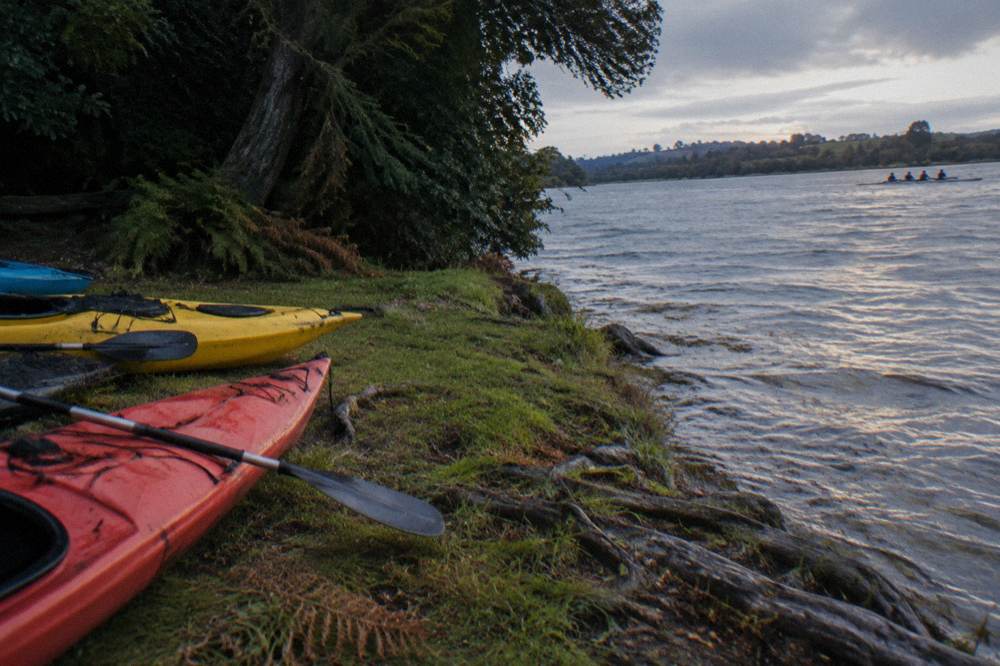
The dedicated glow paddles launch from Auckland's North Shore: Social Nature Movement from Okura Boat Ramp at the end of Okura River Road or Waiake Beach, chosen with the tide, and Canoe & Kayak Adventures from a North Shore spot emailed before 10 AM on the tour day.
The two Social Nature Movement launch sites sit on opposite sides of the same stretch of coast, and the operator links the choice to the tide, calling both locations equally good: Okura at high tide, Waiake at low tide. The booking page for the Okura Or Waiake Start tour names both; the other page for the same trip leaves the start to be chosen at booking. Weather limits differ slightly by site, in the operator's own wording: Waiake does not operate above 5 m/s wind or 2.4 mm rain, Okura above 8 m/s or 2.4 mm rain.
Canoe & Kayak Adventures does not name its exact launch point in advance: the meeting spot is emailed before 10 AM on the morning of the tour, and no suburb or shop address should be assumed before that email arrives. Planning a route around a guessed suburb is a mistake, so the guide on getting to a bioluminescence kayak launch from central Auckland is the practical companion, covering the Bio-Bus add-on and what each start point demands.
Elsewhere on the site the start points are completely different places, which is worth holding onto when comparing. The City Lights night paddles leave from Westhaven Marina on the Waitemata Harbour, and the Rangitoto sunset tours leave from the Auckland Sea Kayaks base at St Heliers Bay, 384 Tamaki Drive. None of these is interchangeable with a North Shore glow launch, and the tide link at Okura and Waiake, explained further in tides and bioluminescence kayak launch points, has no equivalent at the marina.
Does The Moon Matter Differently To Each Glow?
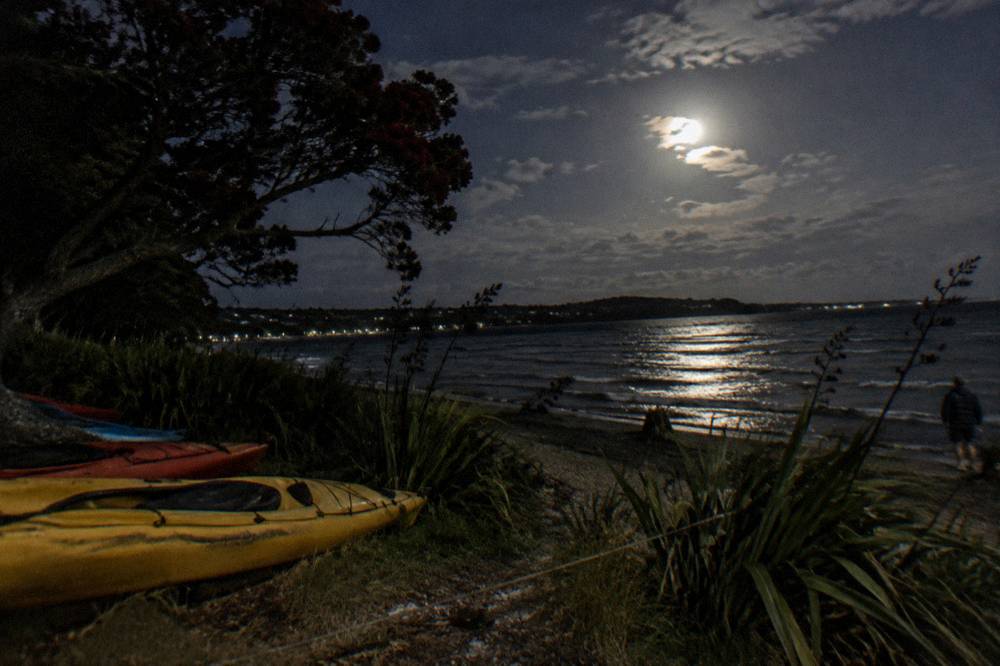
To a glow worm site, the moon is close to irrelevant, because the larvae shine on a wall whether the sky is bright or dark. To the Auckland sea glow, moonlight is a live variable: Social Nature Movement refuses to run when the moon is in the sky above 50 percent illumination, and Canoe & Kayak Adventures recommends booking near a new moon or on later-moonrise nights. Auckland Sea Kayaks states no moon rule at all.
The Social Nature Movement rule is the only hard moon policy among the operators here, and it is worth quoting the operator's reasoning: excessive moonlight can significantly reduce the quality and visibility of the bioluminescence, so gaps in its availability are intentional. That means a calendar that looks half empty near a full moon is doing its job. Full moons fall on 25 November 2026, 24 December 2026 and 23 January 2027, computed from US Naval Observatory data; new moons fall on 9 November 2026, 9 December 2026 and 8 January 2027 over the same stretch.
Canoe & Kayak Adventures takes a softer line: when the moon is brighter, the glow can be more subtle but still visible, and the operator suggests new moon dates or nights with a later moonrise. Its season wording is also its own: in November to April, the operator says, the glow is "often strong enough to enjoy on most nights". Social Nature Movement separately says its peak season is October to April. Neither line transfers to the other operator, and neither is a promise.
Darkness itself arrives at a computable hour, which is the other half of the planning picture. Sunset and twilight times, computed from date and location for the Auckland waterfront, show full dark arriving at 9:49 pm in mid November 2026, 10:27 pm in mid December and 10:29 pm in mid January 2027, with the US Naval Observatory as the underlying source for sun and moon times. Operators set their own start times against that darkness, never the other way around.
| Date | Sunset | Full dark, computed | New moon, computed | Full moon, computed |
|---|---|---|---|---|
| 15 Nov 2026 | 8:08 pm | 9:49 pm | 9 Nov 2026 | 25 Nov 2026 |
| 15 Dec 2026 | 8:36 pm | 10:27 pm | 9 Dec 2026 | 24 Dec 2026 |
| 15 Jan 2027 | 8:42 pm | 10:29 pm | 8 Jan 2027 | 23 Jan 2027 |
| 15 Feb 2027 | 8:18 pm | 9:53 pm | 7 Feb 2027 | 21 Feb 2027 |
The deeper story of moonlight and visibility sits in moon phase and a bioluminescence kayak tour.
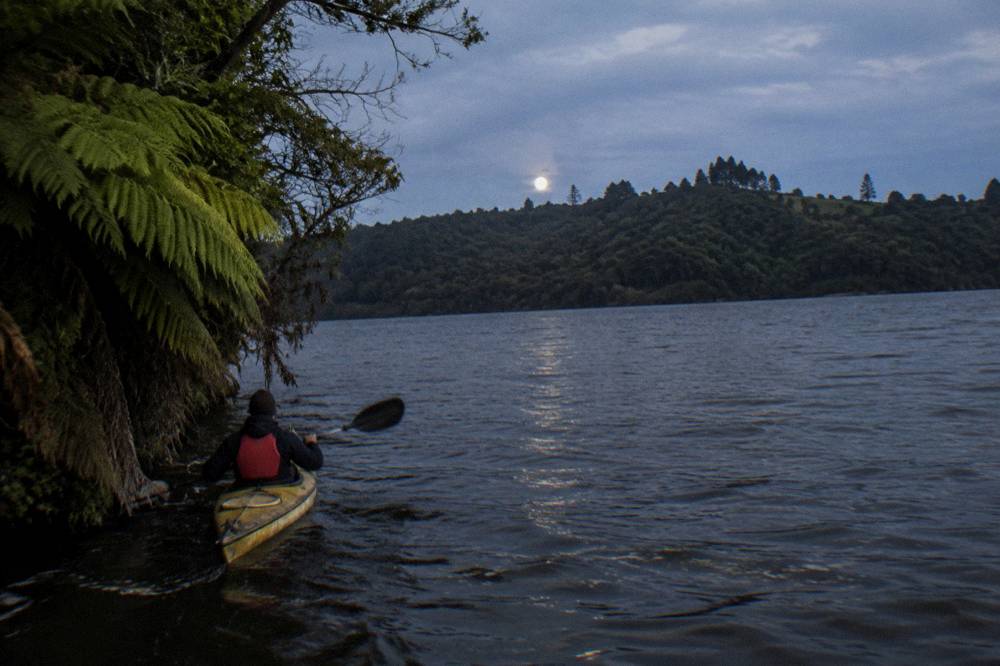
Which Trip Suits Families, Couples And First-Time Paddlers?
For Auckland families, the sea glow paddles carry age limits that matter: Canoe & Kayak Adventures says ages 11 and over with an adult, one booking page says not suitable under 7, and Social Nature Movement specifies 13 plus. Couples and first-time paddlers are catered for across the board, with guided paddles, tuition from Canoe & Kayak Adventures, and a stated easy grading from Social Nature Movement, while glow worm trip suitability is one for that region's operator.
Every one of the nine tours covered here is a guided paddle, none is a rental, and each booking page's age and limit lines are its own. Canoe & Kayak Adventures gives the fullest fitness picture: able to walk nonstop for 30 minutes and sit on the ground and get up unaided, with a note to tell the operator if over 120 kg, and the frank reminder that kayaking is a wet sport. Its 1 guide to 6 guest ratio, stated on the booking page, is the tightest supervision figure in the glow category.
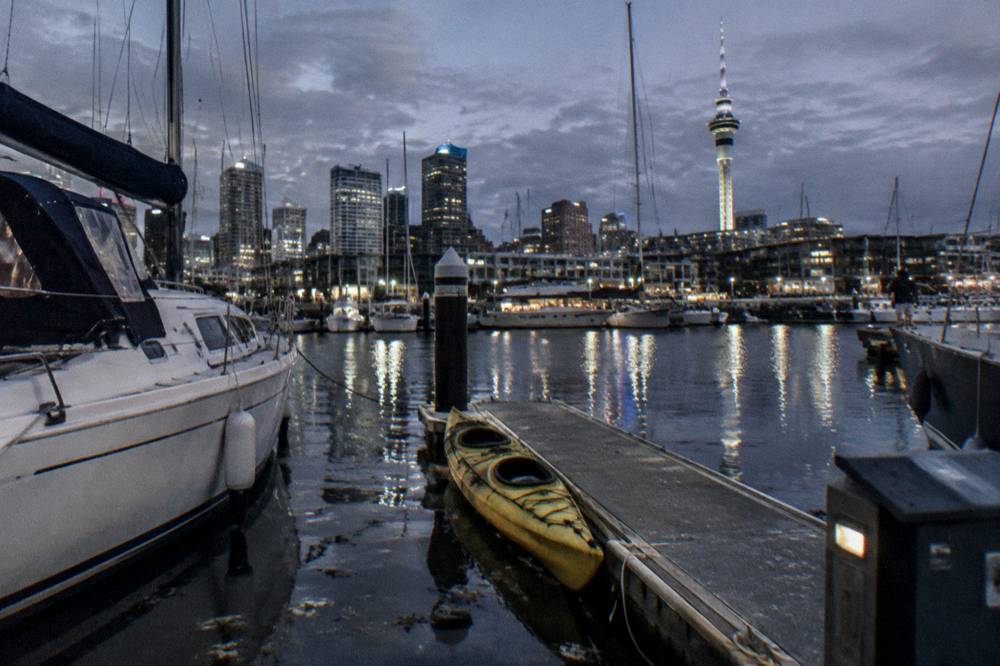
For date nights, the glow paddles are a 2 hour evening with a natural light show nobody can schedule, and the honest framing is exactly that. A steadier after-dark alternative for couples is the City Lights paddle from Westhaven Marina, a 2 hour tour from $73 per person with a 5.0 rating across 15 reviews and a sweet treat on the water, paddling the Waitemata Harbour with the city lit up around it. The trade is simple: skyline instead of sea glow, with no bioluminescence claim attached.
Safety on any of these trips is handled by the operators, and the rules around lifejackets tightened recently. From 9 October 2026, everyone on board a recreational craft six metres or less must wear a properly fitted lifejacket while underway, and Maritime NZ lists kayaks among the craft covered. The tour operators supply the lifejackets, and in Social Nature Movement's case the flotation device carries a safety light too. The fuller picture is in night kayak safety on a guided bioluminescence paddle.
Can You Photograph A Glow Worm Display Or Sea Glow From A Kayak?
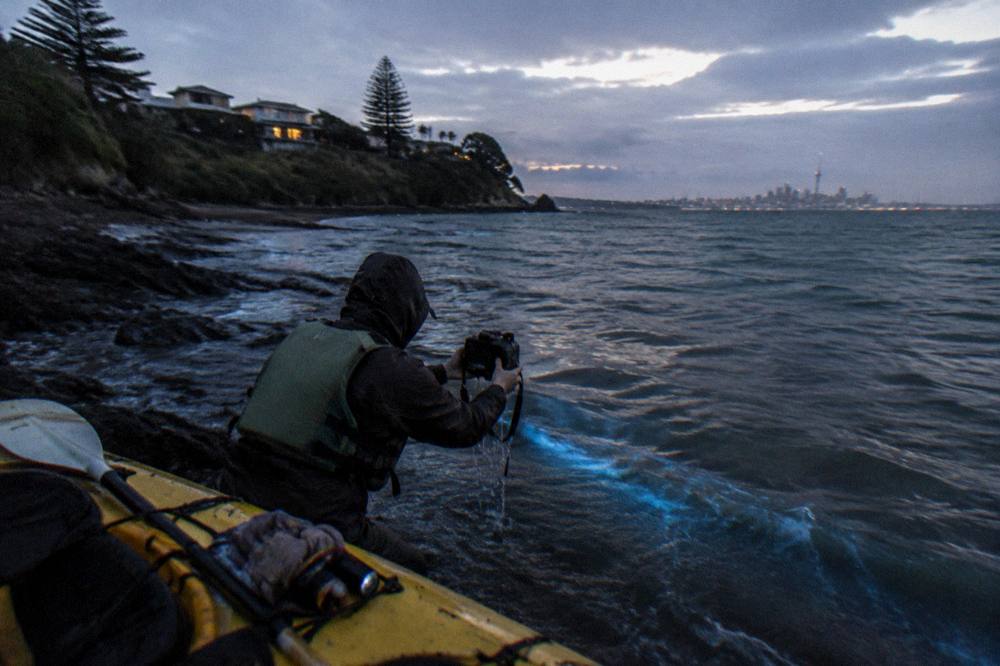
Photographing a fixed glow worm display is a long-exposure problem on a stable platform. Photographing sea glow from a kayak is harder still: Social Nature Movement says it is challenging and needs specialised camera settings, recommending a waterproof phone case, and Auckland Sea Kayaks' own City Lights page encourages a phone, GoPro or camera in a waterproof case at the guest's own risk. Neither operator promises photographs of anything.
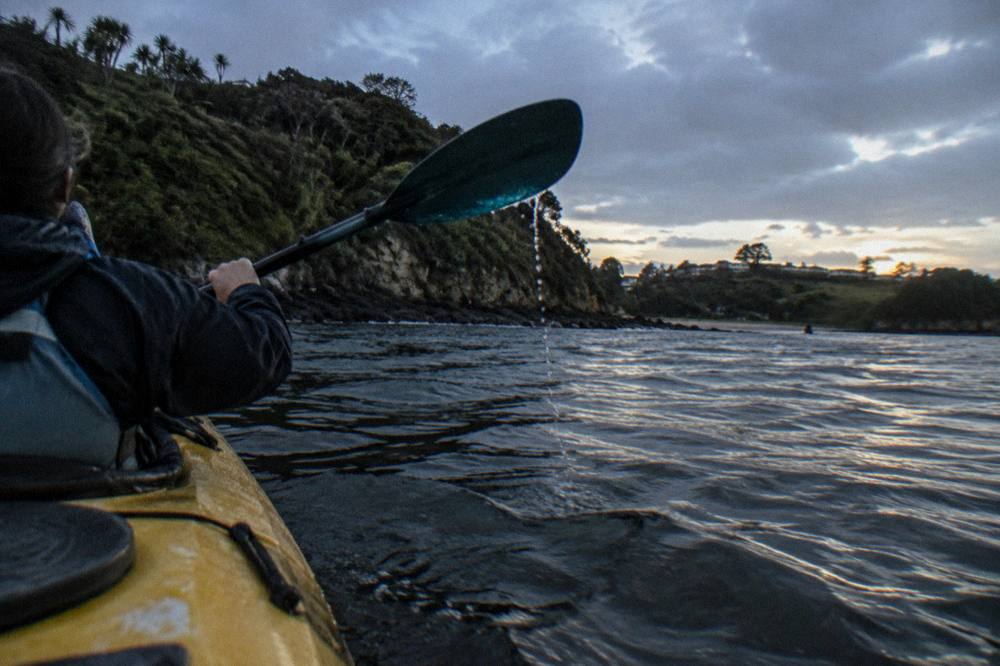
The physics explains the gap. A glow worm's steady light can be gathered over a long exposure if the camera is still, and on a tour that pauses at a fixed site, stillness is sometimes possible. Sea glow is a flash lasting around 80 milliseconds, triggered by motion, from a kayak that is itself moving, in the dark, over water. Those four conditions stack against each other, which is why even experienced photographers treat the sea glow as a bonus rather than the goal.
What the gear guidance comes down to, per the operators: Social Nature Movement recommends a waterproof phone case and notes that capturing the glow needs specialised settings; Auckland Sea Kayaks supplies dry bags and a phone pocket on its lifejackets, and welcomes cameras at the guest's own risk. Nothing on any booking page claims photography support, editing help or photo delivery, so treat any images as your own project. More depth sits in photographing bioluminescence from a kayak.
Which One Should You Actually Book?
If you are in Auckland and want an evening on the water chasing light, book the sea glow paddle: from $53, about 2 hours, North Shore launches, free cancellation to 24 hours before. If what you specifically want is the cave-wall constellation of glow worms, book that trip where it runs, in another region, and keep the Auckland paddle as a separate experience. Trying to substitute one for the other is the only real mistake available here.
The decision collapses to the light you want to be inside of. The sea glow surrounds the kayak and answers every stroke, on the condition that the plankton show up, which no operator promises. The glow worm display waits on its wall, steady and indifferent to weather and moon, reached by a trip this site does not sell and cannot speak to beyond the general biology. Both are legitimate reasons to be out at night; they are simply not the same reason.
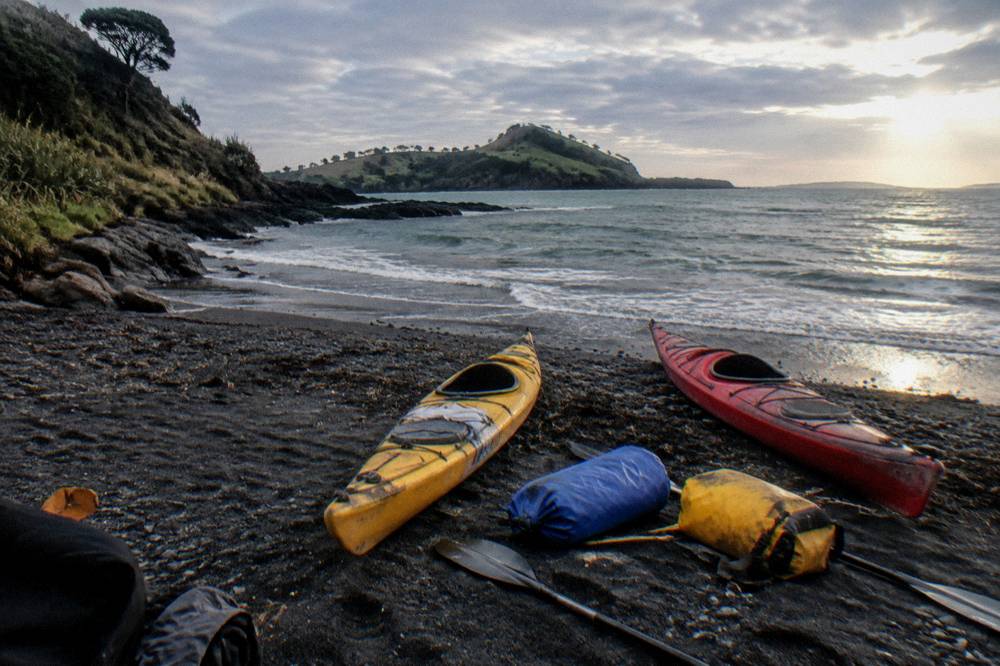
For readers staying in Auckland, the site's own numbers make the choice practical. The cheapest sea glow entry is $53, the most-reviewed page carries 4.9 across 329 reviews, and all four dedicated glow paddles run about 2 hours from North Shore launches, with every booking page stating a full refund at least 24 hours before the start. The broader context of how a glow paddle differs from an ordinary night paddle is covered in night kayaking lights and what a kayak shows after dark, and this site holds the full set of tour pages and planning guides.
Common Questions About Glow Worm And Bioluminescence Kayak Tours
Is A Glow Worm Kayak Tour The Same As A Bioluminescence Kayak Tour?
No. Glow worms are insect larvae shining from fixed spots on cave walls and damp bush; the Auckland bioluminescence tours paddle coastal water where disturbed plankton can flash. Two different organisms, habitats and trip styles, even though both are forms of bioluminescence in the broad sense.
Can You See Glow Worms On An Auckland Kayak Tour?
Not on the tours sold here. The Auckland tours covered on this site are sea glow paddles on the North Shore and harbour paddles at Westhaven and St Heliers Bay.
Is The Sea Glow Guaranteed On An Auckland Bioluminescence Kayak Tour?
No. Canoe and Kayak Adventures states that bioluminescence can never be guaranteed. Canoe & Kayak Adventures adds that if your guide confirms none was seen, it offers a free repeat tour, on its own terms.
How Much Does A Bioluminescence Kayak Tour In Auckland Cost?
From $53 per person for the cheapest dedicated glow paddle, up to $67.52 across the four glow tours, all roughly 2 hours. The same trip can show different prices on different booking pages, and all prices on this site are USD per-person "from" figures.
Does A Bright Moon Cancel An Auckland Glow Paddle?
Sometimes, for one operator. Social Nature Movement does not run when the moon is in the sky above 50 percent illumination, so gaps in its availability are intentional. Canoe & Kayak Adventures keeps running and only recommends new moon or later-moonrise nights; Auckland Sea Kayaks states no moon rule.
Which Tour Should A First-Time Paddler Book?
Any of the guided glow paddles works for a first-timer: all nine tours covered here are guided, none is a rental, and Canoe & Kayak Adventures states tuition, a 1 guide to 6 guest ratio and a wet-sport honesty about fitness. Ages and weight limits differ by booking page, so check the page for your chosen tour before booking.