Tides And Bioluminescence Kayak Launch Points: Why The Start Beach Changes
Auckland's dedicated glow paddles do not always start from the same beach. Social Nature Movement links Okura Boat Ramp to high tide and Waiake Beach to low tide, and says both are equally good. Here is what that means for a booked paddler, and what the other night tours do instead.
Short answer
Social Nature Movement picks between Okura Boat Ramp (1 Okura River Road) and Waiake Beach based on the tide, and says both are equally good, Okura at high tide, Waiake at low tide. The start is chosen at booking. Canoe & Kayak Adventures emails its North Shore spot before 10 AM on the day. No tide times or heights are published on any booking page.
A paddler who books a bioluminescence kayak tour in Auckland often expects a single meeting point. The dedicated glow paddles do not work that way. The most reviewed night paddle on this site, the Social Nature Movement glow tour at 4.9 across 329 reviews from $53 on one booking page, names its start only at booking, and the twin page for the same trip lists two possible beaches on the North Shore. The operator ties that choice to the tide. Understanding why the beach moves, and what each operator does instead, turns a confusing confirmation email into a simple plan for the night. If a shifting start beach complicates plans for a night out, the guide to bioluminescence kayak tours that work as a date night compares what each operator includes, from launch points to trip length.
The organism behind the glow is worth a sentence first. The light comes mostly from dinoflagellates, single-celled organisms that flash when the water around them is disturbed, a mechanism described in detail at Wikipedia's page on dinoflagellates. The tide, however, is not what makes them glow. On these tours it is what decides where the kayaks go in.
Why Does The Night Kayak Start Beach Change?
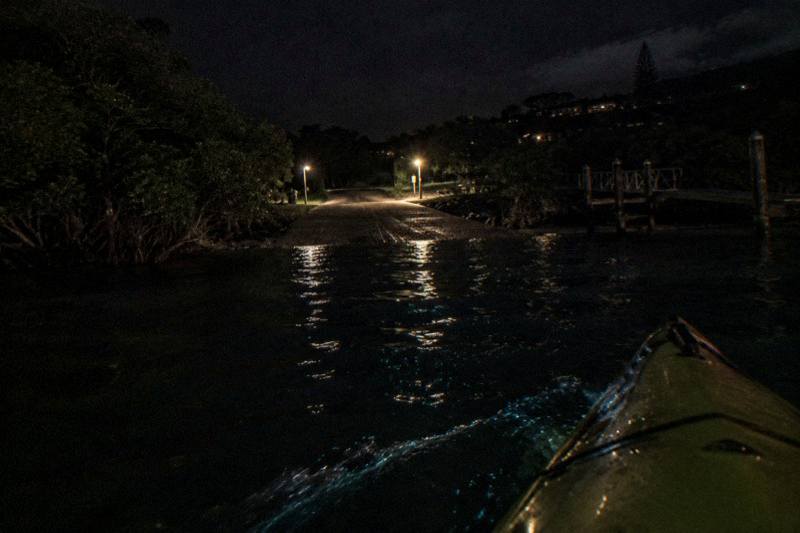
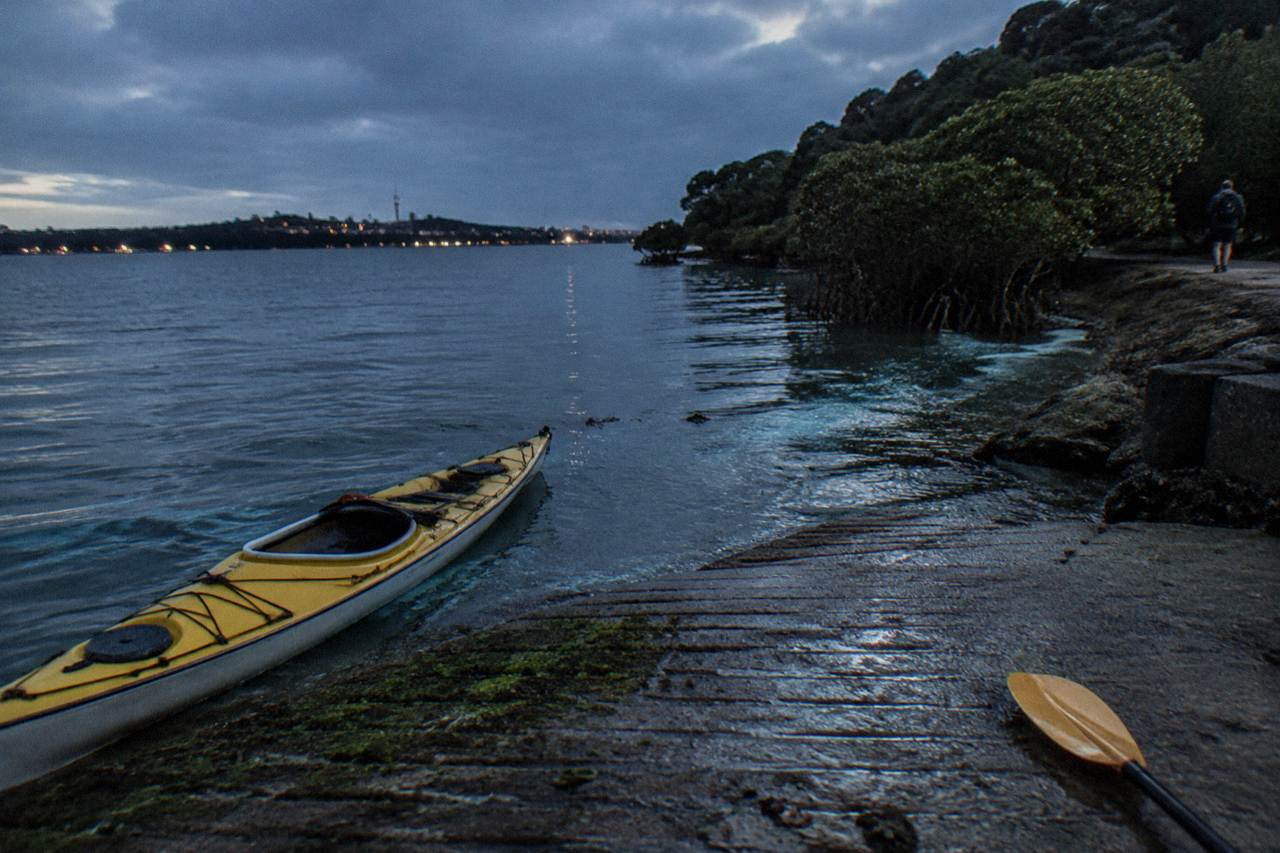
The start beach changes because Social Nature Movement links each of its two North Shore launches to a different tide state, and says both are equally good: Okura Boat Ramp at high tide, Waiake Beach at low tide. The choice is the operator's, made around the tide on the night, not a signal that one beach is better for the glow. No booking page publishes tide times or heights.
That is the whole mechanism, and it is operator wording rather than inference. The tour's pages name two meeting points, Okura Boat Ramp at the end of Okura River Road and Waiake Beach, and the operator connects Okura to high tide and Waiake to low tide. Its phrase for the comparison is that "both locations are equally good". A paddler who sees the location change between booking and the night of the tour is watching a routine tide-based decision, not a downgrade or a swap forced by a problem.
What the operator does not say matters just as much. Neither page states tide times, tide heights, or a cut-off that flips the choice from one beach to the other. The tide logic belongs to Social Nature Movement alone among the operators covered here. Canoe & Kayak Adventures runs its glow tour from a North Shore spot emailed before 10 AM on the tour day, with no tide wording on its booking pages. Auckland Sea Kayaks departs from fixed bases at Westhaven Marina and St Heliers Bay, again with no tide rule stated. Carrying the Okura and Waiake tide line across to those operators would be a mistake, because it is one company's practice.
The practical consequence is simple. A booked paddler should read the start point as it is confirmed, not as it appeared when browsing, and plan travel around whichever beach the operator names. The deeper geography of the two launches, including how they differ as places to arrive at after dark, is covered in the companion guide to Okura and Waiake bioluminescence kayak launches, which goes beach by beach.
Okura Boat Ramp Or Waiake Beach: What Is The Difference?
Okura Boat Ramp sits at the end of Okura River Road and is linked by the operator to high tide, while Waiake Beach is linked to low tide, and the operator calls both equally good. The booking page for the two-hour version lists both places. The other booking page for the same trip names neither, only that the start is chosen at booking. Neither page ranks the beaches.
The two beaches sit on Auckland's North Shore, and the operator's tide pairing is the only stated difference between them. None of the operators claim that the glow is stronger on their tour, that their trip is safer, or that they take bigger groups. The equipment line is the same: kayak, paddle and a personal flotation device with a safety light, plus, on one page, a guide. Weather limits are also stated as operator practice: tours only proceed in calm conditions, with Waiake not operating above 5 m/s wind or 2.4 mm rain, and Okura above 8 m/s or 2.4 mm rain.
The transport story differs from the tour itself. An optional paid add-on called the Bio-Bus runs from near the Sky Tower, meeting one hour before the start, with a 30 minute one-way ride per the operator. It appears as an add-on at checkout on one booking page and is not mentioned on the other. No tour on this site includes free hotel pickup, so a paddler not taking the Bio-Bus arranges their own way to whichever beach is confirmed. Options for that journey are laid out in getting to a bioluminescence kayak launch from central Auckland.
For comparison, here is what each of the two Social Nature Movement booking pages shows for the same trip. They are one trip sold twice, so the figures belong to each page as shown.
| Booking page version | Called it | Duration | From (USD, per person) | Rating and reviews | Start point | Group max |
|---|---|---|---|---|---|---|
| Two-hour page | Okura Or Waiake Start, 2 Hours | 2 hours | $62.42 | 5.0 across 46 reviews | Okura Boat Ramp or Waiake Beach | Not stated |
| One and a half to two-hour page | Optional Bio-Bus, 1.5 To 2 Hours | 1.5 to 2 hours | $53 | 4.9 across 329 reviews | Chosen at booking | Check the booking page |
The price gap is real but the trip is the same paddle; the pages are twins and should never both be booked. A reader deciding between them is really deciding between price, review pool and how the start point is communicated.
What Does The Booking Page Say About Where You Meet?
The two-hour page lists both beaches up front; the other page for the same trip says only that the start is chosen at booking, and the Bio-Bus add-on is described as meeting near the Sky Tower one hour before the start. Canoe & Kayak Adventures emails its exact North Shore spot before 10 AM on the day. Auckland Sea Kayaks uses fixed addresses published in advance.
So it pays to be precise about who tells you what, and when, on each tour. Social Nature Movement's two-hour page names Okura Boat Ramp and Waiake Beach as the possible starts, so a reader can see both options before paying. Its twin page hides the choice inside the booking flow: the start is "Chosen at Booking", which means the beach appears during checkout rather than in the tour description. Neither operator says which beach a given date will use, and neither includes a tide table on its booking page.
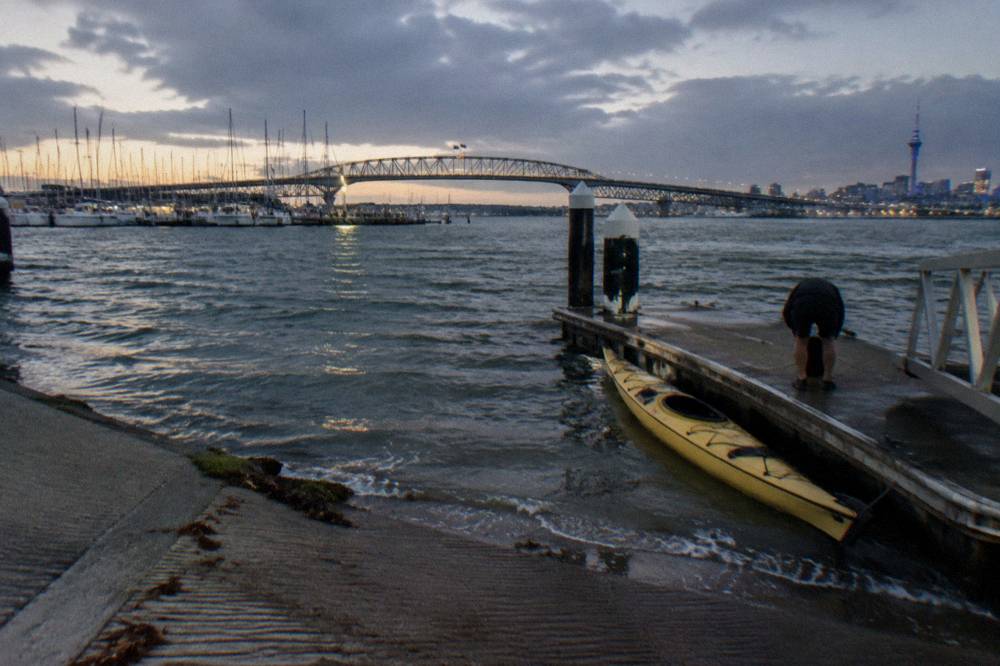
Canoe & Kayak Adventures takes a later-is-normal approach. Its pages give only a North Shore location that is emailed before 10 AM on the tour day, so the exact spot is known only hours before the paddle. Its operator page recommends booking near a new moon or on nights with a later moonrise, because "moonlight affects this tour and how brightly you will see bioluminescence", but that is a moon statement, not a tide statement. Auckland Sea Kayaks is the opposite: the City Lights paddles meet at the Westhaven Marina boat ramp, and the sunset tours at the operator's St Heliers Bay base at 384 Tamaki Drive, both fixed addresses a traveller can plan around from the day of booking.
Cancellation terms are stated identically across all nine tours: a full refund when cancelled at least 24 hours before the start. That matters for a launch that is confirmed late, because a paddler who cannot reach the confirmed beach still has the stated refund window on the booking page.
Does The Tide Change The Bioluminescence Itself?
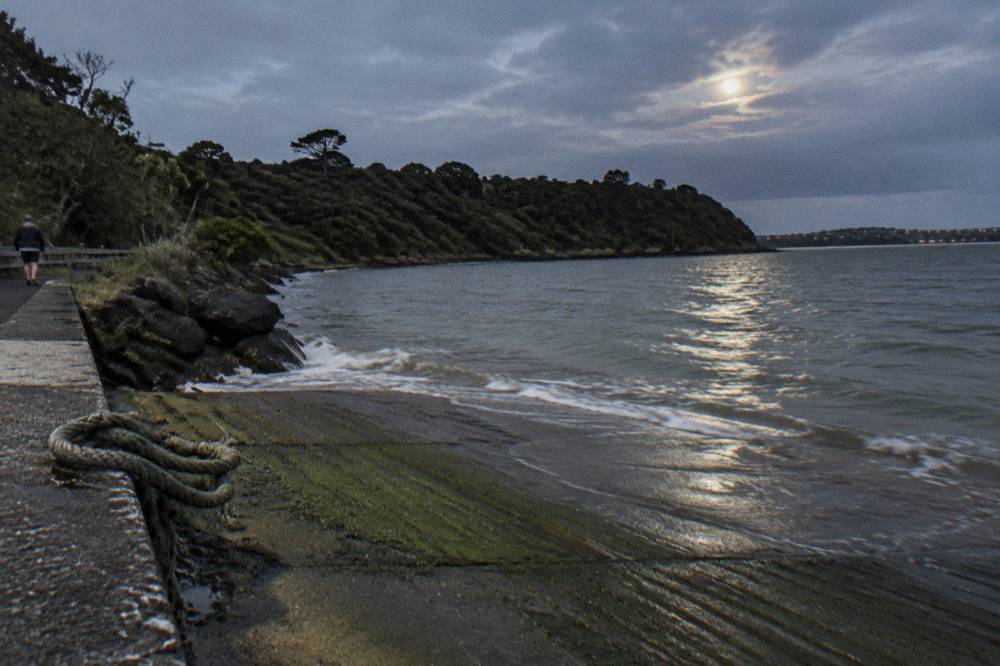
No operator or agency behind these tours says the tide affects the glow. The tide, on these tours, decides the beach, not the brightness. What the operators do say about visibility concerns the moon and the season: Social Nature Movement runs no tours when the moon is in the sky above 50 percent illumination, and says peak season is October to April.
That distinction is worth holding on to, because the internet tends to blur it. The light in the water is produced by dinoflagellates and their relatives when they are mechanically disturbed, and it accumulates near the surface when the sea is calm, as described for Noctiluca scintillans, the species Auckland Council environmental scientist Dr Megan Carbines called "a non-toxic dinoflagellate, which often forms bright blooms around the coast in summer". Nothing in that mechanism is a tide claim, and no operator here makes one.
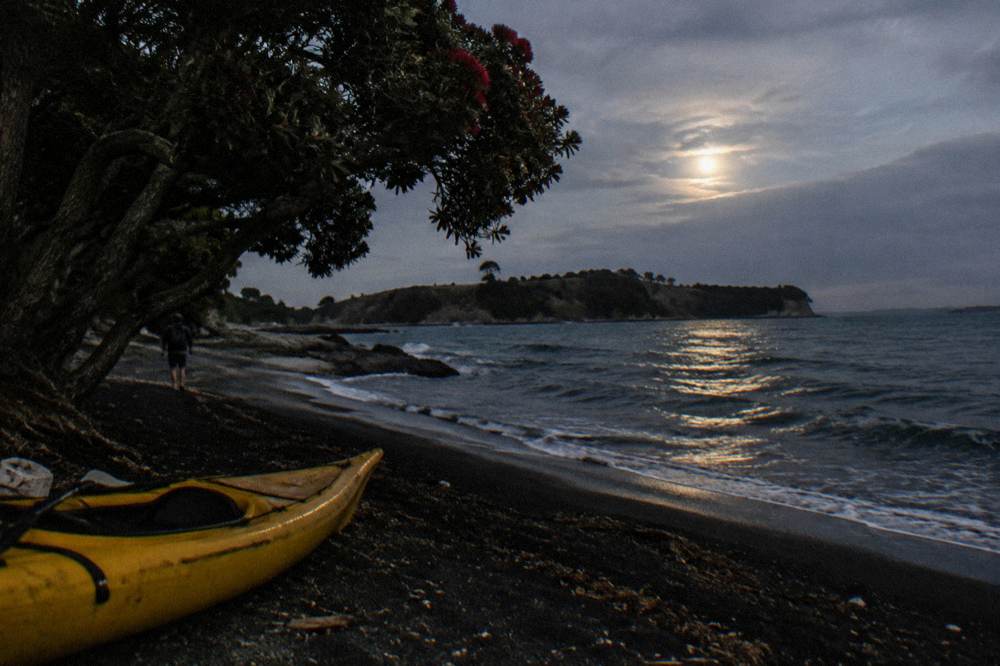
The moon is where the operators do speak. Social Nature Movement's rule is stated in its own words: "we do not operate when the moon is in the sky and at more than 50% illumination, as excessive moonlight can significantly reduce the quality and visibility of the bioluminescence, so gaps in our availability are intentional." Canoe & Kayak Adventures gives advice rather than a rule, recommending a new moon or a later moonrise, and adds that in November to April the glow is "often strong enough to enjoy on most nights", with the reminder that "bioluminescence is a natural event and can never be guaranteed". Auckland Sea Kayaks has no moon rule for its tours and says only that bioluminescence is "sometimes" seen on its sunset tour, "typically October to April". Three operators, three positions, and none of them is about the tide.
New moon dates are easy to plan against because they are computed, not guessed. The dates below are converted to Auckland local time from US Naval Observatory data, the same source behind the sun and moon calculators at the US Naval Observatory.
| Month | New moon (Auckland time) | Full moon (Auckland time) |
|---|---|---|
| November 2026 | 9 Nov | 25 Nov |
| December 2026 | 9 Dec | 24 Dec |
| January 2027 | 8 Jan | 23 Jan |
| February 2027 | 7 Feb | 21 Feb |
| March 2027 | 8 Mar | 22 Mar |
These are dates, not promises: a dark night raises nothing on its own, and no booking page guarantees a sighting. The season angle, including how the operators' various season lines differ, is unpacked in the best time for a bioluminescence kayak tour in Auckland, which keeps each operator's wording attached to that operator.
Where Do The Other Auckland Night Paddles Start From?
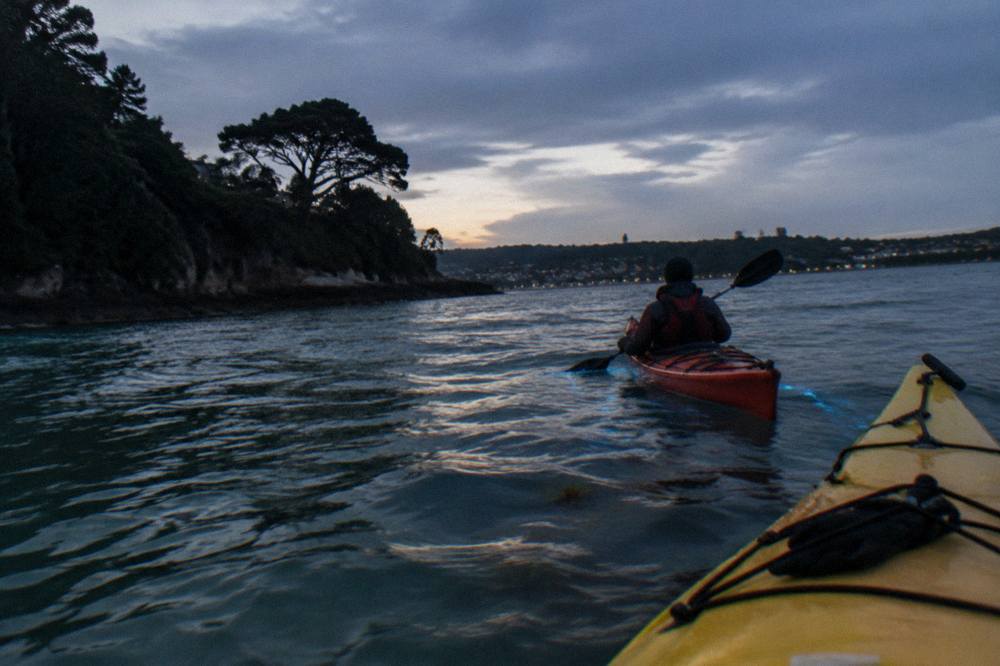
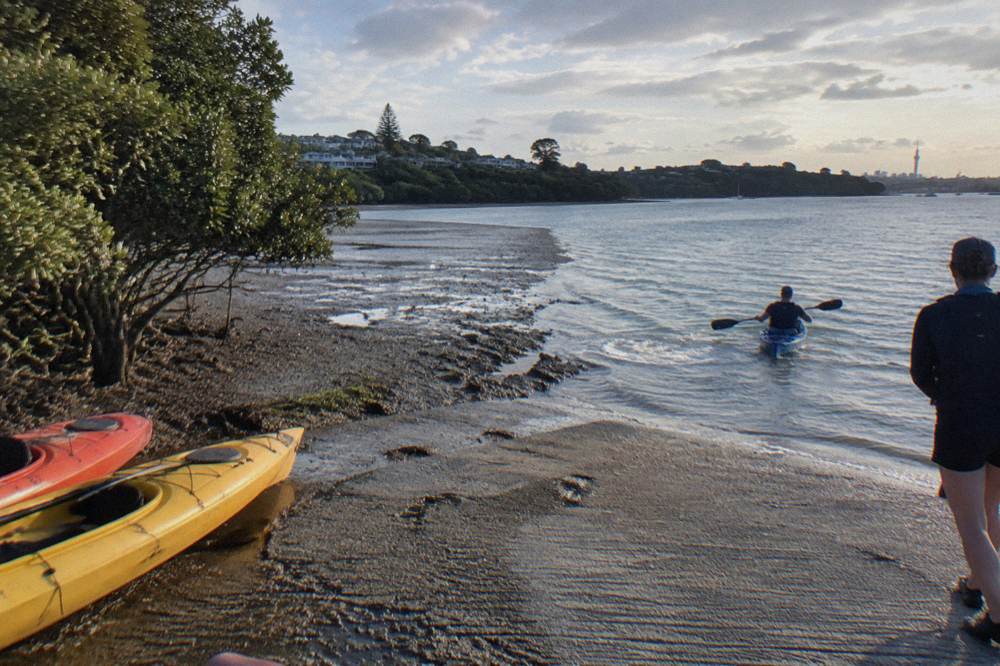
The Canoe & Kayak Adventures glow tour starts from a North Shore spot emailed before 10 AM on the day; Auckland Sea Kayaks' sunset tour departs from its St Heliers Bay base at 384 Tamaki Drive; and the City Lights paddles leave from the Westhaven Marina boat ramp. None of these operators states a tide rule for its launch.
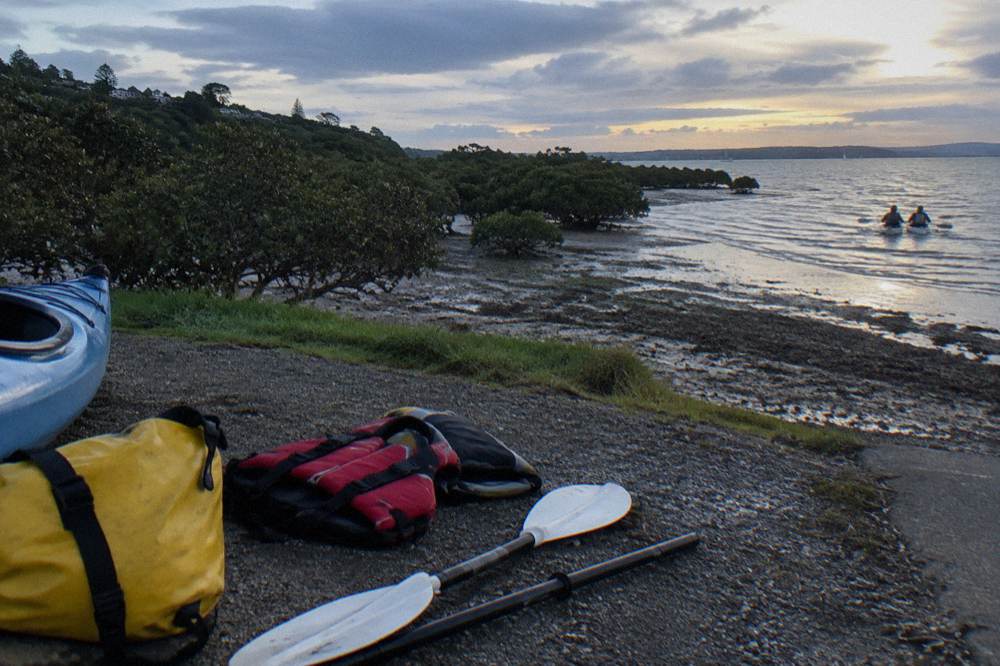
Canoe & Kayak Adventures has run kayak tours since 1994, still owned by an original founder, and its glow paddle is a 2 hour trip with 1 guide to 6 guests. Its two booking pages are twins of one trip: from $67.52 at 4.1 across 207 reviews on one page, and from $66 at 4.5 across 67 reviews on the other. Both use the same late-confirmation meeting system, a North Shore location emailed before 10 AM on the tour day. One page states a minimum age of 7 and a 120 kg weight limit, both stated on that page only; the operator's own site says ages 11 and over accompanied by an adult, but that is operator wording rather than a booking-page line. Its distinctive offer is operator wording too: if the guide confirms no bioluminescence was seen on the night, the operator gives a free repeat tour.
The Auckland Sea Kayaks sunset tour to Rangitoto Island is a 6 hour 30 minute paddle from St Heliers Bay, from $139.02 at 4.9 across 179 reviews, with a BBQ dinner and a hot drink, a group maximum of 8 and free cancellation up to 24 hours before the start. It departs from a fixed base, so there is no launch lottery, and a pre-booked free shuttle runs from the Auckland War Memorial Museum for the Rangitoto tours. The operator says bioluminescence is "sometimes" seen on this tour, "typically October to April", and can never be guaranteed, and its booking pages make no bioluminescence promise at all. The twin page for the same trip shows from $116 at 4.8 across 85 reviews with slightly different stated limits, a minimum age of 14 and a 125 kg weight limit on that page.
The City Lights paddles complete the map of night starts in Auckland. They run from the Westhaven Marina boat ramp, one at about 2.5 hours with snacks from $82.27 at 4.8 across 28 reviews, the other a 2 hour trip with a sweet treat from $73 at 5.0 across 15 reviews. These are city paddles with no bioluminescence claim on either page, and every kayak carries an all-round white navigation light at the rear. For how that fits alongside a glow paddle, see night kayak versus bioluminescence kayak tour.
| Night paddle | Operator | Start point | When the start is confirmed | Duration |
|---|---|---|---|---|
| Okura Or Waiake glow paddle | Social Nature Movement | Okura Boat Ramp or Waiake Beach | Chosen at booking, tied to the tide | 2 hours |
| North Shore glow paddle | Canoe & Kayak Adventures | North Shore spot | Emailed before 10 AM on the day | 2 hours |
| Rangitoto sunset paddle | Auckland Sea Kayaks | St Heliers Bay, 384 Tamaki Drive | Fixed base, known at booking | 6 hours 30 minutes |
| City Lights paddle | Auckland Sea Kayaks | Westhaven Marina boat ramp | Fixed base, known at booking | 2 to 2.5 hours |
How Do You Plan Around A Launch That Is Not Fixed Until Booking?
Plan the night around the confirmation, not the browsing: book early enough to see the chosen start, read the confirmation the day before, and treat the Bio-Bus or your own transport as the decision that depends on the beach. Every tour here states a full refund up to 24 hours before the start, which sets the real deadline for changing your mind.
The first practical step is choosing which booking page to use, because the two Social Nature Movement pages communicate the start differently. The two-hour page shows both beaches in the tour description, which helps a paddler who wants to imagine both options before paying. The twin page reveals the start inside checkout, which is fine for a paddler who only needs to know where to be, and it carries the bigger review pool at 4.9 across 329 reviews and the lower price at from $53. The two-hour page carries 5.0 across 46 reviews at from $62.42. Same trip, different pages, so the choice is about information style, price and review pool rather than a different paddle.
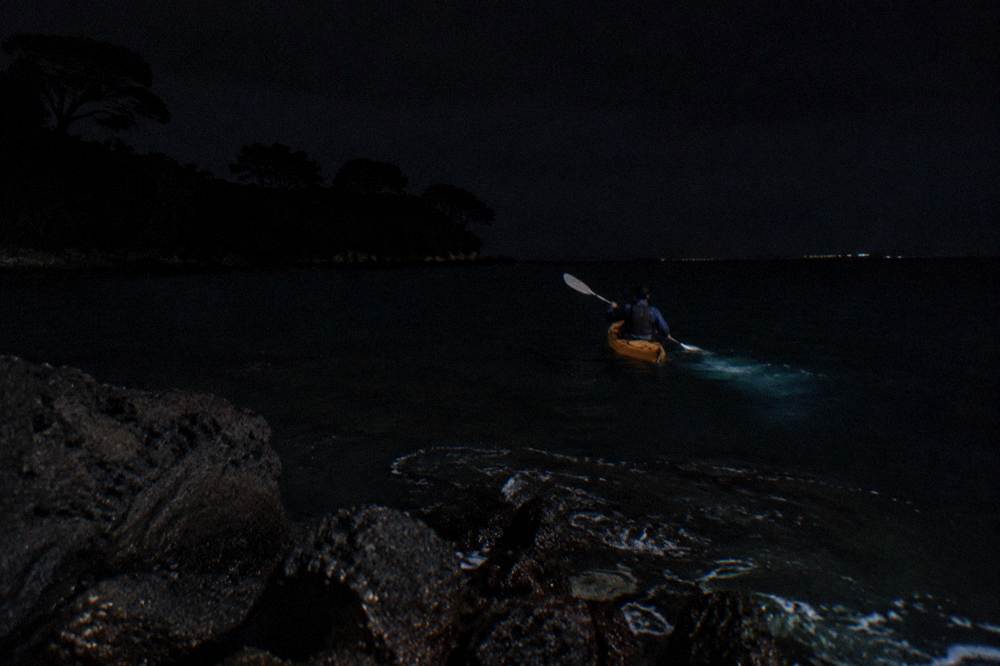
Second, build the evening around darkness rather than a clock time. The operators set their own start times, and no tour publishes one in the material here, but full darkness is computed, not guessed. On 15 December 2026, for example, sunset at the Auckland CBD waterfront is 8:36 pm, civil twilight ends 9:07 pm, and astronomical dusk falls at 10:27 pm, computed from date and location. By 15 June 2027 the same milestones are 5:11 pm, 5:40 pm and 6:43 pm. A glow paddle that starts before full dark is not a broken promise, because the organisms are disturbed into flashing wherever the kayaks move, but a paddler who wants the darkest hour can compare the tour's start against the dusk line.
Third, prepare for a wet, dark, guided activity as the operators describe it. Social Nature Movement's bring list is its own: thin merino or thermal shirt, fleece or woollen jumper, rain-proof jacket, warm beanie, towel, torch, water shoes, personal medication and a water bottle. Canoe & Kayak Adventures notes that "kayaking is a wet sport". Maritime NZ guidance for paddle craft is to dress for the water temperature, because cold water shock and hypothermia can kill, and to check the marine forecast, advice published in its paddle craft guidance. From 9 October 2026, everyone on board a recreational craft six metres or less must wear a properly fitted lifejacket while underway, a change Maritime NZ lists kayaks among, and the booking pages that list a life jacket include it.
Which Launch Point Suits Which Kind Of Paddler?
A paddler who wants the tide-story glow experience books the Okura or Waiake tour and accepts a beach chosen at booking; one who prefers to know the address in advance books a fixed-base tour at St Heliers Bay or Westhaven Marina; and one who is happy to learn the spot on the morning books the Canoe & Kayak Adventures glow paddle. All three night formats are guided paddles.
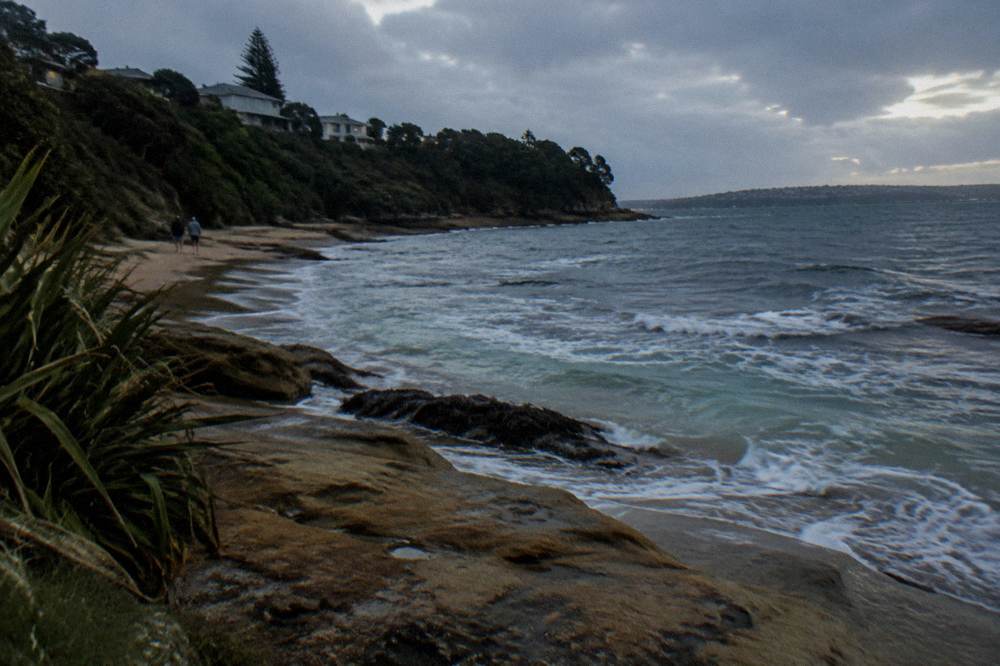
The tide-driven launch suits a traveller staying central with the Bio-Bus add-on or with a car, because either way the beach decision is the operator's and the trip runs about 2 hours. The fixed-base sunset tour suits a paddler building a full evening around one address, with dinner included and a group maximum of 8. The City Lights paddles suit someone who wants the shortest travel from the city centre, a marina start and a view back at the skyline, at about 2 to 2.5 hours.
Budget frames the choice as much as geography. Across the nine tours covered here the cheapest per-person from-price is $53, the highest is $139.02 and the median is $73, all USD and per person. The two hour glow paddles cluster at the low end, the dinner paddles at the top, and the city paddles in the middle. Reviews should be read with counts attached: 5.0 across 46 reviews is a strong small pool, while 4.1 across 207 reviews is a bigger, more critical one, and the Tiritiri Matangi dinner and wildlife trip is a 7 hour paddle that has no rating yet, so no star claim can be made for it.
| If the paddler wants | Best fit | Why |
|---|---|---|
| The tide-linked glow paddle | Okura Or Waiake Start, 2 Hours | Operator ties each beach to a tide state, 2 hours, from $62.42 |
| The lowest from-price on a glow paddle | Optional Bio-Bus, 1.5 To 2 Hours | Same trip on its twin page, from $53, 4.9 across 329 reviews |
| A known address from day one | Rangitoto sunset paddle | Fixed St Heliers Bay base, dinner included, group max 8 |
| A short city night paddle | City Lights paddles | Westhaven Marina start, 2 to 2.5 hours, from $73 |
None of these choices promises the glow. The strongest honesty line among the operators belongs to Canoe & Kayak Adventures, which pairs "can never be guaranteed" with a free repeat tour if the guide confirms nothing was seen, and the strongest planning tool is the operator's own moon wording, covered in moon phase and a bioluminescence kayak tour. A reader assembling the whole picture across operators can start with this site and its guide to Auckland bioluminescence kayak tours compared.
Common Questions About Tides And Bioluminescence Kayak Launch Points
Why Does The Start Beach Change Between Okura And Waiake?
Social Nature Movement links Okura Boat Ramp to high tide and Waiake Beach to low tide, and says both locations are equally good. The operator chooses the beach around the tide on the night, and the start is confirmed at booking.
Does The Tide Affect How Bright The Bioluminescence Is?
No operator or agency says the tide affects how bright the glow is. The operators' visibility statements concern the moon and the season, and Social Nature Movement says bioluminescence varies naturally while Canoe & Kayak Adventures says it can never be guaranteed.
When Do You Find Out The Exact Launch Point?
It depends on the tour. The Social Nature Movement two-hour page lists both beaches and the choice appears at booking; the twin page names the start only during checkout. Canoe & Kayak Adventures emails its North Shore spot before 10 AM on the tour day. Auckland Sea Kayaks uses fixed bases at St Heliers Bay and Westhaven Marina.
Is One Beach Better Than The Other For Seeing The Glow?
No booking page ranks the two beaches, and the operator calls them equally good. The choice is about the tide and the launch, not about the strength of the glow, which no tour promises.
Can You Cancel If The Confirmed Launch Is Hard To Reach?
Every one of the nine tours states a full refund when cancelled at least 24 hours before the start. The Bio-Bus add-on from near the Sky Tower also exists for the Social Nature Movement glow paddle on the page that offers it.
Do The Other Night Kayak Tours Also Move Their Launch Points?
No. The Canoe & Kayak Adventures glow tour confirms its spot on the day, but the Auckland Sea Kayaks tours depart from fixed addresses: St Heliers Bay for the Rangitoto sunset tour and the Westhaven Marina boat ramp for the City Lights paddles.