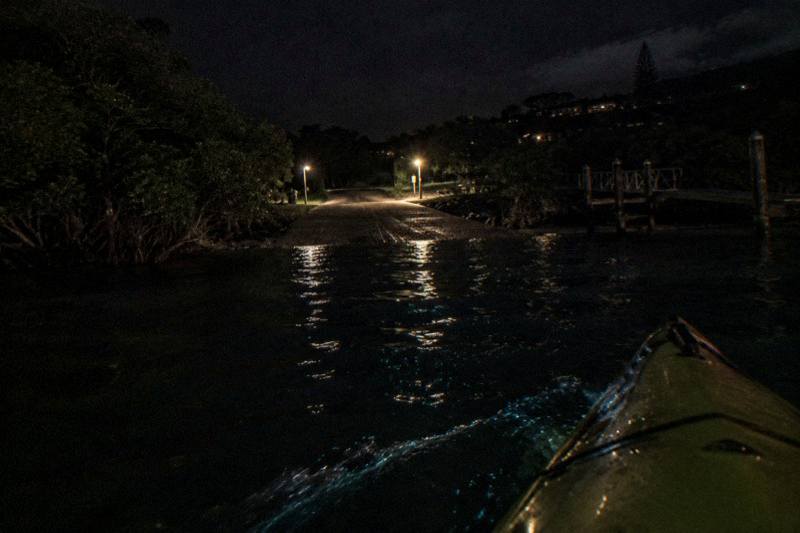
Best Time For A Bioluminescence Kayak Tour In Auckland: Season And Dates
Three Auckland operators describe the bioluminescence season in three different ways, and only their own words can be used. This guide sets out each statement, the computed dusk and full-dark times that shape a summer booking, and the moon dates that matter for a North Shore glow paddle.
Short answer
There is no single official Auckland bioluminescence season. Social Nature Movement says its peak runs October to April, Canoe and Kayak Adventures says November to April glow is often strong enough on most nights, and Auckland Sea Kayaks says bioluminescence is sometimes seen on its sunset tour, typically October to April. Canoe and Kayak Adventures and Auckland Sea Kayaks say a sighting can never be guaranteed, and Social Nature Movement says the glow varies naturally.
Every Auckland bioluminescence tour operator frames the season differently, and those differences are the most useful planning information available. Social Nature Movement links its peak to October through April and refuses to run when a bright moon is in the sky. Canoe and Kayak Adventures points to November through April as the months when the glow is "often strong enough to enjoy on most nights", while Auckland Sea Kayaks says only that bioluminescence is "sometimes" seen on its sunset tour, "typically October to April". None of the three promises a sighting, and no public agency publishes a season forecast for the Hauraki Gulf.
This guide separates what each operator actually says from the computed astronomy that shapes any booking: when full dark arrives in an Auckland summer, which new and full moon dates fall in the year ahead, and how the nine tours covered here differ in price and duration. The goal is a date choice built on attributed statements rather than folklore. For a wider view of how the months compare, the season by season guide to bioluminescence kayak timing in Auckland covers each operator's season wording month by month.
When Is The Bioluminescence Season In Auckland?
There is no official Auckland bioluminescence season and no agency forecast for the Hauraki Gulf. What exists are three separate operator statements: Social Nature Movement says peak season is October to April, Canoe and Kayak Adventures says November to April glow is "often strong enough to enjoy on most nights", and Auckland Sea Kayaks says bioluminescence is "sometimes" seen on its sunset tour, "typically October to April". Each statement belongs to that operator alone and none promises a sighting.
The science behind the glow gives the season statements some physical grounding without confirming any of them. The organism most often responsible is Noctiluca scintillans, a single-celled dinoflagellate that flashes when the water around it is disturbed, as described at Wikipedia's page on Noctiluca scintillans. Auckland Council environmental scientist Dr Megan Carbines, quoted in a Local Matters report on warm-water blooms, called it "a non-toxic dinoflagellate, which often forms bright blooms around the coast in summer", and said rising water temperature "is conducive to these sorts of blooms if combined with calm conditions allowing them to accumulate".
Warm water and calm conditions encourage the blooms, and the flashes happen at night when the cells are disturbed. Sea temperatures around Auckland are coolest in winter and warmest in late summer, which sits alongside the operators' season wording, but no glow threshold, nutrient level or moon effect has been established for Auckland water.
| Operator | Season statement in its own words | Applies to |
|---|---|---|
| Social Nature Movement | Peak season is October to April; "best viewed during warmer months (late spring through autumn) on dark, moonless nights" | Its bioluminescence tours |
| Canoe & Kayak Adventures | "In November-April, the glow is often strong enough to enjoy on most nights" | Its bioluminescence tours |
| Auckland Sea Kayaks | Bioluminescence is "sometimes" seen, "typically October to April"; can never be guaranteed | Its Rangitoto sunset tour only |
The three statements should stay separate in any planning decision. Social Nature Movement's October-to-April line and its moon rule are one operator's policy, not a general law of the Waitemata Harbour, and Canoe and Kayak Adventures' November-to-April wording is a different operator's reading of its own launch area on the North Shore. The moon phase and bioluminescence tour relationship is covered in detail in its own guide.
How Late Does Full Dark Arrive In An Auckland Summer?
Full dark, meaning astronomical dusk, arrives very late in an Auckland summer: 9:49 pm on 15 November 2026, 10:27 pm on 15 December and 10:29 pm on 15 January 2027, computed from date and location for the Auckland CBD waterfront. Sunset alone is not dark enough for a glow paddle, and the gap between sunset and full dark runs about an hour and a half to nearly two hours across the year.
A bioluminescence paddle needs darkness, and darkness arrives later than many visitors expect at this latitude. Dinoflagellate bioluminescence occurs only at night and is controlled by a circadian clock, so the useful window for a glow tour opens well after the sun has set. The table below shows the computed sunset, the end of civil twilight and astronomical dusk, the point when the sky is fully dark, for the 15th of each month, drawn from US Naval Observatory data as explained at the USNO sun and moon computation page.
| Date | Sunset | End of civil twilight | Full dark (astronomical dusk, computed) |
|---|---|---|---|
| 15 Nov 2026 | 8:08 pm | 8:37 pm | 9:49 pm |
| 15 Dec 2026 | 8:36 pm | 9:07 pm | 10:27 pm |
| 15 Jan 2027 | 8:42 pm | 9:12 pm | 10:29 pm |
| 15 Feb 2027 | 8:18 pm | 8:46 pm | 9:53 pm |
| 15 Mar 2027 | 7:41 pm | 8:07 pm | 9:08 pm |
| 15 Apr 2027 | 5:56 pm | 6:22 pm | 7:22 pm |
| 15 May 2027 | 5:23 pm | 5:50 pm | 6:52 pm |
| 15 Jun 2027 | 5:11 pm | 5:40 pm | 6:43 pm |
| 15 Jul 2027 | 5:23 pm | 5:51 pm | 6:54 pm |
| 15 Aug 2027 | 5:46 pm | 6:13 pm | 7:13 pm |
| 15 Sep 2027 | 6:11 pm | 6:37 pm | 7:37 pm |
| 15 Oct 2027 | 7:37 pm | 8:03 pm | 9:06 pm |
The practical reading for a date choice is straightforward. A summer booking around Okura or Waiake means a late night, with full dark close to 10:30 pm near the solstice and the glow window opening after that. A shoulder-season or winter booking brings full dark before 7:30 pm, an easier hour for families and for anyone with a morning flight, though it sits outside what the operators describe as their peak. Operators set their own start times, and the operators, not any table, decide when a tour begins. The question of what time of year is best is examined from the traveller-value side in a separate article.
Daylight saving adds one more wrinkle worth knowing. Summer time (UTC+13) began on 27 September 2026 and ends on 4 April 2027, resuming on 26 September 2027, so all the late clock times above are in daylight-saving time and shift back an hour in winter. The times are computed from date and location, not read from a tour schedule.
Which Dates Around Okura And Waiake Suit A Glow Paddle?
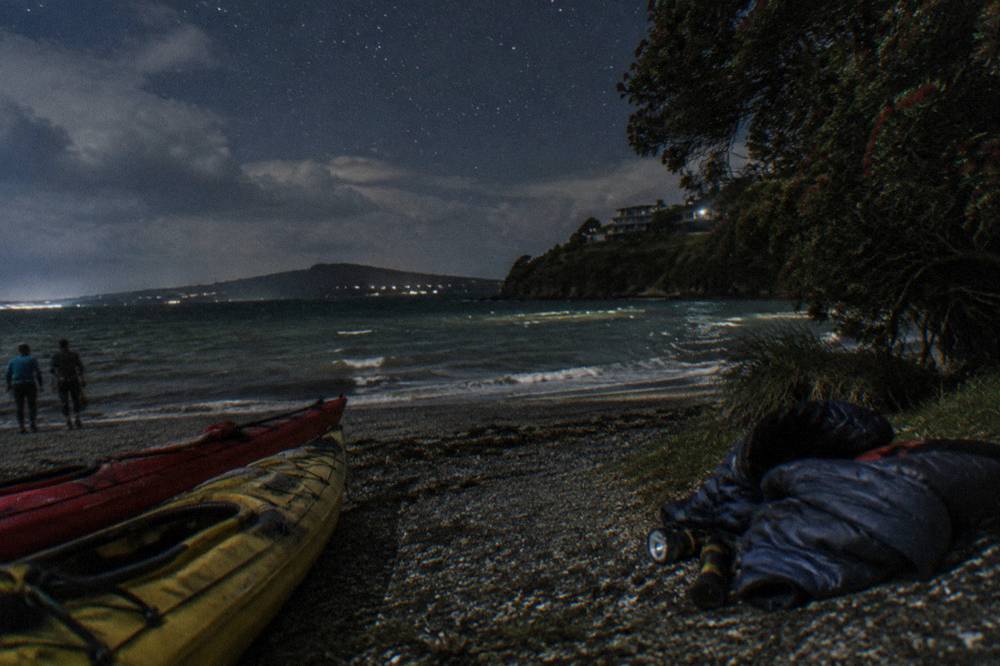
The dedicated glow paddles launch from Okura Boat Ramp or Waiake Beach on the North Shore, and Social Nature Movement links the choice to the tide: Okura at high tide, Waiake at low tide, with "both locations are equally good". Canoe and Kayak Adventures instead emails its exact North Shore meeting spot before 10 AM on the tour day. Tide, moon and darkness all shape which dates work at each launch.
Okura Boat Ramp sits at the end of Okura River Road, and Waiake Beach is the alternative when the tide suits it better. That tide-dependence means the calendar and the tide table interact: a date with good darkness and a favourable moon may still shift its launch between the two ramps. The tides and launch points guide works through that relationship in full, and the Okura and Waiake launches are described place by place elsewhere on this site.
Social Nature Movement's weather limits also gate the calendar. The operator says tours proceed only in calm conditions, with Waiake not operating above 5 m/s wind or 2.4 mm rain and Okura above 8 m/s or 2.4 mm rain. Those are the operator's own thresholds, published for its own tours, and they explain why a date can look perfect on paper and still not run.
Canoe and Kayak Adventures takes a different approach to the same problem. Its tours run on demand with minimum numbers, its guide-to-guest ratio is 1 to 6, and it says the glow is "very rare not to see at least one type", with a free repeat tour offered if the guide confirms none was seen. Its meeting spot is only ever emailed before 10 AM on the day, so a booking with this operator is a commitment to a North Shore night without a pinned address in advance. Its dedicated bioluminescence tour runs 2 hours, is rated 4.1 across 207 reviews on one booking page and 4.5 across 67 reviews on the other, from $67.52 and from $66 respectively. See the two-hour North Shore glow tour for dates and current availability.
The Tiritiri Matangi trip by the same operator, Social Nature Movement, sits apart from all of this. It is a 7-hour dinner, wildlife and night-walk trip with a return paddle that offers "a chance to see bioluminescent plankton", from $139, with pickup included and two pickup options chosen at booking. It has no rating yet and should never be compared on price with the 2-hour glow paddles, because it is a different kind of night out entirely.
Does The Moon Phase Change Which Date To Book?
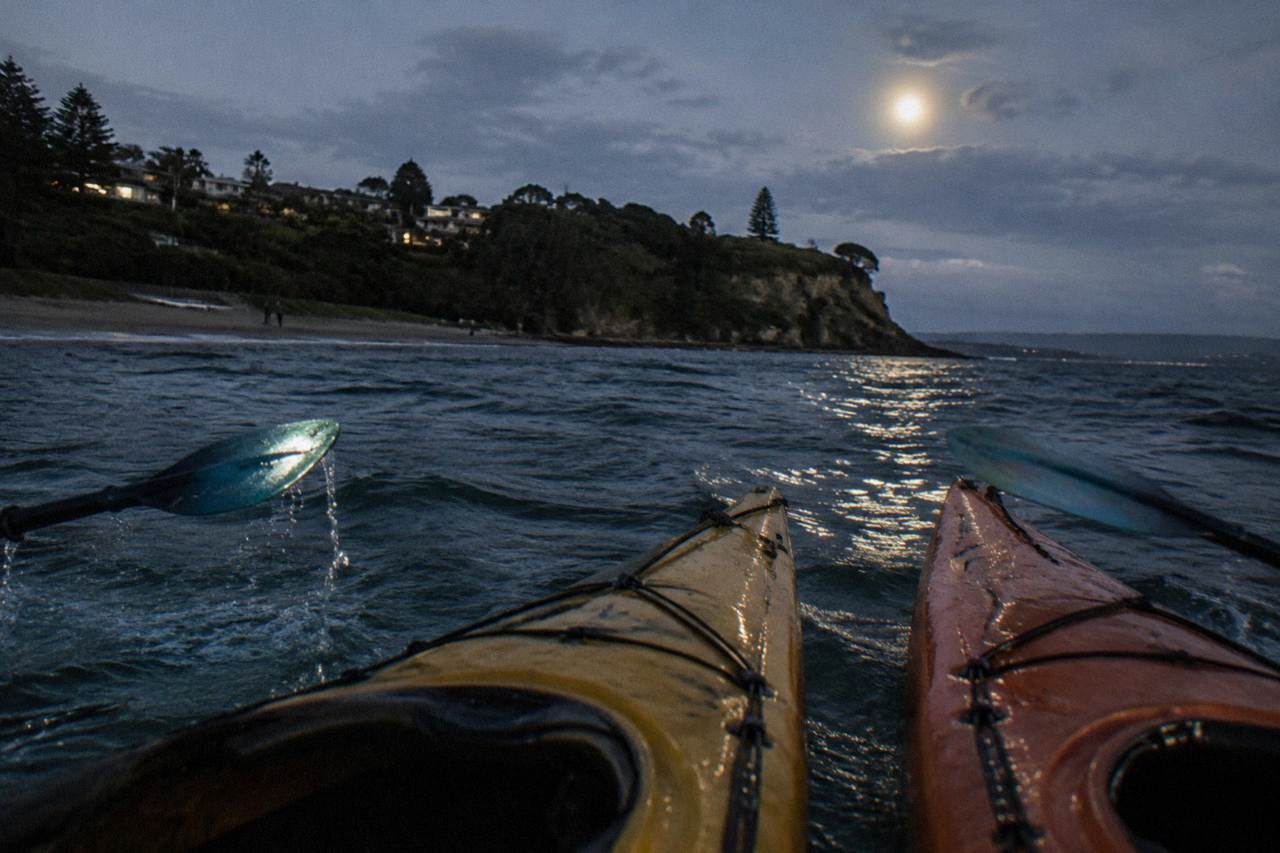
Yes, by operator policy and by operator advice. Social Nature Movement does not operate when the moon is in the sky at more than 50 percent illumination, so its calendar gaps are intentional. Canoe and Kayak Adventures recommends booking near a new moon or on nights with a later moonrise. Auckland Sea Kayaks has no moon rule at all. One operator's moon wording never applies to another.
The moon calendar below is computed from US Naval Observatory data and converted to Auckland local time. The dates here are astronomy, not advice: no night is a "best night", and no date guarantees a sighting.
| Moon phase | Dates, November 2026 to October 2027 (computed from US Naval Observatory data) |
|---|---|
| New moon | 9 Nov 2026, 9 Dec 2026, 8 Jan 2027, 7 Feb 2027, 8 Mar 2027, 7 Apr 2027, 6 May 2027, 5 Jun 2027, 4 Jul 2027, 2 Aug 2027, 1 Sep 2027, 30 Sep 2027, 30 Oct 2027 |
| Full moon | 25 Nov 2026, 24 Dec 2026, 23 Jan 2027, 21 Feb 2027, 22 Mar 2027, 21 Apr 2027, 20 May 2027, 19 Jun 2027, 19 Jul 2027, 17 Aug 2027, 16 Sep 2027, 16 Oct 2027 |
For a Social Nature Movement booking, the practical consequence is that dates around each full moon simply do not appear in its availability, and the operator says the gaps are deliberate: "we do not operate when the moon is in the sky and at more than 50% illumination, as excessive moonlight can significantly reduce the quality and visibility of the bioluminescence". For Canoe & Kayak Adventures, moonlight affects the tour and how brightly bioluminescence can appear; when the moon is brighter the glow can be more subtle, but still visible, and the operator recommends new moon dates or nights with a later moonrise. Its tours run on those nights regardless.
A date near a new moon suits both glow operators, Canoe & Kayak Adventures advising it directly and Social Nature Movement ruling out brighter moonlight, yet no booking promises a sighting. The glow comes from living organisms that "vary naturally", in Social Nature Movement's words, and Canoe and Kayak Adventures and Auckland Sea Kayaks add that it can never be guaranteed. A reader who wants the fuller picture of how moonlight interacts with the water can read the dedicated moon phase guide.
Do Sunset Tours On The Waitemata Harbour See The Glow?
Auckland Sea Kayaks says bioluminescence is "sometimes" seen on its Rangitoto sunset tour, "typically October to April", and can never be guaranteed. Its City Lights night paddles from Westhaven Marina make no bioluminescence claim at all. A sunset tour is a harbour and dinner trip that happens on water where the glow can appear, not a dedicated glow paddle.
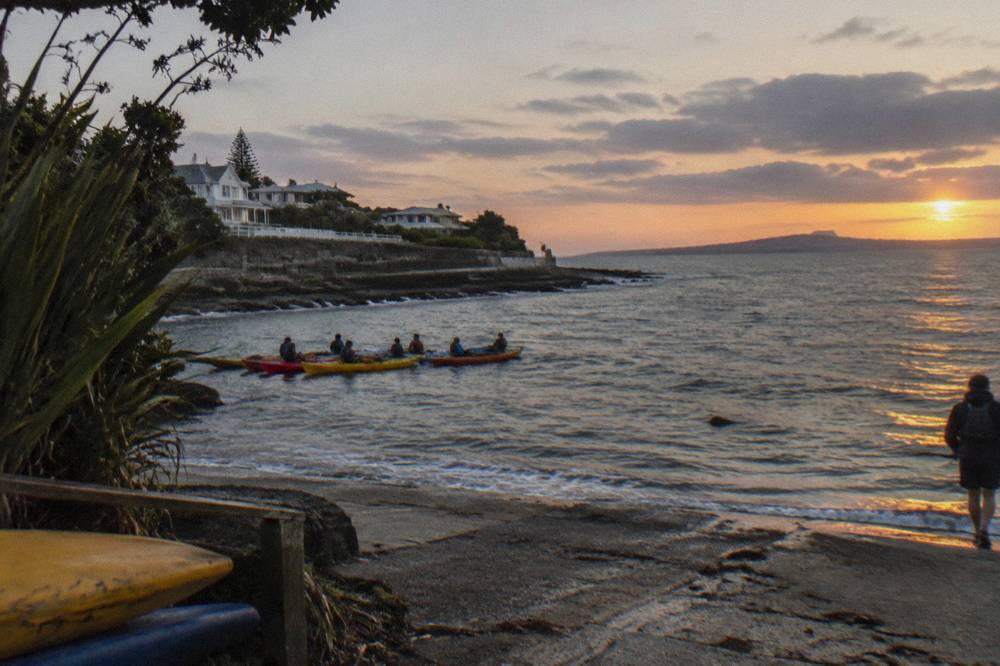
The Rangitoto sunset trips run from the operator's base at St Heliers Bay, 384 Tamaki Drive, cross to the island for a BBQ dinner and return after dark, with navigation lights on each kayak and a pre-booked free shuttle from the Auckland War Memorial Museum available. The trip is sold on two booking pages: one shows 4.9 across 179 reviews from $139.02, the other 4.8 across 85 reviews from $116. See the Rangitoto sunset and night paddle for the date calendar.
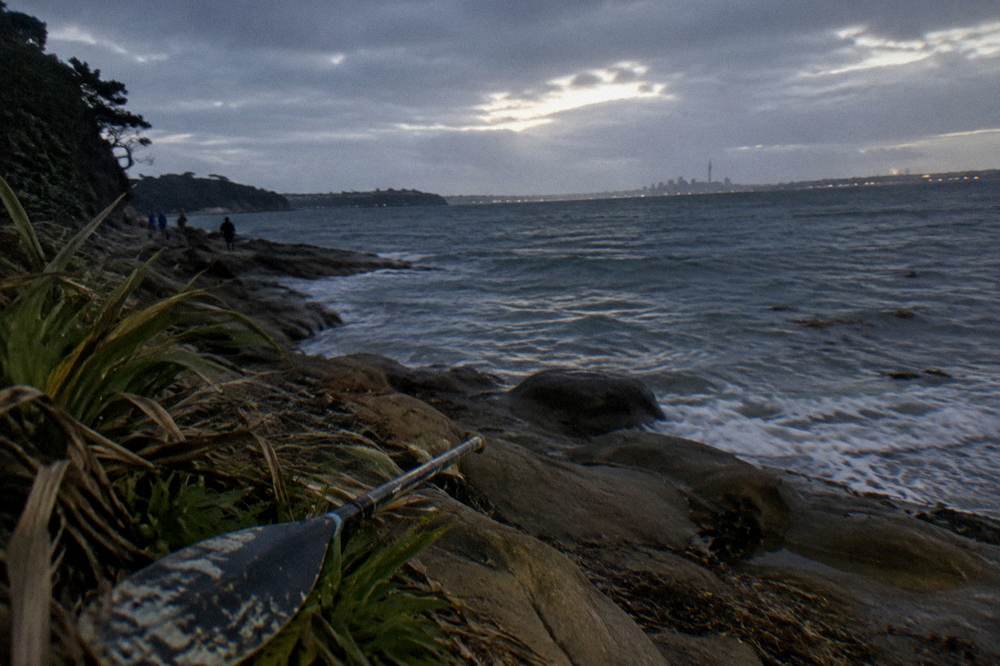
The distinction matters for season planning. A reader who books the sunset tour in, say, February is buying a 6.5 to 7-hour evening with dinner, a volcano and a starlit paddle home across the Waitemata Harbour, with the glow as an acknowledged possibility in the operator's own season window. A reader who books a dedicated 2-hour glow paddle from Okura, Waiake or an emailed North Shore spot is buying a tour built around the organisms, run by an operator whose calendar, moon policy and season statement all exist for that purpose. Neither is a guarantee; they differ in what the night is for.
How Do Prices And Durations Compare Across The Season?
The cheapest dedicated glow paddle is from $53 per person for the most-reviewed trip in the group, 4.9 across 329 reviews, and the highest per-person price across the nine tours is $139.02 for the Rangitoto sunset tour. The median price is $73. Prices are per person, in USD, from each booking page, and twins of the same trip can differ in price.
Four of the nine tours covered here are dedicated bioluminescence paddles sold by two operators, each trip appearing on two booking pages at different prices. The table lists each booking page, and paired rows are the same trip.
| Tour | Operator | Duration | Rating and reviews | From, per person | Start |
|---|---|---|---|---|---|
| Optional Bio-Bus, 1.5 To 2 Hours | Social Nature Movement | 1.5 to 2 hours | 4.9 across 329 reviews | $53 | Chosen at booking |
| Okura Or Waiake Start, 2 Hours | Social Nature Movement | 2 hours | 5.0 across 46 reviews | $62.42 | Okura Boat Ramp or Waiake Beach |
| North Shore Start, 2 Hours | Canoe & Kayak Adventures | 2 hours | 4.1 across 207 reviews | $67.52 | North Shore, spot emailed on the day |
| No Hotel Pickup, 2 Hours | Canoe & Kayak Adventures | 2 hours | 4.5 across 67 reviews | $66 | North Shore, spot emailed on the day |
| Tiritiri Matangi, 7 Hours | Social Nature Movement | 7 hours | No rating shown yet | $139 | Pickup options chosen at booking |
| St Heliers Start, Rangitoto BBQ | Auckland Sea Kayaks | 6 hours 30 minutes | 4.9 across 179 reviews | $139.02 | St Heliers Bay |
| Rangitoto BBQ, 7 Hours | Auckland Sea Kayaks | 7 hours | 4.8 across 85 reviews | $116 | St Heliers Bay |
| 2.5 Hours, Snacks | Auckland Sea Kayaks | About 2.5 hours | 4.8 across 28 reviews | $82.27 | Westhaven Marina |
| Sweet Treat, 2 Hours | Auckland Sea Kayaks | 2 hours | 5.0 across 15 reviews | $73 | Westhaven Marina |
Once you have picked a tour, the guide to free things to do in Auckland at night around your kayak tour rounds out the evening with activities near each launch point.
The price spread tells a season story of its own. The 2-hour glow paddles cluster between $53 and $67.52, which makes trying for a night of glow relatively low-cost compared with the dinner-length harbour trips above $116. Every one of the nine booking pages states a full refund when cancelled at least 24 hours before the start, so a season experiment booked early carries a defined exit. The tour prices guide unpacks the pricing structure in more depth.
How Far Ahead Should A Date Be Chosen?
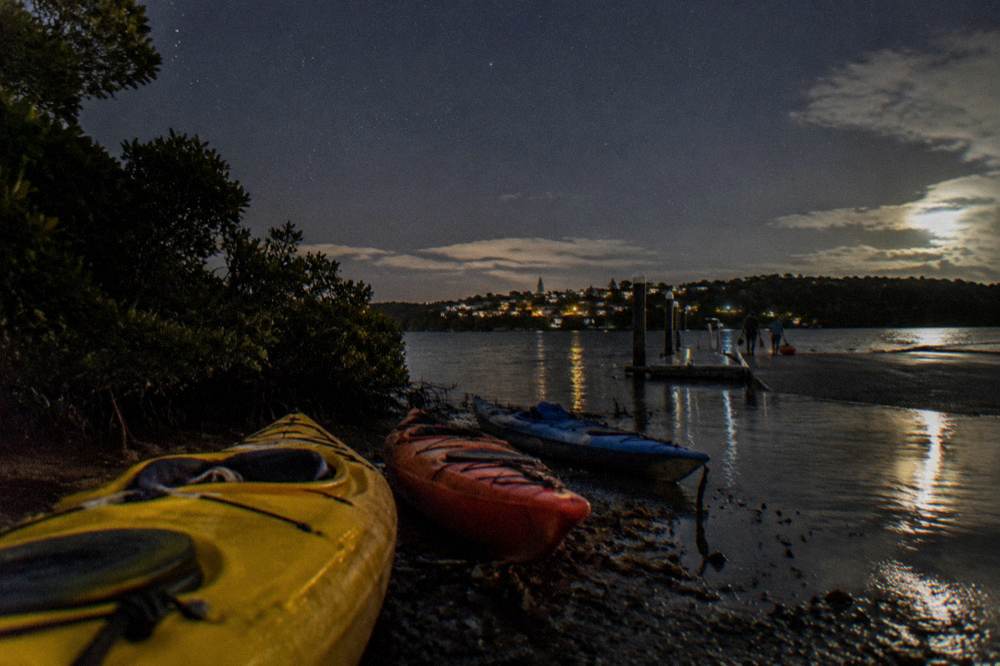
Canoe and Kayak Adventures says its November to April dates "do fill fast, so booking ahead is a good idea", the only operator to say so. Social Nature Movement's availability gaps are intentional moon-driven cuts, so a dark-window date can vanish while it still looks open elsewhere. A date around a new moon is the scarce commodity.
Put the three constraints together and the booking logic assembles itself. The reader wants a date inside the operator's own season wording, on a night the operator will actually run, with the 24-hour cancellation window still intact when the forecast firms up. For Social Nature Movement that means the calendar has already done the moon filtering. For Canoe and Kayak Adventures it means the operator says its November to April dates fill fast, and recommends booking near a new moon or on nights with a later moonrise. For Auckland Sea Kayaks it means a sunset booking in the "typically October to April" window with the glow treated as a bonus rather than the purpose.
The how far ahead to book guide works through timing in detail, including school holidays and the cancellation arithmetic. What matters for season choice specifically is that the scarce dates are dark ones: thirteen new moons fall in the year from November 2026, and each dark window is about a week either side.
What Else Shapes A Season Choice On A North Shore Night?
Weather limits, water temperature guidance and the late summer clock all bear on the date. Social Nature Movement runs only in calm conditions, Maritime NZ advises dressing for the water temperature because cold water shock can kill, and full dark after 10 pm in midsummer means a late finish. None of this changes the season statements, it just narrows which nights suit.
Warm clothing is the one preparation every source agrees on. Maritime NZ's paddle craft guidance, at the Maritime NZ paddle craft page, tells paddlers to dress for the water temperature, carry two waterproof ways to call for help and check the marine forecast before going out. Since 9 October 2026, everyone on board a recreational craft six metres or less must wear a properly fitted lifejacket while underway, and Maritime NZ lists kayaks among the craft covered, noting an educational approach to compliance in the coming months. Where a booking page lists lights and gear, the operator fits and issues them; that is the whole night-light story on a guided paddle.
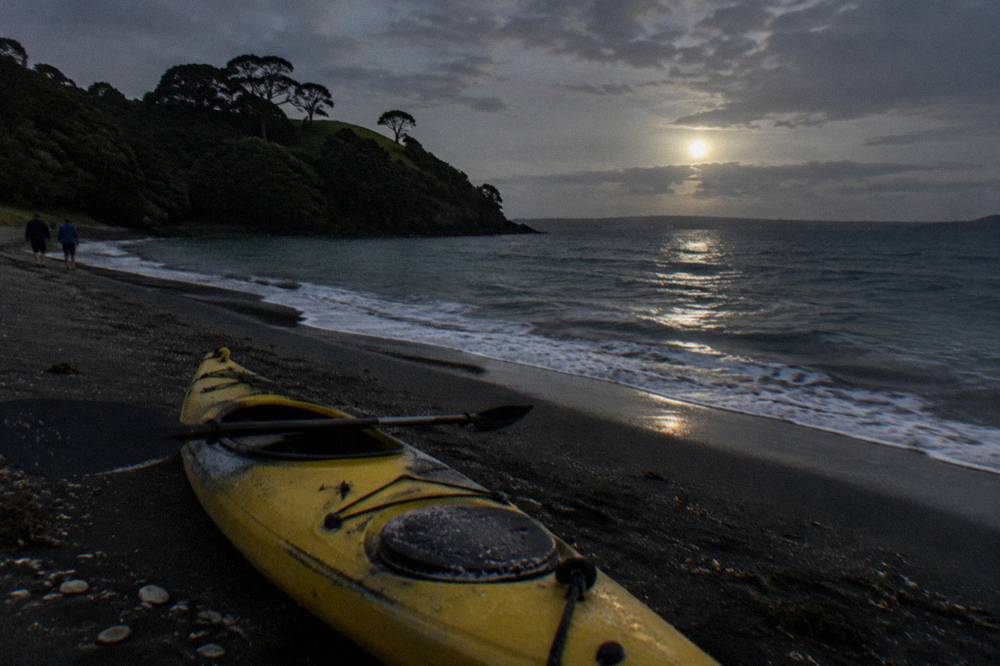
Social Nature Movement publishes its own bring list: thin merino or thermal shirt, fleece or woollen jumper, rain-proof jacket, warm beanie, towel, torch, water shoes, personal medication and a water bottle. Social Nature Movement asks guests to bring this gear, and the kit reads as winter-capable even inside the October-to-April peak. Canoe and Kayak Adventures reminds guests that "kayaking is a wet sport". The what to wear guide covers kit in full.
Should The Season Choice Also Consider A City Lights Night?
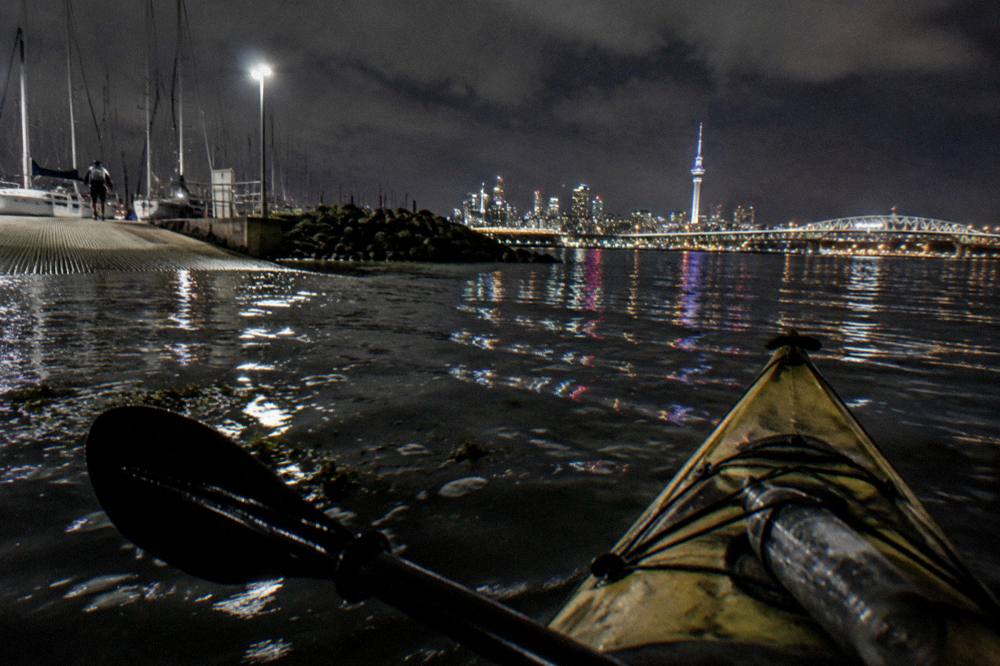
A city lights paddle from Westhaven Marina is a night kayak without any bioluminescence claim, so it works as a season-proof alternative when moonlight or the operator calendar rules out a glow date. The two Auckland Sea Kayaks city paddles run from $73 and from $82.27, rated 5.0 across 15 reviews and 4.8 across 28 reviews, on the sheltered Waitemata Harbour.
The city option solves a real planning problem. If the only free evening in a trip falls near a full moon, or outside an operator's peak, a glow paddle is either unavailable or working against the operator's own advice. A paddle among the harbour lights makes no promise it cannot keep: every kayak carries an all-round white navigation light, guides carry marine VHF radios and first aid, and the operator has run tours since 2010 as an audited certified adventure activity operator. The two booking pages are twins of one trip, one at 2 hours with a sweet treat and a group max of 9, the other about 2.5 hours with snacks and a group max of 8.
Choosing between the two nights is really choosing what the evening is for. The glow paddle is a wager on organisms, weather and darkness, priced from $53 at the dedicated end. The city paddle is a guarantee of harbour lights, reflections and a guide, with the sky doing scenery rather than chemistry. Many trip plans simply do both on different nights, and the 24-hour cancellation stated on every booking page keeps that flexible. This site keeps the full set of nine tours side by side for exactly that kind of comparison.
What Dates Would A Careful Reader Actually Book?
A careful reader books inside the operator's own season wording, on a date the operator will run: near a new moon for the glow paddles, October to April or November to April depending on the operator, with the Rangitoto sunset tour treated as a harbour trip with a possible glow bonus. Dark, calm and cancellable beats any month name.
The date choice reduces to three checks. First, the season: match the booking to the operator's own statement, never to a merged "Auckland season" that no operator publishes. Second, the sky: new moon dates through October 2027 are listed above, and Social Nature Movement's calendar already excludes its bright-moon nights. Third, the clock: full dark comes early enough for a family-friendly hour in the cooler months, and each operator sets its own start time; darkness times are computed from date and location.
No date, month or moon phase promises a sighting, and no booking page here makes that promise. What a good date does is stack the conditions the operators themselves name: warmth, calm, darkness and a calendar the operator has already vetted. Booked that way, with the 24-hour refund window as a backstop, the worst case is still a guided night paddle on a North Shore beach or the Waitemata Harbour.
Common Questions About The Best Time For A Bioluminescence Kayak Tour In Auckland
When Is The Bioluminescence Season In Auckland?
There is no single official season. Social Nature Movement says its peak runs October to April, Canoe and Kayak Adventures says November to April glow is "often strong enough to enjoy on most nights", and Auckland Sea Kayaks says bioluminescence is "sometimes" seen on its sunset tour, "typically October to April". Each statement belongs to that operator only.
Does A Bright Moon Cancel A Bioluminescence Kayak Tour?
For Social Nature Movement, yes by policy: it does not operate when the moon is in the sky at more than 50 percent illumination, so its availability gaps are intentional. Canoe and Kayak Adventures still runs and says the glow "can be more subtle, but still visible", recommending new moon or later-moonrise nights. Auckland Sea Kayaks has no moon rule.
How Late Does It Get Dark In An Auckland Summer?
Full dark, computed as astronomical dusk for the Auckland CBD waterfront, arrives at 9:49 pm on 15 November 2026, 10:27 pm on 15 December and 10:29 pm on 15 January 2027. The times are computed from date and location; operators set their own tour start times.
Which New Moon Dates Are Coming Up In Auckland?
New moon dates computed from US Naval Observatory data, in Auckland local time: 9 Nov 2026, 9 Dec 2026, 8 Jan 2027, 7 Feb 2027, 8 Mar 2027, 7 Apr 2027, and roughly monthly through to 30 Oct 2027. A new moon date is astronomy, not a sighting guarantee.
Can The Glow Be Seen On A Rangitoto Sunset Tour?
Auckland Sea Kayaks says bioluminescence is "sometimes" seen on its sunset tour, "typically October to April", and can never be guaranteed. The sunset tours are harbour and dinner trips that return after dark, not dedicated glow paddles.
Is A Bioluminescence Kayak Tour Ever Guaranteed To Show The Glow?
No. Canoe and Kayak Adventures and Auckland Sea Kayaks say the glow is a natural event that can never be guaranteed, and Social Nature Movement says it varies naturally. Canoe and Kayak Adventures offers a free repeat tour if its guide confirms none was seen; terms are the operator's.