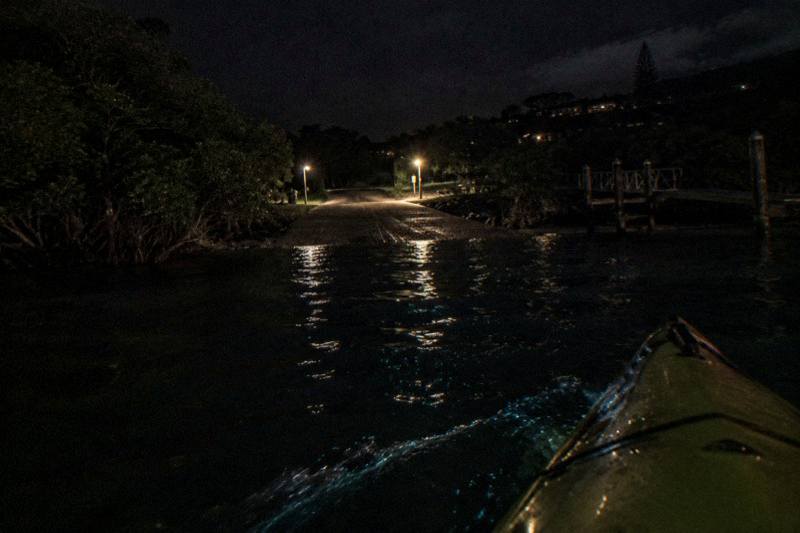
Does A Bright Moon Cancel A Bioluminescence Kayak Tour?
A bright moon cancels some Auckland bioluminescence kayak tours and not others. This guide explains each operator's moon rule, the weather rules that are separate, and the moon dates ahead.
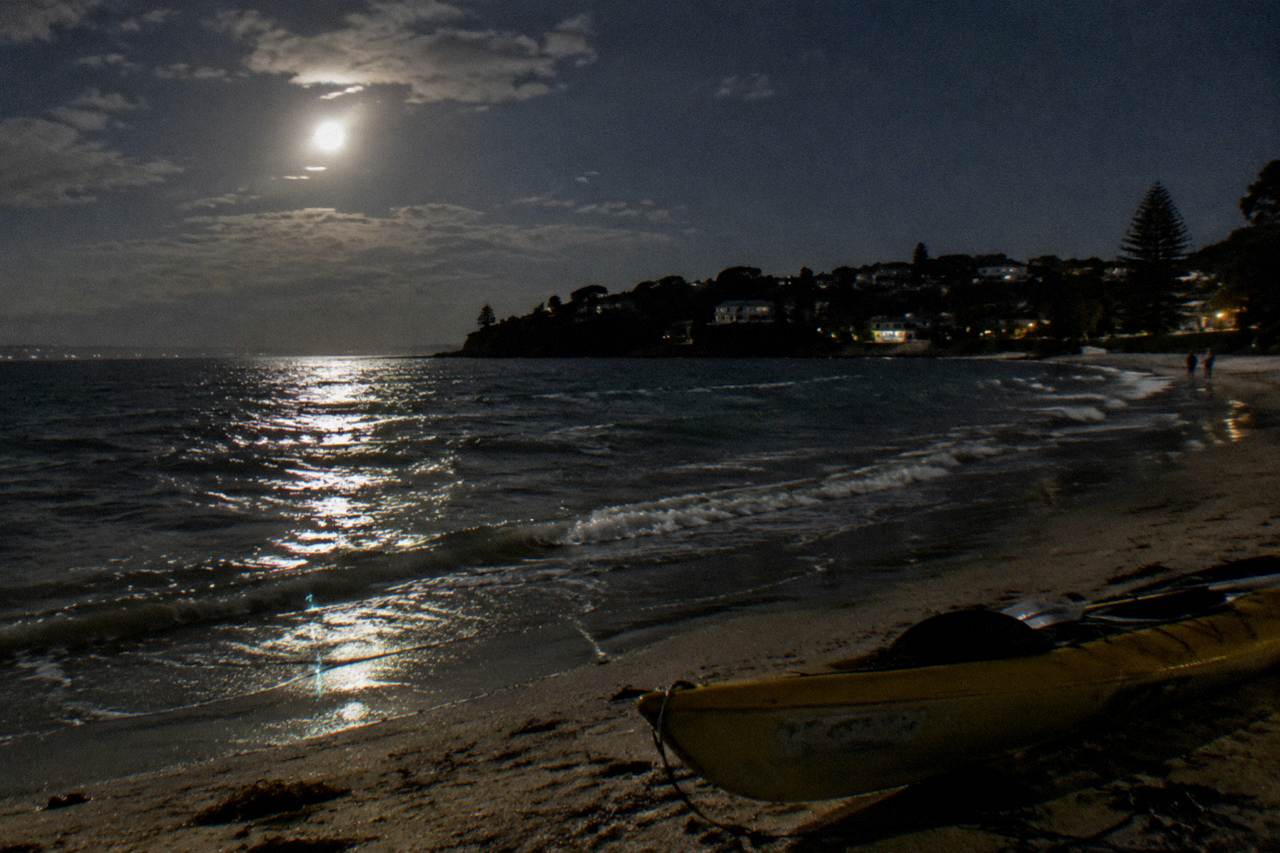
A bright moon cancels a bioluminescence kayak tour in Auckland for one of the three operators covered on this site, and that operator is upfront about it. Social Nature Movement does not run its glow paddle when the moon is in the sky at more than 50 percent illumination, so the gaps in its calendar are deliberate. Canoe & Kayak Adventures paddles on moonlit nights and says the glow can be more subtle but still visible, while Auckland Sea Kayaks states no moon rule at all for the tours it runs.
That distinction matters when you are picking a date, because a night that looks fully booked on one calendar may simply be a night the operator chose not to sell. It also matters for what you expect once you are on the water. Moonlight does not switch the glow off; it competes with it, the same way a streetlight competes with a firefly. The organisms in the water flash exactly the same way on a bright night, but your eye has more ambient light to see past.
This article walks through each operator's actual wording, separates moon rules from the weather rules that cancel tours for a completely different reason, and lists the computed moon dates for the year ahead so you can see the shape of the calendar before you book anything. The moon dates come from US Naval Observatory data converted to Auckland local time, and every price and review figure comes from the nine tours covered on this site.
The dedicated bioluminescence paddles, the two-hour glow trips sold by Social Nature Movement and Canoe & Kayak Adventures, are where the moon question bites hardest. If you already know you want the glow-specific paddle, compare the Social Nature Movement tour from Okura or Waiake with the Canoe & Kayak Adventures paddle that has run since 1994.
Which Auckland Operators Have A Moon Rule For Night Kayak Tours?
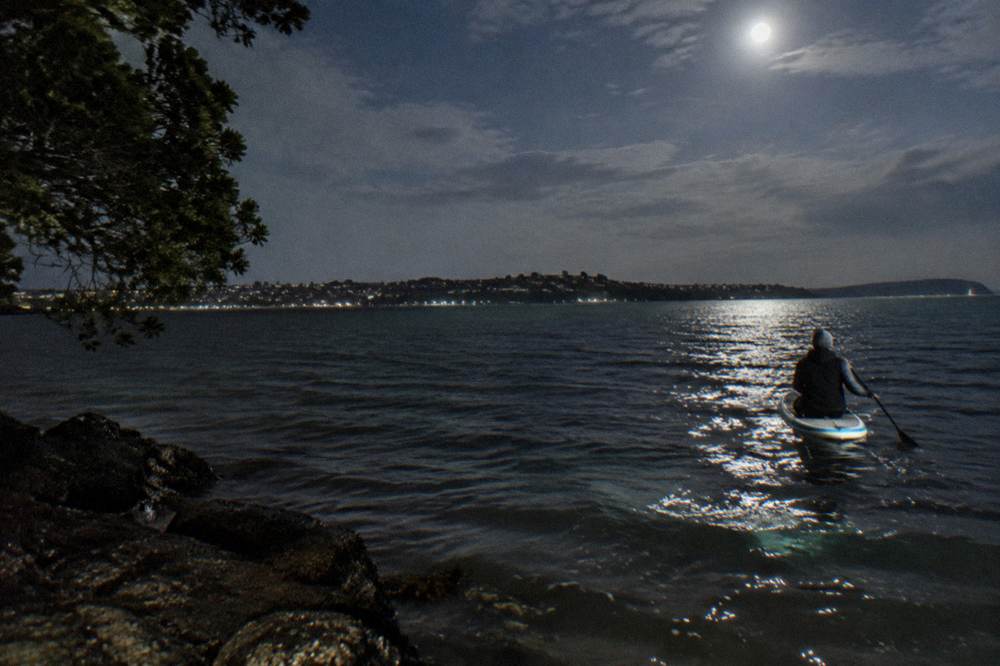
Only Social Nature Movement has a formal moon rule among the operators running night kayak tours from Auckland. It states plainly that it does not operate when the moon is in the sky at more than 50 percent illumination, which means the gaps in its availability are intentional. Canoe & Kayak Adventures gives moonlight advice but sets no rule, and Auckland Sea Kayaks states no moon rule on any of its tours.
The exact Social Nature Movement wording is worth reading, because it answers the question before you have to ask it: "we do not operate when the moon is in the sky and at more than 50% illumination, as excessive moonlight can significantly reduce the quality and visibility of the bioluminescence, so gaps in our availability are intentional." Two things follow from that sentence. First, the rule is about the moon being above the horizon, not just about the phase: a crescent moon that sets early may leave the second half of a night fully dark. Second, the operator applies the reasoning to its own tours only, and this article applies it the same way.
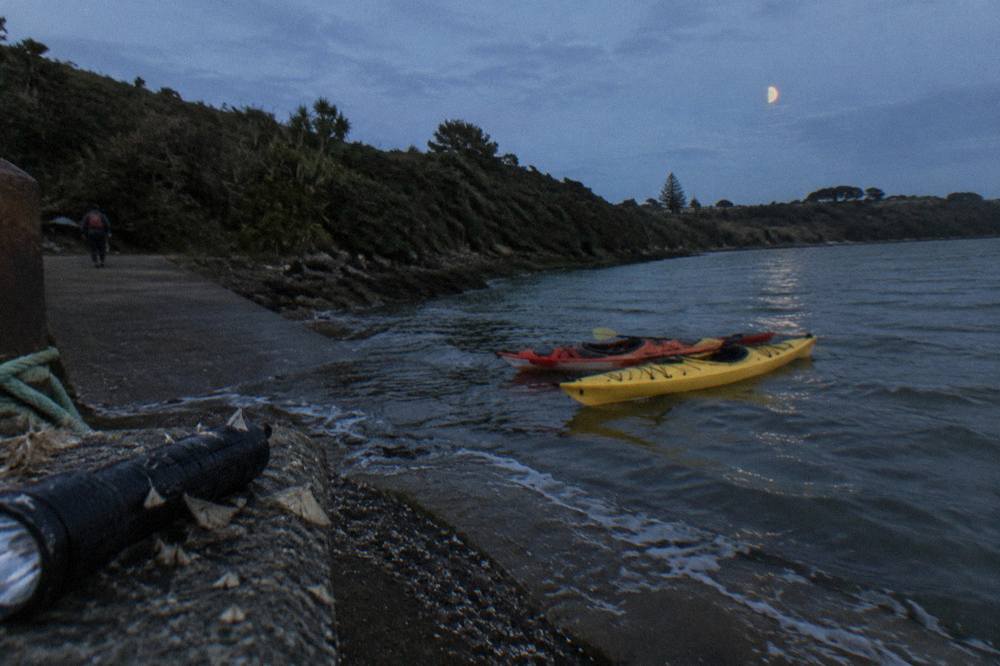
Canoe & Kayak Adventures takes the opposite approach. Its notice reads: "Moonlight affects this tour and how brightly you will see bioluminescence. When the moon is brighter, the glow can be more subtle, but still visible. We recommend booking near a new moon or on nights with later moonrise." That is advice, not a cancellation policy. The tour runs on moonlit nights, and the operator adds that in November to April the glow is "often strong enough to enjoy on most nights" on its trips, while still saying bioluminescence can never be guaranteed.
Auckland Sea Kayaks, which runs the City Lights paddles from Westhaven Marina and the Rangitoto sunset tours from St Heliers Bay, states no moon rule anywhere in its tour material. Its sunset tour material mentions bioluminescence only to say it is "sometimes" seen, "typically October to April", and never guaranteed. A bright moon changes nothing about whether that tour departs.
| Operator | Moon rule? | What the operator says | Which tours it covers |
|---|---|---|---|
| Social Nature Movement | Yes | No tours when the moon is in the sky at more than 50 percent illumination | Its bioluminescence tours, launched at Okura or Waiake |
| Canoe & Kayak Adventures | Advice only | Recommends booking near a new moon or on nights with later moonrise | Its bioluminescence tour, North Shore start |
| Auckland Sea Kayaks | None stated | Bioluminescence "sometimes" seen on its sunset tour, typically October to April | City Lights and Rangitoto sunset tours |
Planning a whole trip around the lunar calendar rather than one night? The companion page on this site gathers the moon question together with season, tides and launch points, and the deeper dive is in the guide to moon phases and bioluminescence kayak dates.
What Does The 50 Percent Rule Mean For Okura And Waiake Tours?
For the Social Nature Movement tour that launches at Okura Boat Ramp or Waiake Beach, the 50 percent rule means many nights around the full moon are simply not for sale. The calendar you see is the calendar the operator intends: nights when a moon above half illuminated hangs in the sky are absent by design, not sold out. The tour itself runs 2 hours, from $62.42 per person, rated 5.0 across 46 reviews.
That price sits on one booking page for the trip. The same paddle is sold on a second booking page at from $53 per person, rated 4.9 across 329 reviews, with the start point chosen at booking rather than fixed. The two pages describe one trip with two doors, and the moon rule covers both doors equally because it belongs to the operator, not to a page. If you are choosing between them, the start-point wording is the practical difference: one page names Okura Boat Ramp at the end of Okura River Road and Waiake Beach, and the other says the location is chosen at booking.
The operator links the choice of launch to the tide rather than the moon, calling both locations equally good: Okura at high tide, Waiake at low tide. The moon rule then sits on top of that as a scheduling filter. Add the optional Bio-Bus, a paid add-on that meets near the Sky Tower an hour before the start and takes about 30 minutes each way, and a night paddle on the North Shore becomes reachable without a car of your own. The Bio-Bus price shows at checkout.
The tour itself, the Social Nature Movement glow paddle from Okura or Waiake, includes the kayak, paddle and a personal flotation device with a safety light, and the booking page states a full refund for cancellations at least 24 hours before the start, as all nine tours covered here do. The operator's season wording is that peak Auckland bioluminescence season is October to April, and that the organisms vary naturally. What the moon rule buys you is not a sighting, it is a dark sky as a starting condition.
Can You Still See Bioluminescence From A Kayak Near A Full Moon?
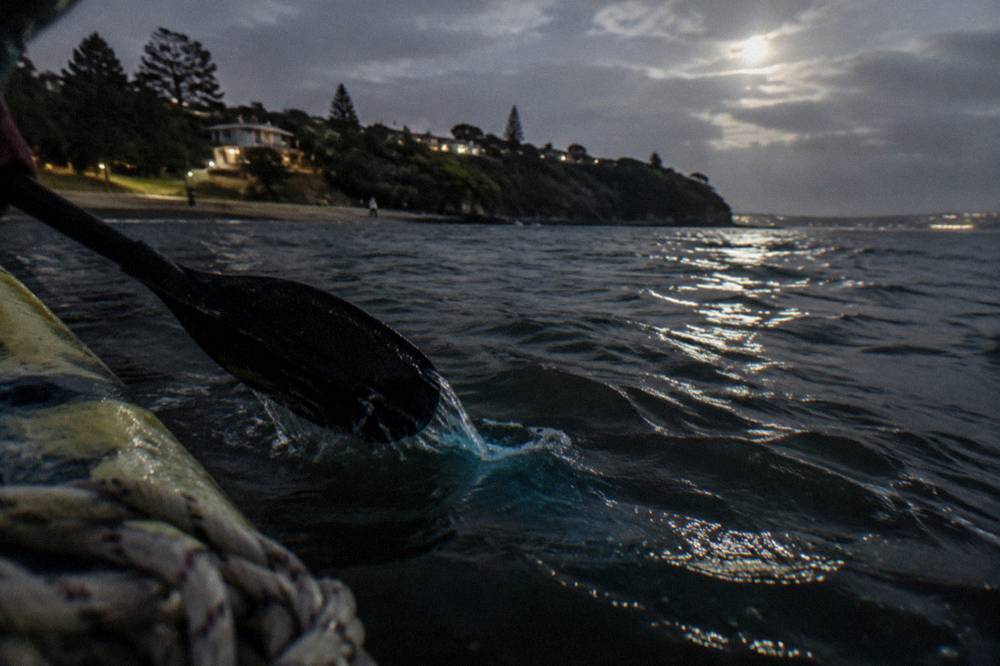
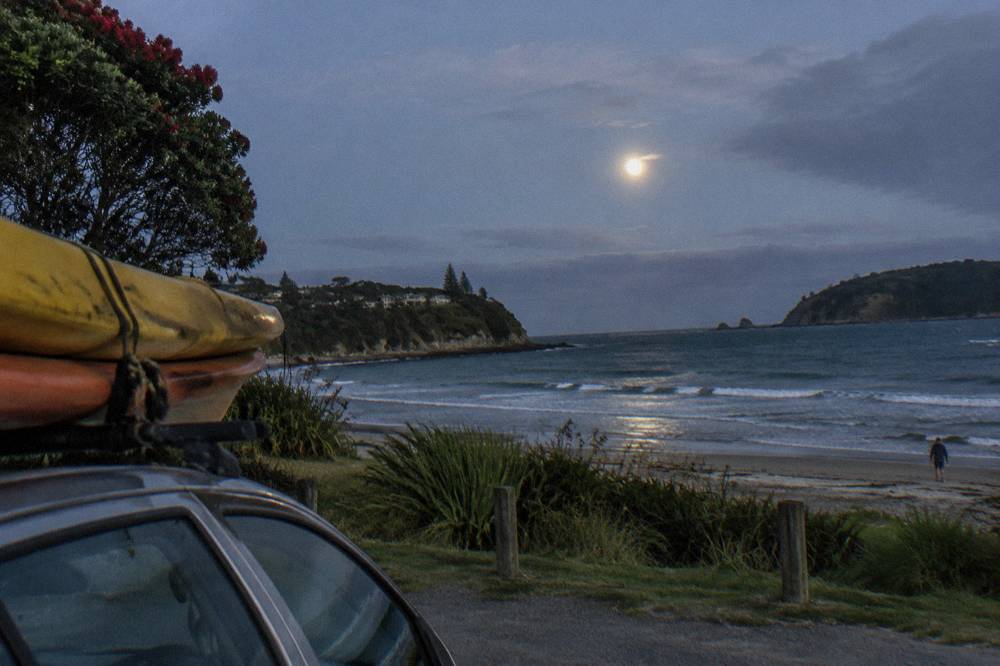
Yes, in the operator wording of Canoe & Kayak Adventures: when the moon is brighter, the glow can be "more subtle, but still visible". That operator runs its two-hour North Shore paddle on moonlit nights and recommends, rather than requires, booking near a new moon or on nights with a later moonrise. So near a full moon your tour is unlikely to be cancelled for moonlight alone.
The reason a bright moon dims the experience is physiological rather than biological. The flash from a disturbed dinoflagellate lasts about 80 milliseconds and is mostly blue-green light, faint by design. Your eye adapts to the brightest thing in view, and a full moon over the Hauraki Gulf is bright enough to lift your whole visual baseline. The same flash that reads as a streak of light on a dark night reads as a hint on a moonlit one. Nothing in the water has changed.
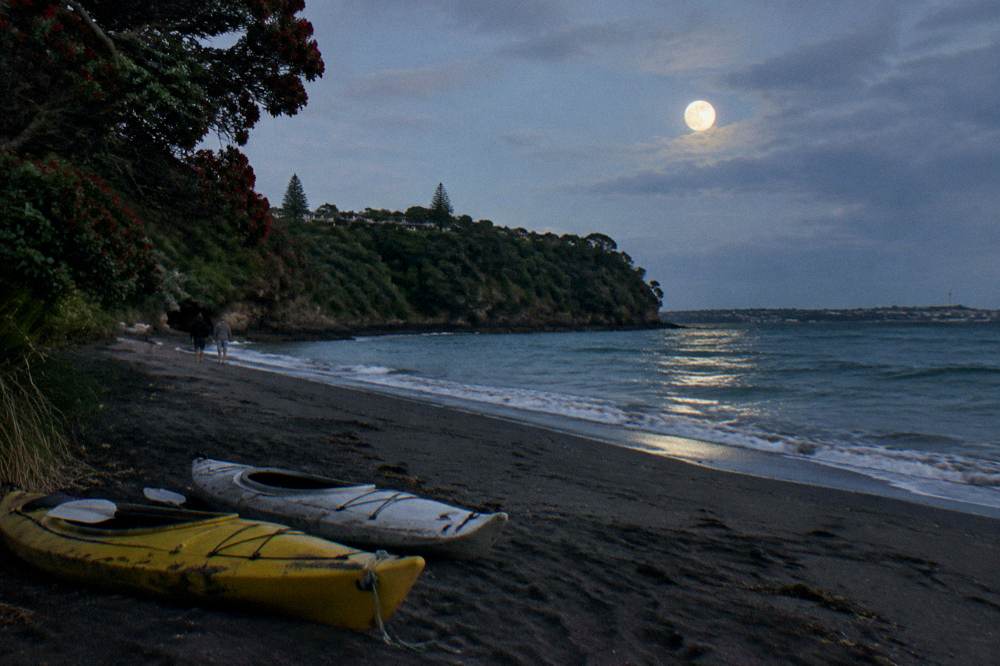
Canoe & Kayak Adventures, which says it has run kayak tours since 1994 and is still owned by an original founder, prices its glow paddle from $67.52 per person on one booking page, rated 4.1 across 207 reviews, and from $66 on the other page, rated 4.5 across 67 reviews. Again, one trip, two pages. The meeting spot is a North Shore location emailed before 10 AM on the day of the tour, the guide ratio is 1 to 6, and the booking page for the $66 option states a minimum age of 7 and a 120 kg limit. The operator's strongest commitment is its repeat-tour offer: if your guide confirms no bioluminescence was seen, you get a free repeat tour.
That offer is the operator's own answer to the uncertainty the moon creates. It does not promise the glow, and the operator says so directly: "Bioluminescence is a natural event and can never be guaranteed, but we plan every trip around the best conditions and it's very rare not to see at least one type." Combine that with the moonlight advice and the practical read is simple: book the date that suits you, know that a brighter moon means a subtler show, and lean toward the new-moon end of the month if the glow is the whole point of the trip.
What Moon Dates Fall Near Auckland In The Year Ahead?
New moons in Auckland time fall on 9 November 2026, 9 December 2026, 8 January 2027, 7 February 2027 and roughly monthly after that through 30 October 2027, computed from US Naval Observatory data. Full moons fall on 25 November 2026, 24 December 2026 and monthly after that. No date here is a promise of darkness or of a sighting; they are calendar facts for planning around.
The table below is the lunar skeleton of the coming year. Use it to see why some operator calendars look patchy: the nights either side of each full moon are the ones a 50 percent rule removes, while the nights either side of each new moon are where dark-sky windows concentrate. The moon's own rise and set times still matter, because the Social Nature Movement rule is about the moon being in the sky, not just its phase, and those times shift every night.
| Month | New moon | Full moon |
|---|---|---|
| November 2026 | 9 Nov | 25 Nov |
| December 2026 | 9 Dec | 24 Dec |
| January 2027 | 8 Jan | 23 Jan |
| February 2027 | 7 Feb | 21 Feb |
| March 2027 | 8 Mar | 22 Mar |
| April 2027 | 7 Apr | 21 Apr |
| May 2027 | 6 May | 20 May |
| June 2027 | 5 Jun | 19 Jun |
| July 2027 | 4 Jul | 19 Jul |
| August 2027 | 2 Aug | 17 Aug |
| September 2027 | 1 Sep and 30 Sep | 16 Sep |
| October 2027 | 30 Oct | 16 Oct |
Two practical notes go with the table. September 2027 gets two new moons, which means the dark-sky window repeats within one month. And because the rule is about the moon above the horizon, the nights immediately after a full moon, when the moon rises late, can be dark for the first half of the night even though the phase is still well past half. That is the window the Canoe & Kayak wording points at when it recommends nights with later moonrise.
Is A Moon Cancellation The Same As A Weather Cancellation In Auckland?
No. A moon rule is planned months ahead and shows up as dates that were never for sale. A weather cancellation happens on the day, when wind or rain crosses an operator's stated limits, and is handled with a new date or a refund. Confusing the two leads people to think a calendar gap means a tour "sold out", when it may mean the operator chose that night off for darkness.
Each operator states its own weather limits and none applies to another. Social Nature Movement says tours only proceed in calm conditions, with specific ceilings: Waiake does not operate above 5 m/s wind or 2.4 mm rain, and Okura above 8 m/s or 2.4 mm rain. Canoe & Kayak Adventures says weather cancellation means a different date or a full refund, with minimum numbers applying. Auckland Sea Kayaks says it operates within strict wind and sea limits, that the final call is often made on the day, and that unsafe conditions mean a move, a reschedule or a full refund if no alternative exists.
The booking pages for all nine tours state a full refund when cancelled at least 24 hours before the start, and that covers you if you change your mind. An operator-side weather call is separate: the operator, not you, is the one cancelling, and each operator's terms above describe what happens next. Neither kind of cancellation is about the moon unless the operator says it is, and only one does.
For paddlers weighing the whole year, not just one night, the guide to the best time of year for a bioluminescence kayak tour separates the season question from the moon question, and the two answers do not overlap neatly: an operator's peak season and its dark-sky windows intersect only on some nights.
How Does Moonlight Change What The Water Actually Does?
Moonlight changes nothing in the water itself. The organisms that flash, chiefly dinoflagellates such as Noctiluca scintillans, produce light through mechanical stimulation, and a flash lasts about 80 milliseconds whether the night is dark or moonlit. What changes is your eye: more ambient light raises the threshold at which a faint blue-green flash registers, which is exactly why operators treat darkness as a viewing condition.
The science is well described and worth knowing before you stand on a beach at night. Noctiluca scintillans is a single-celled dinoflagellate, 400 to 1500 micrometres across, that drifts with the current and accumulates near the surface when the sea is calm. Auckland Council environmental scientist Dr Megan Carbines, quoted by Local Matters, describes it as "a non-toxic dinoflagellate, which often forms bright blooms around the coast in summer. When disturbed, it also emits a burst of light, often seen when swimmers or boats move through the water at night." A paddle stroke is exactly the kind of disturbance she means.
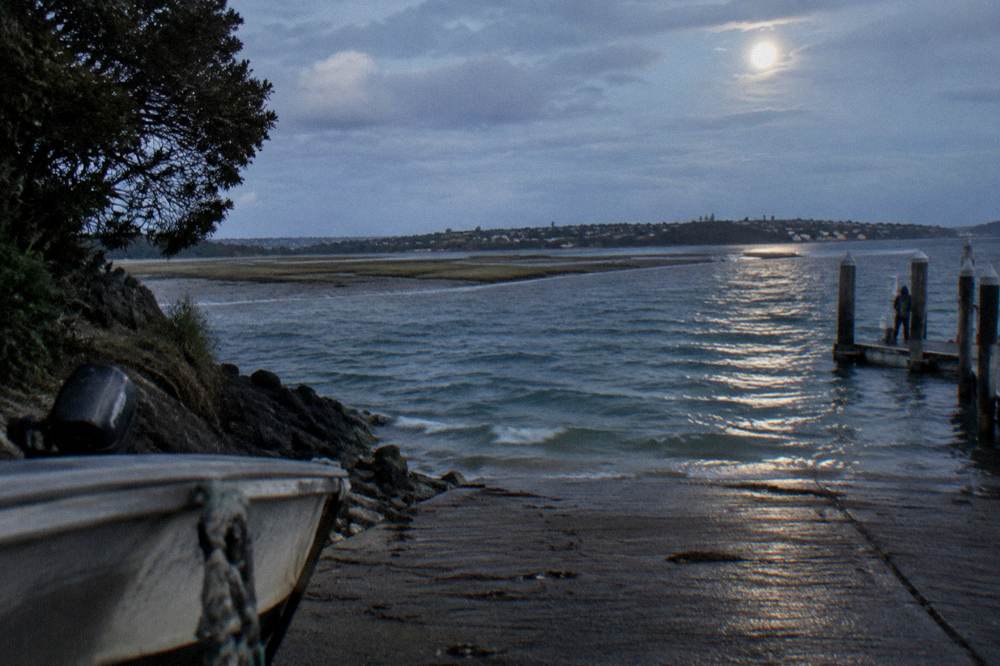
The wider biology is covered in the guide to what makes the water glow on a bioluminescence kayak tour, including why dinoflagellate light is blue-green and why it only occurs at night. The short version for the moon question is that the glow is a chemical flash triggered by shear stress in the water, controlled by a circadian clock, and utterly indifferent to the moon. Bright moonlight is a filter between the flash and your retina, nothing more.
Social Nature Movement adds, as operator wording, that what paddlers see on its tours includes dinoflagellates as the most common surface glow. It also says photographing the glow is challenging and needs specialised camera settings, and recommends a waterproof phone case for anyone trying. None of that is a moon fact, but all of it shapes what a moonlit night feels like on the water: a subtler glow, harder to photograph, and still the same water.
Should You Book Around The Moon Or Around Your Holiday Dates?
Book around your holiday dates first, then use the moon to choose between operators rather than to abandon the idea. If your only free night falls near a full moon, the Canoe & Kayak Adventures glow paddle and the Auckland Sea Kayaks tours still run, and the first offers a free repeat tour if no glow is seen. If darkness is the whole point, the Social Nature Movement calendar has already done the filtering for you.
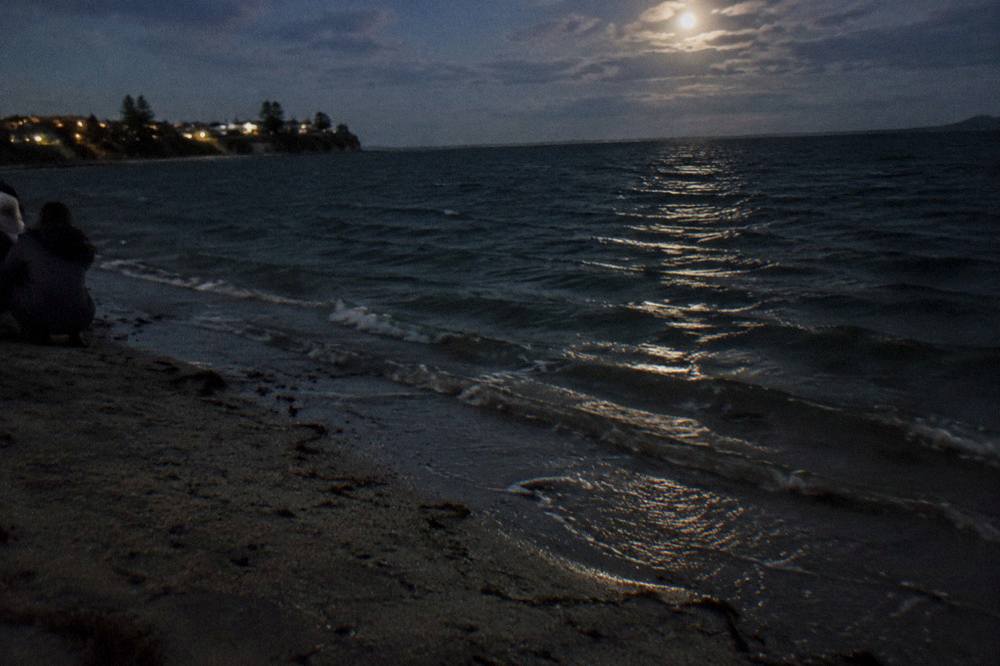
There is a third category worth naming: nights on the water in Auckland that were never about the glow at all. The Auckland Sea Kayaks City Lights tour, a 2-hour paddle from Westhaven Marina rated 5.0 across 15 reviews and priced from $73 per person, is a city-skyline night paddle with a sweet treat included, and it makes no bioluminescence claim. On a bright-moon night it loses nothing, because the moon over the Waitemata Harbour is part of the show it is selling. The 2.5-hour version, from $82.27 with snacks, is the same idea with more time on the water.
The 7-hour Tiritiri Matangi trip sits in its own space again. It is a sunset paddle, a guided nocturnal walk and a dinner trip with a grazing platter and drinks, from $139 per person, with pickup included and two pickup options chosen at booking. Its tie to this article's question is one line: the return paddle offers a chance to see bioluminescent plankton, a chance and nothing more. It has no rating yet, and it should never be compared by price with the two-hour glow paddles, because it is a different kind of day out entirely.
For the sunset-and-night format closer to home, the Rangitoto trips from St Heliers Bay run 6 hours 30 minutes to 7 hours, include a BBQ dinner, and are priced from $139.02 on one booking page, rated 4.9 across 179 reviews, and from $116 on the other, rated 4.8 across 85. Auckland Sea Kayaks says bioluminescence is "sometimes" seen on this tour, "typically October to April", and never guaranteed, and a bright moon changes nothing about whether it departs. A pre-booked free shuttle from the Auckland War Memorial Museum serves these tours, with limited seats.
Common Questions About Bright Moons And Bioluminescence Kayak Tours
Does A Bright Moon Cancel A Bioluminescence Kayak Tour?
Only for Social Nature Movement, which runs no tours when the moon is in the sky at more than 50 percent illumination, so gaps in its calendar are intentional. Canoe & Kayak Adventures and Auckland Sea Kayaks state no moon cancellation rule; their glow-related and night tours run on moonlit nights.
Can You See Bioluminescence On A Full Moon Night From A Kayak?
Canoe & Kayak Adventures says the glow can be "more subtle, but still visible" under a brighter moon and recommends nights near a new moon or with a later moonrise. No operator promises a sighting on any night, and Social Nature Movement simply does not run its tour when a moon above half illuminated is in the sky.
Why Do Some Dates Show No Availability At All?
Two different reasons produce empty dates. Social Nature Movement deliberately removes nights when the moon is in the sky above 50 percent illumination. Weather cancellations, by contrast, happen close to the day, when wind or rain crosses each operator's stated limits, and are settled with a new date or a refund.
What Is The Cancellation Policy If The Operator Cancels?
Every one of the nine tours covered here states a full refund when you cancel at least 24 hours before the start. If the operator cancels for weather, each operator's own terms apply: Canoe & Kayak Adventures offers a different date or a full refund, and Auckland Sea Kayaks may move, reschedule or fully refund when conditions are unsafe.
Does A Bright Moon Affect The City Lights Or Rangitoto Sunset Tours?
Not as a matter of policy. Auckland Sea Kayaks states no moon rule for any tour. The City Lights paddles from Westhaven Marina make no bioluminescence claim at all, and the Rangitoto sunset tours say only that bioluminescence is "sometimes" seen, typically October to April, and never guaranteed.
When Are The Next New Moons Near Auckland?
Computed from US Naval Observatory data in Auckland local time: 9 November 2026, 9 December 2026, 8 January 2027, 7 February 2027 and 8 March 2027, continuing monthly through 30 October 2027. Darkness and glow can vary on any date; treat the dates as planning guidance, not a promise.