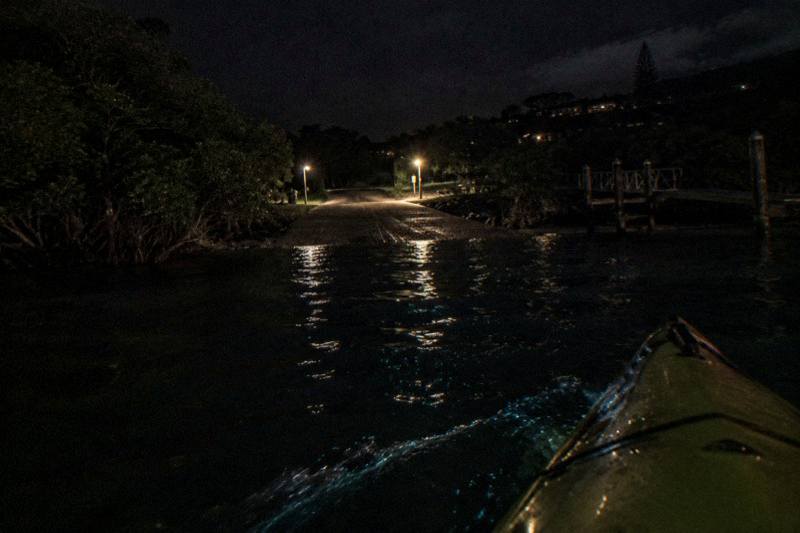
How Rare Is It To See Bioluminescence On A Kayak Tour?
What Auckland operators, a council scientist and the science of dinoflagellates say about how rare bioluminescence sightings are on a guided night kayak tour.
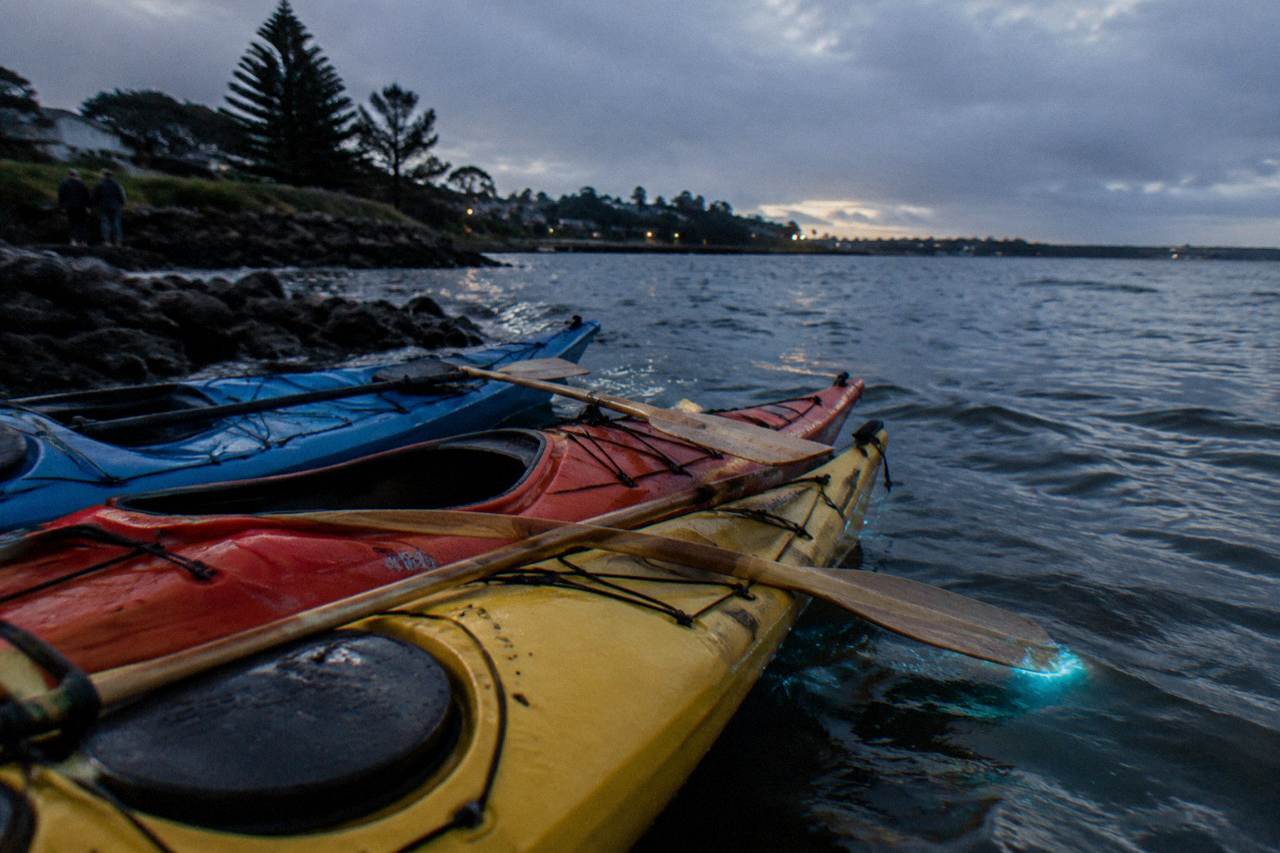
No operator or agency puts a frequency on Auckland bioluminescence, and no booking page for the nine tours covered here promises a sighting. The closest thing to an answer comes from Canoe & Kayak Adventures, which says it plans every trip around the best conditions and that it is "very rare not to see at least one type", while stating the glow "can never be guaranteed". Social Nature Movement says the organisms "vary naturally".
That pair of statements is the honest core of the question. One operator, running kayak tours since 1994, is willing to say that guests on its trips almost always see something luminous, whether that is the dinoflagellate glow people picture or another light-producing organism in the water. The same operator immediately qualifies it, because a natural event cannot be booked like a seat. The other dedicated glow operator in Auckland declines to frame it as odds at all and simply says the organisms vary.
The reason nobody can go further than that is biological. The light comes from living things drifting in the water, concentrated or scattered by currents, weather and the shape of each bay. A stretch of coast that glows on Tuesday can be dark on Wednesday, and a bay that was empty in the evening can fill with drifting cells by midnight. Noctiluca scintillans, a common source of the surface glow, is single celled, drifts with the current and accumulates at the surface when the sea is calm, which is why the same operators keep saying the same two words: calm and dark.
For a reader deciding whether to book, the practical picture is this. This site covers three operators and two dedicated glow trips on four pages, alongside the sunset and city lights trips that make no bioluminescence promise at all. Prices for the dedicated glow paddles run from $53 per person to $67.52 per person. Every one of the nine tours states a full refund when cancelled at least 24 hours before the start, so the financial risk of a dark night is small, and one operator adds a repeat-tour offer on top. With the refund policies covered, the other natural question is whether paddling after dark is sensible at all, and the guide to kayaking at night in Auckland explains what guided tours do to keep the experience safe.
What Do Auckland Operators Actually Say About Seeing The Glow?
Canoe & Kayak Adventures says it is "very rare not to see at least one type" and offers a free repeat tour if its guide confirms no bioluminescence was seen. Social Nature Movement says the organisms "vary naturally" and runs no tours when the moon is in the sky above 50 percent illumination. Auckland Sea Kayaks says bioluminescence is "sometimes" seen on its Rangitoto sunset tour.
Each of those statements belongs to one operator and applies only to that operator's trips, which is why this page repeats them attributed rather than blended into a general claim. The Canoe & Kayak Adventures wording is the strongest in Auckland, and it is worth reading in full: "Bioluminescence is a natural event and can never be guaranteed, but we plan every trip around the best conditions and it's very rare not to see at least one type. If you don't see any on your tour, as confirmed by your guide on the night, we'll give you a free repeat tour." The repeat offer has conditions, the guide on the night makes the call, and the terms belong to the operator.
Social Nature Movement takes a different approach to the same uncertainty. Rather than quoting odds, it removes the biggest source of disappointment structurally: its tours simply do not run when bright moonlight would wash the glow out. The operator's rule is that it does "not operate when the moon is in the sky and at more than 50% illumination, as excessive moonlight can significantly reduce the quality and visibility of the bioluminescence, so gaps in our availability are intentional". A reader looking at that operator's calendar and finding holes in it is looking at the mechanism working as designed.
Auckland Sea Kayaks, which runs the city lights and Rangitoto trips, says bioluminescence is "sometimes" seen on its sunset tour, "typically October to April". That line belongs to the sunset tour only, and neither of its City Lights paddles makes any bioluminescence claim at all. Someone booking a city lights night paddle to see the glow is booking the wrong product, however beautiful the harbour lights are.
| Operator | Trip type | Operator wording on the glow | Booking page price from |
|---|---|---|---|
| Canoe & Kayak Adventures | 2 hour bioluminescence paddle, North Shore | "Very rare not to see at least one type"; free repeat tour if none seen | $66 to $67.52 per person |
| Social Nature Movement | 1.5 to 2 hour glow paddle, Okura or Waiake | Organisms "vary naturally"; no tours under a bright moon | $53 to $62.42 per person |
| Auckland Sea Kayaks | Rangitoto sunset and night paddle, St Heliers Bay | "Sometimes" seen, "typically October to April" | $116 to $139.02 per person |
| Auckland Sea Kayaks | City Lights night paddle, Westhaven Marina | No bioluminescence claim on the booking pages | $73 to $82.27 per person |
The twin prices in that table are the same trips sold on two booking pages each, one page per price; no page is more official than the other and the trips are identical. This is covered in more detail in Auckland bioluminescence kayak tours compared, which works through the whole set side by side.
Is the glow worth the uncertainty? Canoe & Kayak Adventures offers a free repeat tour if the guide confirms no glow was seen, which is the closest thing in Auckland to insurance against a dark night. Every tour states a full refund when cancelled at least 24 hours before the start, and the booking page shows the dates the operator has open.
Why Does Nobody Give A Percentage For Auckland Bioluminescence?
No agency counts sightings, no operator publishes a success rate, and no scientific body measures glow frequency in Auckland bays, so a percentage simply does not exist to be quoted. What exists is mechanism: the light comes from organisms that drift, concentrate and disperse with calm weather and currents, so yesterday's bay is not tonight's bay.
The organism behind most of the surface glow, Noctiluca scintillans, is a dinoflagellate, a single-celled drifting alga between 400 and 1500 micrometres across. Its light is produced by mechanical stimulation, in plain terms by something disturbing the water: a paddle, a hull, a wave. A flash lasts about 80 milliseconds. Because the cells drift with the current and accumulate at the surface in calm conditions, the density of glowing life in any given bay changes night to night and even hour to hour, which is why a tour operator can steer toward good water but cannot summon it.
Auckland Council environmental scientist Dr Megan Carbines, quoted in Local Matters in December 2021, described Noctiluca scintillans as "a non-toxic dinoflagellate, which often forms bright blooms around the coast in summer. When disturbed, it also emits a burst of light, often seen when swimmers or boats move through the water at night." She also linked blooms to rising water temperature, saying warmer water "is conducive to these sorts of blooms if combined with calm conditions allowing them to accumulate."
That sentence is the best available explanation of why the glow cannot be scheduled. Two variables, warmth and calm, have to line up, and neither is under anyone's control. Earth Sciences New Zealand, formerly NIWA, has documented the same species in the Hauraki Gulf, describing it as a harmless, non-photosynthetic dinoflagellate whose cells phosphoresce when disturbed, and giving it the popular names "Sea Ghost" and "Fire of Sea". The mechanism is well understood. The count is not.
The honest framing, and the one used throughout this site, is that bioluminescence in Auckland water is common enough that two operators build their summer business around it, and variable enough that neither will call it certain. Anyone wanting the full biology can read what makes the water glow on a bioluminescence kayak tour.
How Do Warm Water And Calm Conditions Shape The Glow Near Okura And Waiake?
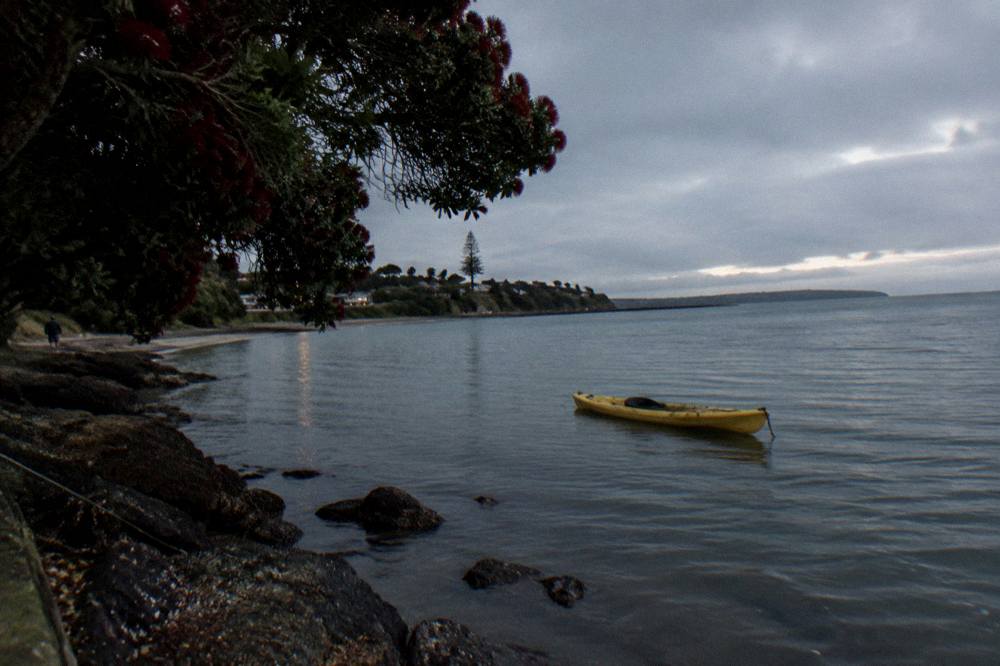
The two dedicated glow launch areas on Auckland's North Shore, Okura Boat Ramp and Waiake Beach, are where the council scientist's formula comes in: warmth plus calm lets drifting cells accumulate. Social Nature Movement says its peak season is October to April.
Warm water matters because the organisms are living things whose populations grow in warmer months; sea temperatures around Auckland are coolest in winter and warmest in late summer. Calm water matters because cells that would otherwise be mixed and dispersed by wind and chop instead accumulate near the surface, where a paddle stroke can set them flashing. A bay that has held calm, warm water for several days is a very different proposition from the same bay after a week of wind.
Social Nature Movement, which launches at Okura Boat Ramp at the end of Okura River Road or at Waiake Beach depending on the tide, ties the two together. The operator says peak Auckland bioluminescence season is October to April, best viewed "during warmer months (late spring through autumn) on dark, moonless nights". Its weather limits are explicit in the operator's own words: tours only proceed in calm conditions, with Waiake not operating above 5 m/s wind or 2.4 mm rain, and Okura above 8 m/s or 2.4 mm rain.
Canoe & Kayak Adventures, which launches from a North Shore spot emailed before 10 AM on the day, adds a season line of its own: "In November-April, the glow is often strong enough to enjoy on most nights." That is the operator's wording about its own trips, and it is the single most direct rarity statement any Auckland operator makes, November to April on its tours is described as glow on most nights, not occasional nights. Even then the next sentence is about booking ahead because those dates fill fast, not about certainty.
No water temperature threshold marks when Auckland bioluminescence appears; the glow is not tied to any particular number of degrees. The reader's takeaway from this section should be simple: the same stretch of North Shore coast is a different proposition in February than in July.
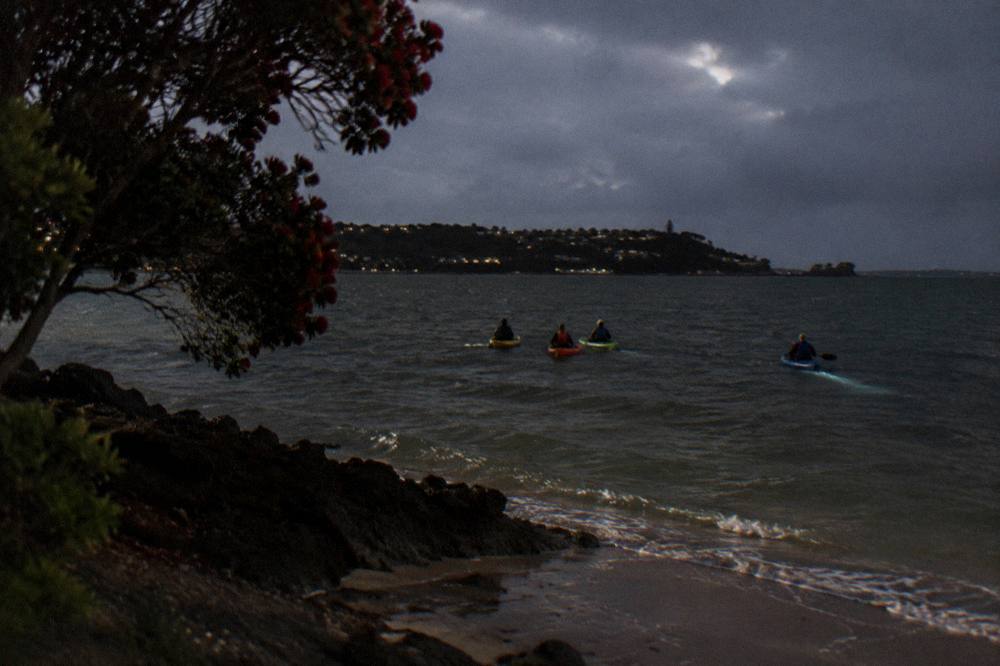
The most reviewed glow paddle in Auckland is the Social Nature Movement trip, 4.9 across 329 reviews, from $53 per person, the lowest per-person price of the nine tours covered here. It is sold on a booking page where the start point is chosen at booking, with an optional paid Bio-Bus add-on from near the Sky Tower for those staying central.
Does A Bright Moon Ruin The Chances On A North Shore Glow Paddle?
Moonlight reduces how visible the glow is, and the operators respond differently: Social Nature Movement refuses to run when the moon is in the sky above 50 percent illumination, while Canoe & Kayak Adventures runs in moonlight but recommends booking near a new moon or on nights with a later moonrise. Auckland Sea Kayaks has no moon rule.
The physics is not mysterious. The glow is a faint blue-green flash produced by single-celled organisms, and a bright moon raises the background light of the whole water surface, making each flash harder to pick out. Canoe & Kayak Adventures puts it plainly: "Moonlight affects this tour and how brightly you will see bioluminescence. When the moon is brighter, the glow can be more subtle, but still visible." The operator then advises booking near a new moon or on nights with later moonrise, advice rather than a rule.
Social Nature Movement turns the same physics into a rule, running no tours when the moon is both in the sky and above 50 percent illumination, and saying the resulting gaps in its availability are intentional. New moon dates computed from US Naval Observatory data for Auckland local time include 9 November 2026, 9 December 2026, 8 January 2027 and 7 February 2027, with a new moon roughly monthly through to 30 October 2027. Full moon falls on 25 November 2026, 24 December 2026 and 23 January 2027 in the same span.
| Month | New moon (Auckland time) | Full moon (Auckland time) |
|---|---|---|
| November 2026 | 9 Nov | 25 Nov |
| December 2026 | 9 Dec | 24 Dec |
| January 2027 | 8 Jan | 23 Jan |
| February 2027 | 7 Feb | 21 Feb |
Those dates are computed from US Naval Observatory data and are not a promise of dark, glow-friendly nights in themselves; cloud, wind and the presence of the organisms still decide the night. What the dates give a planner is a calendar to check availability against, especially for the operator that skips bright-moon nights entirely. The fuller treatment of the topic, including how each operator's rule differs, is in moon phase and a bioluminescence kayak tour.
What Happens If An Auckland Glow Tour Sees Nothing?
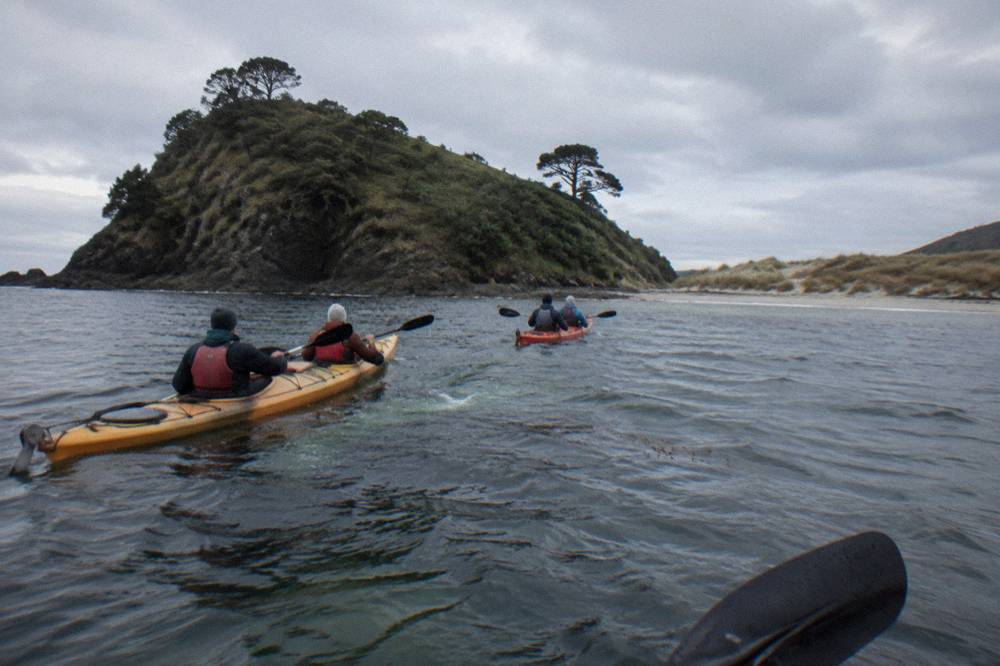
Canoe & Kayak Adventures offers a free repeat tour if its guide confirms on the night that no bioluminescence was seen, and all nine tours state a full refund when cancelled at least 24 hours before the start. Beyond that, each operator's terms govern, and no booking page promises a sighting.
The repeat-tour offer is the most concrete answer Auckland has to the rarity question. It converts "very rare not to see at least one type" from marketing into a commitment with a mechanism: the guide on the night makes the call, and the operator re-books the guest. The 1 to 6 ratio is worth noticing when weighing this offer, because the person deciding whether the night counts as a no-glow night is a guide with six guests, not a queue of forty.
Social Nature Movement does not offer a repeat; its protection is upstream, in the moon rule and the weather limits described above, plus the fact that its peak season framing pushes bookings into the months the operator considers strongest. Auckland Sea Kayaks, whose sunset tour only "sometimes" shows glow, makes no glow-related offer at all, which is consistent with a trip whose headline is Rangitoto, a BBQ dinner and a paddle home after dark rather than the glow itself.
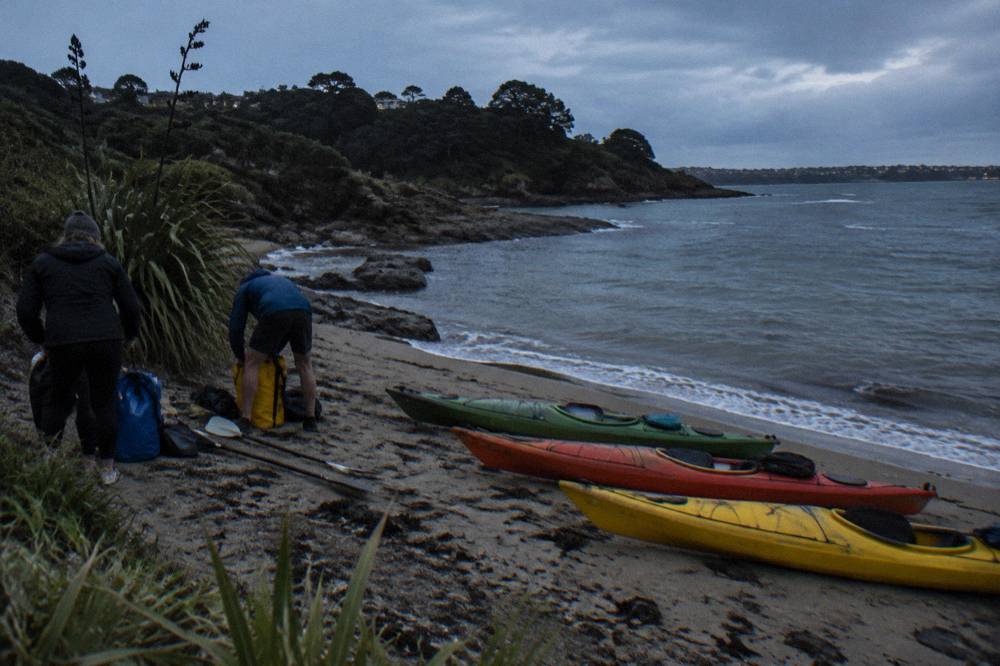
Cancellation is the other half of the risk picture. Every one of the nine tours states a full refund when cancelled at least 24 hours before the start, in the booking pages' own wording. That covers a change of plans before the day; it does not cover a cloudless, calm night on which the water simply stays dark, which is exactly the gap the Canoe & Kayak Adventures repeat offer fills. The question of how far ahead to lock a date in, especially around the moon calendar, is handled in how far ahead to book a bioluminescence kayak tour.
Which Auckland Night Paddles Are Actually About Bioluminescence?
Four of the nine tours covered here are dedicated bioluminescence paddles, all around 2 hours on the North Shore, from $53 to $67.52 per person. One 7 hour Tiritiri Matangi trip lists a chance of bioluminescent plankton on its return paddle, and the Rangitoto sunset and City Lights trips make no bioluminescence promise.
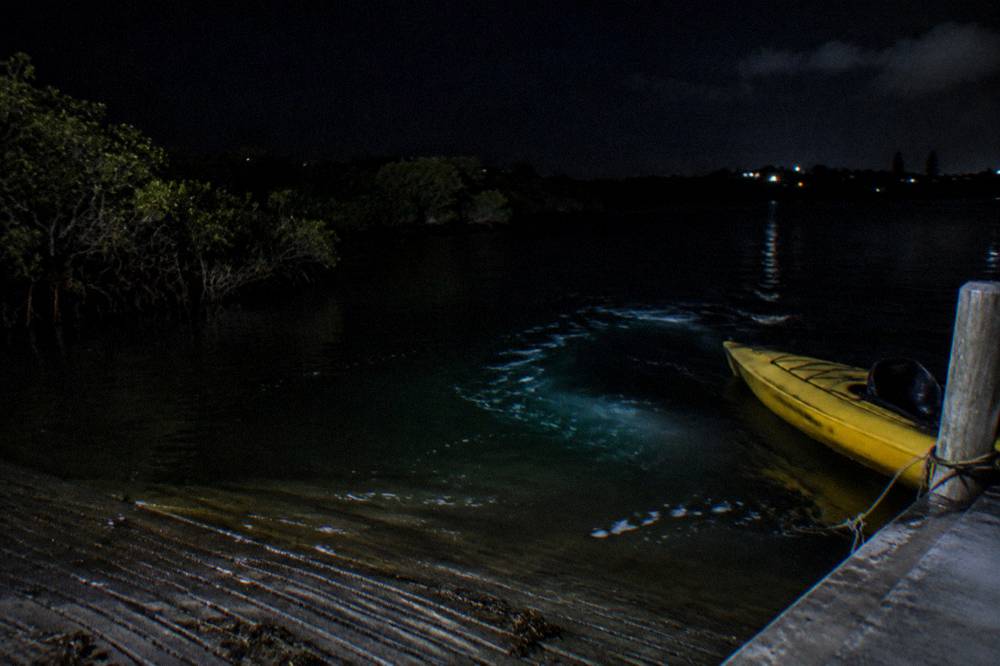
The distinction matters more than any price difference. A dedicated glow paddle launches after dark from Okura Boat Ramp, Waiake Beach or an emailed North Shore spot, on nights the operator has chosen for darkness and calm, with the stated purpose of finding glowing water. The two Social Nature Movement booking pages for its glow tour show 4.9 across 329 reviews and 5.0 across 46 reviews for the same trip, and the two Canoe & Kayak Adventures pages show 4.1 across 207 reviews and 4.5 across 67 reviews, again one trip on two pages.
| Trip | Operator | Duration | Rating and reviews | From, per person | Glow claim |
|---|---|---|---|---|---|
| Glow paddle, start chosen at booking | Social Nature Movement | 1.5 to 2 hours | 4.9 from 329 reviews | $53 | Dedicated glow tour |
| Glow paddle, Okura or Waiake start | Social Nature Movement | 2 hours | 5.0 from 46 reviews | $62.42 | Dedicated glow tour |
| Glow paddle, est. 1994 | Canoe & Kayak Adventures | 2 hours | 4.1 from 207 reviews | $67.52 | Dedicated glow tour |
| Guided glow paddle | Canoe & Kayak Adventures | 2 hours | 4.5 from 67 reviews | $66 | Dedicated glow tour |
| Tiritiri Matangi sunset and night paddle | Social Nature Movement | 7 hours | No rating yet | $139 | Chance of plankton on the return paddle |
| Rangitoto sunset and night paddle | Auckland Sea Kayaks | 6.5 to 7 hours | 4.9 from 179 reviews, 4.8 from 85 reviews | $139.02 and $116 | "Sometimes" seen, typically October to April |
| City Lights night paddle | Auckland Sea Kayaks | 2 to 2.5 hours | 4.8 from 28 reviews, 5.0 from 15 reviews | $82.27 and $73 | No bioluminescence claim |
The Tiritiri Matangi trip deserves its own sentence: it is a 7 hour dinner, wildlife and night-walk trip with a return paddle that the booking page says offers a chance to see bioluminescent plankton, and it has no rating yet. It is not a 2 hour glow paddle and does not belong in a price comparison with them. The general biology of bioluminescence, light produced by living organisms through a chemical reaction, is the same everywhere; what differs is whether a given trip is built around finding it.
Is A Chance Of Glow Enough Reason To Paddle At Night In Auckland?
For most of the readers this site serves, yes: the four dedicated glow tours cost from $53 to $67.52 per person, all nine tours state free cancellation up to 24 hours before the start, and one operator adds a repeat tour if the night stays dark. The glow is not guaranteed anywhere, but the downside of a dark night is a guided paddle under stars instead.
The economics of the decision are unusually forgiving for a nature-dependent experience. The cheapest dedicated glow tour in Auckland is also the most reviewed, which removes the usual trade-off between price and proven product. Every tour on this site carries the 24 hour free-cancellation wording, so the money is recoverable almost to the day. And the strongest rarity statement available, Canoe & Kayak Adventures' "very rare not to see at least one type", comes bundled with the repeat offer that backs it.
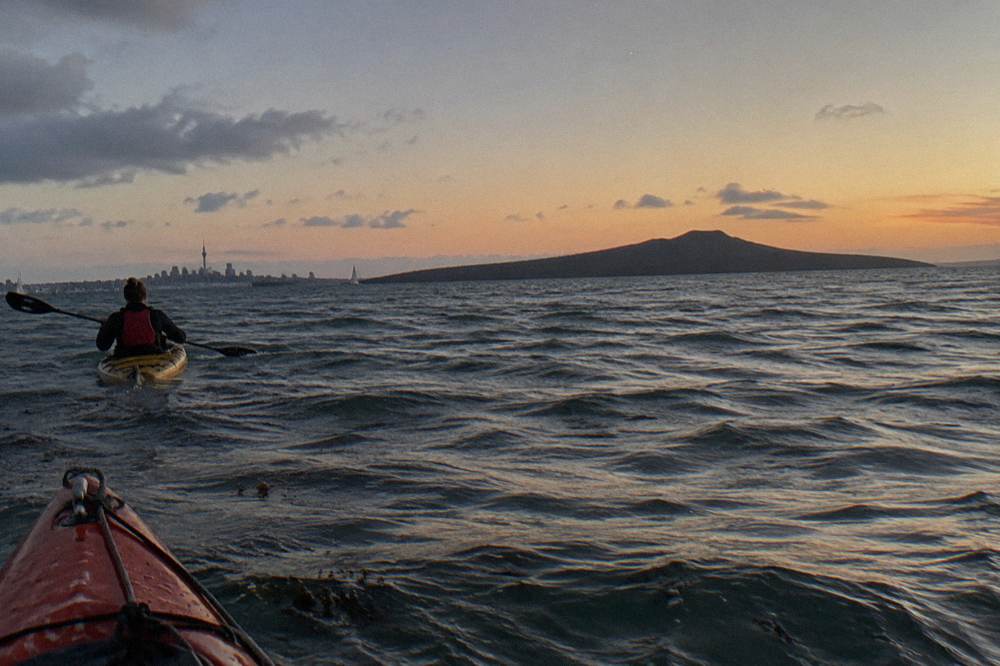
The non-glow upside is real rather than a consolation prize. The North Shore launches at Okura and Waiake sit under some of the darker sky reachable from central Auckland, the Rangitoto trips cross the Waitemata Harbour at dusk and return beneath the stars, and the City Lights paddles run past the lit waterfront from Westhaven Marina with a navigation light on every kayak. This site exists because the glow question is genuinely hard to answer with a number, and the surrounding night paddling is worth the booking either way.
A reader weighing the odds honestly should also weigh the calendar. Summer nights help, calm forecasts help, dark moon windows help, and the operators themselves have already built all three into how they schedule. Booking inside the windows the operators keep open, rather than against them, is the single practical thing a visitor controls. The deeper question of whether every tour sees the glow, and what "seeing it" even means when several organisms can be responsible, is taken up in will every bioluminescence kayak tour see the glow.
Whichever of the three a reader leans toward, the honest summary is the same: Auckland operators cannot promise the glow, one of them is willing to say it is very rare to miss it entirely, and every booking page on this site honours a full refund up to 24 hours before the start. That is a reasonable bet for one of the stranger sights the ocean produces.
Common Questions About Seeing Bioluminescence On A Kayak Tour
How Rare Is It To See Bioluminescence On A Kayak Tour?
No percentage exists. Canoe & Kayak Adventures says it is "very rare not to see at least one type" on its 2 hour glow paddles and offers a free repeat tour if its guide confirms none was seen. Social Nature Movement says the organisms "vary naturally", and Auckland Sea Kayaks says glow is "sometimes" seen on its Rangitoto sunset tour.
Does Every Auckland Bioluminescence Tour See The Glow?
No booking page promises a sighting. The dedicated glow tours are planned around dark, calm nights, one operator offers a repeat tour if nothing is seen, and every one of the nine tours states a full refund when cancelled at least 24 hours before the start.
What Time Of Year Is The Glow Most Likely Around Auckland?
In operator wording only: Social Nature Movement says its peak season is October to April, Canoe & Kayak Adventures says that from November to April the glow is "often strong enough to enjoy on most nights", and Auckland Sea Kayaks says glow on its sunset tour is "sometimes" seen, "typically October to April".
Does A Full Moon Stop A Bioluminescence Kayak Tour?
Only for Social Nature Movement, which runs no tours when the moon is in the sky above 50 percent illumination. Canoe & Kayak Adventures runs in moonlight but recommends booking near a new moon or on nights with a later moonrise. Auckland Sea Kayaks has no moon rule.
Which Auckland Tours Are Not Bioluminescence Tours?
The two City Lights night paddles from Westhaven Marina make no bioluminescence claim, and the Rangitoto sunset trips promise a BBQ dinner and a night paddle home rather than the glow, which the operator says is only "sometimes" seen. The 7 hour Tiritiri Matangi trip lists a chance of bioluminescent plankton on its return paddle.
Can You Get Your Money Back If No Bioluminescence Appears?
Every tour states a full refund when cancelled at least 24 hours before the start, but that covers changing plans, not a dark night. On the night itself, Canoe & Kayak Adventures offers a free repeat tour if its guide confirms no bioluminescence was seen; the terms are the operator's.