Is It A Good Idea To Kayak At Night In Auckland?
Night kayaking in Auckland is safe and rewarding on a guided tour. Here is what the science, the operators and Maritime NZ rules say about paddling after dark.
Kayaking at night in Auckland is a genuinely good idea when the paddle is guided, and a poor one when it is improvised. Every one of the nine night and sunset-to-dark tours covered here is a guided trip with kayaks, paddles and safety gear supplied, from $53 per person for the cheapest glow paddle to $139.02 for the longest island sunset run. The case against going alone is not the dark itself, it is the combination of dark water, cold water, weather that changes fast on the Hauraki Gulf, and a lifejacket rule that now applies to every small craft underway. This article works through the question the way a cautious friend would: what the darkness actually looks like on Auckland's waters, what changes for the paddler after sunset, what the operators and the maritime rules require, and who should think twice before booking.
Yes, kayaking at night in Auckland is a good idea, provided you go with a guided tour. The city offers four bioluminescence night kayak tours, three sunset-to-night paddles and two city lights night paddles, all guided and all supplying kayaks and safety equipment, with every one offering a full refund when cancelled at least 24 hours before the start. If you're curious whether the water will actually glow on the night you paddle out, the guide to how often bioluminescence shows up on guided kayak tours gathers what Auckland operators and a council scientist say about the odds.
A second question sits behind the first: can a person with modest paddling experience do this? The operators' own materials answer that carefully rather than with bravado. Auckland Sea Kayaks, which has run tours since 2010 and is an audited certified adventure activity operator, describes its sunset run as suitable for people with little kayaking experience and its harbour paddling as sheltered on the Waitemata. Social Nature Movement grades its own bioluminescence paddle as easy on its operator page. Canoe & Kayak Adventures, guiding since 1994, builds its trips around a ratio of one guide to six guests and includes tuition in what the booking page lists as included.
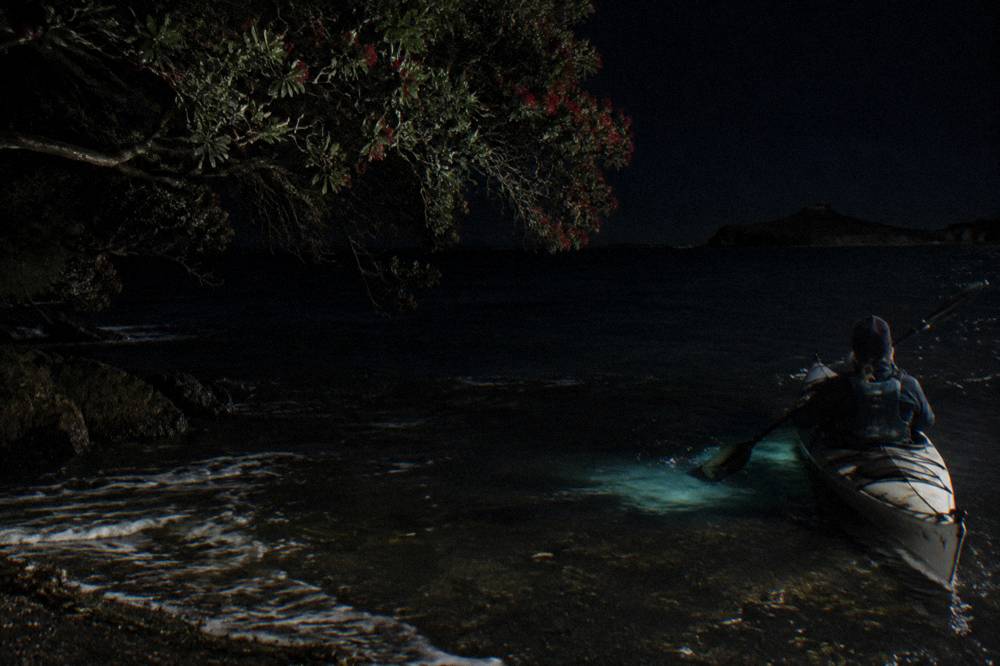
What the night adds is the thing people come for. Disturb the water around an Auckland beach in the warmer months and, when the organisms are present, the water can flash blue-green around the paddle. The mechanism is real and well documented: dinoflagellates produce light through mechanical stimulation, in flashes measured in fractions of a second, as described in the science of bioluminescence. No booking page promises a sighting, and Canoe & Kayak Adventures says so in writing. What a guided night tour does promise is that the decision about where, when and whether to launch sits with people who check those conditions nightly.
The glow paddle in that set is the trip this site features throughout its guides: the Social Nature Movement bioluminescence tour, which launches from Okura Boat Ramp at the end of Okura River Road or from Waiake Beach, tide depending, and runs two hours from $62.42 per person, rated 5.0 across 46 reviews on that booking page. Readers deciding between it and the alternatives can compare the Auckland glow tours side by side, or read more about what a bioluminescence kayak tour actually involves.
Is Kayaking At Night Safe On Auckland's Waitemata Harbour?
Yes, night kayaking on Auckland's Waitemata Harbour is safe when you go with a guided tour, because operators engineer out the risks that make solo night paddling dangerous. Auckland Sea Kayaks fits every kayak with an all-round white navigation light, its guides carry marine VHF radios and first aid, and it paddles only the sheltered harbour, while Social Nature Movement runs tours solely in calm conditions under hard wind and rain limits.
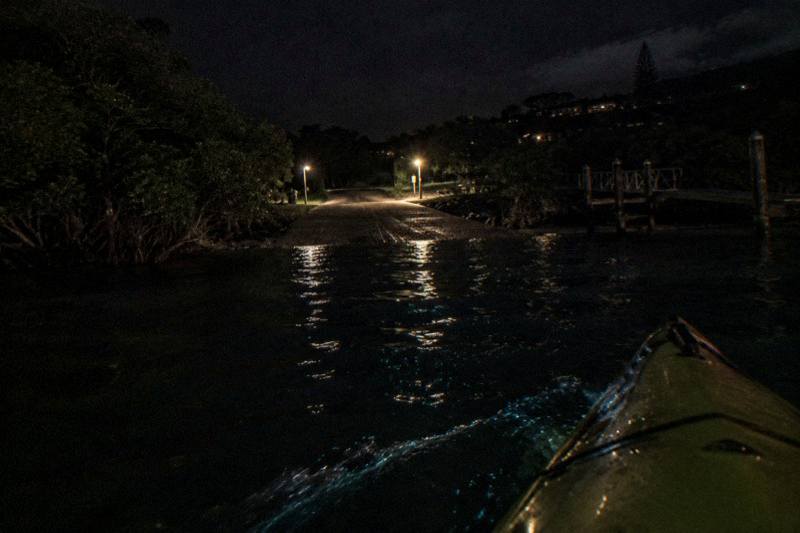
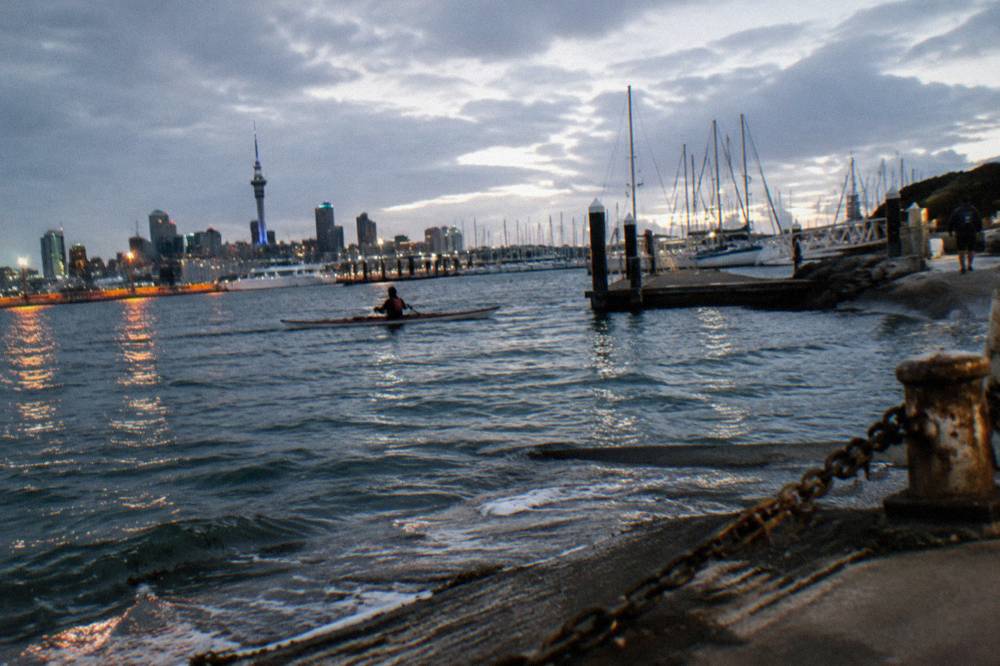
The harbour itself is the friendliest piece of water in the region for a first night paddle. Auckland Sea Kayaks describes the Waitemata as sheltered, and its city lights tours depart from the boat ramp at Westhaven Marina, Z Pier, where the city skyline does some of the illuminating. The Rangitoto sunset tours depart instead from the operator base at St Heliers Bay, 384 Tamaki Drive, paddle out in daylight and return after dark, with dinner on the island in between. Those are two different night experiences: one stays close to the marina under city lights, the other crosses open harbour water and comes home beneath the stars.
The glow tours sit on the North Shore rather than the harbour proper. Social Nature Movement launches at Okura Boat Ramp or Waiake Beach and links the choice to the tide, describing both locations as equally good: Okura at high tide, Waiake at low tide. Canoe & Kayak Adventures emails its North Shore meeting spot to guests before 10 AM on the day of the tour, so the exact beach depends on conditions. That flexibility is a safety feature as much as a planning quirk, because it lets the guide match the night to the water.
What about the weather? Each operator sets its own limits and makes its own call. Social Nature Movement states that Waiake does not operate above 5 m/s wind or 2.4 mm rain, and Okura above 8 m/s or 2.4 mm rain. Auckland Sea Kayaks says it operates within strict wind and sea limits, that the final call is often made on the day, and that if conditions are unsafe it may move, reschedule or fully refund guests. Weather, in other words, is the operator's problem on a guided tour and entirely the paddler's problem alone.
Wondering whether the dates around your visit will work?
Darkness, cold water and distance from help are the three things that turn a night paddle from easy to dangerous, and a guided tour manages all three.
What Is Different About Paddling After Dark At Okura Or Waiake?
Three things change at these North Shore launches: your eyes stay on the water, your paddle stroke supplies the light, and the group keeps you oriented, on dedicated glow tours that run about two hours. Canoe & Kayak Adventures guides at a ratio of one to six, with its two-hour paddle starting from $66 per person at 4.5 across 67 reviews.
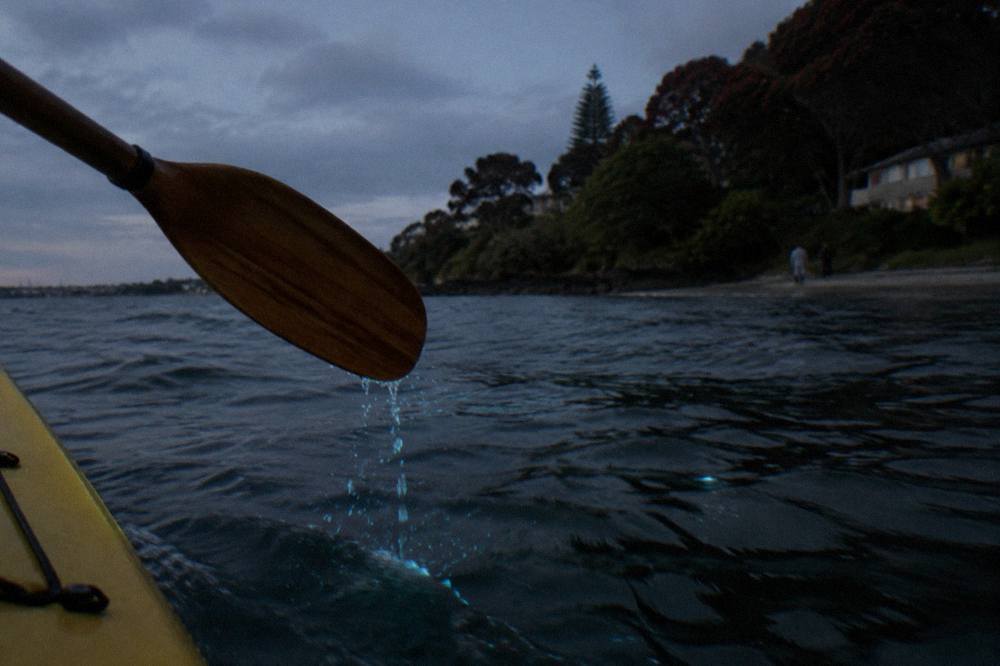
The science is worth knowing because it sets expectations honestly. The organism most often behind the surface glow is Noctiluca scintillans, a single-celled dinoflagellate that drifts with the current, accumulates at the surface when the sea is calm, and flashes when mechanically disturbed; Wikipedia's entry on the species gives its size as 400 to 1500 micrometres and its flash as lasting roughly 80 milliseconds. Auckland Council environmental scientist Dr Megan Carbines, quoted by Local Matters, described it as a non-toxic dinoflagellate that often forms bright blooms around the coast in summer and emits a burst of light when disturbed by swimmers or boats at night.
The season lines belong to the operators, each for its own tours only. Social Nature Movement says its peak Auckland bioluminescence season is October to April. Canoe & Kayak Adventures says that in November to April the glow is "often strong enough to enjoy on most nights", and adds that moonlight affects how brightly the glow shows, recommending booking near a new moon or on nights with a later moonrise. Auckland Sea Kayaks says only that bioluminescence is "sometimes" seen on its sunset tour, "typically October to April", and that line applies to that tour alone. None of the three promises a sighting.
The moon matters enough that one operator schedules around it. Social Nature Movement does not operate when the moon is in the sky at more than 50 percent illumination, because excessive moonlight reduces how visible the glow is, so gaps in its availability are intentional. That is a genuine advantage of a guided glow tour over a do-it-yourself night paddle: the calendar has already been filtered. New moon dates for the year ahead, computed from US Naval Observatory data, include 9 November 2026, 9 December 2026, 8 January 2027 and 7 February 2027, and readers can dig deeper with the site's guide to moon phases and a bioluminescence kayak tour.
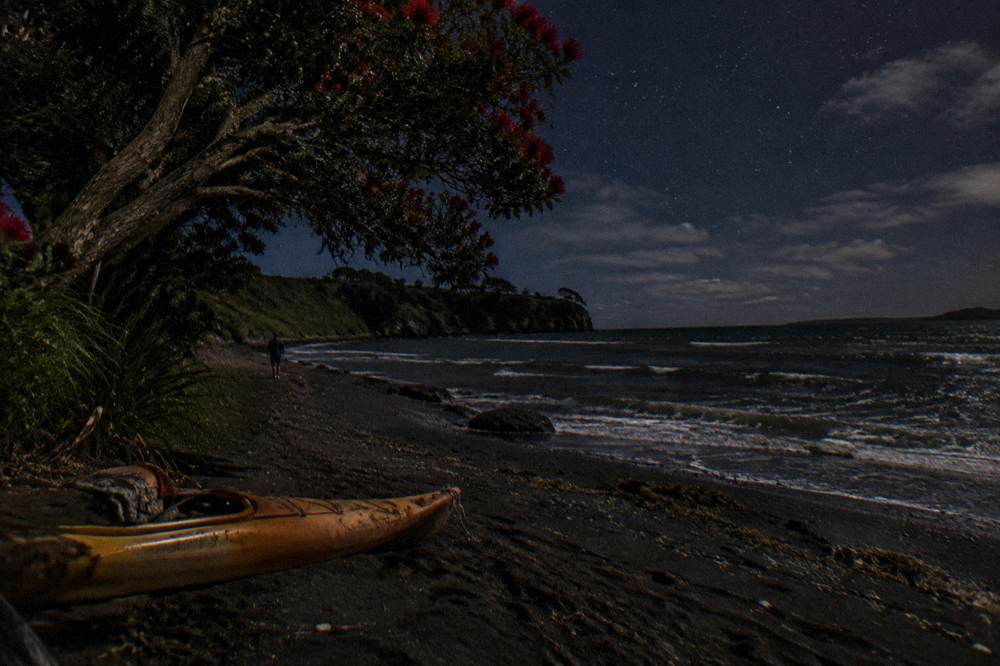
Should You Kayak At Night Alone Or With A Guide In Auckland?
With a guide, and not only for beginners. Maritime NZ's guidance for paddle craft reads like a checklist of what a solo night paddler must assemble alone: dress for the water temperature because cold water shock and hypothermia can kill, carry two waterproof ways to call for help, and check the marine forecast. A guided tour supplies the gear, the local judgment and the company, and on the nine tours covered here every paddle is guided, none is a rental.
The lifejacket rule is now unambiguous. From 9 October 2026, everyone on board a recreational craft six metres or less must wear a properly fitted lifejacket while the craft is underway, and Maritime NZ lists kayaks and paddleboards among the craft covered, with compliance handled through an educational approach in the early months. On the tours this site covers, the question answers itself: life jackets are part of what the operators issue, from Social Nature Movement's personal flotation device with safety light to Auckland Sea Kayaks' supplied life jacket with a phone pocket.
Guides also carry the communication and first aid that a solo paddler would have to buy, stow and know how to use. Auckland Sea Kayaks' guides carry marine VHF radios and first aid. Canoe & Kayak Adventures runs one guide to six guests and includes tuition in the price. Social Nature Movement states all participants wear lights and reflective gear. These are ordinary, unglamorous details, and they are the substance of why night kayaking in Auckland is a good idea on a tour and a gamble alone.
The alternative framing, that a confident paddler could rent a kayak and find the glow independently, runs into a scope problem as much as a safety one: none of the operators here offers a night rental, and the 9 Auckland night paddles covered here are all guided trips. A reader set on independent night paddling should at minimum follow Maritime NZ's paddle craft guidance in full, and be honest about the cold-water part, which is the part people underestimate.
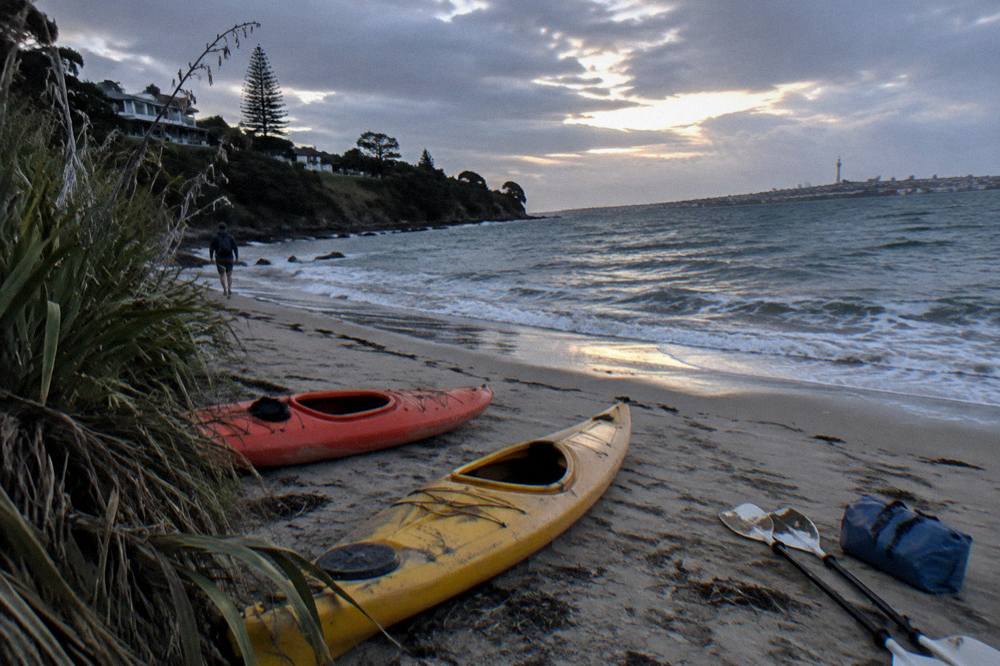
Canoe & Kayak Adventures states its own fitness expectations plainly: guests should be able to walk nonstop for 30 minutes and to sit on the ground and get up unaided, and its booking page notes that kayaking is a wet sport. Its tour carries an unusual comfort for a glow trip: if the guide confirms on the night that no bioluminescence was seen, the operator offers a free repeat tour, because, in its words, bioluminescence is a natural event that can never be guaranteed.
Beyond the glow tours, Auckland has two other ways to be on the water at night, both guided, and both evidence that the after-dark paddle is a format rather than a single product.
What Do Auckland Night Kayak Tours Actually Provide?
Across Auckland's nine night kayak tours, all are guided paddles with kayaks and paddles supplied, while food ranges from nothing stated to a full BBQ dinner. Five of the nine include some food or drink: sweet treats or snacks on city lights paddles, BBQ dinner and drinks on Rangitoto runs, and a luxury grazing platter with drinks at Tiritiri Matangi, with prices from $53 to $139.02 (median $73).
The table below shows the shape of the market.
| Trip | Operator | Duration | From, per person | Rating and reviews | Starts |
|---|---|---|---|---|---|
| Glow paddle | Social Nature Movement | 1.5 to 2 hours | $53 | 4.9 across 329 reviews | Chosen at booking |
| Okura or Waiake glow paddle | Social Nature Movement | 2 hours | $62.42 | 5.0 across 46 reviews | Okura Boat Ramp or Waiake Beach |
| North Shore glow paddle | Canoe & Kayak Adventures | 2 hours | $66 | 4.5 across 67 reviews | North Shore, spot emailed on the day |
| City lights paddle | Auckland Sea Kayaks | About 2.5 hours | $82.27 | 4.8 across 28 reviews | Westhaven Marina |
| Rangitoto sunset and night | Auckland Sea Kayaks | 7 hours | $116 | 4.8 across 85 reviews | St Heliers Bay |
| Tiritiri Matangi dinner paddle | Social Nature Movement | 7 hours | $139 | No rating yet | Pickup options chosen at booking |
Each trip answers a slightly different version of the night question. The glow paddles are short, close to shore and centred on the water itself. The city lights paddles from Westhaven Marina, from $82.27 for the 2.5 hour version with snacks, are about the skyline: the trip makes no bioluminescence claim and does not need one, since the harbour lights supply the spectacle. The Rangitoto sunset tours paddle out in daylight, eat dinner on or near the island, and return in the dark, with the booking page for the 7 hour version describing a paddle home beneath the stars across the Waitemata Harbour.
The Tiritiri Matangi trip is its own animal and should not be compared on price with the 2 hour glow paddles: it is a 7 hour dinner, wildlife and night-walk trip with a return paddle that offers a chance to see bioluminescent plankton, from $139 per person, with pickup included and chosen at booking. It is the only tour here with hotel-style pickup built in; otherwise, no tour includes free hotel pickup, and the Social Nature Movement Bio-Bus from near the Sky Tower is an optional paid add-on, while Auckland Sea Kayaks runs a pre-booked free shuttle from the Auckland War Memorial Museum for its Rangitoto tours.
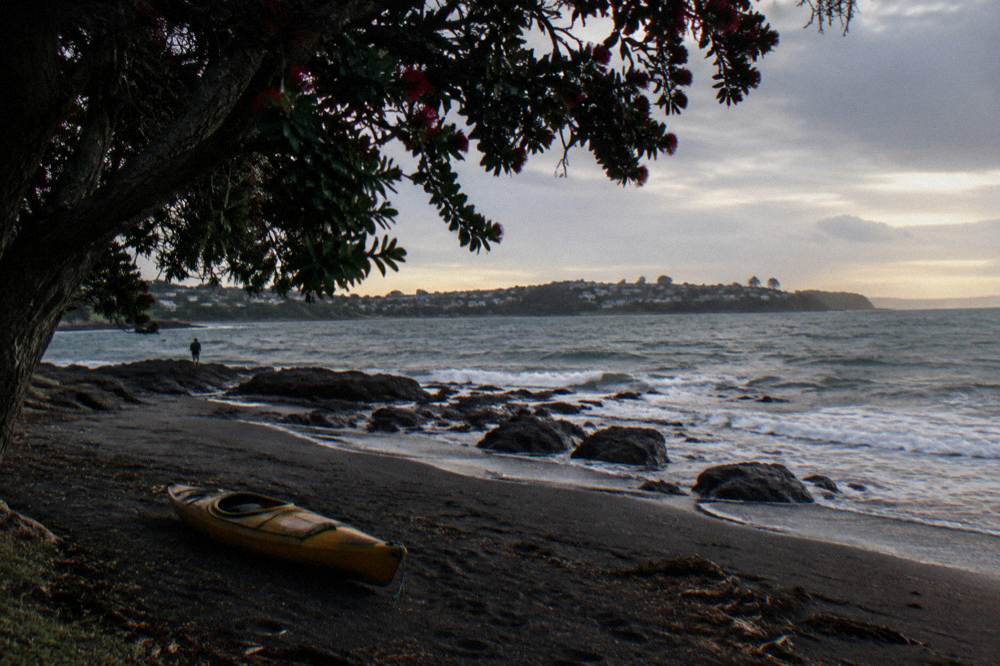
How Dark Does Auckland Get After Sunset?
Dark enough, and full darkness comes later in summer. On the Auckland waterfront, computed from date and location, sunset on 15 December 2026 is 8:36 pm, civil twilight ends at 9:07 pm, and full astronomical darkness does not arrive until 10:27 pm. By 15 June 2027 the same sequence compresses to a 5:11 pm sunset and 6:43 pm full dark, so darkness comes much later in summer than in winter.
| Date, Auckland waterfront | Sunset | End of civil twilight | Full dark, computed |
|---|---|---|---|
| 15 Nov 2026 | 8:08 pm | 8:37 pm | 9:49 pm |
| 15 Dec 2026 | 8:36 pm | 9:07 pm | 10:27 pm |
| 15 Jan 2027 | 8:42 pm | 9:12 pm | 10:29 pm |
| 15 Mar 2027 | 7:41 pm | 8:07 pm | 9:08 pm |
| 15 Jun 2027 | 5:11 pm | 5:40 pm | 6:43 pm |
| 15 Sep 2027 | 6:11 pm | 6:37 pm | 7:37 pm |
These times come from US Naval Observatory sun and moon data for the Auckland location, and operators set their own start times against them, so no tour departure can be read off this table. What the table does explain is booking behaviour: midsummer glow tours leave very late, and families with younger children find the midwinter and shoulder-season starts easier than the long midsummer evenings allow. Sea temperatures in the region are coolest in winter and warmest in late summer.
For the glow specifically, darkness is only half the equation; the moon is the other half, and the site's best time for a bioluminescence kayak tour guide works through the interaction in detail. Social Nature Movement's 50 percent moon rule means its summer calendar concentrates in the weeks around each new moon, while Canoe & Kayak Adventures runs on more nights and simply warns that the glow can be more subtle under a brighter moon.
Who Should Reconsider A Night Paddle In Auckland?
Most adults and supervised teenagers can manage a guided night paddle, but operators set firm limits: minimum ages of 7, 12, or 14 depending on the trip, weight caps of 120 to 125 kg on several pages, and Auckland Sea Kayaks' requirements that guests stay seated up to 45 minutes and speak basic English, so anyone outside these bounds, or unable to walk 30 minutes nonstop, should reconsider.
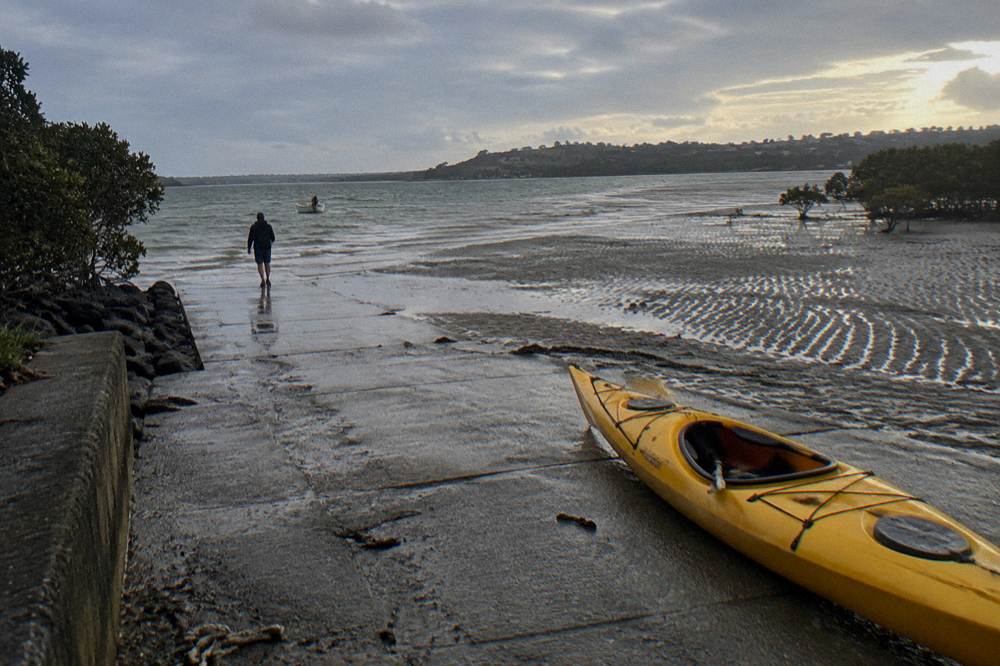
The age detail deserves precision because the numbers differ by operator and are easily muddled. One Canoe & Kayak Adventures booking page states minimum age 7, and the operator's own page says 11 and over accompanied by an adult, with younger children welcome only after contacting the operator. Social Nature Movement's operator page gives 13 and over. Auckland Sea Kayaks gives 14 and over for the Rangitoto sunset tour, and its operator page gives 12 and over with an adult for the city lights paddle. Families weighing the options have a dedicated guide on night kayak tours with kids in Auckland. Age is one requirement, and swimming ability is another question families often raise, so the guide to swimming requirements for Auckland night kayak tours spells out what operators and life jacket rules actually say about non-swimmers.
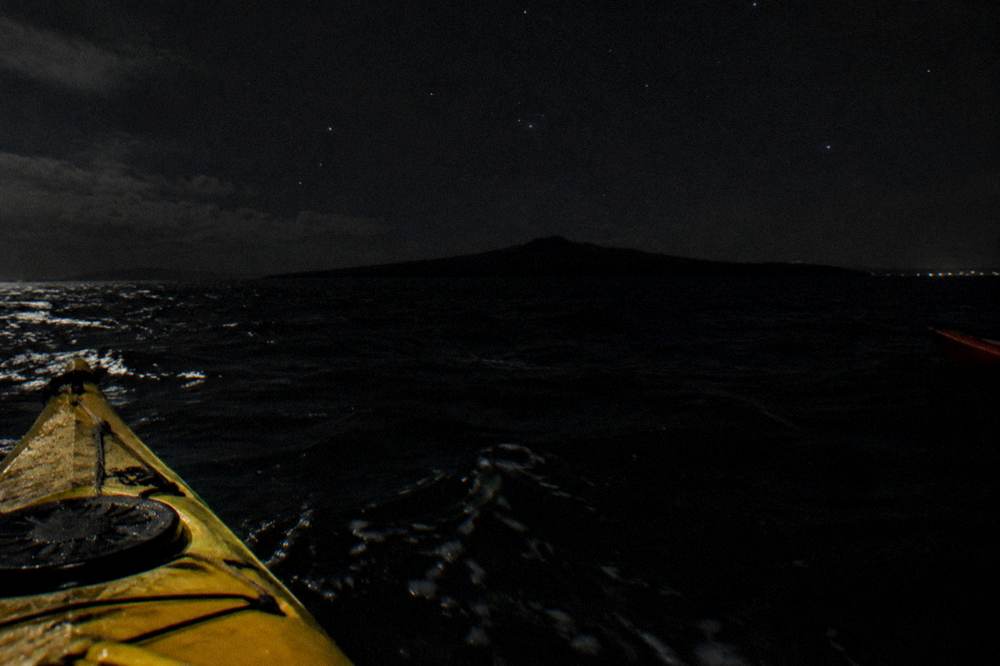
The cold is the honest objection to night paddling at any time of year in New Zealand. Maritime NZ's advice to dress for the water temperature, not the air temperature, exists because cold water shock and hypothermia can kill, and a still summer evening can sit over water cold enough to matter. The operators dress for it: Social Nature Movement's bring list runs to a thin merino or thermal shirt, a fleece or woollen jumper, a rain-proof jacket, a warm beanie, a towel and a torch, and the site's what to wear on a night kayak tour guide translates the layers for visitors.
Photographers should calibrate expectations too. Social Nature Movement says outright that photographing the glow is challenging and needs specialised camera settings, recommending a waterproof phone case for anyone trying. The eye sees far more than the camera does on these paddles, and readers who want the full picture can start with photographing bioluminescence from a kayak.
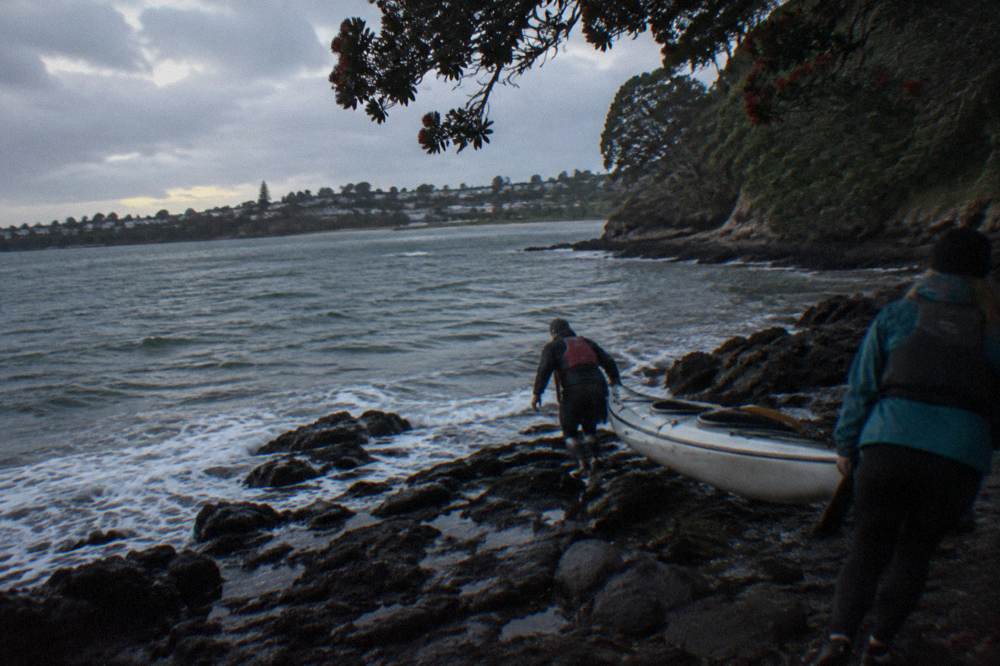
One more Auckland-specific option belongs in this discussion of who should go: the 7 hour Tiritiri Matangi trip suits the visitor who wants penguins, a guided nocturnal walk, a sunset grazing platter with drinks and a return paddle with a chance of bioluminescent plankton, all with pickup included. It has no rating yet, and it is a big evening, but it bundles nearly everything this article describes into one trip.
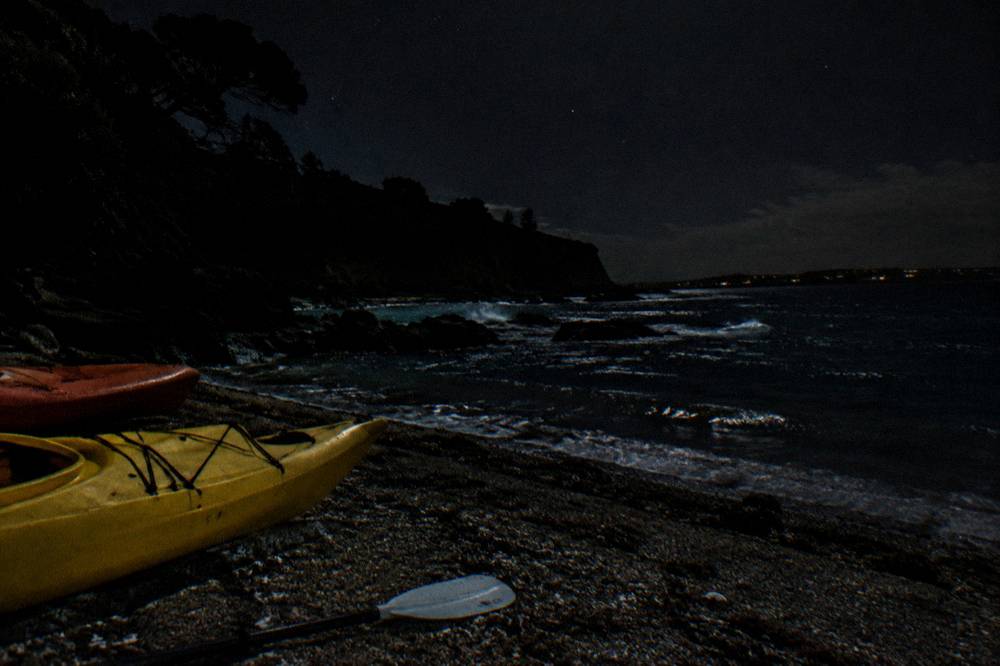
The verdict, then, on the original question: a guided night paddle in Auckland is one of the better ideas in the city's tour catalogue, and this site exists because the format rewards planning. The darkness is predictable, the water is managed, the gear is supplied, and the one thing nobody can promise, the glow, is also the thing nobody needs to promise for the night to be worth it.
Common Questions About Night Kayaking In Auckland
Is It A Good Idea To Kayak At Night?
On a guided tour, yes. Every night paddle covered here is guided, supplies kayak, paddle and safety gear, and states a full refund when cancelled at least 24 hours before the start. Going alone at night is a different proposition: Maritime NZ's cold-water, communication and forecast advice describes exactly the risks a guide manages for you.
Is It Safe To Kayak At Night In Auckland?
On the tours covered here, the safety systems are explicit: navigation lights on every Auckland Sea Kayaks kayak, VHF radios and first aid with its guides, calm-condition wind and rain limits at Social Nature Movement's launches, and a one-to-six guide ratio at Canoe & Kayak Adventures. Operators make their own weather call and reschedule or refund when conditions are unsafe.
Do You Have To Wear A Lifejacket Kayaking At Night?
From 9 October 2026, everyone on a recreational craft six metres or less must wear a properly fitted lifejacket while the craft is underway, and Maritime NZ lists kayaks among the craft covered. Four booking pages list a life jacket or personal flotation device among the inclusions: "Okura Or Waiake Start, 2 Hours", "Optional Bio-Bus, 1.5 To 2 Hours", "Rangitoto BBQ, 7 Hours" and "Sweet Treat, 2 Hours".
Can Beginners Join A Night Kayak Tour In Auckland?
The operators' own wording suggests yes on several trips: Auckland Sea Kayaks calls its sunset tour suitable for people with little kayaking experience, Social Nature Movement grades its glow paddle as easy, and Canoe & Kayak Adventures includes tuition. Canoe & Kayak Adventures sets fitness basics, such as the ability to sit and get up from the ground unaided.
Will A Night Kayak Tour Definitely See Bioluminescence?
No. Bioluminescence is a natural event: Social Nature Movement says it varies naturally, and Canoe & Kayak Adventures says it can never be guaranteed. Canoe & Kayak Adventures goes further: if the guide confirms on the night that none was seen, it offers a free repeat tour. Social Nature Movement filters its calendar around the moon to improve the odds.
What Should You Wear On A Night Kayak Tour?
Dress for the water temperature, per Maritime NZ guidance, and in layers. Social Nature Movement's bring list names a thin merino or thermal shirt, a fleece or woollen jumper, a rain-proof jacket, a warm beanie, a towel, a torch, water shoes, personal medication and a water bottle.