What Is A Bioluminescence Kayak Tour? The Night Paddle Explained
A bioluminescence kayak tour is a guided evening paddle on Auckland water where tiny plankton can light up blue-green when the sea is disturbed. Here is what the tour is, who runs it, what it costs and what no operator can promise.
Short answer
A bioluminescence kayak tour in Auckland is a guided evening paddle, about two hours, where dinoflagellate plankton such as Noctiluca scintillans can flash blue-green when water is disturbed by a paddle. Two dedicated trips, sold on four booking pages, run from Okura, Waiake and the North Shore, from $53 per person. A sighting is never guaranteed.
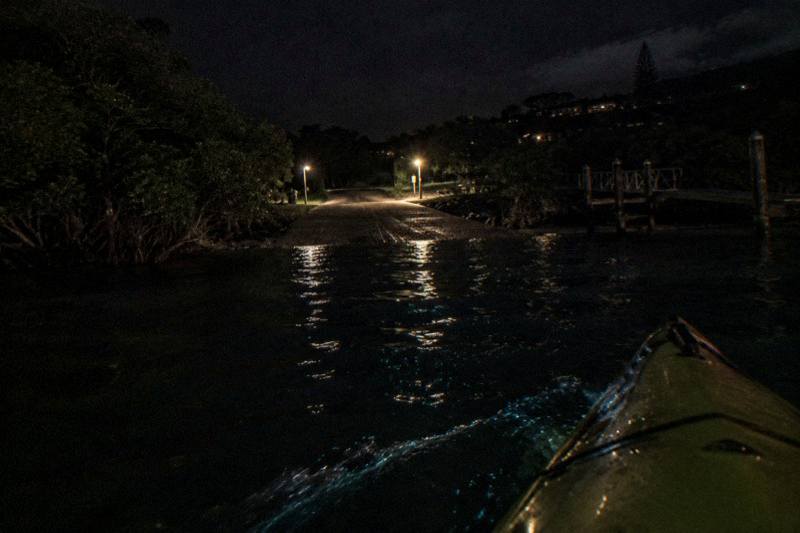
A bioluminescence kayak tour is a guided paddle taken after dark, in water where tiny drifting organisms can emit a flash of blue-green light when the surface is disturbed. Every stroke of a paddle, every drip and every wake has the potential to set that light off, which is why the kayak has become the standard way to look for it: you are low, slow and close to the water, and your own movement is what triggers the show. In Auckland the tour exists as a short, guided evening trip, run by two operators from North Shore launch points, and sold at from prices between $53 and $67.52 per person depending on the booking page. For a wider view of how Auckland stacks up against other paddling spots around the country, the guide to bioluminescence kayak tours across New Zealand puts operators, prices, seasons and booking details side by side.
This page explains the whole thing: the organism behind the glow, the operators who run the dedicated trips, where they launch, what the tour costs, what to wear, and the single most important sentence in the subject, that no operator promises a sighting. The tours covered here are the four dedicated glow paddles plus, for context, the longer sunset and city-lights trips that also paddle in the dark. The water may glow on any given night, and no tour can guarantee it.
What Is A Bioluminescence Kayak Tour In Auckland?
A bioluminescence kayak tour in Auckland is a guided evening paddle, about two hours long, launched from North Shore spots such as Okura Boat Ramp, Waiake Beach or a location emailed on the day, in water where disturbed plankton can flash blue-green light. The kayak and paddle are supplied, a guide leads the group, and every one of the four dedicated trips states a full refund for cancellations at least 24 hours before the start.
The format is simple and consistent across both operators. You meet at a launch point after dark, the operator supplies the kayak, paddle and safety gear, and a guide leads a group out onto the water. The dedicated glow trips are short: two hours for Canoe & Kayak Adventures, and either two hours or 1.5 to 2 hours for Social Nature Movement depending on the booking page. The point of going at night, and of going by kayak rather than by boat, is proximity: the light comes from single-celled organisms in the surface water, and it shows best at arm's length from a paddle.
The glow, when it appears, is triggered by movement. Earth Sciences New Zealand, formerly NIWA, notes that Noctiluca scintillans cells "phosphoresce when disturbed", which is exactly what a paddle stroke does. Nothing is added to the water, nothing is lit from below, and there is no artificial component to the display. The tour is a search, in the best sense: a guided, weather-dependent trip into water where the phenomenon is known to occur around the Auckland coast.
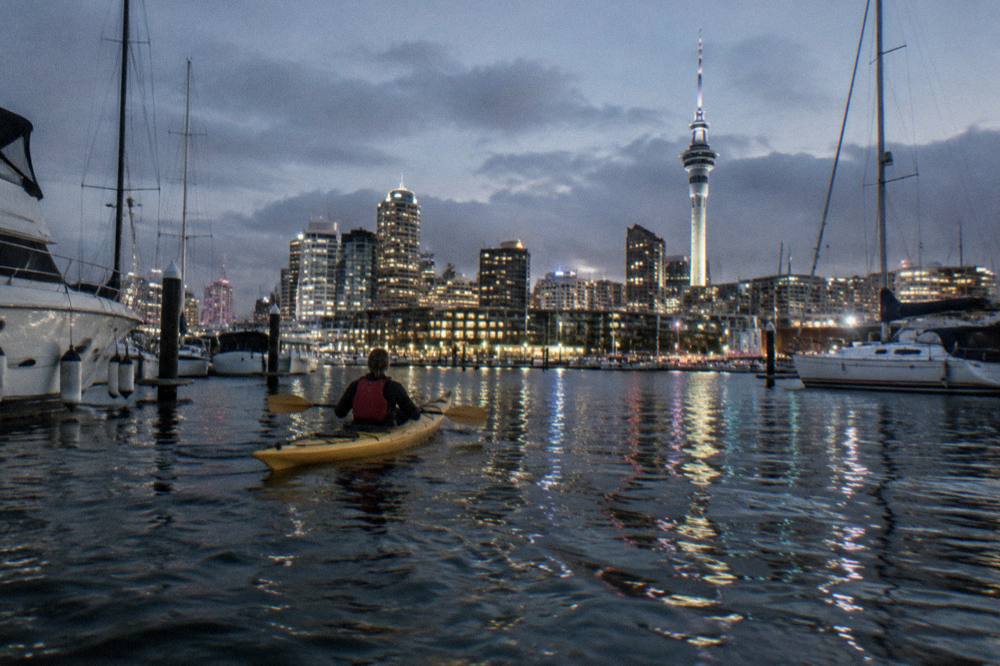
It is worth separating this from the other night paddles in the city. Auckland Sea Kayaks runs a City Lights tour from Westhaven Marina that is about the lit skyline, and a longer sunset tour to Rangitoto Island that returns after dark; the operator says bioluminescence is "sometimes" seen on that sunset trip, "typically October to April", and can never be guaranteed. The dedicated glow tours are different: the bioluminescence is the reason the trip exists. That distinction shapes everything below, including the price comparison you should and should not make. More background is in the night kayak versus glow paddle comparison.
What Makes The Water Glow Around Auckland?
The glow around Auckland comes mostly from Noctiluca scintillans, a single-celled non-toxic dinoflagellate that flashes blue-green light when mechanically disturbed, in a burst lasting about 80 milliseconds. All three describe light emitted when the cells are disturbed; Wikipedia adds that it occurs only at night under a circadian clock.
The organism is genuinely tiny. Wikipedia describes Noctiluca scintillans as a single cell of roughly 400 to 1500 micrometres that drifts with the current. The light is produced by mechanical stimulation, shear stress in the water, and it accumulates near the surface when the sea is calm. Because the reaction runs on a circadian clock, it happens at night; a daytime bloom of the same species can actually tint the water pink or red, something Earth Sciences New Zealand documented in Hauraki Gulf waters in October 2002.
Dr Megan Carbines, an Auckland Council environmental scientist quoted by Local Matters in December 2021, described the species plainly: "a non-toxic dinoflagellate, which often forms bright blooms around the coast in summer. When disturbed, it also emits a burst of light, often seen when swimmers or boats move through the water at night." She also noted that rising water temperature, combined with calm conditions that let cells accumulate, is conducive to these blooms. Local Matters itself calls Mahurangi and the Hibiscus Coast, both north of Auckland, places "long been known as bioluminescence hotspots"; that is the newspaper's characterisation, not the council's. Because even a known hotspot needs the right mix of warmth and calm, many paddlers wonder how often the glow actually appears on the water, a question the guide to how rare bioluminescence sightings really are answers in detail.
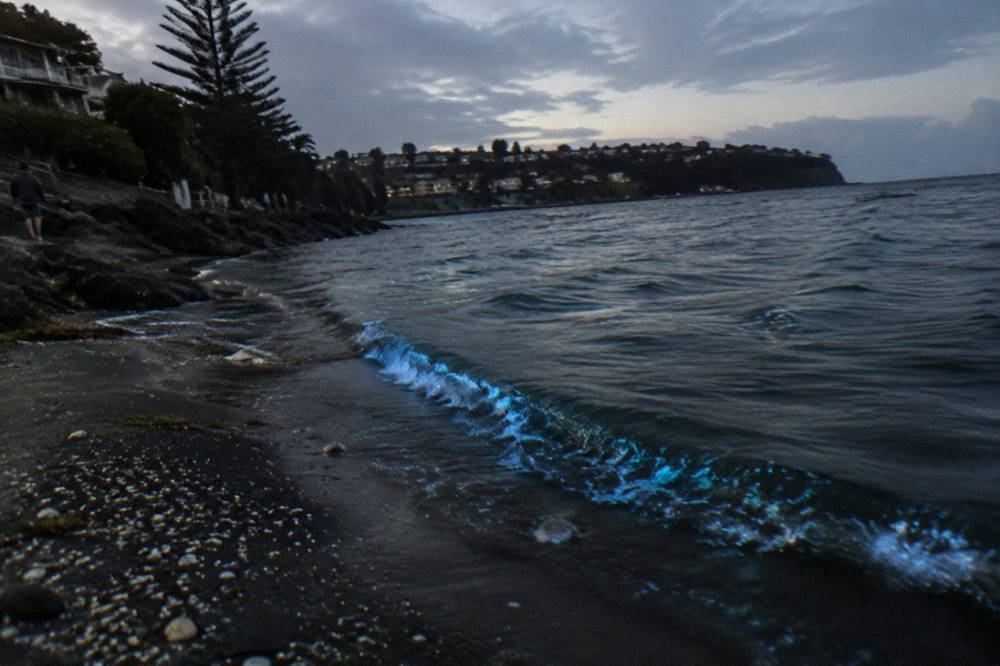
Why the flash exists at all is still an open question. Wikipedia summarises the leading hypothesis as the "burglar alarm" idea: a sudden flash startles or exposes whatever is disturbing the cell, attracting larger predators to the grazer that triggered it. On a kayak tour the practical point is simpler. The mechanism needs disturbance, so paddles, drips and hull wakes are the trigger, and the light is mostly blue-green. Social Nature Movement adds, as its own wording, that what paddlers see can include dinoflagellates. The fuller science story, with the species detail, is on the Noctiluca scintillans and sea sparkle page.
Who Runs Bioluminescence Kayak Tours From Okura, Waiake And The North Shore?
Two operators run the dedicated glow paddles: Social Nature Movement, launching at Okura Boat Ramp or Waiake Beach, and Canoe & Kayak Adventures, launching from a North Shore spot emailed before 10 AM on the day. Each operator's trip is sold on two booking pages with different prices and review counts, from $53 to $67.52 per person. The same trip on two pages is one trip, never two.
That twin-page structure is the single most confusing thing about shopping for this tour, so it deserves a clear table. Each row below is one physical trip; the two prices shown are the two booking pages it is sold on, and each page carries its own rating and review count. You book one page or the other.
| Trip | Operator | Duration | From price, page one | From price, page two | Rating, page one | Rating, page two | Start |
|---|---|---|---|---|---|---|---|
| Glowing Bioluminescent Waters night kayak | Social Nature Movement | 1.5 to 2 hours | from $53 | from $62.42 | 4.9 across 329 reviews | 5.0 across 46 reviews | Chosen at booking; the twin page lists Okura Boat Ramp or Waiake Beach |
| Bioluminescence Kayak Tour, est. 1994 | Canoe & Kayak Adventures | 2 hours | from $67.52 | from $66 | 4.1 across 207 reviews | 4.5 across 67 reviews | North Shore, spot emailed before 10 AM on the day |
Both pages of both trips state a full refund when cancelled at least 24 hours before the start. Both operators supply the kayak and paddle; one of the two Social Nature Movement booking pages lists a guide, while the Canoe & Kayak Adventures pages list a guide and tuition. Group size appears on one Canoe & Kayak Adventures page only: up to 24.
The two operators are different businesses with different histories. Canoe & Kayak Adventures says it has run kayak tours since 1994 and is still owned by an original founder, with one guide to six guests on its glow trips. Social Nature Movement is the larger presence on the booking pages: its 329-review page is the most reviewed tour of the nine covered on this site, from $53, which also makes it the cheapest per person. A fuller side-by-side, including the non-glow night paddles, is on the Auckland bioluminescence kayak tours compared page.
The Canoe & Kayak Adventures trip, sold from $67.52 on one page and from $66 on the other, carries the longer track record and a distinctive promise: if the guide confirms on the night that no bioluminescence was seen, the operator gives a free repeat tour. Check availability on the Bioluminescence Kayak Tour est. 1994 page.
Where Do The Glow Tours Launch Around Okura, Waiake And The North Shore?
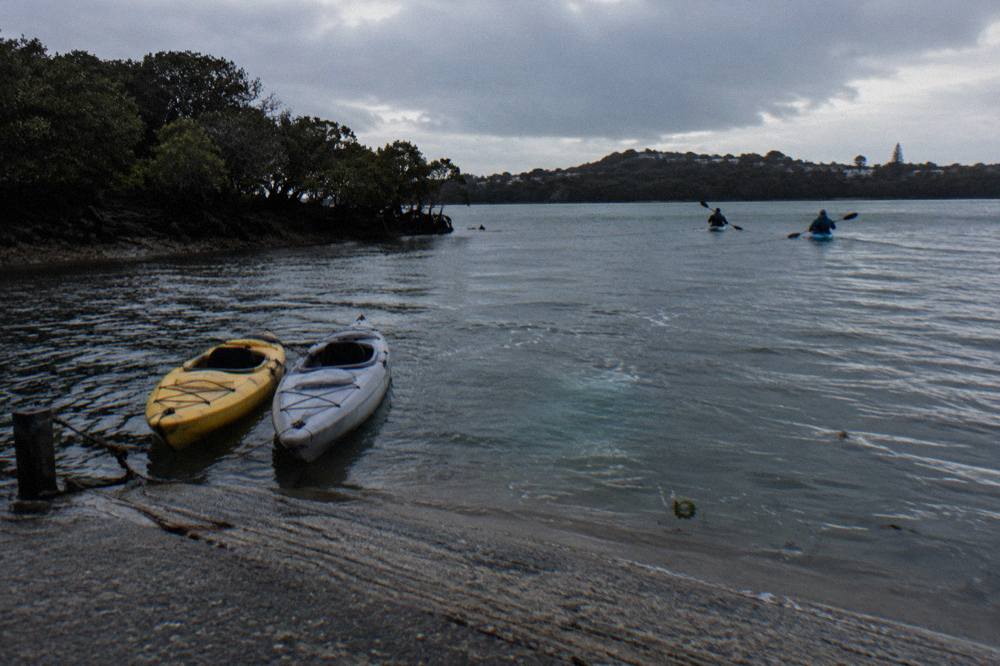
The dedicated glow trips launch from three North Shore places: Okura Boat Ramp at the end of Okura River Road, Waiake Beach, and a Canoe & Kayak Adventures North Shore spot that is only emailed before 10 AM on the day of the tour. Social Nature Movement links its two beaches to the tide, calling both equally good: Okura at high tide, Waiake at low tide.
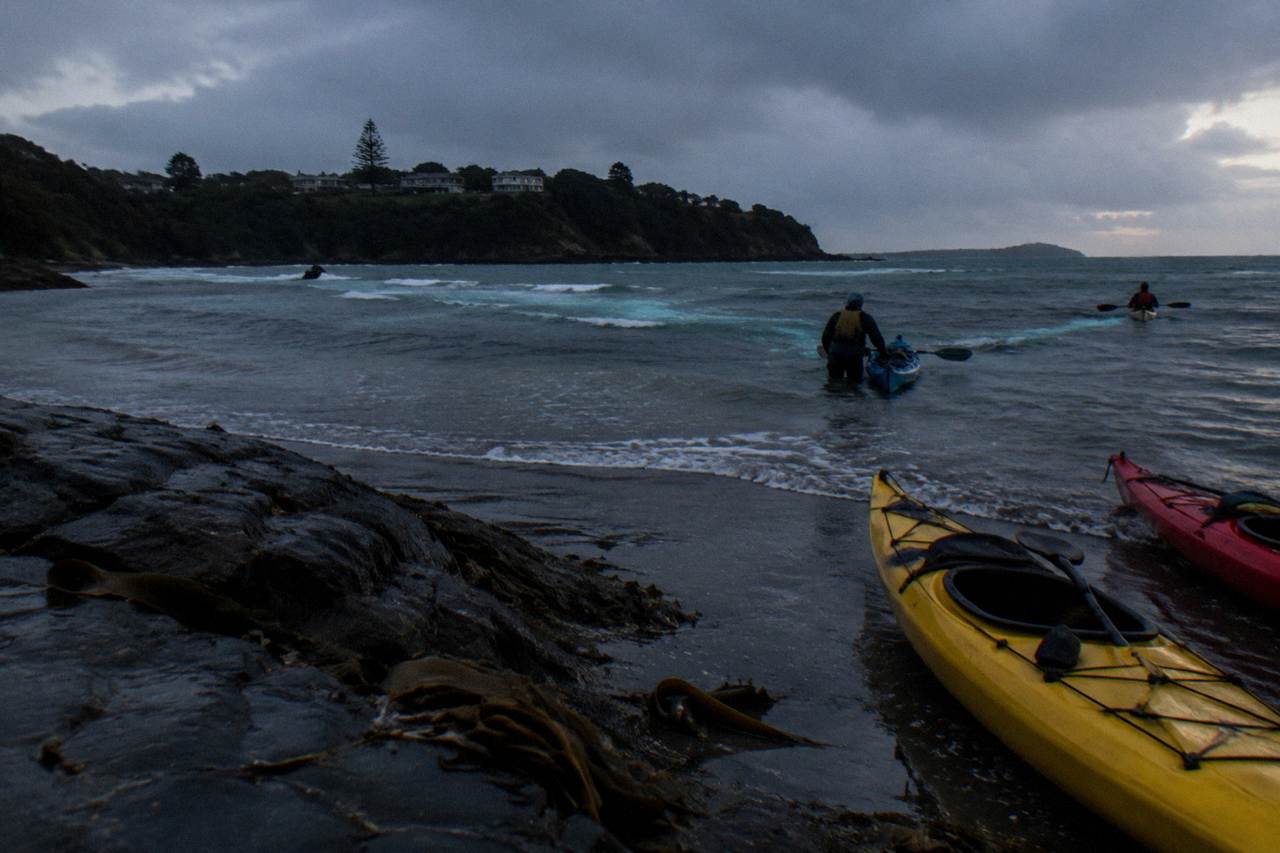
The geography matters because these launches are not on the lit city waterfront. They sit on the North Shore coast northeast of the harbour bridge, on water that faces the open Hauraki Gulf rather than the skyline. Social Nature Movement names both of its launch points on its booking page: Okura Boat Ramp at 1 Okura River Road, Okura, and Waiake Beach. Which one is used depends on the tide, and the operator's own wording is that both locations are equally good. One of its booking pages leaves the exact point to be chosen at booking.
Canoe & Kayak Adventures works differently. Its booking pages give only a location code, and the exact North Shore spot is emailed to you before 10 AM on the morning of the tour.
| Launch | Used by | What the booking page says |
|---|---|---|
| Okura Boat Ramp, 1 Okura River Road, Okura | Social Nature Movement | One of two named launches, used at high tide |
| Waiake Beach | Social Nature Movement | The other named launch, used at low tide |
| North Shore spot, emailed before 10 AM on the day | Canoe & Kayak Adventures | Exact spot emailed on the morning |
Getting to these launches from the city centre takes planning, since no glow tour includes free hotel pickup. Social Nature Movement sells an optional paid add-on called the Bio-Bus, which meets near the Sky Tower one hour before the start and takes about 30 minutes one way, per the operator. The transport options, including the Bio-Bus meeting point, are laid out in getting to a bioluminescence kayak launch from central Auckland, and the launches themselves are described in the Okura and Waiake launch guide.
How Long Is A Bioluminescence Kayak Tour Near Auckland?
The dedicated glow paddles run one and a half to two hours on the water. The Social Nature Movement trip is listed as 2 hours on one booking page and 1.5 to 2 hours on the other, which notes that tours after the first of the night run 1.5 hours. The Canoe & Kayak Adventures trip is 2 hours. Longer night paddles exist but are different products.
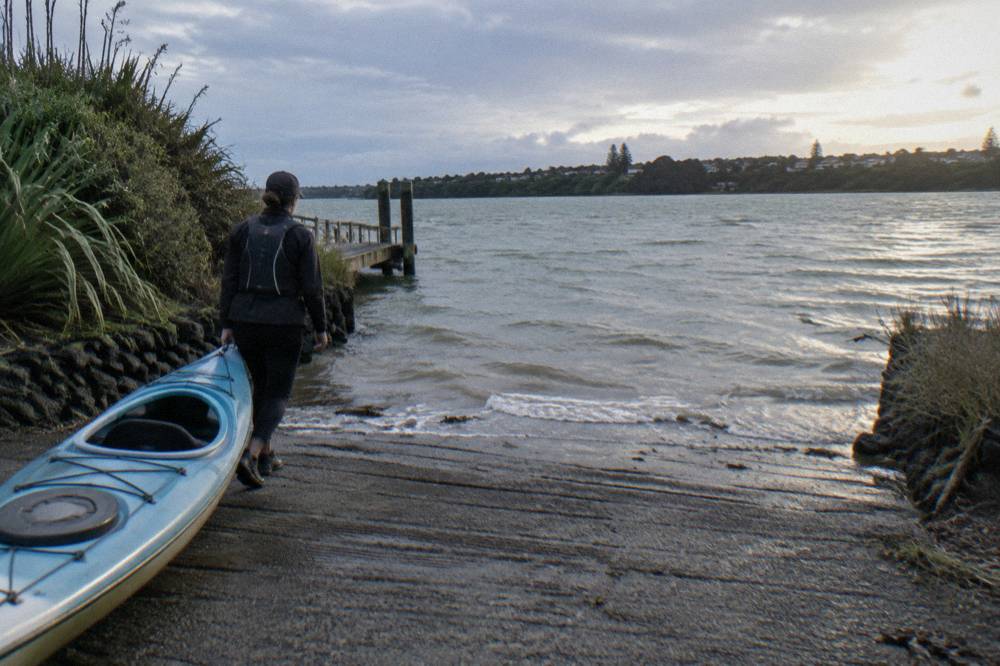
The operator's own pages note that the experience is weather-gated: Social Nature Movement says tours only proceed in calm conditions, and its stated limits are 5 m/s of wind or 2.4 mm of rain at Waiake and 8 m/s of wind or 2.4 mm of rain at Okura. Canoe & Kayak Adventures says weather cancellations mean a different date or a full refund, and that minimum numbers apply. Those weather limits and minimum numbers are exactly the sort of planning a guide takes on, so anyone weighing a solo attempt can start with the guide to seeing the glow without a tour.
The longer trips should not be confused with these. Social Nature Movement also runs a 7-hour Tiritiri Matangi trip that includes a sunset kayak, penguins, a guided night walk, a grazing platter with drinks and a return paddle with, in the operator's words, a chance to see bioluminescent plankton. Check the booking page for the price. It is a dinner and wildlife expedition, not a glow paddle, and it should never be compared on price with the two-hour trips. Auckland Sea Kayaks' Rangitoto sunset tour runs 6 hours 30 minutes or 7 hours depending on the booking page, from $139.02 and $116 respectively, with a BBQ dinner, and its City Lights paddles run about 2.5 hours and 2 hours from Westhaven Marina.
Darkness timings shape when these tours can start. The hours below are computed from date and location for the Auckland CBD waterfront, from US Naval Observatory sunset data with astronomical dusk calculated; operators set their own start times, so no tour time appears here.
| Date | Sunset | Full dark, astronomical dusk |
|---|---|---|
| 15 Nov 2026 | 8:08 pm | 9:49 pm |
| 15 Dec 2026 | 8:36 pm | 10:27 pm |
| 15 Jan 2027 | 8:42 pm | 10:29 pm |
| 15 Mar 2027 | 7:41 pm | 9:08 pm |
The best time for a bioluminescence kayak tour in Auckland page works through the seasonal side of this in detail.
Can Any Tour Promise You Will See The Glow?
No. Social Nature Movement says bioluminescence varies naturally, and Canoe & Kayak Adventures says it is a natural event that can never be guaranteed. Canoe & Kayak Adventures goes furthest: if the guide confirms on the night that none was seen, it offers a free repeat tour. Social Nature Movement says the organisms vary naturally, and schedules around weather and moonlight, but promises nothing. Treat any sighting language as operator wording, not a contract.
This is the honest centre of the whole subject, and it is why the operators themselves are careful. Canoe & Kayak Adventures' exact wording is worth reading in full: "Bioluminescence is a natural event and can never be guaranteed, but we plan every trip around the best conditions and it's very rare not to see at least one type. If you don't see any on your tour, as confirmed by your guide on the night, we'll give you a free repeat tour." The repeat-tour offer is the operator's own terms, and it applies only when the guide confirms no bioluminescence was seen. Social Nature Movement's line is shorter: the organisms vary naturally, and the tour runs only in calm conditions.
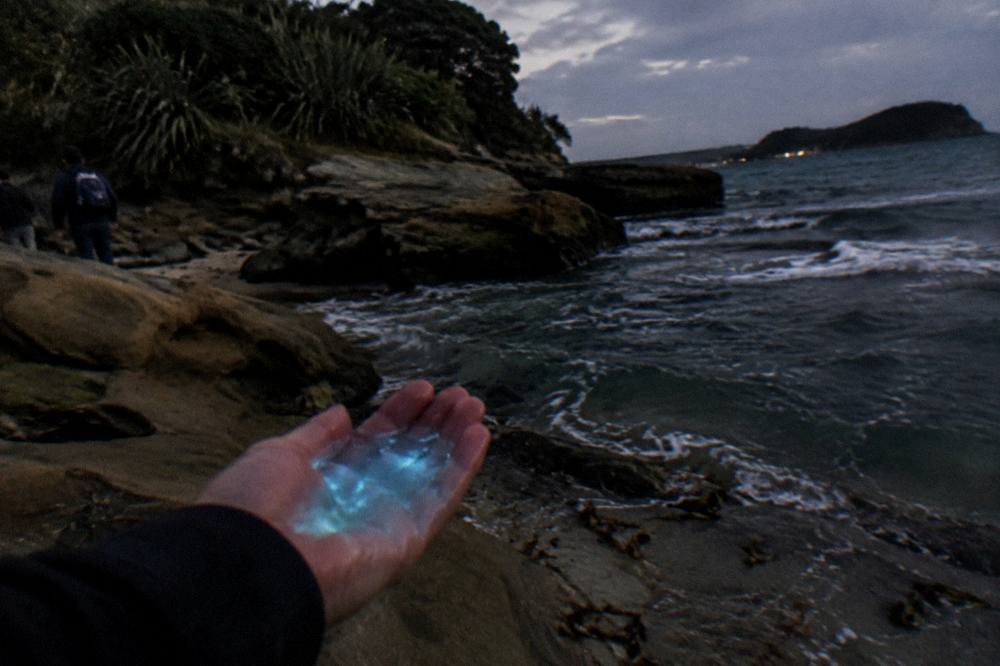
The science supports the caution. The cells drift with the current, accumulate when the sea is calm, and are patchy rather than evenly spread; the Auckland Council scientist's description of blooms forming in summer, combined with calm conditions allowing accumulation, is a picture of a variable natural event, not a fixed installation. Nobody can switch it on. A night with no flash is a real outcome on any tour, from any operator, in any month.
What the operators do control is scheduling around moonlight, and even here their approaches differ and must never be blended. Social Nature Movement has a hard rule: it does not operate when the moon is in the sky at more than 50 percent illumination, because excessive moonlight reduces visibility of the glow, so gaps in its availability are intentional. Canoe & Kayak Adventures runs in moonlight but recommends booking near a new moon or on nights with a later moonrise, since brighter moonlight makes the glow more subtle though still visible. Auckland Sea Kayaks has no moon rule at all for its trips. The moon phase and a bioluminescence kayak tour page has the new moon dates, computed from US Naval Observatory data, if you want to work the calendar yourself.
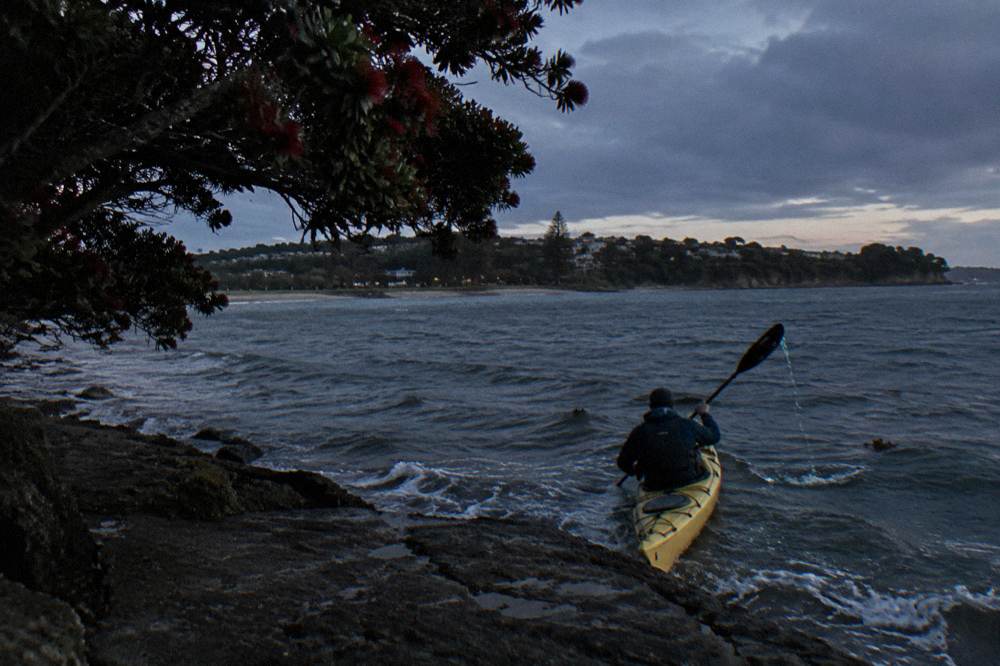
What Should You Wear And Bring On A Night Paddle In Auckland?
Social Nature Movement's bring list is thin merino or thermal shirt, fleece or woollen jumper, rain-proof jacket, warm beanie, towel, torch, water shoes, personal medication and a water bottle. Dressing for the water temperature rather than the air is official Maritime NZ guidance, and the operators supply the kayaks and paddles; check the booking page for what else is included, such as flotation gear.
The clothing list is not negotiable in practice, because Auckland nights on the water are cool even in summer and the trip runs in the dark. Social Nature Movement's own list is the most specific: thermal base layer, warm mid layer, a rain shell, a beanie, water shoes, a towel, a torch, any personal medication and water. Canoe & Kayak Adventures advises on fitness that guests should be able to walk nonstop for 30 minutes and sit on the ground and get up unaided. Its summary of the activity is blunt: "Kayaking is a wet sport."
Safety on the water is regulated, and one rule changed recently. From 9 October 2026, Maritime NZ requires everyone on a recreational craft of six metres or less, a category that includes kayaks, to wear a properly fitted lifejacket while the craft is underway. The tours here already fit that pattern: Social Nature Movement supplies a personal flotation device with a safety light, Canoe & Kayak Adventures includes safety equipment with its kayaks, and Auckland Sea Kayaks fits life jackets and, on its kayaks, an all-round white navigation light. Maritime NZ's paddle craft guidance adds the background: dress for the water temperature because cold water shock and hypothermia can kill, carry two waterproof ways to call for help, and check the marine forecast. The fuller gear and clothing rundown is in what to wear on a night kayak tour in Auckland.
Photography deserves one honest line. Social Nature Movement says photographing the glow is challenging and needs specialised camera settings, and recommends a waterproof phone case for photos. Phone screens and camera flash cast white light, which temporarily ruins the dark-adapted eyes needed to see the blue-green flashes. The photographing bioluminescence from a kayak page covers the camera side properly.
When Is The Bioluminescence Season In Auckland?
Each operator frames the season its own way and the lines belong to that operator only: Social Nature Movement says peak Auckland bioluminescence season is October to April; Canoe & Kayak Adventures says that from November to April the glow is often strong enough to enjoy on most nights; Auckland Sea Kayaks says bioluminescence is sometimes seen on its sunset trip, typically October to April. None of these is a guarantee for any night.
The reason the operators that name a season point at the warmer months is the science above: the council scientist's observation that summer warmth and calm conditions together favour blooms. But a season is a tendency, not a timetable, and no booking page promises a sighting.
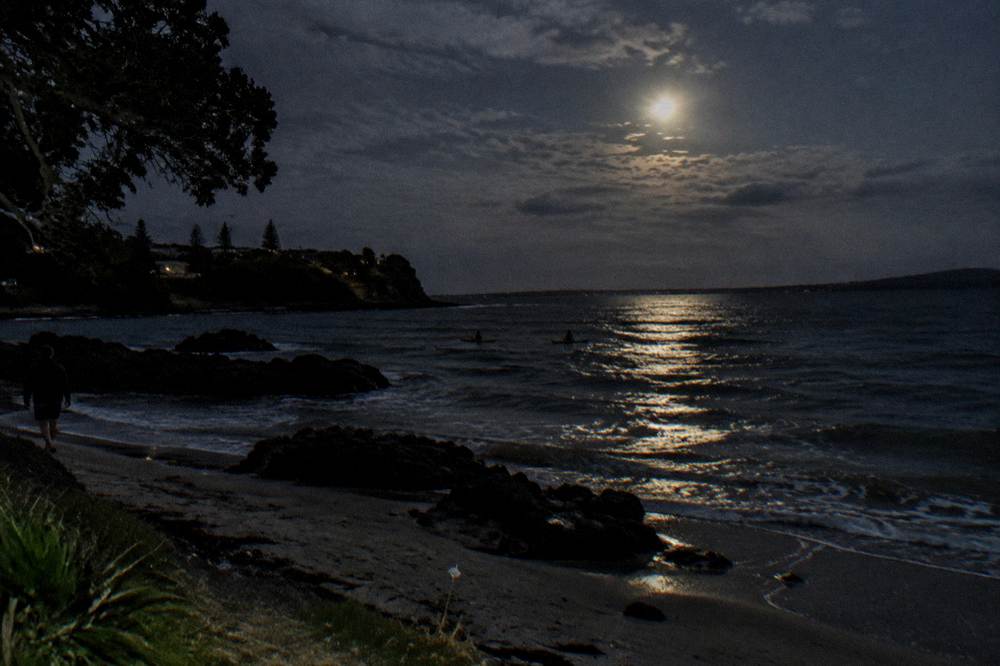
The moon shapes the calendar as much as the water temperature does. Social Nature Movement's 50 percent illumination rule means its calendar has deliberate holes around bright moon phases, which looks like scarce availability on a booking page but is actually the operator removing the nights least likely to show the glow well. Canoe & Kayak Adventures paddles on more nights and tells guests plainly that brighter moonlight makes the glow more subtle. Booking near a new moon, or on a night when the moon rises late, is that operator's own recommendation, and the new moon dates through 2027, computed from US Naval Observatory data, are tabulated on the moon phase page linked above. The seasonal question in full, including the trade-offs of each window, is covered in what time of year is best for bioluminescence kayaking.
How Much Does A Bioluminescence Kayak Tour In Auckland Cost?
The dedicated glow paddles cost from $53, from $62.42, from $66 or from $67.52 per person, all USD from prices, with the spread coming from the booking page rather than the trip: each operator's tour is sold on two pages at two prices. For comparison across the site's nine tours, the median is $73, the cheapest is $53 and the highest is the $139.02 Rangitoto sunset trip, which is a different product.
Within the glow category, the price decision is mostly a booking-page decision rather than a quality decision, since each pair of pages sells the same physical trip. The Social Nature Movement paddle at from $53 on its most reviewed page, 4.9 across 329 reviews, is the cheapest per person of all nine tours on this site; the same trip on the other page shows 5.0 across 46 reviews at from $62.42. The Canoe & Kayak Adventures trip splits the same way, from $67.52 on its 207-review page and from $66 on its 67-review page.
| Tour | Type | Duration | From price per person | Reviews |
|---|---|---|---|---|
| Glowing Bioluminescent Waters night kayak | Glow paddle | 1.5 to 2 hours | from $53 / from $62.42 | 329 / 46 |
| Bioluminescence Kayak Tour, est. 1994 | Glow paddle | 2 hours | from $67.52 / from $66 | 207 / 67 |
| City Lights night kayak | City night paddle | 2 to about 2.5 hours | from $73 / from $82.27 | 15 / 28 |
| Rangitoto sunset and night | Sunset dinner paddle | 6.5 to 7 hours | from $116 / from $139.02 | 85 / 179 |
| Tiritiri Matangi dinner and night walk | Wildlife expedition | 7 hours | from $139 | New tour, check the booking page for ratings |
What sits outside these numbers: the Bio-Bus add-on for Social Nature Movement is a paid extra on top of the base price, and no tour includes free hotel pickup, though the Tiritiri Matangi trip includes pickup with two options chosen at booking. Every one of the nine tours states a full refund when cancelled at least 24 hours before the start, which is worth holding onto when a weather cancellation is a real possibility. The full price landscape, including what drives the differences, is in the bioluminescence kayak tour prices in Auckland guide.
Who Can Join A Glow Paddle Around The Waitemata?
Age and weight limits are set per booking page and differ. One Canoe & Kayak Adventures page states a minimum age of 7, its operator page says 11 and over with an adult, and one page lists a 120 kg limit. Auckland Sea Kayaks' sunset trip is 14 and over with a 125 kg limit, and its City Lights operator age is 12 and over with an adult.
The short honest summary is that the dedicated glow trips are oriented to adults and older children, and the exact line depends on which page you read and which operator you ask. One Canoe & Kayak Adventures booking page states a minimum age of 7; the same operator's own page says ages 11 and over accompanied by an adult, with younger children welcome only after contacting the operator. The weight guidance from that operator is to tell it if you are over 120 kg. Social Nature Movement's booking pages state no age, while its operator page says 13 and over, and one of its booking pages states a 120 kg limit.
The Auckland Sea Kayaks trips, for comparison, are firmer: its Rangitoto sunset page states minimum age 14 and a 125 kg limit, its operator page says 14 and over with a 120 kg limit, and its City Lights operator page says 12 and over with an adult and a 120 kg limit, with the ability to stay seated up to 45 minutes at a time and a seat about 65 cm wide. The Tiritiri Matangi trip states a minimum age of 12 and a 120 kg limit on its booking page. These details are the difference between a booking that works and one that gets turned away at the launch. Families weighing the options have a dedicated page in night kayak tours with kids in Auckland.
For a first-time paddler, the reassuring facts are these: all nine tours covered here are guided paddles, none is a rental, and the glow trips are short. Questions about experience level are covered in can beginners join a bioluminescence kayak tour and the first-timers guide.
How Do You Book And What Happens If You Cancel?
Book through the tour's booking page, choose the date and, for Social Nature Movement, the meeting option, and every one of the nine tours states a full refund when cancelled at least 24 hours before the start. Weather cancellations are the operator's call under its own stated limits, and Canoe & Kayak Adventures offers a different date or a full refund; its repeat-tour offer covers confirmed no-glow nights.
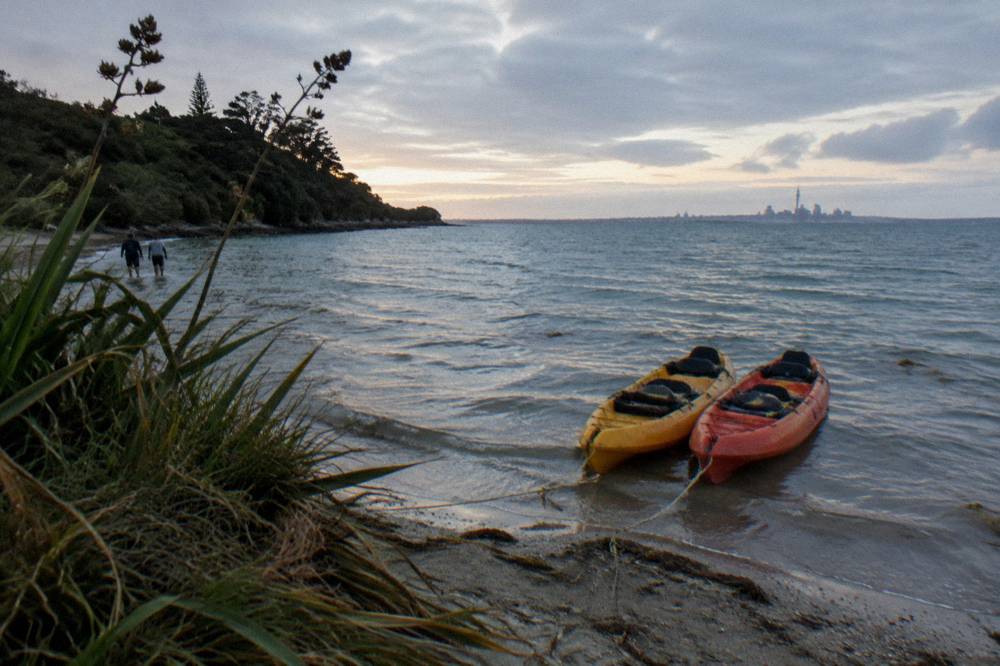
The booking flow differs slightly by operator. For the Social Nature Movement glow paddle, the meeting point is chosen at booking, and the optional Bio-Bus from near the Sky Tower is an add-on at checkout, meeting one hour before the start. For Canoe & Kayak Adventures, the launch spot arrives by email before 10 AM on the day, so the only thing to arrange in advance is getting to the North Shore once that email lands; the operator also says minimum numbers apply, since tours run on demand. Auckland Sea Kayaks' Rangitoto trips add a pre-booked free shuttle from the Auckland War Memorial Museum atrium, with limited seats, departing 30 minutes before the tour.
Timing advice is operator wording, not this site's: Canoe & Kayak Adventures says that in November to April the popular dates fill fast, so booking ahead is a good idea. Beyond that, the practical rule is simply to book the nights that fit the operator's own conditions, the Social Nature Movement calendar already excludes bright moon nights, and to check the marine forecast, which Maritime NZ lists among its paddle craft essentials. How far ahead to book, with the reasoning, is laid out in how far ahead to book a bioluminescence kayak tour.
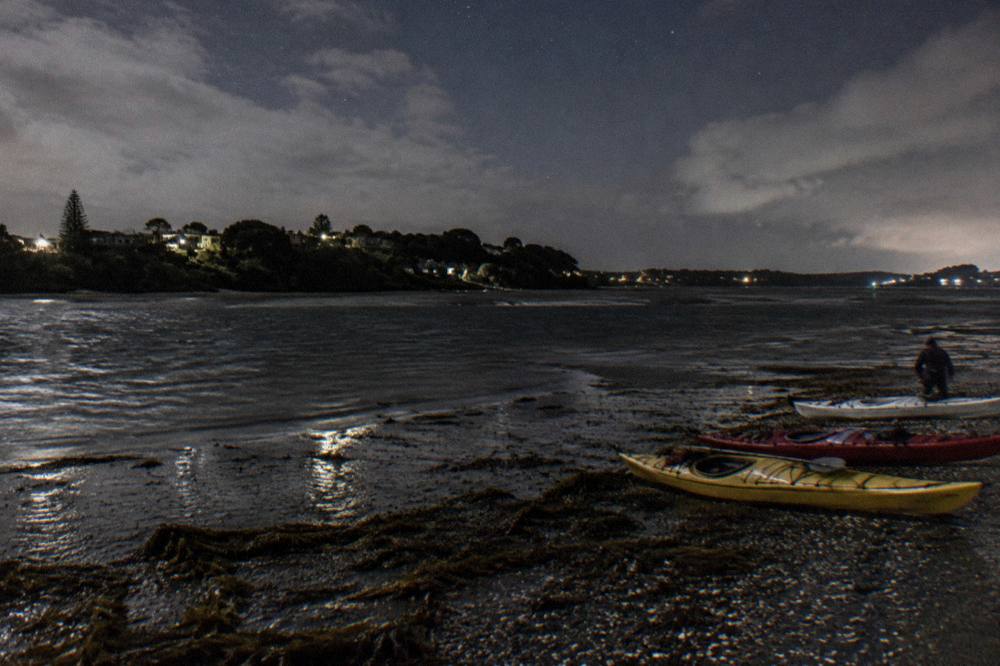
One point of perspective ties this whole page together. A bioluminescence kayak tour is a modest, well-run evening activity: two hours, a guide, a kayak, dark water and a natural phenomenon that may or may not flash for you. The operators are honest about that, the science explains why, and the price of admission buys the search, not the certainty. For a wider view of whether the experience earns its cost, read is bioluminescence kayaking worth it. This page is part of this site's coverage of every glow and night paddle in the region.
If the glow stays away and you still want water under a night sky, the City Lights paddles from Westhaven Marina are the natural fallback: the two-hour Sweet Treat version from $73 is rated 5.0 across 15 reviews and comes with a sweet treat on the water, trading the plankton search for the lit skyline of the Waitemata.
Common Questions About Bioluminescence Kayak Tours
What Is A Bioluminescence Kayak Tour?
A guided evening paddle, about two hours, on water where tiny plankton can flash blue-green light when the surface is disturbed by a paddle. The kayak, paddle and safety gear are supplied and a guide leads the group. In Auckland the dedicated trips run from North Shore launch points from $53 per person.
Will I Definitely See Bioluminescence On The Tour?
No. Social Nature Movement says bioluminescence varies naturally, and Canoe & Kayak Adventures says it is a natural event that can never be guaranteed. Canoe & Kayak Adventures adds a free repeat tour if the guide confirms on the night that none was seen, under its own terms.
How Long Does A Bioluminescence Kayak Tour Last?
The dedicated glow paddles run 1.5 to 2 hours for Social Nature Movement and 2 hours for Canoe & Kayak Adventures. Longer night trips exist, including a 7-hour Tiritiri Matangi dinner and wildlife expedition that lists only a chance of bioluminescent plankton on the return paddle.
Where Do Bioluminescence Kayak Tours In Auckland Launch From?
Social Nature Movement launches at Okura Boat Ramp or Waiake Beach, chosen with the tide. Canoe & Kayak Adventures emails its exact North Shore spot before 10 AM on the day of the tour.
What Causes The Water To Glow?
Mostly Noctiluca scintillans, a single-celled non-toxic dinoflagellate that flashes blue-green light when mechanically disturbed, in bursts of about 80 milliseconds. The light is a natural chemical reaction that occurs only at night and is controlled by a circadian clock.
Does A Bright Moon Cancel The Tour?
Only for Social Nature Movement, which does not run tours when the moon is in the sky at more than 50 percent illumination, so gaps in its availability are intentional. Canoe & Kayak Adventures operates in moonlight and recommends nights near a new moon or with a later moonrise, saying the glow is more subtle but still visible.