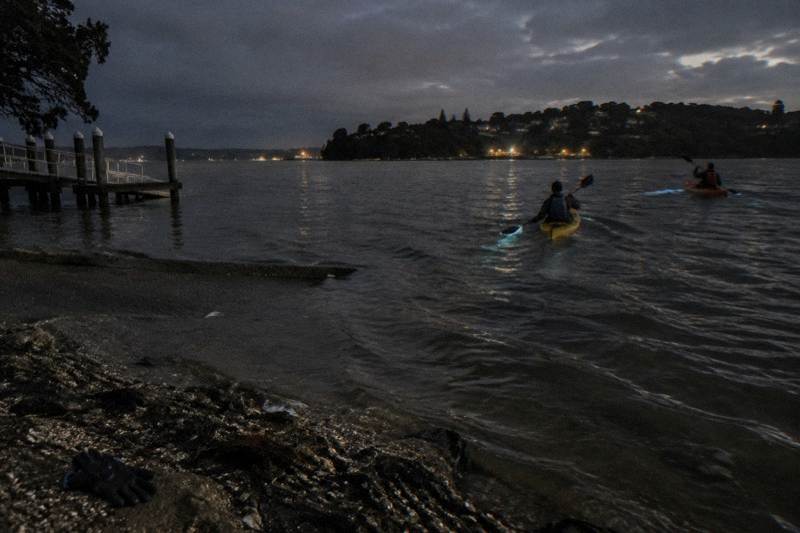
Bioluminescence Kayak Tours In New Zealand: How Auckland Compares
Bioluminescence draws kayakers to coastlines around New Zealand, and the guided night paddles covered here all run on Auckland water. This guide sets out what is known nationally, then compares the Auckland tours, prices and seasons in detail.
Short answer
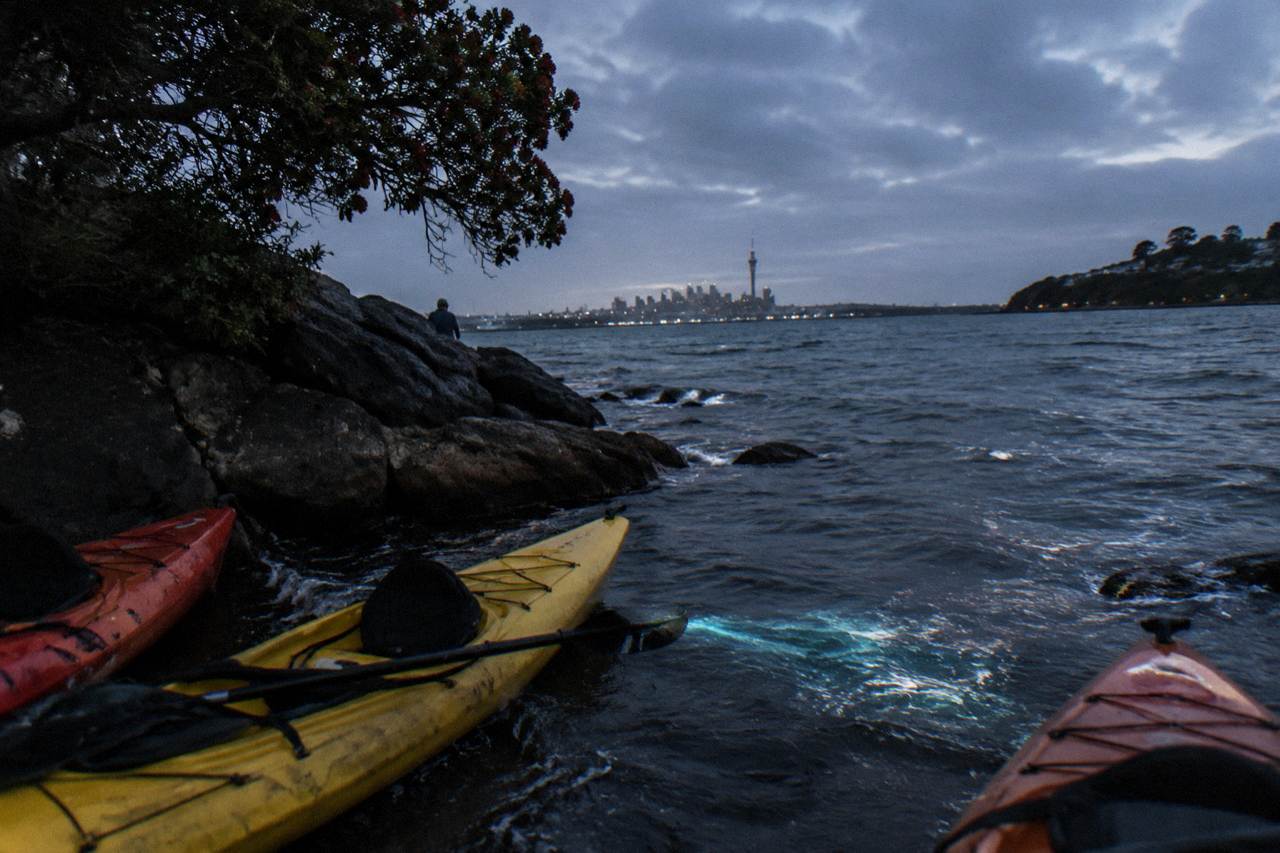
The glow paddles covered here run on Auckland water, from $53 per person for the most reviewed tour, a Social Nature Movement 1.5 to 2 hour paddle rated 4.9 across 329 reviews. The science is national: Noctiluca scintillans, a non-toxic dinoflagellate, blooms around the New Zealand coast in summer and flashes when disturbed.
Bioluminescence is not unique to any one corner of New Zealand. The organism behind most of the coastal glow, a dinoflagellate called Noctiluca scintillans, is recorded in New Zealand waters from the Hauraki Gulf to the Chatham Rise, and it flashes wherever calm, warm surface water lets it accumulate. What differs by place is whether a guided kayak tour exists to take you out among it at night, and on that count the honest answer is narrow: the tours covered on this site all run on Auckland water, and this guide compares those tours rather than ranking the country.
The national science still matters to an Auckland booking, because it explains the season, the moon logic and the calm-water condition operators attach to their trips. Dr Megan Carbines, an Auckland Council environmental scientist, described Noctiluca in a Local Matters interview as "a non-toxic dinoflagellate, which often forms bright blooms around the coast in summer" that "emits a burst of light" when disturbed by swimmers or boats at night, and noted that rising water temperature combined with calm conditions lets blooms accumulate. That sentence is the closest thing New Zealand has to a national bioluminescence forecast, and every Auckland operator's seasonal and weather wording sits on top of it.
Where Can You See Bioluminescence In New Zealand From A Kayak?
Bioluminescent dinoflagellates are recorded around the New Zealand coast, with Earth Sciences New Zealand documenting Noctiluca scintillans in Hauraki Gulf bloom events in 2002, but the guided glow kayak tours covered here all run on Auckland water. This site covers Auckland only: it compares nine tours, five of them night glow or chance-of-glow paddles, and claims nothing about operators in any other region.
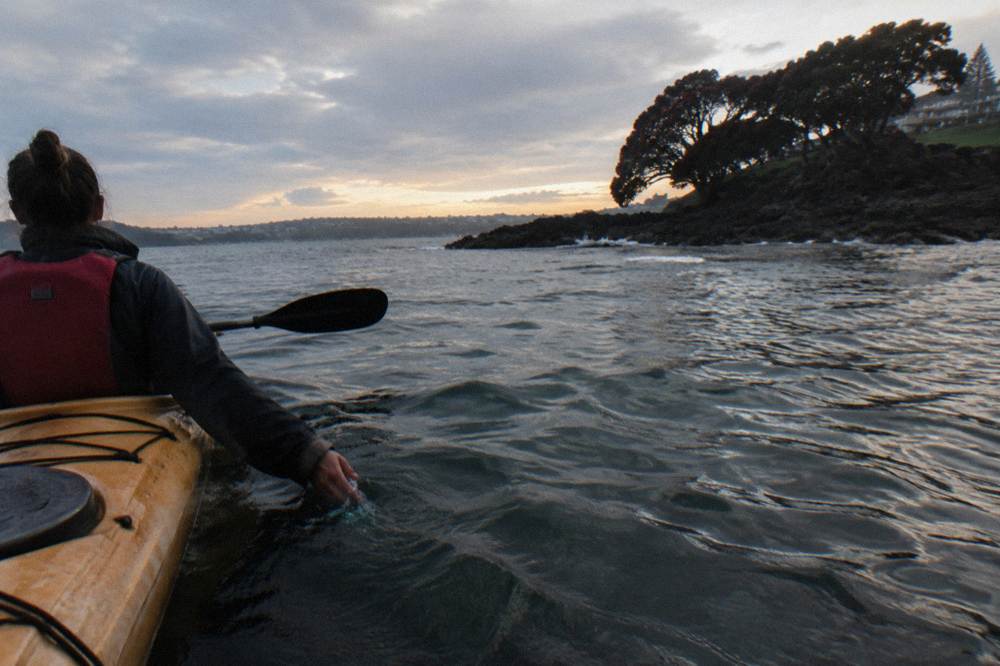
The science is genuinely national. Noctiluca scintillans is a single-celled organism, 400 to 1500 micrometres across, that drifts with the current and produces light through mechanical stimulation: when a paddle, a wave or a hull shears the water around it, the cell flashes for roughly 80 milliseconds. NIWA voyage captions from the Chatham Rise describe the mechanism plainly: "At night, Noctiluca scintillans cells phosphoresce when disturbed", and give the popular names "Sea Ghost" and "Fire of Sea". Those captions are not an Auckland sighting, but the mechanism they describe is the same one at work in the Hauraki Gulf.
Auckland's own record includes the Hauraki Gulf bloom events of October 2002, which Earth Sciences New Zealand described as "a harmless, non-photosynthetic dinoflagellate species of alga" tinting the surface pink or red by day. Local Matters, the newspaper rather than the council, calls Mahurangi and the Hibiscus Coast "long been known as bioluminescence hotspots", which is worth knowing because Mahurangi lies north of the launch points used by the Auckland tours. The council scientist's own framing is more measured: non-toxic, summer-leaning, calm-water dependent, never scheduled.
The gap between the science and a bookable night out is where Auckland comes in. No agency source gives a temperature threshold, a nutrient level or a moon effect for Auckland water, so every season and moon claim in the rest of this guide comes from an operator, attributed each time. The background on what makes the water glow and on Noctiluca scintillans and sea sparkle covers the organism in more depth.
| Source | What it says about New Zealand bioluminescence | Where it applies |
|---|---|---|
| Auckland Council scientist Dr Megan Carbines | Noctiluca "often forms bright blooms around the coast in summer", flashes when disturbed, accumulates in calm warm water | New Zealand coast generally |
| Earth Sciences New Zealand, October 2002 | Harmless dinoflagellate bloom events in the Hauraki Gulf, pink-red by day | Hauraki Gulf |
| NIWA Chatham Rise captions | Cells phosphoresce when disturbed at night, "Sea Ghost" and "Fire of Sea" | Mechanism only, not an Auckland sighting |
| Local Matters newspaper | Calls Mahurangi and the Hibiscus Coast "long been known as bioluminescence hotspots" | The newspaper's own characterisation |
Which Auckland Tours Go Looking For The Glow?
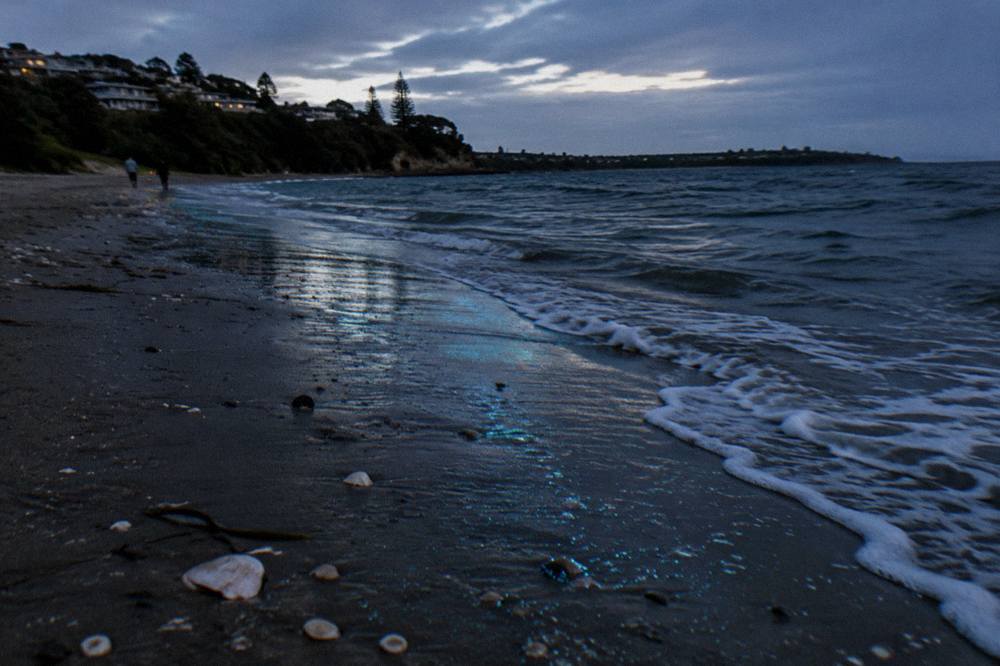
Four dedicated bioluminescence kayak tours run in Auckland, from $53 to $67.52 per person, operated by Social Nature Movement and Canoe & Kayak Adventures, plus one 7 hour Tiritiri Matangi dinner trip that offers a chance of bioluminescent plankton on its return paddle. All five are guided paddles, and none of the booking pages promises a sighting.
The dedicated glow tours are 2 hour or 1.5 to 2 hour night paddles. Social Nature Movement sells its tour on two booking pages: one showing 5.0 across 46 reviews from $62.42, the other, the most reviewed tour of the nine covered here, showing 4.9 across 329 reviews from $53 per person. Canoe & Kayak Adventures, an operator that says it has run kayak tours since 1994, also sells on two pages: one at 4.1 across 207 reviews from $67.52, the other at 4.5 across 67 reviews from $66. Each pair is one trip, priced differently by page.
The Bioluminescence Kayak Tour, Est. 1994 from Canoe & Kayak Adventures is the tour this site features on this page: a 2 hour guided paddle from a North Shore spot emailed before 10 AM on the day, with kayaks, safety equipment and tuition included and a 1 guide to 6 guest ratio. The operator's key promise is conditional honesty: "Bioluminescence is a natural event and can never be guaranteed", and if the guide confirms none was seen, the operator offers a free repeat tour.
Around the dedicated glow paddles sit three other night experiences. The Tiritiri Matangi trip is a 7 hour Social Nature Movement journey with a sunset paddle, penguins, a guided night walk, a grazing platter with drinks and a return paddle with "a chance to see bioluminescent plankton"; it has no reviews yet and its price appears on the booking page, so it sits apart from the shorter 2 hour glow paddles. Auckland Sea Kayaks runs two Rangitoto sunset tours that return after dark, on which the operator says bioluminescence is "sometimes" seen, "typically October to April", and two City Lights paddles from Westhaven Marina that make no bioluminescence claim at all.
How Much Does A Glow Kayak Tour In Auckland Cost?
Dedicated Auckland bioluminescence tours cost from $53 to $67.52 per person, against a median of $73 across all nine tours covered here. The Tiritiri Matangi dinner trip sits apart at from $139, and the Rangitoto sunset tours run from $116 to $139.02, both longer trips with food that should not be compared with the 2 hour glow paddles.
Price alone tells you little without duration and inclusions, so the table below sets the glow-relevant tours side by side. Prices are USD "from" figures per person, taken from each tour's booking page, and every tour states a full refund when cancelled at least 24 hours before the start. Food, guide ratios and gear differ tour by tour: count the rows rather than assuming a standard package.
| Tour | Operator | Duration | From USD | Rating |
|---|---|---|---|---|
| Auckland: Night Kayak Tour in Glowing Bioluminescent Waters | Social Nature Movement | 1.5 to 2 hours | $53 | 4.9 across 329 reviews |
| Auckland Bioluminescence Kayak Tour | Social Nature Movement | 2 hours | $62.42 | 5.0 across 46 reviews |
| Auckland: Bioluminescence Kayak Tour with Guide | Canoe & Kayak Adventures | 2 hours | $66 | 4.5 across 67 reviews |
| Bioluminescence Kayak Tour, Est. 1994 | Canoe & Kayak Adventures | 2 hours | $67.52 | 4.1 across 207 reviews |
| Auckland: Sunset Kayak & Penguin Night Paddle with Dinner | Social Nature Movement | 7 hours | $139 | No rating yet |
| Auckland: Sunset & Night Sea Kayak Tour to Rangitoto Island | Auckland Sea Kayaks | 7 hours | $116 | 4.8 across 85 reviews |
| Sunset kayak tour to Rangitoto Island | Auckland Sea Kayaks | 6 hours 30 minutes | $139.02 | 4.9 across 179 reviews |
The cheapest per person of the nine tours is the Social Nature Movement glow paddle at $53 on its most reviewed booking page, and the highest is the Rangitoto sunset tour at $139.02. The two glow operators sit inside a tight $14 band, which means the decision between them turns less on price than on start point, group size and each operator's approach to the moon and the weather. The dedicated bioluminescence kayak tour prices guide breaks the price question down further.
When Do The Auckland Glow Tours Run?
Social Nature Movement says its peak Auckland bioluminescence season is October to April; Canoe & Kayak Adventures says that in November to April the glow is "often strong enough to enjoy on most nights"; Auckland Sea Kayaks says bioluminescence is "sometimes" seen on its sunset tour "typically October to April". Each line belongs to that operator only, and none is a sighting promise.
The operators' seasonal wording is worth reading exactly, because it is the only season information that exists for these tours. Social Nature Movement, whose tours only proceed in calm conditions, says the peak Auckland bioluminescence season is October to April and that the organisms "vary naturally". Canoe & Kayak Adventures frames November to April as the window when "the glow is often strong enough to enjoy on most nights", adding that "these popular dates do fill fast, so booking ahead is a good idea". Auckland Sea Kayaks' line applies to its sunset tour alone, not to its City Lights paddles.
Darkness timing is a separate, computable matter. On the Auckland waterfront, computed from date and location using US Naval Observatory data, full dark on 15 December 2026 arrives at 10:27 pm, on 15 January 2027 at 10:29 pm and on 15 March 2027 at 9:08 pm; by 15 June 2027 it arrives at 6:43 pm. Summer nights are late, winter nights early, and the operators set their own start times, which is why no tour departure time appears here. The best time guide works through the timing question in detail.
The moon interacts with the season differently at each operator, and the difference matters to anyone comparing bookings. Social Nature Movement has a rule: "we do not operate when the moon is in the sky and at more than 50% illumination, as excessive moonlight can significantly reduce the quality and visibility of the bioluminescence, so gaps in our availability are intentional." Canoe & Kayak Adventures runs in brighter conditions but advises that "when the moon is brighter, the glow can be more subtle, but still visible", recommending booking near a new moon or on nights with later moonrise. Auckland Sea Kayaks has no moon rule. New moon dates through the period, computed from US Naval Observatory data, include 9 November 2026, 9 December 2026, 8 January 2027 and 7 February 2027; a date is a date, never a guarantee of darkness or of glow. The moon phase guide covers this fully.
Okura, Waiake Or The North Shore: Where Do The Glow Tours Start?
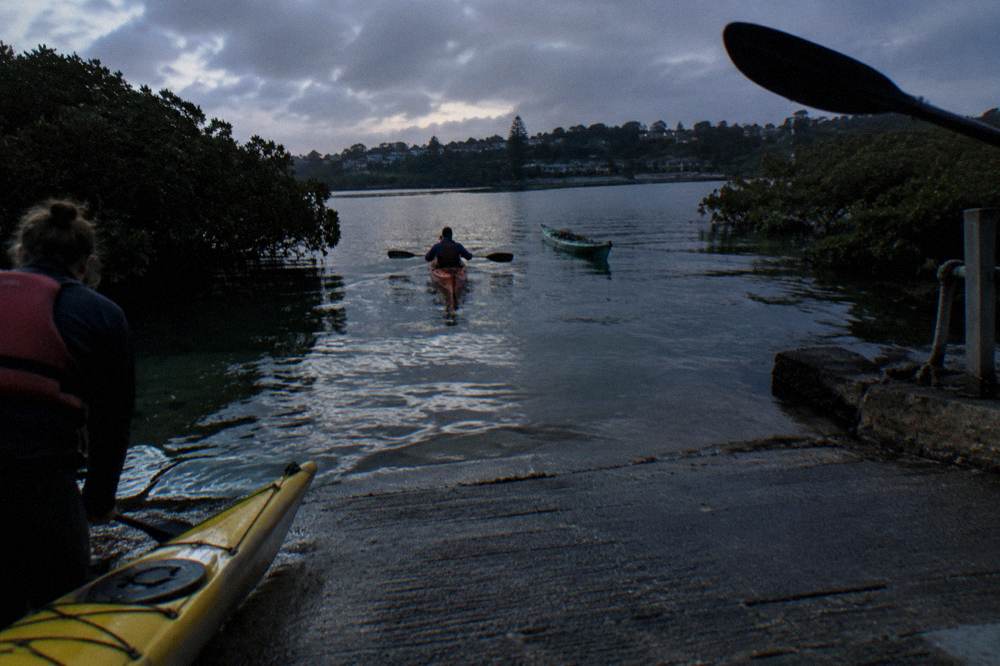
The Social Nature Movement glow tours launch from Okura Boat Ramp or Waiake Beach on the North Shore, chosen with the tide; the Canoe & Kayak Adventures tours launch from a North Shore spot emailed before 10 AM on the tour day. The sunset tours start at St Heliers Bay and the City Lights paddles at Westhaven Marina, all different places.
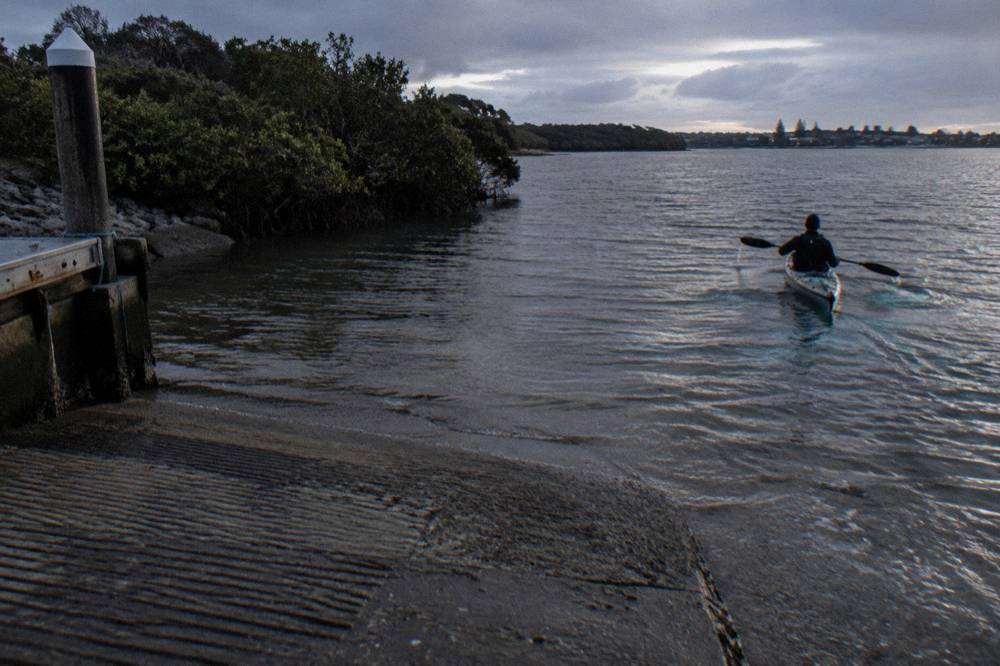
Start point is the part of an Auckland glow booking that surprises people most, because the dedicated bioluminescence paddles do not leave from the city waterfront. Social Nature Movement names two launches, Okura Boat Ramp at the end of Okura River Road and Waiake Beach, and links the choice to the tide: Okura at high tide, Waiake at low tide, with the operator calling both locations equally good. One of its booking pages names no place at all, with the start chosen at booking. Canoe & Kayak Adventures is deliberately vaguer, emailing the exact North Shore spot before 10 AM on the day of the tour, chosen for the conditions. The rest of the planning pages for Auckland sit on this site.
The other night tours cluster elsewhere. The Rangitoto sunset tours depart from Auckland Sea Kayaks' base at St Heliers Bay, 384 Tamaki Drive, and the City Lights paddles leave from the boat ramp at Westhaven Marina. For anyone staying central without a car, the transport facts are specific and limited: Social Nature Movement offers an optional paid add-on called the Bio-Bus from near the Sky Tower, meeting one hour before the start, while Auckland Sea Kayaks runs a pre-booked free shuttle from the Auckland War Memorial Museum for its Rangitoto tours only. No tour includes free hotel pickup. The getting to a launch guide and the Okura and Waiake launches guide cover the routes.
| Tour type | Start point | Transport notes |
|---|---|---|
| Social Nature Movement glow tours | Okura Boat Ramp or Waiake Beach, North Shore | Optional paid Bio-Bus add-on from near the Sky Tower |
| Canoe & Kayak Adventures glow tours | North Shore spot emailed before 10 AM on the day | Pickup stated not included on one booking page |
| Auckland Sea Kayaks Rangitoto sunset tours | St Heliers Bay, 384 Tamaki Drive | Pre-booked free shuttle from the Auckland War Memorial Museum |
| Auckland Sea Kayaks City Lights paddles | Westhaven Marina boat ramp, Z Pier | Paid parking around Z Pier and Westhaven |
| Tiritiri Matangi dinner trip | Pickup included, two options chosen at booking | 75-minute van ride to the departure point |
What Do The Operators Say About Seeing The Glow?
No booking page among the nine tours promises a sighting. Canoe & Kayak Adventures says bioluminescence "can never be guaranteed" but that it is "very rare not to see at least one type", with a free repeat tour if the guide confirms none was seen; Social Nature Movement says the organisms "vary naturally"; Auckland Sea Kayaks says its sunset tour sometimes shows it.
Honesty about the glow is the clearest dividing line between these operators, and each states its position on its own pages. Canoe & Kayak Adventures goes furthest toward a commitment: the free repeat tour applies when the guide confirms on the night that no bioluminescence was seen, with the operator's own terms governing it. Social Nature Movement's equivalent is structural rather than compensatory: the calm-conditions rule, the weather limits and the moon rule exist to raise the quality of the nights it does run. Its weather limits are specific: Waiake does not operate above 5 m/s wind or 2.4 mm rain, Okura above 8 m/s or 2.4 mm rain.
The general biology is simple: dinoflagellate bioluminescence is mostly blue-green, is triggered by mechanical disturbance, is controlled by a circadian clock and occurs only at night, which is why every one of these tours is an after-dark paddle.
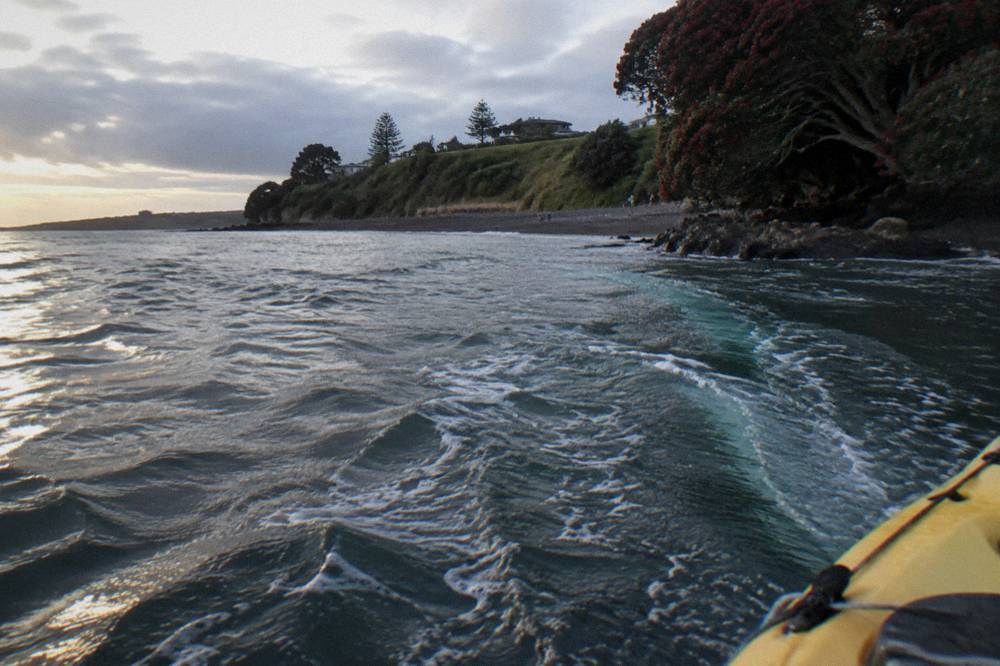
Social Nature Movement also offers a caution for anyone booking with photography in mind: photographing the glow is challenging and needs specialised camera settings, and the operator recommends a waterproof phone case. Whether every tour sees the glow is a question with an honest answer, and the will every tour see the glow post takes it head on.
The other operators' night paddles make weaker or no bioluminescence claims, and that is worth stating plainly. The City Lights tours from Westhaven Marina are city-skyline paddles with no bioluminescence claim on their booking pages. The Tiritiri Matangi trip lists its return paddle with "a chance to see bioluminescent plankton", a single line inside a 7 hour wildlife itinerary, and it has no rating yet. Anyone booking it should do so for the penguins, the island and the dinner, with the plankton as a possible bonus.
How Do Age, Group Size And Safety Rules Compare?
Ages start at 11 with an adult on the Canoe & Kayak tours, 13 on Social Nature Movement's operator page and 14 on the Rangitoto sunset tours; group maxes where stated run from 8 to 24. From 9 October 2026, everyone on a recreational craft six metres or less must wear a properly fitted lifejacket while underway, a Maritime NZ rule that lists kayaks among the craft covered.
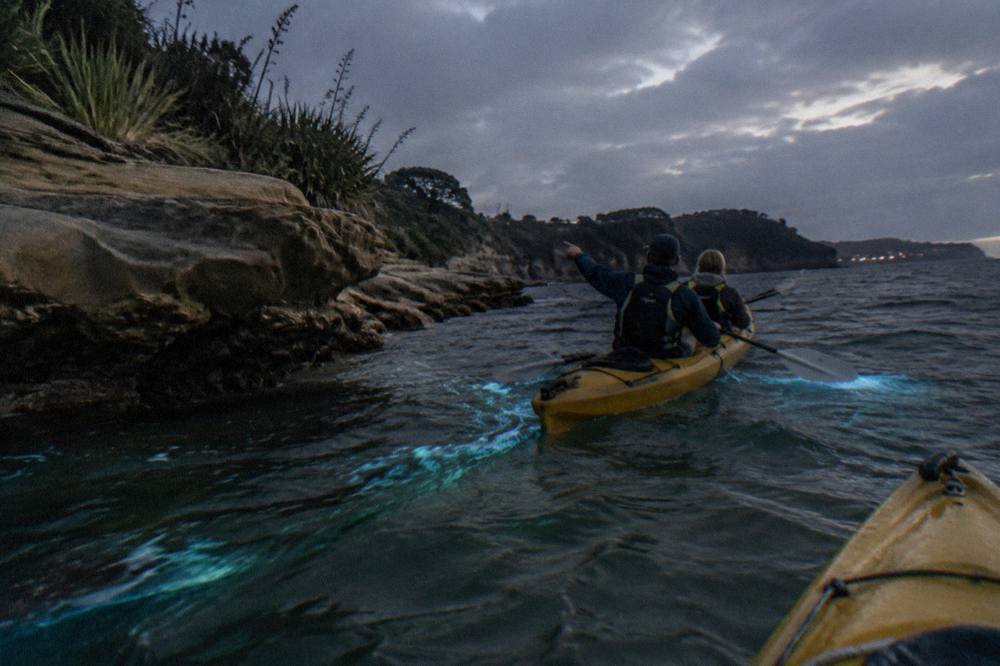
The age and size rules differ enough between tours that a family or a group should check them before choosing. The table below shows only what the booking pages and operators state. Where a figure is absent, the booking page does not say, and the operator should be asked directly.
| Tour | Ages | Group max | Weight guidance |
|---|---|---|---|
| Auckland: Night Kayak Tour in Glowing Bioluminescent Waters | 13+, operator page | Check the booking page | 120 kg, booking page |
| Bioluminescence Kayak Tour, Est. 1994 | 11+ with an adult, operator page | 24 | Tell the operator if over 120 kg |
| Auckland: Bioluminescence Kayak Tour with Guide | Not suitable under 7, one booking page | Check the booking page | 120 kg, booking page |
| Sunset & Night Sea Kayak Tour to Rangitoto Island | 14+, booking page | Check the booking page | 125 kg, booking page |
| Auckland City Lights Night Kayak Tour (2 hours) | 12+ with an adult, operator page | 9 | 120 kg, operator FAQ |
Safety on the water is regulated nationally and supplied by the operators. Maritime NZ's lifejacket rule change, in force from 9 October 2026, requires everyone on board a recreational craft six metres or less to wear a properly fitted lifejacket while the craft is underway, with kayaks listed among the craft covered subject to existing exceptions and an educational approach to compliance in the early months. The operators fit the gear themselves: Social Nature Movement supplies a personal flotation device with a safety light, Auckland Sea Kayaks supplies life jackets and fits every kayak on its night tours with an all-round white navigation light, and Canoe & Kayak Adventures includes kayaks, safety equipment and tuition. Maritime NZ's paddle craft guidance also applies to any private paddling around these tours: dress for the water temperature, carry two waterproof ways to call for help, and check the marine forecast.
Booking terms across the nine tours are consistent on one point: every booking page states a full refund when cancelled at least 24 hours before the start. Weather cancellations are handled by each operator, and the final call on conditions is often made on the day. The night kayak safety guide and the tours with kids guide expand both topics.
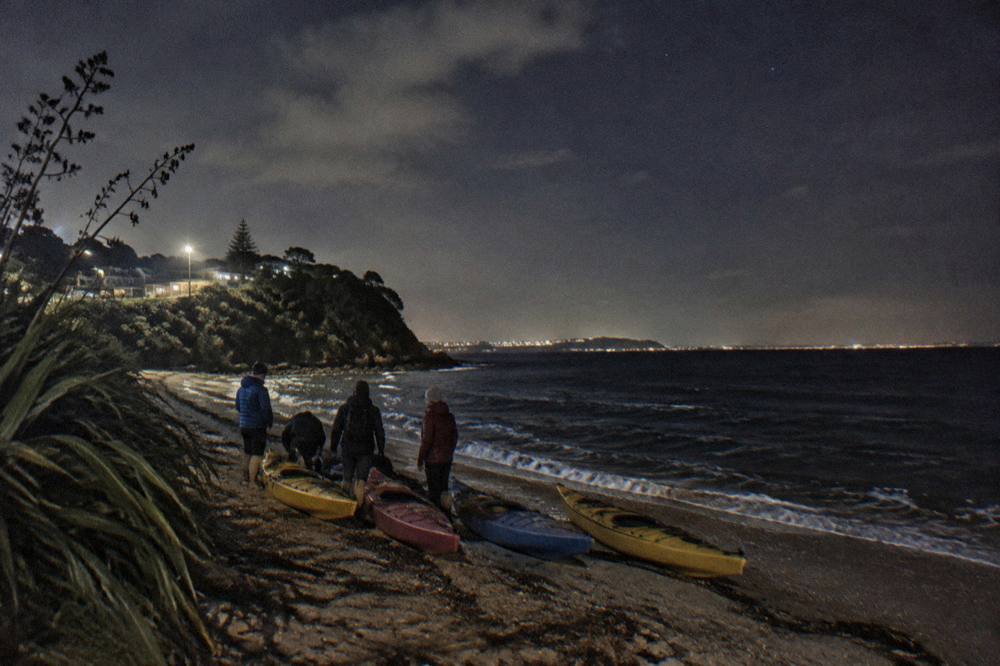
Should You Book A Glow Paddle, A Sunset Trip Or A City Night Paddle?
The dedicated glow paddles suit a visitor whose main goal is bioluminescence, from $53 for 1.5 to 2 hours; the Rangitoto sunset tours suit someone who wants a full evening with a BBQ dinner and a paddle home after dark; the City Lights tours suit someone who wants the Auckland skyline from the water for 2 to 2.5 hours. None of the three is a substitute for the others.
A New Zealand visitor planning around bioluminescence has one bookable answer here: the Auckland glow paddles, run by two operators, both honest that the organisms vary. The tours differ in structure. Social Nature Movement's stricter weather and moon rules mean fewer running nights, chosen for darkness and calm. Canoe & Kayak Adventures runs more nights with a brighter-moon caveat and the free repeat tour offer if the guide confirms nothing was seen.
The dinner-length alternatives are better booked for what they are. The Tiritiri Matangi trip is a wildlife evening: penguins, a guided night walk, a grazing platter with drinks and pickup included, at from $139 per person over 7 hours. The Rangitoto sunset tours, at from $116 and $139.02, are 6.5 to 7 hour trips with a BBQ dinner and a paddle back across the harbour after dark, on which bioluminescence is "sometimes" seen. The City Lights paddles, from $73 to $82.27, are the shortest and most urban option, departing Westhaven Marina with a sweet treat or snacks.
Every tour covered here states free cancellation at least 24 hours before the start, which makes an early booking a low-risk way to secure a date near a new moon or in the peak months an operator names. Availability, start times and the exact meeting arrangements for any given night are on each operator's live booking page, and the conditions on the night belong to the sea.
Common Questions About Bioluminescence Kayak Tours In New Zealand
Can You See Bioluminescence Anywhere In New Zealand From A Kayak?
Noctiluca scintillans, the dinoflagellate behind most coastal glow, is recorded around the New Zealand coast, and an Auckland Council scientist says it often forms bright blooms in summer. The guided glow kayak tours covered here, however, all run on Auckland water, and this site makes no claim about operators elsewhere.
How Much Does A Bioluminescence Kayak Tour In Auckland Cost?
The dedicated glow tours cost from $53 to $67.52 per person for 1.5 to 2 hours. The longer dinner and sunset trips, which are different experiences, run from $116 to $139.02, and the City Lights paddles from $73 to $82.27.
What Is The Best Time Of Year For Bioluminescence Kayaking In New Zealand?
Operator wording only: Social Nature Movement says its peak Auckland season is October to April, and Canoe & Kayak Adventures says that in November to April the glow is "often strong enough to enjoy on most nights". There is no official season for the glow, and no sighting can be promised for any month.
Does A Bright Moon Cancel A Bioluminescence Kayak Tour?
Only Social Nature Movement has a moon rule: no tours when the moon is in the sky at more than 50 percent illumination. Canoe & Kayak Adventures runs in brighter moonlight but recommends booking near a new moon or on nights with later moonrise. Auckland Sea Kayaks has no moon rule.
Is The Glow Guaranteed On An Auckland Tour?
No. Canoe & Kayak Adventures states that bioluminescence can never be guaranteed; Social Nature Movement says it varies naturally. Canoe & Kayak Adventures offers a free repeat tour if the guide confirms on the night that none was seen; the other operators do not make that offer.
Where Do The Auckland Bioluminescence Tours Start From?
Social Nature Movement launches from Okura Boat Ramp or Waiake Beach on the North Shore, chosen with the tide. Canoe & Kayak Adventures emails its North Shore meeting spot before 10 AM on the tour day. An optional paid Bio-Bus add-on runs from near the Sky Tower.