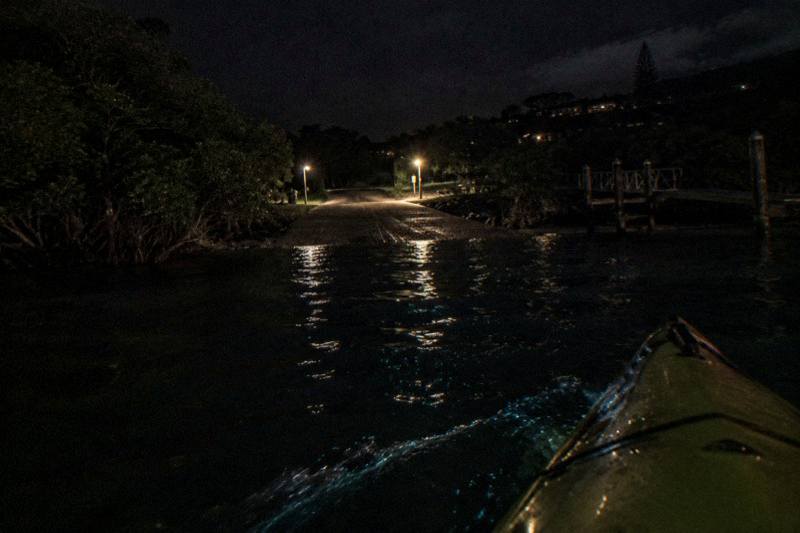
Noctiluca Scintillans And Sea Sparkle: The Organism Behind A Night Kayak Glow
Sea sparkle is a single-celled organism called Noctiluca scintillans, and a kayak paddle is one of the most direct ways to disturb it. Here is what the science says, what Auckland's operators say, and what the tours cost.
Short answer
Noctiluca scintillans is a non-toxic, single-celled dinoflagellate, 400 to 1500 micrometres across, that flashes blue-green light for about 80 milliseconds when the water around it is disturbed. Dedicated Auckland glow kayak tours run from $53 per person, and Canoe & Kayak Adventures says a sighting can never be guaranteed.
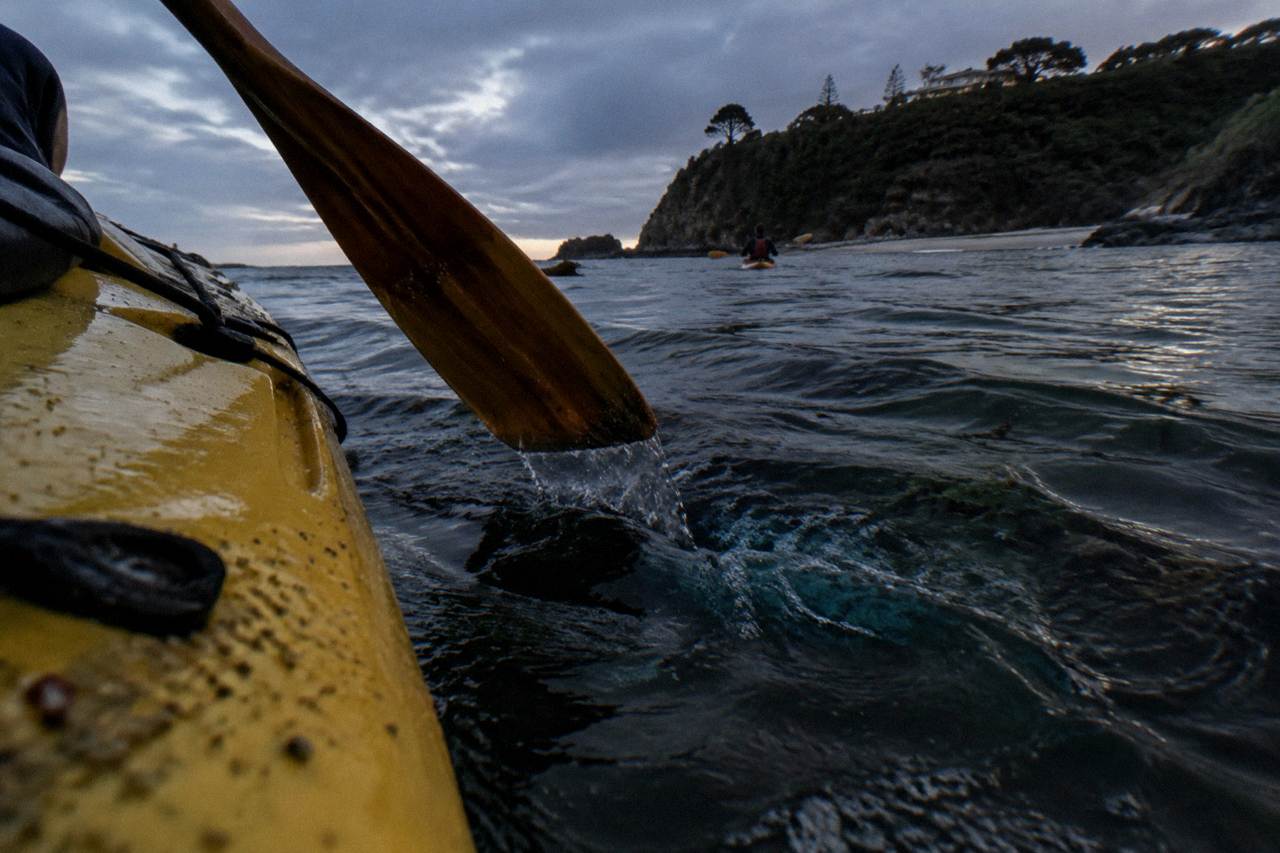
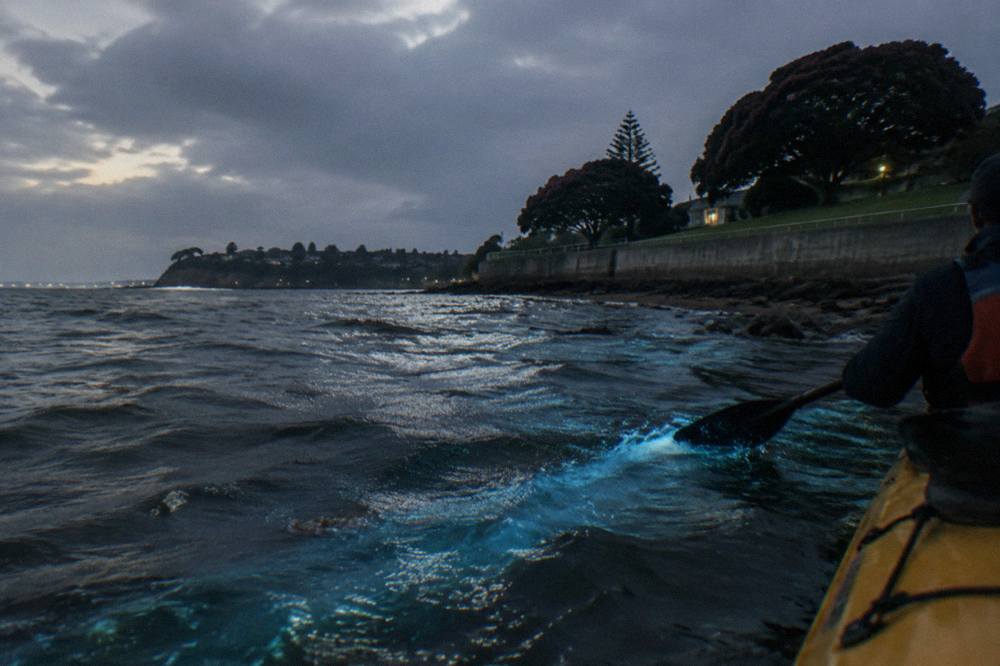
A paddle stroke, a wave, a hull pushing through dark water: each one can trigger a blue-green flash from an organism too small to see with the naked eye. The flash comes from Noctiluca scintillans, a single-celled dinoflagellate known by the popular names "Sea Ghost" and "Fire of Sea". It is the organism most often behind the surface glow that Auckland's night kayak tours go looking for, and the reason a North Shore shoreline can light up around a moving kayak.
The science is well documented, and so are the limits. The glow varies naturally, no booking page promises a sighting, and the operators themselves are blunt about it. This page sets out what is actually known about the organism, how the flash works, where it fits into Auckland's coastal waters, and what the night kayak tours that chase it charge, where they launch, and what they include.
What Is Noctiluca Scintillans, The Sea Sparkle Behind The Night Glow?
Noctiluca scintillans is a single-celled, non-photosynthetic dinoflagellate between 400 and 1500 micrometres across, small enough to drift with the current and invisible until it flashes. Auckland Council's environmental scientist Dr Megan Carbines describes it as "a non-toxic dinoflagellate, which often forms bright blooms around the coast in summer". The light itself is blue-green and lasts about 80 milliseconds.
The species has been studied in New Zealand waters for decades. Earth Sciences New Zealand, formerly NIWA, described it as "a harmless, non-photosynthetic dinoflagellate species of alga" when documenting the October 2002 Hauraki Gulf bloom events, the same waters Auckland's kayak tours paddle today. Those blooms can tint the sea surface pink or red by daylight, which is the daytime signature of the same organism that glows at night. NIWA voyage captions give the popular names "Sea Ghost" and "Fire of Sea", though those particular captions come from a voyage off the Chatham Rise and describe the mechanism and nicknames, not an Auckland sighting.
Size matters less than behaviour. According to Wikipedia, the cell drifts with the current, produces light through mechanical stimulation, and accumulates at the surface when the sea is calm. That last detail explains a lot about how the tours are planned: calm, still water is when the cells concentrate near the surface where a paddle can reach them, which is why Social Nature Movement says its tours "only proceed in calm conditions". The same accumulation is what Dr Carbines pointed to when she said rising water temperature "is conducive to these sorts of blooms if combined with calm conditions allowing them to accumulate". More on the broader group of dinoflagellates and their light-producing chemistry is on Wikipedia, and the species page for Noctiluca scintillans covers the cell biology in detail.
That is operator wording, not an agency claim.
| Fact | Detail | Source |
|---|---|---|
| Cell size | 400 to 1500 micrometres, single-celled | Wikipedia |
| Flash duration | About 80 milliseconds | Wikipedia |
| Light colour | Mostly blue-green | Wikipedia |
| Toxicity | "A non-toxic dinoflagellate" | Auckland Council scientist, quoted in Local Matters |
| Popular names | "Sea Ghost" and "Fire of Sea" | NIWA voyage captions |
| Daytime sign | Blooms can tint the surface pink or red | NIWA, October 2002 Hauraki Gulf events |
Why Does A Paddle Stroke Make The Water Flash Around A Kayak?
The flash is triggered by mechanical disturbance: shear stress on the cell when water moves past it, the same mechanism whether the disturbance is a wave, a boat, a swimmer or a kayak paddle. The light is controlled by a circadian clock and occurs only at night, which is why every tour searching for it runs after dark.
Dr Carbines put it plainly in the Local Matters interview: "When disturbed, it also emits a burst of light, often seen when swimmers or boats move through the water at night." A kayak is a slow version of that same disturbance, with a paddle dipping and lifting through the water. The leading hypothesis for why dinoflagellates flash at all is the "burglar alarm" idea: the flash may startle a predator or attract a bigger predator to whatever is eating the cell. For a kayaker, the practical consequence is that the light follows motion, so every stroke, turn and drip becomes visible.
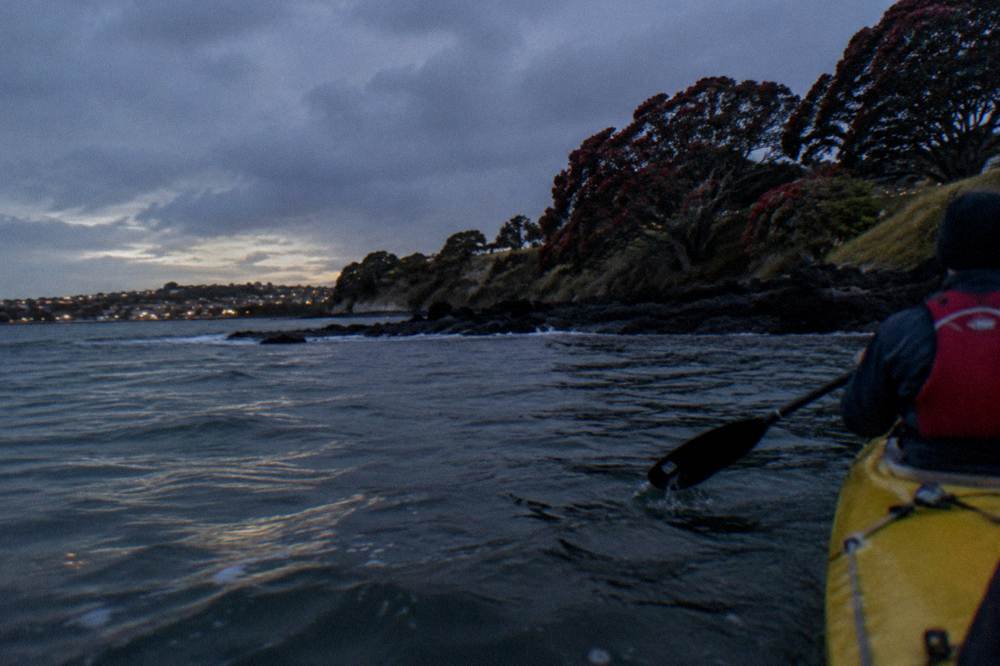
The night-only part of the mechanism matters for planning. Because the bioluminescence follows a circadian clock, it does not show in daylight, and the brightness of any display depends on how many cells have accumulated and how dark the water is. That is where moonlight enters the picture, and it is the reason the operators pay close attention to moon phases and to calm conditions, both covered further down this page. The background to what causes the glow in these organisms is set out in Wikipedia's page on bioluminescence.
It also sets honest expectations. Nothing about the mechanism guarantees a display on any given night. The cells vary naturally in number, the water must be calm enough for them to gather near the surface, and the sky must be dark enough for a blue-green flash to register to the eye. Every Auckland operator states this in some form, and Canoe & Kayak Adventures goes furthest, with a free repeat tour if the guide confirms no bioluminescence was seen.
Where Can You Paddle Over Sea Sparkle Around Auckland?
The dedicated glow tours launch from the North Shore: Social Nature Movement from Okura Boat Ramp at the end of Okura River Road or Waiake Beach, and Canoe & Kayak Adventures from a North Shore spot emailed before 10 AM on the tour day. City paddles depart Westhaven Marina, and sunset tours depart St Heliers Bay on the Waitemata Harbour.
Local Matters, covering the Mahurangi area, reports that Mahurangi and the Hibiscus Coast have "long been known as bioluminescence hotspots", a newspaper claim rather than a council one, but consistent with where the tour launches sit. Okura and Waiake sit on the northeast edge of the city where the Hauraki Gulf meets the North Shore coastline, the same body of water as the October 2002 bloom events documented by NIWA. Social Nature Movement links the choice between its two launches to the tide, saying "both locations are equally good", with Okura at high tide and Waiake at low tide, and the start point for its 2 hour tour is set out on the booking page. The site's guide to Okura And Waiake Bioluminescence Kayak Launches covers the practical differences.
Canoe & Kayak Adventures takes a different approach entirely: the exact North Shore spot is emailed before 10 AM on the day of the tour, and no suburb or address is published in advance. Auckland Sea Kayaks runs two other kinds of night paddle from different bases: the City Lights tours from the boat ramp at Westhaven Marina, Z Pier, on the Waitemata Harbour, and the Rangitoto sunset tours from its base at 384 Tamaki Drive, St Heliers Bay. The sunset tour's booking pages describe the paddle home after dark beneath the stars, and the operator says bioluminescence is "sometimes" seen on that tour, "typically October to April", and can never be guaranteed. The City Lights tours make no bioluminescence claim at all; they are sold on the city skyline, not the glow.
For a reader whose interest in sea sparkle is the reason to be on the water at all, the dedicated glow tours are the fit: the Social Nature Movement paddle from Okura or Waiake, from $62.42 per person, rated 5.0 across 46 reviews on that booking page, with free cancellation up to 24 hours before the start. The Okura Or Waiake glow tour is the featured trip here because its operator is the most explicit about the organism behind the glow and the conditions it needs.
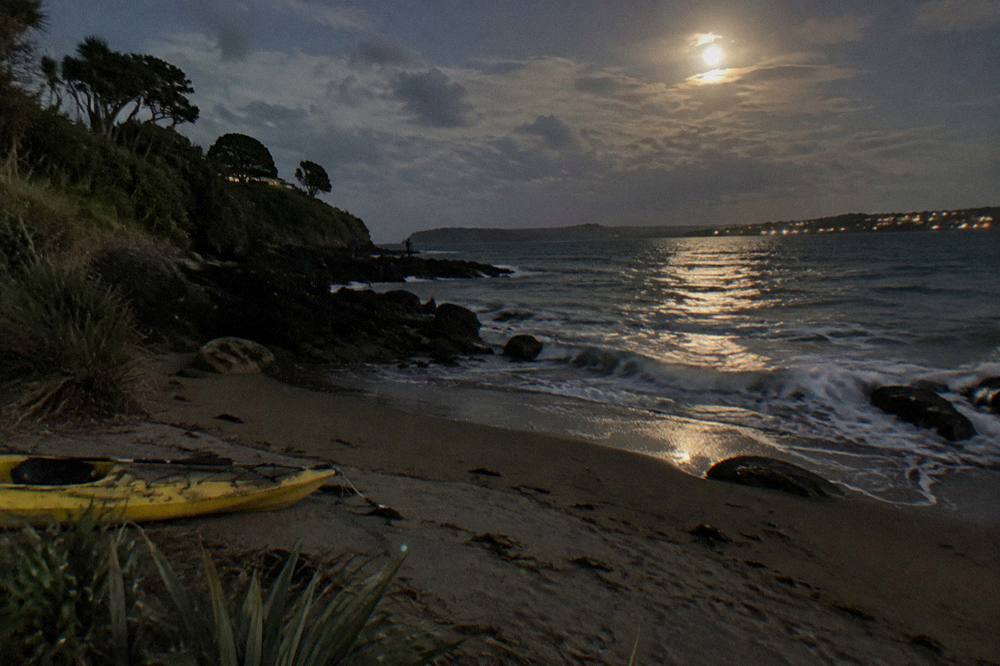
What Do The Auckland Night Kayak Tours Cost And Include?
Dedicated glow tours run from $53 to $67.52 per person, city night paddles from $73 to $82.27, and the sunset-to-night tours from $116 to $139.02, with the 7 hour Tiritiri Matangi dinner trip at $139. Every one of the nine tours states a full refund if cancelled at least 24 hours before the start.
Prices move with duration and what is included. The cheapest way onto glow water is the Social Nature Movement tour on its other booking page, from $53 for a 1.5 to 2 hour paddle, rated 4.9 across 329 reviews, the most reviewed tour covered on this site. The same trip on the Okura Or Waiake booking page shows from $62.42 with a 5.0 rating across 46 reviews: one trip, two pages, two prices, and a table or sentence may say both but the cards never appear together. Canoe & Kayak Adventures sells its 2 hour glow paddle from $66 and $67.52 on its two pages, and its operator has run kayak tours since 1994. Whatever the price ends up being, none of these trips include a swim, and the guide to why glow tours keep you in the kayak explains what lifejackets, cold water, and the view from your seat have to do with it.
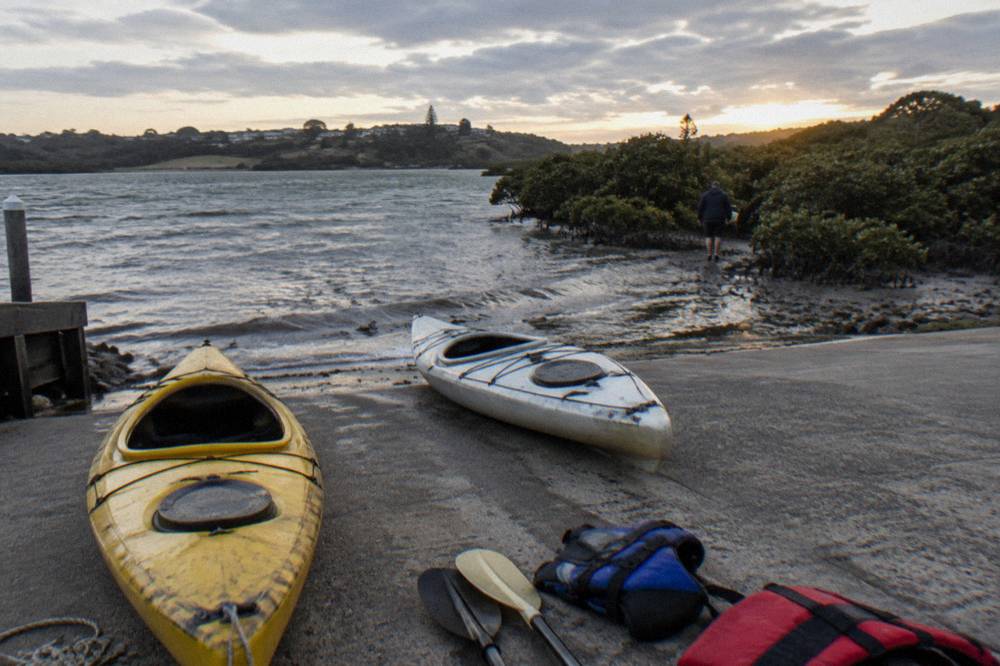
The step up in price buys food and hours. Auckland Sea Kayaks' Rangitoto sunset tour runs 6.5 to 7 hours with a BBQ dinner, from $116 and $139.02 on its two booking pages. The 7 hour Tiritiri Matangi trip from Social Nature Movement, from $139, is a different animal altogether: a sunset paddle, wildlife, a guided nocturnal walk, a sunset luxury grazing platter with drinks, and a return paddle the booking page says offers "a chance to see bioluminescent plankton". It has no rating yet, and it is not comparable on price with the 2 hour glow paddles.
| Tour | Operator | From (USD, per person) | Rating and reviews | Duration | Start point |
|---|---|---|---|---|---|
| Optional Bio-Bus, 1.5 To 2 Hours | Social Nature Movement | $53 | 4.9, 329 reviews | 1.5 to 2 hours | Chosen at booking |
| Okura Or Waiake Start, 2 Hours | Social Nature Movement | $62.42 | 5.0, 46 reviews | 2 hours | Okura Boat Ramp or Waiake Beach |
| No Hotel Pickup, 2 Hours | Canoe & Kayak Adventures | $66 | 4.5, 67 reviews | 2 hours | North Shore, spot emailed on the day |
| North Shore Start, 2 Hours | Canoe & Kayak Adventures | $67.52 | 4.1, 207 reviews | 2 hours | North Shore, spot emailed on the day |
| Sweet Treat, 2 Hours | Auckland Sea Kayaks | $73 | 5.0, 15 reviews | 2 hours | Westhaven Marina |
| 2.5 Hours, Snacks | Auckland Sea Kayaks | $82.27 | 4.8, 28 reviews | About 2.5 hours | Westhaven Marina |
| Rangitoto BBQ, 7 Hours | Auckland Sea Kayaks | $116 | 4.8, 85 reviews | 7 hours | St Heliers Bay |
| Tiritiri Matangi, 7 Hours | Social Nature Movement | $139 | No rating yet | 7 hours | Pickup options chosen at booking |
| St Heliers Start, Rangitoto BBQ | Auckland Sea Kayaks | $139.02 | 4.9, 179 reviews | 6 hours 30 minutes | St Heliers Bay |
What is included varies by operator and is worth checking on the booking page before paying. The Social Nature Movement glow page lists a guide, kayak and equipment, a personal flotation device and a safety light beacon among its inclusions. Canoe & Kayak Adventures lists kayaking and safety equipment, stable sea kayaks or sit-on-tops, tuition from qualified guides and a 1 to 6 guide-to-guest ratio. Auckland Sea Kayaks' sunset page lists the guide, kayak and paddle, life jacket, BBQ dinner and hot and cold drinks. No tour includes free hotel pickup; the Bio-Bus from near the Sky Tower is an optional paid add-on on the Social Nature Movement page, and the Tiritiri trip includes pickup with two options chosen at booking.
How Do Moonlight And Calm Water Change What You See From A Kayak?
Moonlight dims the display because a bright moon raises the background light the flash has to compete with. Social Nature Movement will not run when the moon is in the sky at more than 50 percent illumination; Canoe & Kayak Adventures recommends booking near a new moon or on nights with later moonrise; Auckland Sea Kayaks has no moon rule at all.
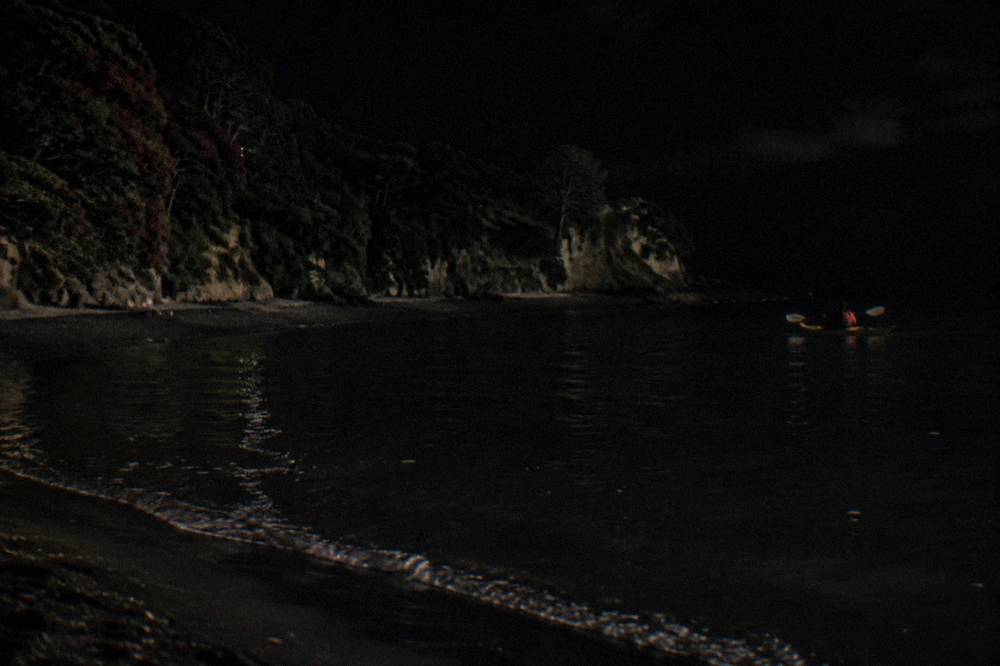
The Social Nature Movement wording is the strictest on the water: "we do not operate when the moon is in the sky and at more than 50% illumination, as excessive moonlight can significantly reduce the quality and visibility of the bioluminescence, so gaps in our availability are intentional." A calendar that looks half empty around the full moon is not a booking glitch, it is the rule at work. Canoe & Kayak Adventures says something softer: "Moonlight affects this tour and how brightly you will see bioluminescence. When the moon is brighter, the glow can be more subtle, but still visible." Those are two different policies from two different operators, and neither applies to the third.
Calm water is the other half of the equation, and it is biology rather than comfort. The cells accumulate at the surface when the sea is calm, so rough water scatters them and dulls any display even on a dark night. Social Nature Movement publishes specific limits for its two launches: Waiake does not operate above 5 m/s wind or 2.4 mm rain, Okura above 8 m/s or 2.4 mm rain. Auckland Sea Kayaks says it operates within strict wind and sea limits and the final call is often made on the day, with a move, reschedule or full refund if conditions are unsafe. The moon dates themselves are computed from US Naval Observatory data: the new moons fall on 9 November 2026, 9 December 2026 and 8 January 2027, with the US Naval Observatory publishing sun and moon times for any date and place.
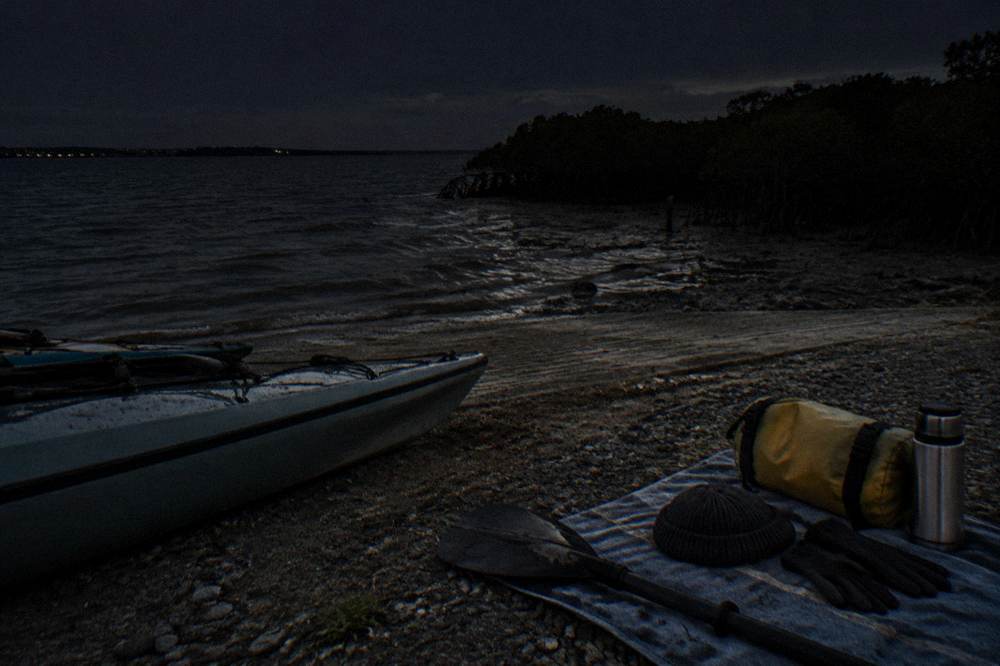
Darkness arrives late in an Auckland summer, which is worth knowing when reading a tour's timing. Computed from date and location for the Auckland CBD waterfront, sunset on 15 December 2026 is 8:36 pm and full dark, meaning astronomical dusk, does not arrive until 10:27 pm; by 15 April 2027 sunset is 5:56 pm and full dark 7:22 pm. The operators set their own start times, so the practical question for a reader is simply whether the night paddle on a given date falls after dark, and the site's page on Moon Phase And A Bioluminescence Kayak Tour works through the calendar in detail.
| Operator | Moon rule | Weather limit | Season wording |
|---|---|---|---|
| Social Nature Movement | No tours when the moon is in the sky above 50 percent illumination | Calm conditions only; Waiake 5 m/s wind, Okura 8 m/s, both 2.4 mm rain | Peak season October to April |
| Canoe & Kayak Adventures | Recommends new moon or later moonrise | Weather cancellation is a different date or a full refund | "In November-April, the glow is often strong enough to enjoy on most nights" |
| Auckland Sea Kayaks | No moon rule | Strict wind and sea limits, final call on the day | Bioluminescence "sometimes" seen on the sunset tour, "typically October to April" |
When Is Sea Sparkle Seen Around Auckland From A Kayak?
Every season statement on this page belongs to one operator. Social Nature Movement says peak Auckland bioluminescence season is October to April; Canoe & Kayak Adventures says that from November to April the glow is "often strong enough to enjoy on most nights"; Auckland Sea Kayaks says bioluminescence is "sometimes" seen on its sunset tour, typically October to April.
No official temperature threshold or season window exists for Auckland water, so the seasons come from the operators who run the tours, each quoting their own experience. Social Nature Movement says sea sparkle is "best viewed during warmer months (late spring through autumn) on dark, moonless nights" and that the organisms "vary naturally". Canoe & Kayak Adventures adds the practical note that "these popular dates do fill fast, so booking ahead is a good idea", its own words, about its own tour. Dr Carbines' science backs the shape of it without promising any night: rising water temperature combined with calm conditions is what allows blooms to accumulate, and sea temperatures are coolest in winter and warmest in late summer.
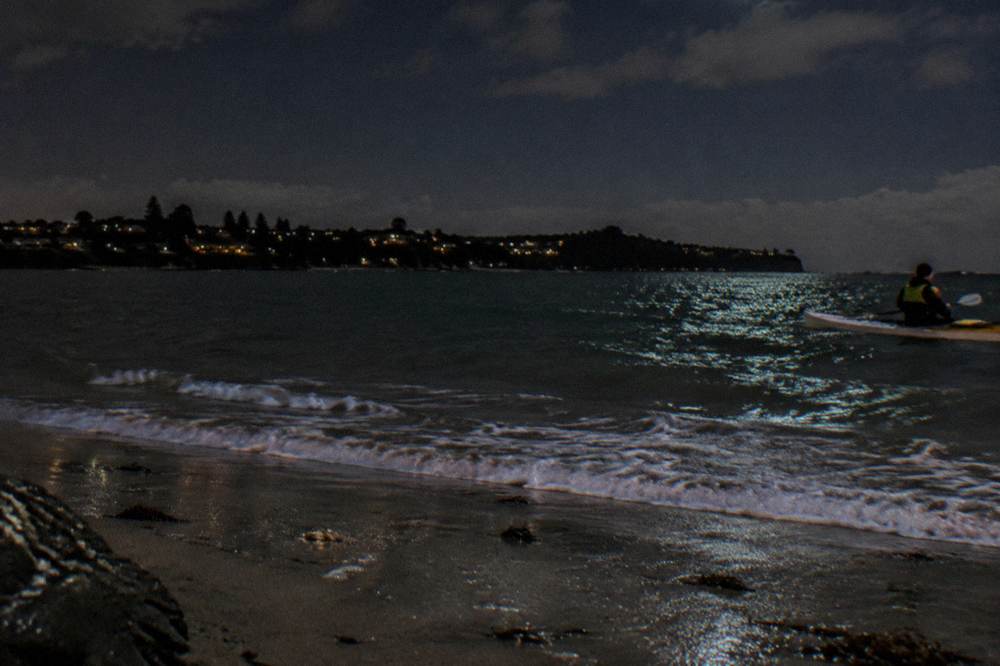
The guarantee question deserves its own straight answer: no booking page promises a sighting, and writing that once is enough. Canoe & Kayak Adventures is the only operator with a concrete remedy, a free repeat tour "if you don't see any on your tour, as confirmed by your guide on the night", with the terms set by the operator. Whether the gamble is worth taking is a fair question, and the blog post Is Bioluminescence Kayaking Worth It weighs it directly.
For readers weighing a glow paddle against the city alternative, the comparison is not close on this criterion. The City Lights tours from Westhaven Marina, from $73 for the 2 hour Sweet Treat version rated 5.0 across 15 reviews and $82.27 for the 2.5 hour version with snacks rated 4.8 across 28, make no bioluminescence claim; they sell the skyline. The Rangitoto sunset tours dangle a chance of the glow on the paddle home, and the Tiritiri trip lists "a chance to see bioluminescent plankton" on its return paddle, but the dedicated glow paddles are the ones built around the organism.
Is Noctiluca Scintillans Harmful To Swimmers Or Kayakers In Auckland Waters?
The Auckland Council scientist's word is "non-toxic": Dr Megan Carbines describes Noctiluca scintillans as "a non-toxic dinoflagellate, which often forms bright blooms around the coast in summer". NIWA likewise called it "a harmless, non-photosynthetic dinoflagellate species of alga" in its Hauraki Gulf documentation.
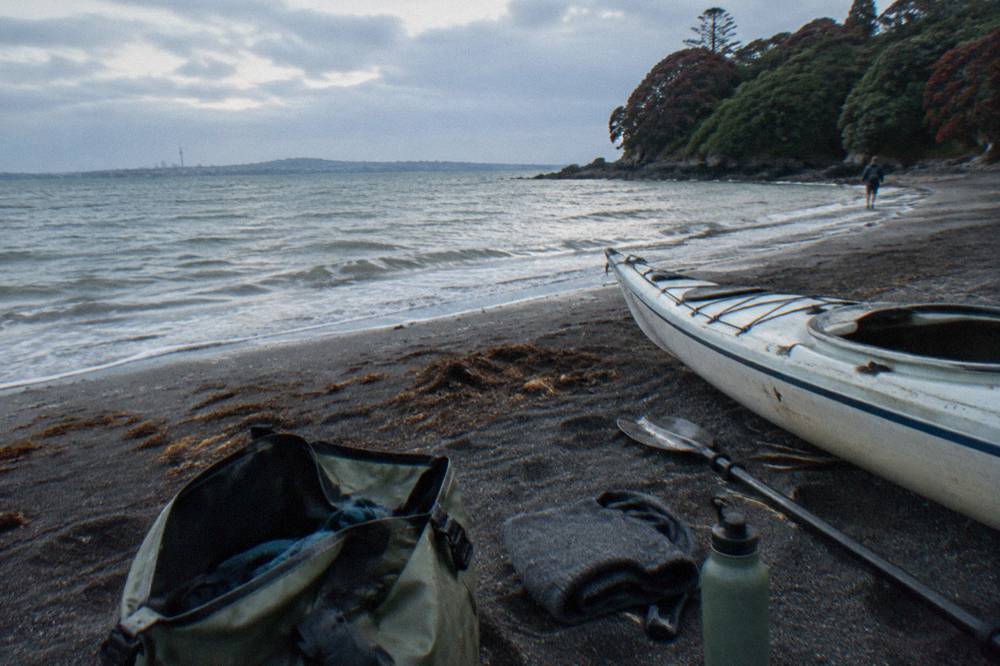
Some dinoflagellate species elsewhere are associated with harmful algal blooms, which is why the word dinoflagellate can carry an alarm-bell ring, and NIWA has tracked blooms of various species by satellite, as covered in its own work on satellite remote sensing of harmful algal blooms. But for this species in these waters the documented characterisation is non-toxic, and the daytime sign of a bloom, a pink or red tint on the water, is a curiosity rather than a warning.
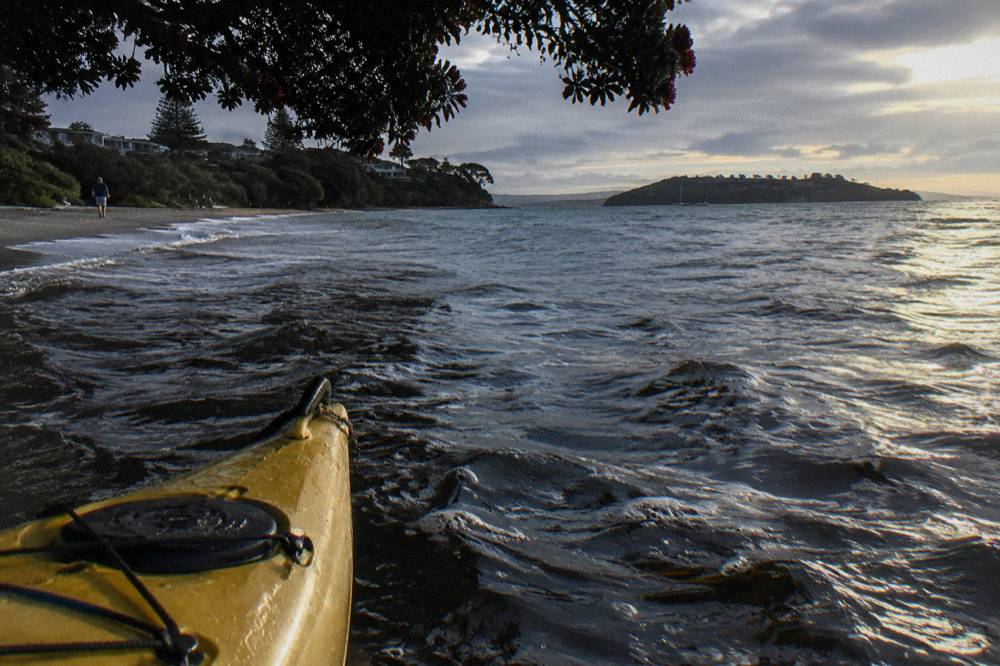
For a kayaker the relevant safety questions are ordinary night-paddling ones, not the organism. Maritime NZ guidance for paddle craft says to dress for the water temperature, because cold water shock and hypothermia can kill, to carry two waterproof ways to call for help, and to check the marine weather forecast; the full paddle craft guidance is on the Maritime NZ site. From 9 October 2026, everyone on board a recreational craft six metres or less must wear a properly fitted lifejacket while the craft is underway, and Maritime NZ lists kayaks among the craft covered. On the tours themselves the operators supply the gear: life jackets are listed on the Social Nature Movement pages and several Auckland Sea Kayaks pages, Social Nature Movement's personal flotation devices carry safety lights, and Auckland Sea Kayaks fits an all-round white navigation light on each kayak for its harbour paddles.
What Should You Bring To Watch For Sea Sparkle On A Night Kayak?
Social Nature Movement's bring list is thin merino or thermal shirt, fleece or woollen jumper, rain-proof jacket, warm beanie, towel, torch, water shoes, personal medication and a water bottle. Auckland Sea Kayaks supplies dry bags and a phone pocket on the life jacket.
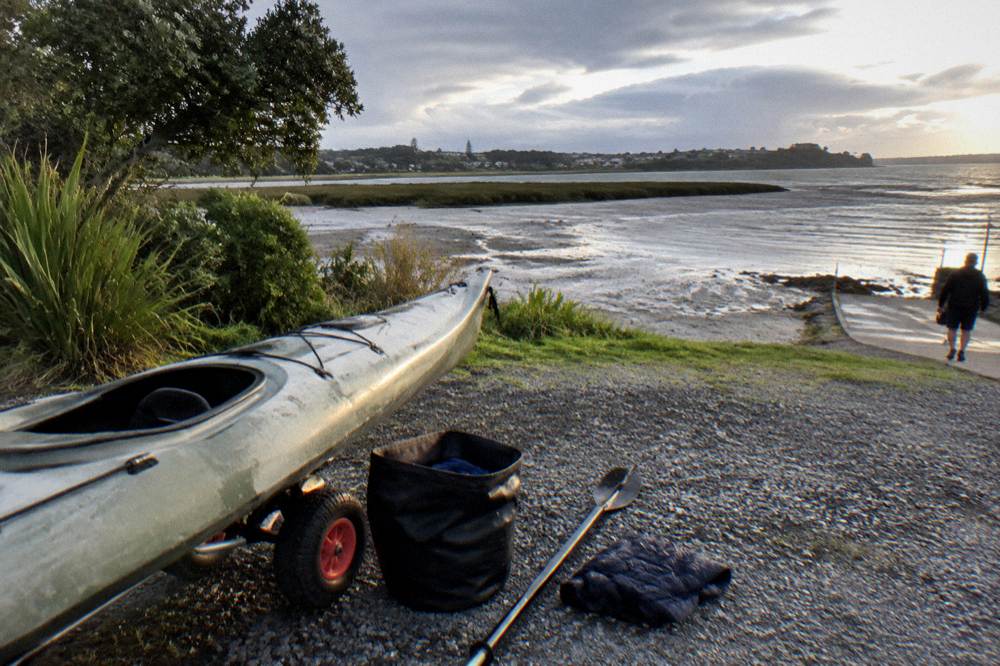
None of that list is exotic, and the reason for the warm layers is the one Maritime NZ gives: dress for the water temperature, not the air temperature. Canoe & Kayak Adventures makes the same point in its own blunt style, noting that "kayaking is a wet sport" and asking that paddlers be able to walk nonstop for 30 minutes and sit on the ground and get up unaided. Its fitness line belongs to that operator alone.
Photography is the item most often regretted. Social Nature Movement says photographing the glow is challenging and needs specialised camera settings, and recommends a waterproof phone case for photos; Auckland Sea Kayaks encourages phones, GoPro or a camera in a waterproof case at the guest's own risk. An 80-millisecond flash from a single-celled organism does not pose for a phone. The site's guide to Photographing Bioluminescence From A Kayak goes into settings and expectations in depth.
Ages and limits differ by operator and belong with the booking decision. Social Nature Movement's operator page sets 13 and over for its glow tour; Canoe & Kayak Adventures sets 11 and over accompanied by an adult, with one of its booking pages stating a minimum age of 7 and a 120 kg weight limit on that page; Auckland Sea Kayaks' Rangitoto page states a minimum age of 14 and a 125 kg limit, and the operator's own page says 14 and over with a 120 kg limit. The booking page for each tour is the document that governs, and families have a dedicated breakdown in Night Kayak Tours With Kids In Auckland.
| Item | Who says it | Why it matters |
|---|---|---|
| Thermal shirt, fleece, rain-proof jacket, beanie | Social Nature Movement bring list | Dress for the water temperature, per Maritime NZ |
| Towel, torch, water shoes, medication, water bottle | Social Nature Movement bring list | Operator's own list for its tours |
| Phone in waterproof case | Social Nature Movement, Auckland Sea Kayaks | Both operators recommend waterproofing; photos need specialised settings |
Sea sparkle is one of the few natural phenomena that a traveller can book a seat next to, and the Auckland options are unusually cheap for it, from $53 per person on the most reviewed page. The organism does not perform on request, the moon and the weather get a vote, and the operators say so in writing. What the science adds is a reason to trust the arrangement anyway: the flash is mechanical, the cells gather on calm nights, and a paddle in dark water is precisely the disturbance that sets them off.
Common Questions About Noctiluca Scintillans And Night Kayaking
What Is Noctiluca Scintillans?
A single-celled, non-photosynthetic dinoflagellate between 400 and 1500 micrometres across, known as "Sea Ghost" and "Fire of Sea". Auckland Council's environmental scientist describes it as "a non-toxic dinoflagellate, which often forms bright blooms around the coast in summer". It flashes blue-green light for about 80 milliseconds when disturbed.
Why Does The Water Glow When A Kayak Paddle Moves Through It?
The flash is triggered by mechanical disturbance: the shear stress on the cell when water moves past it. The light follows a circadian rhythm and appears only at night, tending to gather near the surface in calm conditions, so paddle strokes on a still night often stir it into view.
Where Can You Paddle Over Sea Sparkle Near Auckland?
The dedicated glow tours launch from the North Shore: Okura Boat Ramp or Waiake Beach for Social Nature Movement, and a North Shore spot emailed before 10 AM on the day for Canoe & Kayak Adventures. City night paddles depart Westhaven Marina and sunset tours St Heliers Bay on the Waitemata Harbour.
Can A Night Kayak Tour Guarantee Sightings Of The Glow?
No. Canoe & Kayak Adventures states that bioluminescence can never be guaranteed, while Social Nature Movement says it varies naturally. Canoe & Kayak Adventures offers a free repeat tour if the guide confirms no bioluminescence was seen on the night, with terms set by the operator.
Does A Bright Moon Spoil A Bioluminescence Kayak Tour?
It reduces visibility. Social Nature Movement does not operate when the moon is in the sky at more than 50 percent illumination, so gaps in its availability are intentional. Canoe & Kayak Adventures recommends booking near a new moon or on nights with later moonrise. Auckland Sea Kayaks has no moon rule.
Is Noctiluca Scintillans Harmful To People?
The Auckland Council scientist's characterisation is "non-toxic", and NIWA described it as "a harmless, non-photosynthetic dinoflagellate species of alga" in its Hauraki Gulf documentation. The safety questions that matter on a night paddle are the ordinary ones: warm layers, a life jacket and a check of the marine forecast.