Night Kayaking Lights: What A Kayak And Paddler Show After Dark
A guided night kayak in Auckland is a lit trip in a literal sense: two operators describe fitted lights on their kayaks or their paddlers, and the glow, the city and the stars are what you go out to see. Here is what each operator says it puts on the water after dark, and what that means for the evening you are planning.
Short answer
Guided night kayaks in Auckland carry lights two ways: Auckland Sea Kayaks fits an all-round white navigation light to the rear of every kayak, and Social Nature Movement issues a personal flotation device with a safety light and says all participants wear lights and reflective gear. Tours run from $53 per person, and every one of the nine states a full refund if cancelled at least 24 hours before the start.
Guided night kayaking is one of the few Auckland activities where the equipment list is mostly about light. The operators fit lights, hand out reflective gear, finish after dark and sell the evening on what becomes visible once the sun is gone: the city skyline, the stars, and, on the dedicated glow tours, the blue-green flash of disturbed plankton. This page lays out what each operator says its kayaks and paddlers show after dark, what the rules require, when full dark actually falls, and what the different night paddles let you look at. If you're still weighing whether paddling after dark is a sensible plan at all, the guide to kayaking at night in Auckland sets out what the science, the operators and the maritime rules actually say. Closer to the equipment itself, the question of whether a kayak needs lights turns on what the maritime rules say rather than on what any particular tour happens to hand out.
The science behind the glow is worth thirty seconds before the equipment talk. The organisms most often responsible are dinoflagellates, single-celled drifting algae whose light is triggered by mechanical disturbance, a paddle stroke, a boat, a wave, and is switched by an internal clock so it happens only at night. Wikipedia's entry on bioluminescence covers the mechanism, and the specific species most often named in New Zealand waters, Noctiluca scintillans, is described on its own page: a non-toxic dinoflagellate that accumulates at the surface when the sea is calm and flashes for about 80 milliseconds when disturbed. No operator promises a sighting, and this page never will either.
What Lights Does A Guided Night Kayak In Auckland Carry?
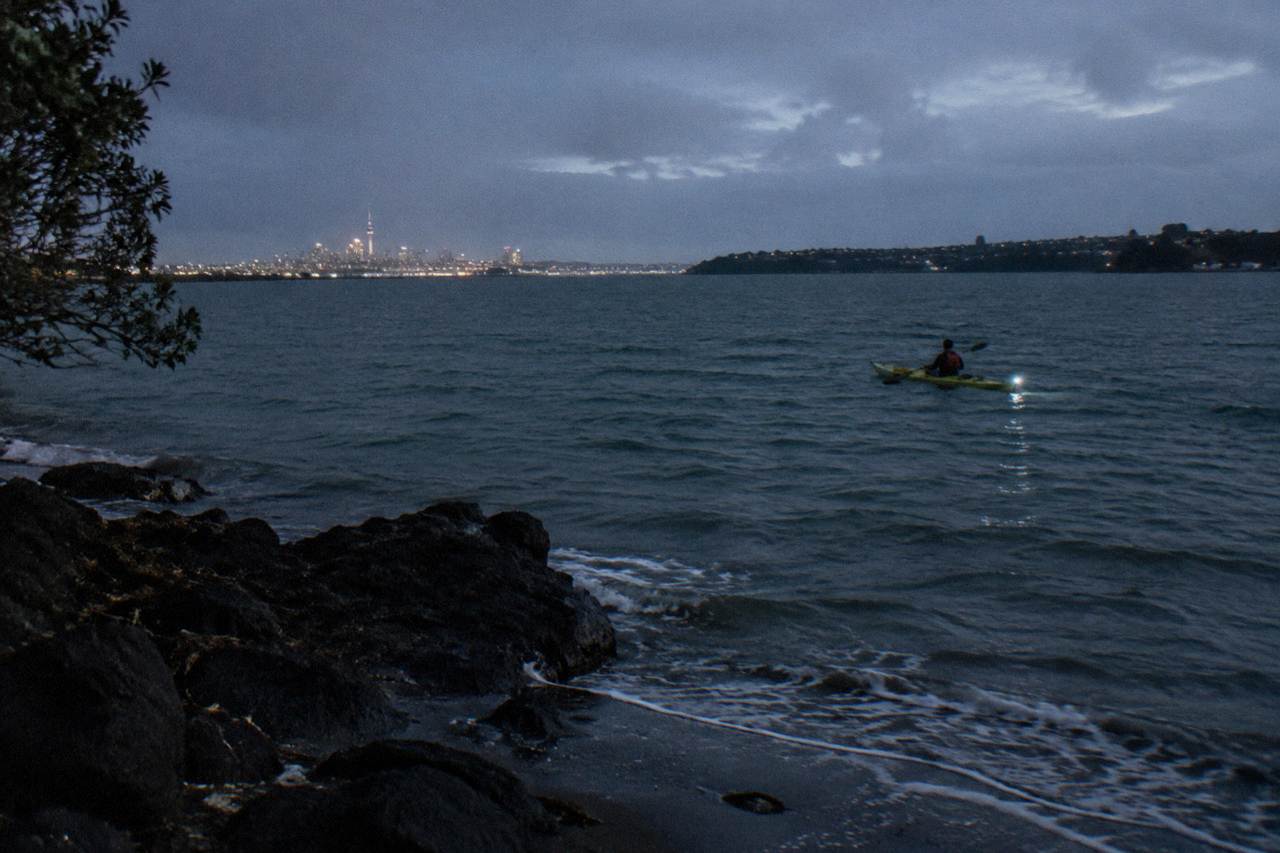
The answer depends on the operator, and only two describe their lighting plainly. Auckland Sea Kayaks fits an all-round white navigation light to the rear of every kayak on its tours, and its guides carry marine VHF radios and first aid. Social Nature Movement issues a personal flotation device with a safety light and says all participants wear lights and reflective gear. The operators fit and issue this gear themselves.
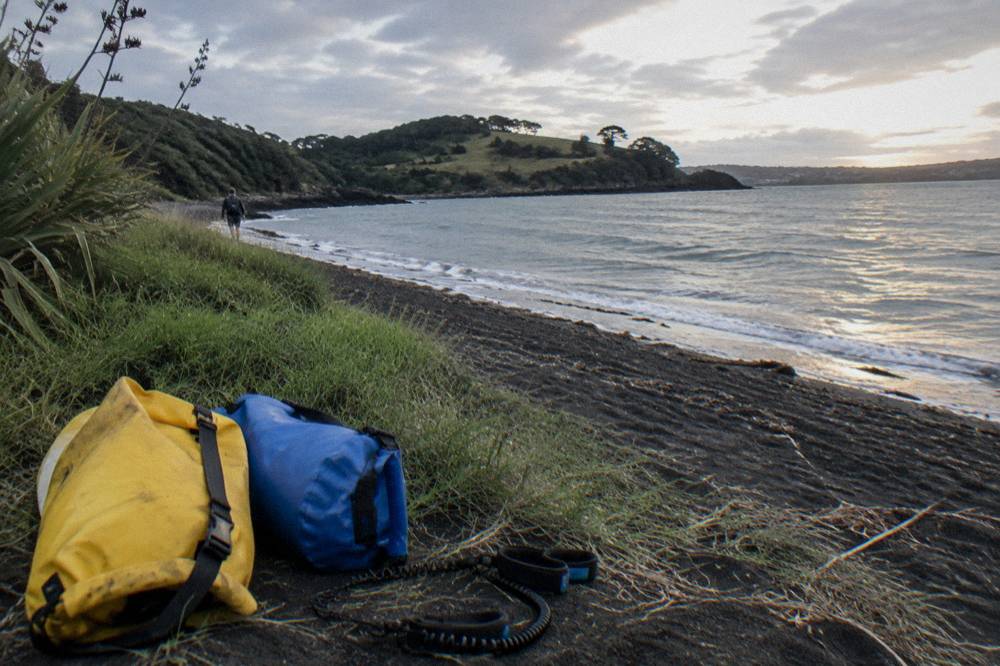
That is the whole of the sourced lighting story on Auckland's guided night paddles, and it splits cleanly along operator lines. Auckland Sea Kayaks, which runs the City Lights tours from Westhaven Marina and the Rangitoto sunset tours from St Heliers Bay, describes its setup in detail: the white all-round light at the rear of each kayak, radios and first aid with the guides, and on the sheltered Waitemata Harbour a paddle where every craft is marked against the dark. Dry bags are supplied, and the life jackets have a phone pocket.
Social Nature Movement, which runs the dedicated bioluminescence tours from Okura Boat Ramp or Waiake Beach, describes a different arrangement: the personal flotation device each paddler wears carries a safety light, and the operator's own FAQ says "all participants wear lights and reflective gear". Its tours also run only in calm conditions, with stated wind and rain limits per launch point: Waiake does not operate above 5 m/s wind or 2.4 mm rain, Okura above 8 m/s or 2.4 mm rain. The lighting and the weather limits are the operator's own wording.
| Operator | What it says about lights and visibility | Tours it applies to |
|---|---|---|
| Auckland Sea Kayaks | All-round white navigation light at the rear of every kayak; guides carry marine VHF radios and first aid; dry bags supplied | City Lights and Rangitoto sunset tours |
| Social Nature Movement | Personal flotation device with safety light; "all participants wear lights and reflective gear" | Dedicated bioluminescence tours from Okura or Waiake |
| Canoe & Kayak Adventures | Kayaks, safety equipment and tuition listed on its booking pages | North Shore bioluminescence tours |
What the table shows is that a reader comparing tours on lighting alone will find the fullest description on the Auckland Sea Kayaks pages. That should not be read as a difference in safety between operators, because the booking pages do not all describe their equipment in the same depth. The shorter answer for Canoe & Kayak Adventures is that its pages list kayaks, safety equipment and tuition, and the operator, running tours since 1994, keeps a ratio of one guide to six guests. For the lifejacket side of the story, Maritime NZ's guidance for lifejackets and for paddle craft covers what every kayaker, guided or not, should know.
Why Do Auckland Sea Kayaks' Kayaks Carry A White Rear Light?
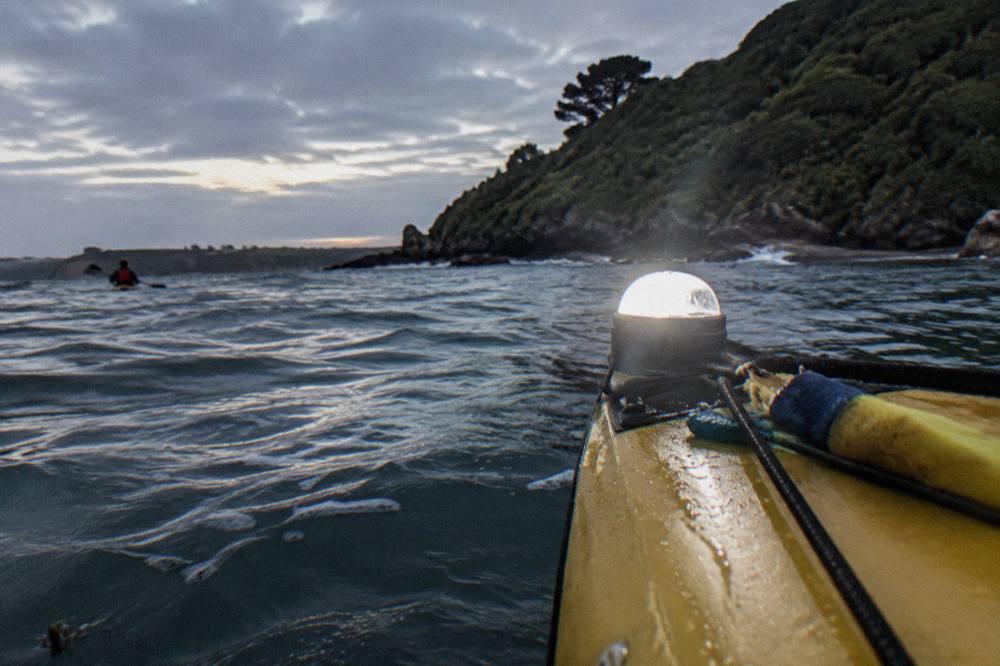
Because the operator fits one. Auckland Sea Kayaks states that every kayak on its tours carries an all-round white navigation light at the rear, and its paddling happens on the Waitemata Harbour, which the operator itself describes as sheltered. That applies to both the City Lights tours from Westhaven Marina and the Rangitoto sunset tours from St Heliers Bay, which return after dark.
The white light is the detail that answers the most common equipment question from readers who have kayaked before. On the water at night, a fixed white all-round light is how other craft see you, and Auckland Sea Kayaks mounts one at the rear of every kayak rather than relying on each paddler to manage a handheld torch. The operator's own descriptions, on the City Lights and sunset tour pages, are the source for this, and the same pages note that guides carry marine VHF radios.
The harbour context matters too. The operator describes its paddling as being on the sheltered Waitemata Harbour, the body of water between the North Shore and the isthmus that the City Lights tours work along, with the Auckland skyline on one side. The sunset tours cross the same harbour to Rangitoto Island and return after dark, with the booking page for the 7 hour version describing a paddle home beneath the night sky and stars.
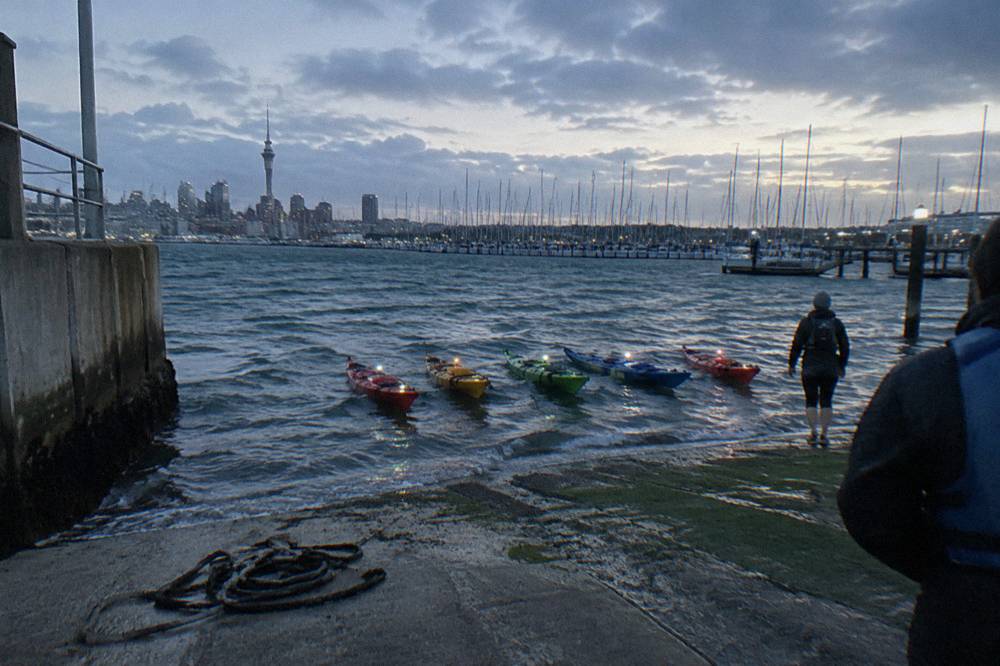
For a reader weighing the city paddles against the glow paddles, the lighting setups mark the difference in what the evening is for. The City Lights tour, from $82.27 per person for the 2.5 hour version and rated 4.8 across 28 reviews, is built around looking at the lit city from the water at night; it makes no bioluminescence claim on its booking page. The dedicated glow tours, from $53 per person on the most reviewed page, 4.9 across 329 reviews, are built around the dark water itself, launched from the North Shore rather than the marina. The safety orientation runs through the details in Night Kayak Safety On A Guided Bioluminescence Paddle.
Between those two poles sit the Rangitoto sunset tours, which begin in daylight and finish in the dark, and the Tiritiri Matangi dinner trip, which paddles back under the stars with a chance of seeing bioluminescent plankton. The lighting question is the same on all of them: the operator fits it, and what changes is what there is to look at.
What Do Paddlers Wear To Stay Visible On The Okura And Waiake Night Tours?
Social Nature Movement, which launches its glow tours from Okura Boat Ramp or Waiake Beach, says "all participants wear lights and reflective gear" and issues a personal flotation device with a safety light. Its own bring list runs to warm layers: a thin merino or thermal shirt, fleece or woollen jumper, rain-proof jacket, warm beanie, towel, torch, water shoes, personal medication and a water bottle.
The bring list is the operator's own, and it is the most concrete clothing guidance for a night paddle in Auckland. It is a list built for sitting still on cold water after dark rather than for athletic effort, and it matches the general rule Maritime NZ gives all paddle craft users: dress for the water temperature, because cold water shock and hypothermia can kill, carry two waterproof ways to call for help, and check the marine forecast before going out. Those three lines are the national guidance, and they sit behind everything the operators arrange for guided groups.
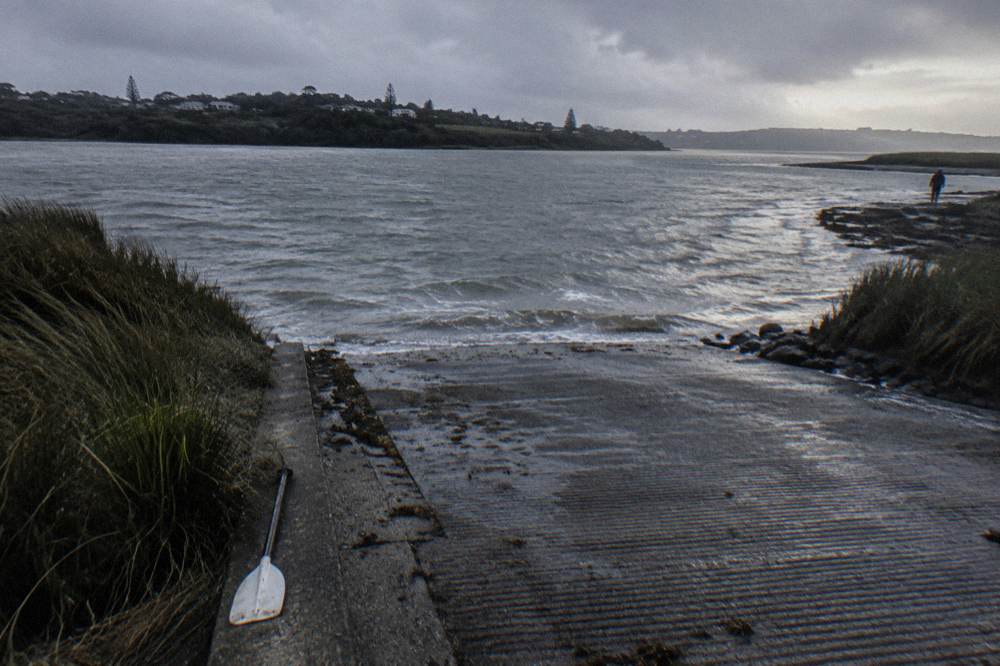
The launch points themselves are chosen by tide, not by the operator's whim. Social Nature Movement links its two North Shore launches to the tide, saying both locations are equally good: Okura at high tide, Waiake at low tide, with the start point selected at booking. The tides are covered in full in Tides And Bioluminescence Kayak Launch Points, and the clothing question, including what the other operators suggest, in What To Wear On A Night Kayak Tour In Auckland.
Canoe & Kayak Adventures, the third operator, gives fitness and clothing-adjacent guidance in its own wording: paddlers should be able to walk nonstop for 30 minutes and sit on the ground and get up unaided, and, in the operator's phrase, "kayaking is a wet sport". Auckland Sea Kayaks' own City Lights page recommends bringing a camera, and encourages a phone, GoPro or camera in a waterproof case, carried at the guest's own risk.
| Tour | From (USD, per person) | Duration | Start point | Rating and reviews |
|---|---|---|---|---|
| City Lights, 2.5 hours, snacks | $82.27 | About 2.5 hours | Westhaven Marina | 4.8 across 28 reviews |
| City Lights, Sweet Treat, 2 hours | $73 | 2 hours | Westhaven Marina | 5.0 across 15 reviews |
| Glow paddle, chosen at booking | $53 | 1.5 to 2 hours | Chosen at booking | 4.9 across 329 reviews |
| Glow paddle, Okura or Waiake start | $62.42 | 2 hours | Okura Boat Ramp or Waiake Beach | 5.0 across 46 reviews |
| Glow paddle, North Shore start | $67.52 | 2 hours | North Shore, spot emailed on the day | 4.1 across 207 reviews |
| Glow paddle with guide, no hotel pickup | $66 | 2 hours | North Shore, spot emailed on the day | 4.5 across 67 reviews |
The table doubles as the price picture for the short night paddles. The two City Lights rows and the four glow rows are the six two-hour-class trips on this site; the Rangitoto and Tiritiri evening tours are longer, catered outings and sit apart.
When Does It Actually Get Dark On Auckland's North Shore?
Full dark, the moment astronomical dusk ends, falls between roughly 6:43 pm in midwinter and 10:29 pm in midsummer on the Auckland waterfront, computed from date and location. On 15 December 2026 sunset is 8:36 pm and full dark is 10:27 pm; on 15 June 2027 sunset is 5:11 pm and full dark is 6:43 pm. The operators set their own start times; check the booking page for the time on your date.
Night tours need darkness, and on summer evenings in Auckland that darkness arrives late. The table below is computed from US Naval Observatory sunset and civil twilight data for the Auckland waterfront, with astronomical dusk calculated from date and location, shown for the 15th of each month. Daylight saving runs on summer time from 27 September 2026 to 4 April 2027, then resumes 26 September 2027.
| Date | Sunset | End of civil twilight | Full dark (computed) |
|---|---|---|---|
| 15 Nov 2026 | 8:08 pm | 8:37 pm | 9:49 pm |
| 15 Dec 2026 | 8:36 pm | 9:07 pm | 10:27 pm |
| 15 Jan 2027 | 8:42 pm | 9:12 pm | 10:29 pm |
| 15 Feb 2027 | 8:18 pm | 8:46 pm | 9:53 pm |
| 15 Mar 2027 | 7:41 pm | 8:07 pm | 9:08 pm |
| 15 Apr 2027 | 5:56 pm | 6:22 pm | 7:22 pm |
| 15 May 2027 | 5:23 pm | 5:50 pm | 6:52 pm |
| 15 Jun 2027 | 5:11 pm | 5:40 pm | 6:43 pm |
The gap between sunset and full dark is the band astronomers call twilight, and it is longer in summer than the table's three columns might suggest at a glance: in December, the sky keeps fading for nearly two hours after the sun goes down. The US Naval Observatory's sun and moon calculator is the underlying source for anyone checking a specific date.
Does The Moon Change What A Night Paddle Shows?
It changes what the glow tours offer, and one operator treats it as a rule. Social Nature Movement does not run its tours when the moon is in the sky at more than 50 percent illumination, so gaps in its availability are intentional. Canoe & Kayak Adventures only recommends booking near a new moon or on nights with a later moonrise. Auckland Sea Kayaks has no moon rule.
The two glow operators treat the moon differently, and the difference is worth understanding before checking a calendar. For Social Nature Movement the moon is a scheduling constraint: excessive moonlight, in the operator's wording, can significantly reduce the quality and visibility of the bioluminescence, so the dark gaps in its calendar are deliberate rather than a shortage of demand. For Canoe & Kayak Adventures the moon is advice rather than a rule: moonlight affects how brightly the glow shows, brighter moonlight makes the glow more subtle but still visible, and the operator recommends new moon or later moonrise nights. Neither statement applies to the other operator, and neither applies to Auckland Sea Kayaks, whose tours make no bioluminescence promise on their booking pages anyway.
The moon dates themselves come from US Naval Observatory data converted to Auckland local time. New moons fall on 9 November and 9 December 2026, then 8 January, 7 February, 8 March and 7 April 2027; full moons on 25 November and 24 December 2026, then 23 January, 21 February, 22 March and 21 April 2027. No date here is a promised dark night or a promised sighting; the moon data simply tells you when the sky will lack a bright moon, and the rest is up to the water. The full moon rule detail is unpacked in Moon Phase And A Bioluminescence Kayak Tour.
What Can You See From A Kayak After Dark In Auckland?
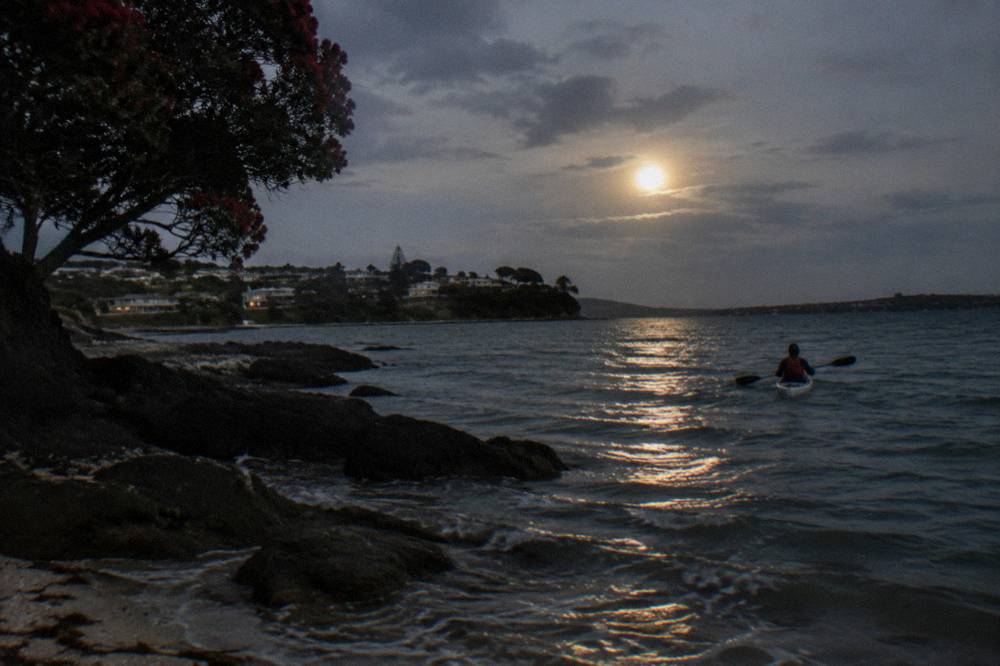
Three different shows, depending on the tour: the lit Auckland skyline from Westhaven Marina, the stars and a chance of bioluminescent plankton on the longer evening paddles, and the dark-water glow the dedicated North Shore tours exist for. The City Lights tours make no bioluminescence claim; the glow tours promise nothing either, and Canoe & Kayak Adventures says sightings can never be guaranteed while Social Nature Movement says the glow varies naturally.
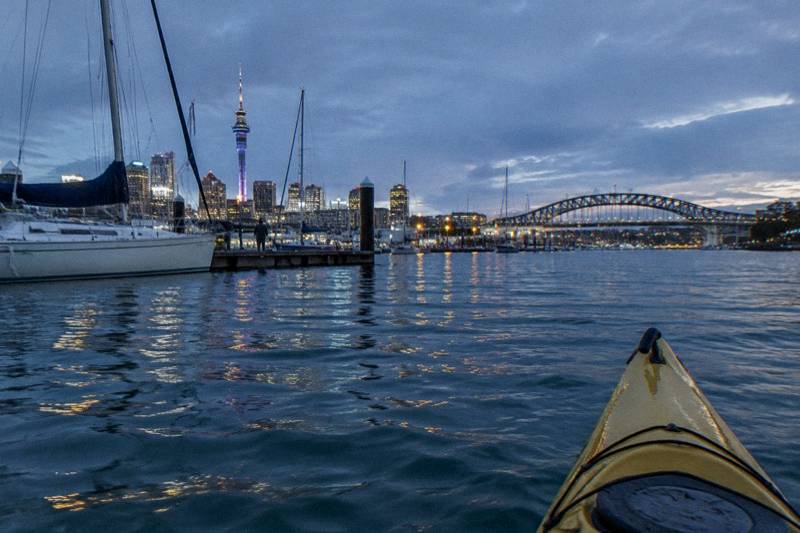
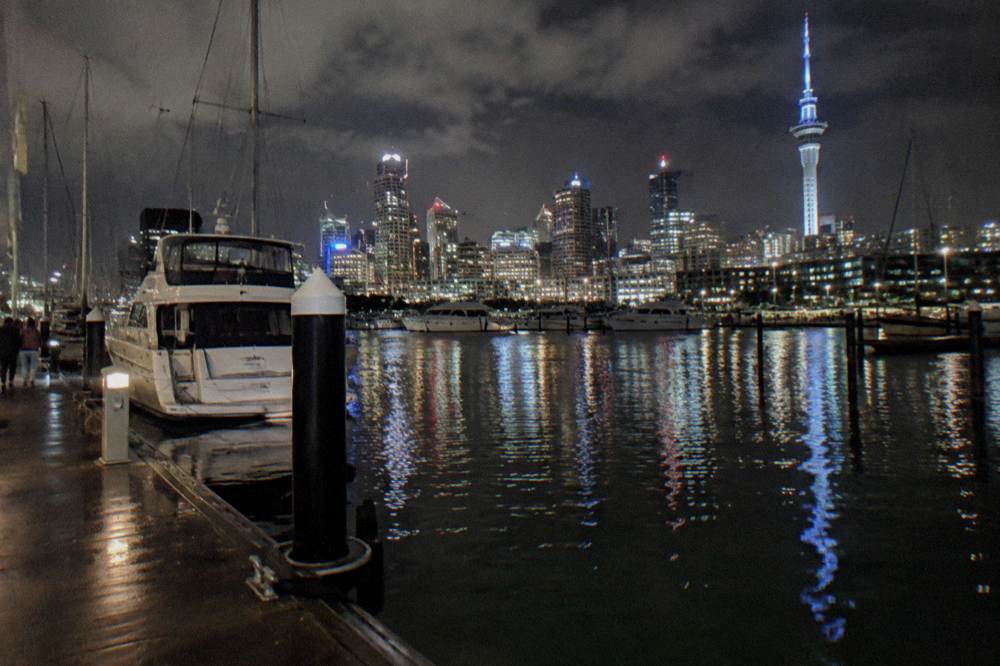
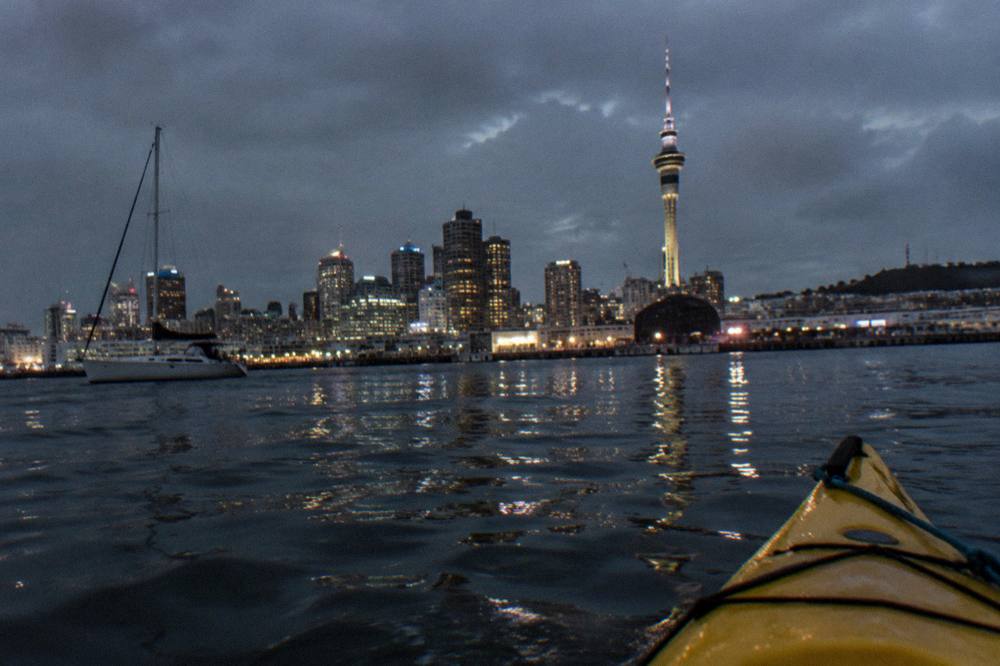
The City Lights tours are the ones where the lights are the point. Auckland Sea Kayaks runs them from the boat ramp at Westhaven Marina, Z Pier, on the Waitemata Harbour, with the operator describing a paddle past the lit city after dark. The 2.5 hour version, from $82.27 per person with snacks, is rated 4.8 across 28 reviews; its 2 hour twin, from $73 per person with a sweet treat, is rated 5.0 across 15 reviews. Both carry the white navigation light at the rear of each kayak. The details are in City Lights Night Kayak Auckland, and the 2.5 hour City Lights tour is the featured tour on this site for that style of evening.
The Rangitoto sunset tours are the hybrids: a daylight launch from St Heliers Bay, a BBQ dinner on the island, and a return paddle after dark. The booking page for the 7 hour version, from $116 per person and rated 4.8 across 85 reviews, describes kayaking home beneath the night sky and the stars; the operator says bioluminescence is "sometimes" seen on its sunset tour, "typically October to April", and can never be guaranteed, a line that belongs to the sunset tour only.
The Tiritiri Matangi trip is its own category: a 7 hour Social Nature Movement evening from $139 per person with no rating yet, taking in penguins, a guided nocturnal walk and a sunset grazing platter with drinks, with pickup included and chosen at booking, and a return paddle the booking page describes as offering a chance to see bioluminescent plankton. It is a dinner and wildlife trip with a night paddle attached, not a two hour glow tour, and it should not be compared with them on price.
As for the glow itself, the science is settled even when the sightings are not. Auckland Council environmental scientist Dr Megan Carbines, quoted by Local Matters, describes Noctiluca scintillans as "a non-toxic dinoflagellate, which often forms bright blooms around the coast in summer" that "emits a burst of light" when disturbed, and notes rising water temperature combined with calm conditions lets blooms accumulate. That matches the operators' own season wording: Social Nature Movement says its peak season is October to April, and Canoe & Kayak Adventures says that in November to April the glow is "often strong enough to enjoy on most nights". Both are operator statements about their own tours, and neither amounts to a promise.
Which Night Paddle Should You Book If Lights Are Your Question?
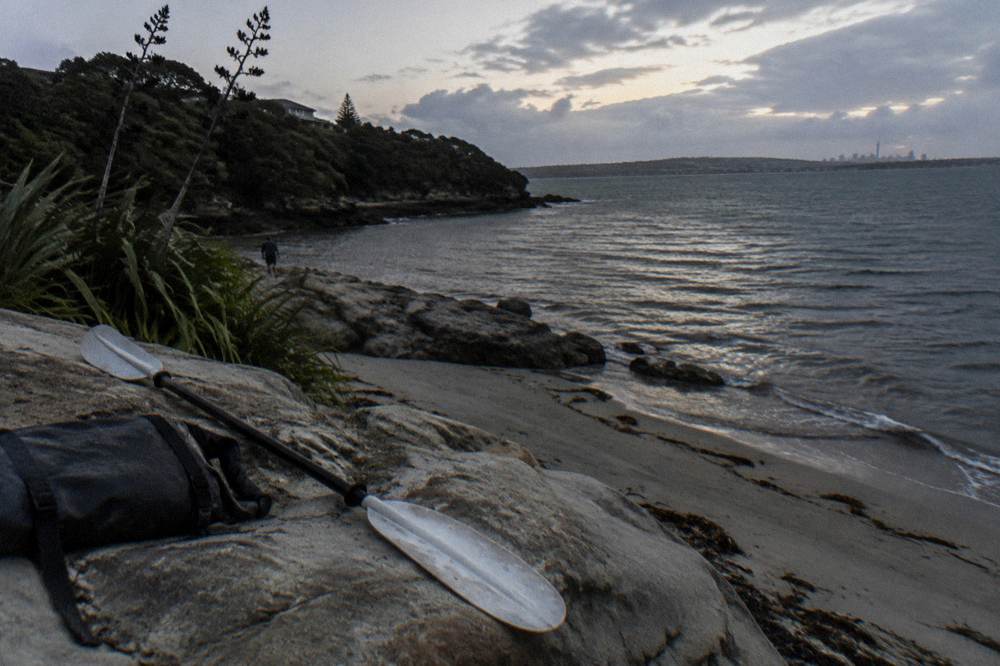
Read the lighting line as a signal of what the evening is for. The white navigation light and the city skyline belong to Auckland Sea Kayaks from Westhaven and St Heliers Bay. The safety-lighted vests and reflective gear belong to Social Nature Movement's dark-water glow tours on the North Shore. Canoe & Kayak Adventures supplies kayaks, safety equipment and tuition on its North Shore glow tours, with one guide to six guests.
The practical sorting is by what you want to look at. If the answer is a lit city and an easy evening on sheltered water, the City Lights tours fit, and the shorter 2 hour version at $73 per person is the cheapest of the two. If the answer is dark water and the possibility of glow, the Social Nature Movement pages carry the most reviews, 4.9 across 329 on its most reviewed page from $53 per person, while Canoe & Kayak Adventures offers the longest track record, tours since 1994, and a stated free repeat tour if the guide confirms no bioluminescence was seen. If the answer is dinner, an island and stars on the way home, the Rangitoto and Tiritiri evenings are the ones, at $116 to $139.02 per person.
Cancellation is the same across all nine tours on the booking pages: a full refund when cancelled at least 24 hours before the start. Booking ahead is still sensible on the glow tours, where Canoe & Kayak Adventures says its November to April dates fill fast, and where Social Nature Movement's moon rule removes bright-moon nights from its calendar by design. How far ahead is covered in How Far Ahead To Book A Bioluminescence Kayak Tour.
The choice between a glow paddle and a city paddle is unpacked further in Night Kayak Vs Bioluminescence Kayak Tour, and the price picture for every option is in Bioluminescence Kayak Tour Prices In Auckland. Whatever the choice, the lighting is the operator's job: the reader's job is the warm layers, the waterproof camera case, and turning up on time at the right boat ramp.
Common Questions About Night Kayaking Lights
Do Guided Night Kayaks In Auckland Carry Lights?
Yes, where the operators describe it. Auckland Sea Kayaks fits an all-round white navigation light to the rear of every kayak, and Social Nature Movement issues personal flotation devices with safety lights, saying all participants wear lights and reflective gear.
Do I Need To Bring My Own Torch On A Night Kayak Tour?
Social Nature Movement lists a torch on its own bring list, alongside warm layers, water shoes and a water bottle. Check the operator's bring list for your specific tour before packing.
Does A Bright Moon Cancel A Bioluminescence Kayak Tour?
For Social Nature Movement, yes in effect: it does not operate when the moon is in the sky at more than 50 percent illumination, so those dates simply do not appear. Canoe & Kayak Adventures runs in moonlight but recommends new moon or later moonrise nights. Auckland Sea Kayaks has no moon rule.
Can You See Bioluminescence On The City Lights Kayak Tour?
The City Lights tours make no bioluminescence claim on their booking pages; they are paddles past the lit city skyline. Only the dedicated glow tours are about bioluminescence, and even those say sightings can never be guaranteed.
What Time Do Night Kayak Tours Start In Auckland?
The operators set their own start times, so check the booking page for the exact departure time of your tour. For orientation: full dark falls between about 6:43 pm in midwinter and 10:29 pm in midsummer, computed from date and location, which is why summer night tours begin late.
Do You Get A Free Repeat Tour If No Bioluminescence Is Seen?
Canoe & Kayak Adventures says bioluminescence is a natural event that can never be guaranteed, and it offers a free repeat tour if the guide confirms none was seen. An equivalent offer is not stated for Social Nature Movement or Auckland Sea Kayaks, whose pages say only that sightings vary and cannot be promised. Separately, all nine tours carry a full refund when cancelled at least 24 hours before the start.