How Long Does The Glow Last On A Bioluminescence Kayak Tour?
The glow on an Auckland bioluminescence kayak tour is a series of very short flashes triggered by moving water, not a continuous light. This guide explains what that means for a two hour night paddle.
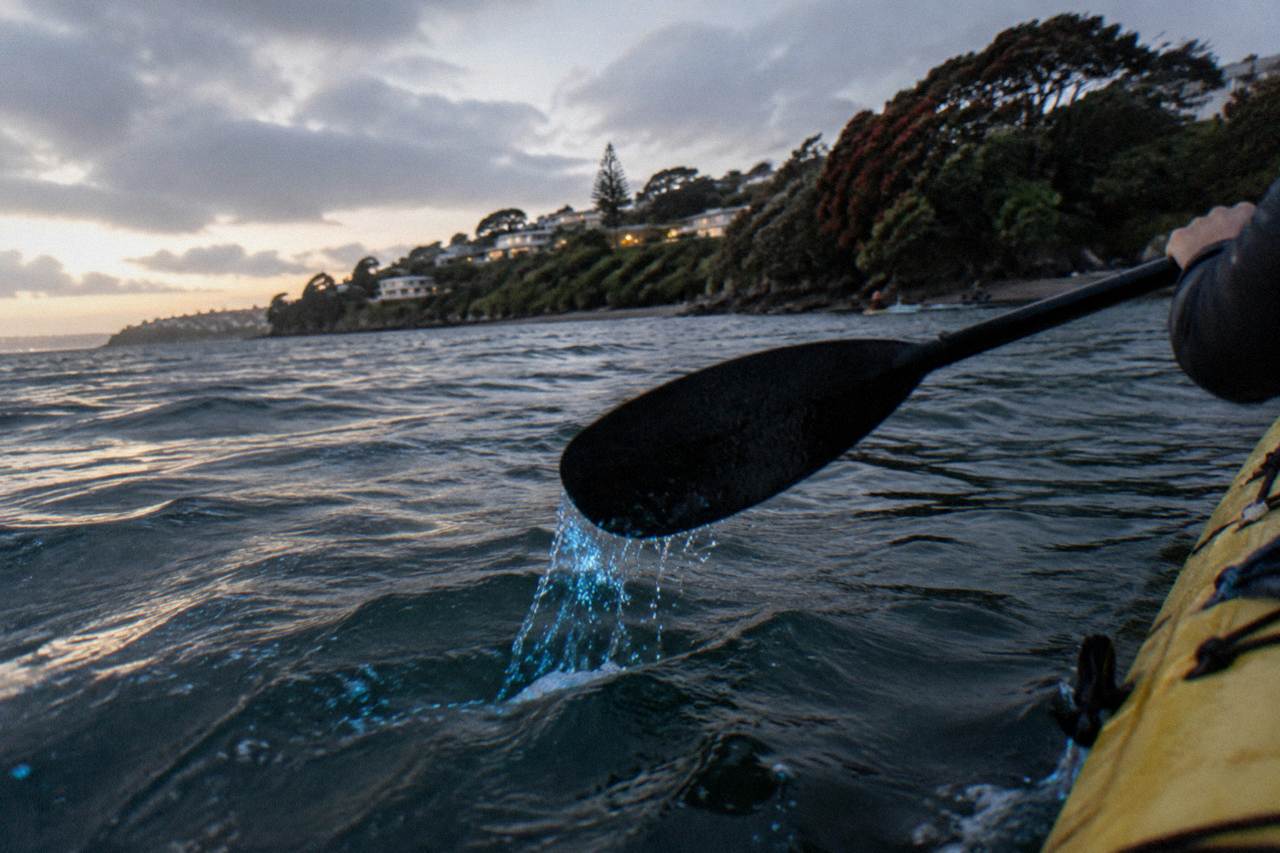
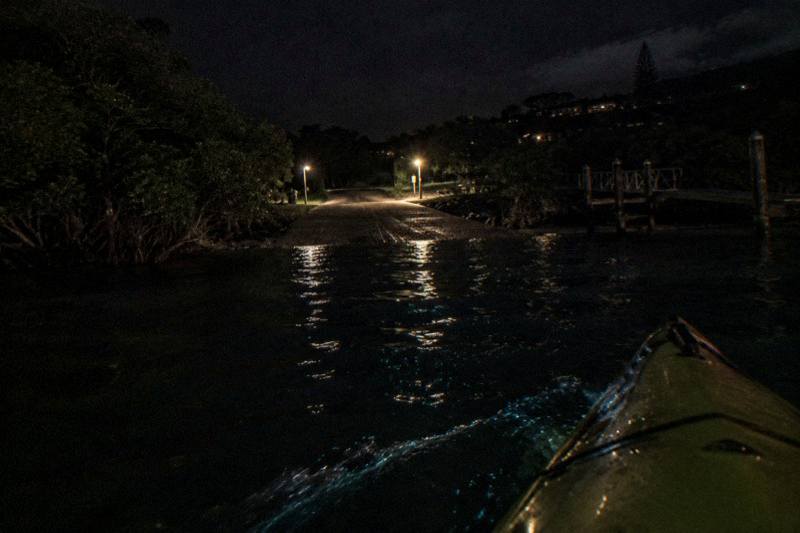
No operator in Auckland can put a duration on the glow itself, because it is not a continuous light. The blue-green light is produced by single-celled organisms called dinoflagellates, and each individual flash lasts about 80 milliseconds, roughly a twelfth of a second, according to Wikipedia. What lasts is the paddle: the dedicated Auckland glow tours run 1.5 to 2 hours or 2 hours, and the glow appears wherever water is disturbed during that time.
That gap between the question and the answer is worth unpacking, because it changes what a night paddle in Auckland actually looks like. The light comes from organisms such as Noctiluca scintillans, a dinoflagellate that Auckland Council environmental scientist Dr Megan Carbines described to Local Matters as "a non-toxic dinoflagellate, which often forms bright blooms around the coast in summer". When a paddle, a hull or a wave disturbs the water, the cells flash. When the water is still, nothing shows. So the honest answer to how long the glow lasts is: for as long as something keeps moving the water, and for as long as the organisms are present in that spot on that night.
The second half of the answer is the tour. Auckland's dedicated bioluminescence kayak tours give you a window of roughly two hours on the water in which every paddle stroke, every drip and every eddy behind the kayak is a chance to trigger that light. Social Nature Movement runs its glow tour for 1.5 to 2 hours on one booking page, from $53 per person on its most reviewed page, rated 4.9 across 329 reviews. Canoe & Kayak Adventures runs a two hour paddle, from $67.52 per person, rated 4.1 across 207 reviews. Those two operators, plus Auckland Sea Kayaks, make up the tours covered on this site. If you're picturing glowing caves instead of sparkling water, the glow worm kayak tour vs bioluminescence kayak tour comparison explains how differently those two lights behave.
The bioluminescence tours run about two hours, so the practical question is whether that is enough time on the water. If you don't see any on your tour, as confirmed by your guide on the night, we'll give you a free repeat tour." That is the closest thing to a duration guarantee that exists in Auckland.
How Long Is The Paddle Itself On An Auckland Glow Tour?
Every dedicated bioluminescence kayak tour in Auckland lasts about two hours on the water. The Canoe & Kayak Adventures tour is a two hour paddle from $67.52 per person. Social Nature Movement's version is listed at 2 hours on one booking page and 1.5 to 2 hours on the other, from $53. A seven hour Tiritiri Matangi dinner trip also lists a chance of plankton glow on its return paddle.
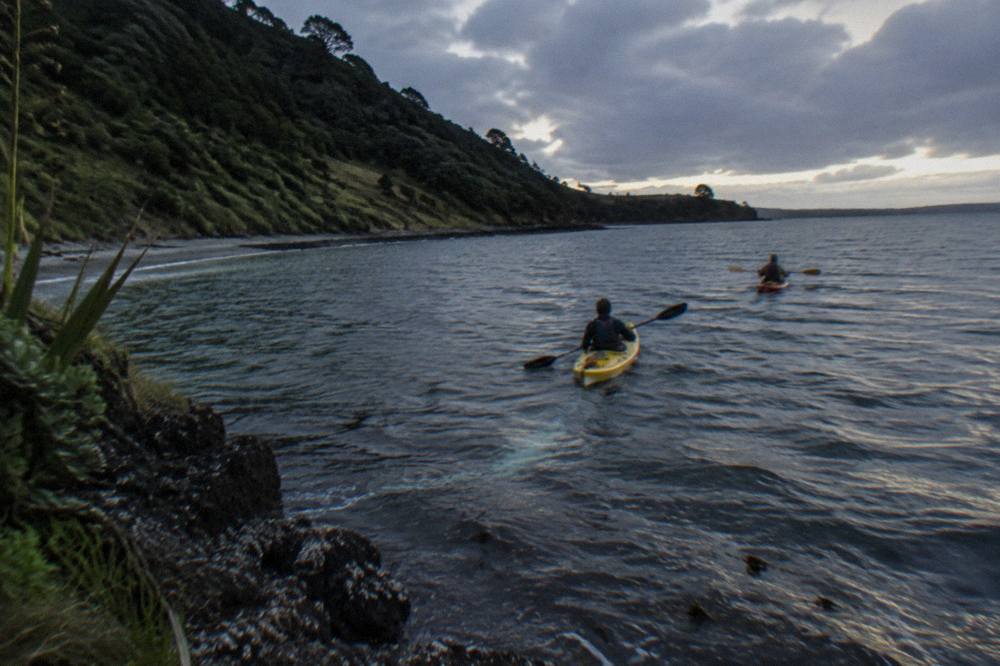
Two hours is the shape of the product, and it is set by the operators rather than by any rule. Social Nature Movement launches at Okura Boat Ramp at the end of Okura River Road, or at Waiake Beach, choosing between the two with the tide; the operator's own words are that "both locations are equally good", with Okura suiting high tide and Waiake low tide. One of its booking pages names Okura and Waiake; the other sets the start point at booking. Canoe & Kayak Adventures takes a different approach: the exact North Shore spot is emailed before 10 AM on the day of the tour.
The 1.5 to 2 hour range on Social Nature Movement's most reviewed page has a specific cause. The operator notes that tours after the first departure of the night run 1.5 hours, while the first tour of the night runs the full two. If the length of the paddle matters to you, the first departure of the evening is the one that guarantees the longer window. Both operators' prices are per person from-prices on their booking pages.
For readers comparing the two North Shore operators side by side, this site's Auckland bioluminescence kayak tours comparison breaks down every flag in one place.
| Tour | Operator | Duration | From (USD, per person) | Rating and reviews |
|---|---|---|---|---|
| North Shore Start, 2 Hours | Canoe & Kayak Adventures | 2 hours | $67.52 | 4.1 across 207 reviews |
| Optional Bio-Bus, 1.5 To 2 Hours | Social Nature Movement | 1.5 to 2 hours | $53 | 4.9 across 329 reviews |
| Okura Or Waiake Start, 2 Hours | Social Nature Movement | 2 hours | $62.42 | 5.0 across 46 reviews |
| No Hotel Pickup, 2 Hours | Canoe & Kayak Adventures | 2 hours | $66 | 4.5 across 67 reviews |
| Tiritiri Matangi, 7 Hours | Social Nature Movement | 7 hours | $139 | No rating shown yet |
Note the twin rows. Social Nature Movement's glow tour and Canoe & Kayak Adventures' glow tour are each sold on two booking pages, and the pages carry different prices and different review counts for the same trip on the water. Treat each pair as one tour when comparing.
When Does The Water Actually Light Up Around Okura And Waiake?
The glow appears only where water is disturbed, and only at night. Wikipedia summarises the science: dinoflagellate bioluminescence is triggered by mechanical disturbance such as a boat, a swimmer or waves, is controlled by a circadian clock, and occurs only at night. On a kayak that means the light follows the paddle, showing in splashes, drips and the wake rather than as a steady glow across the sea. Since the glow follows every splash, many paddlers wonder about dipping a hand in, and what happens when you touch the bioluminescent water explains what operators say about wet hands and paddle strokes.
This is the single fact that most reshapes expectations. Paddlers sometimes arrive imagining a bay lit continuously from shore to shore. What the mechanism actually produces is light that switches on with movement: stroke the water and the blade trail flashes, drip from the paddle and each droplet burns briefly, and the eddy line behind the hull can carry a fading shimmer. The cells concentrate at the surface when the sea is calm, which is one reason every Auckland operator runs these tours only in settled conditions.
The flash itself is astonishingly brief. Noctiluca scintillans is a single-celled organism 400 to 1500 micrometres across that drifts with the current; its light comes from mechanical stimulation, and a flash lasts about 80 milliseconds. The sensation of a lasting glow comes from overlap: many flashes firing at once along a paddle stroke, so the water seems to hold the light briefly after each movement. Stop paddling and it goes dark, because nothing new is being disturbed.
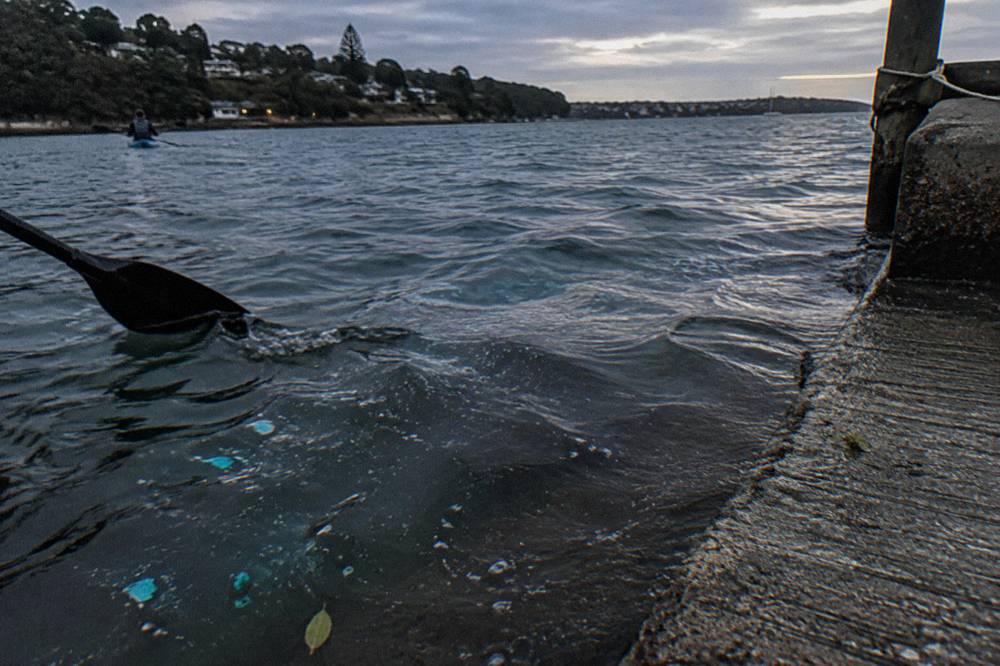
The organisms vary, too. Its wording is that these organisms "vary naturally". Auckland Council's scientist, quoted in Local Matters, noted that Noctiluca "often forms bright blooms around the coast in summer" and that rising water temperature "is conducive to these sorts of blooms if combined with calm conditions allowing them to accumulate". The newspaper itself, not the council, calls Mahurangi and the Hibiscus Coast areas "long been known as bioluminescence hotspots".
If the question behind the question is whether every tour sees the glow, that is answered plainly: no booking page promises a sighting. Canoe & Kayak Adventures states bioluminescence "can never be guaranteed", and Social Nature Movement says it "varies naturally". This site's piece on whether every bioluminescence kayak tour sees the glow covers the honest odds and the repeat-tour offer in detail.
Does The Moon Change How Long You Can See The Glow In Auckland?
Yes, and one Auckland operator treats moonlight strictly enough to shape its whole calendar. Social Nature Movement does not run tours when the moon is in the sky at more than 50 percent illumination, in its own words, "so gaps in our availability are intentional". Canoe & Kayak Adventures still runs tours in bright moonlight but recommends booking near a new moon or on nights with a later moonrise.
The moon matters because the glow is dim by any standard. A bright moon raises the background light on the water, and a flash that would look vivid against a black sea reads as subtle against a silvered one. Canoe & Kayak Adventures puts it this way: "Moonlight affects this tour and how brightly you will see bioluminescence. When the moon is brighter, the glow can be more subtle, but still visible." Its practical advice is to book near a new moon or on nights when the moon rises later, so the early hours of the tour happen under a darker sky.
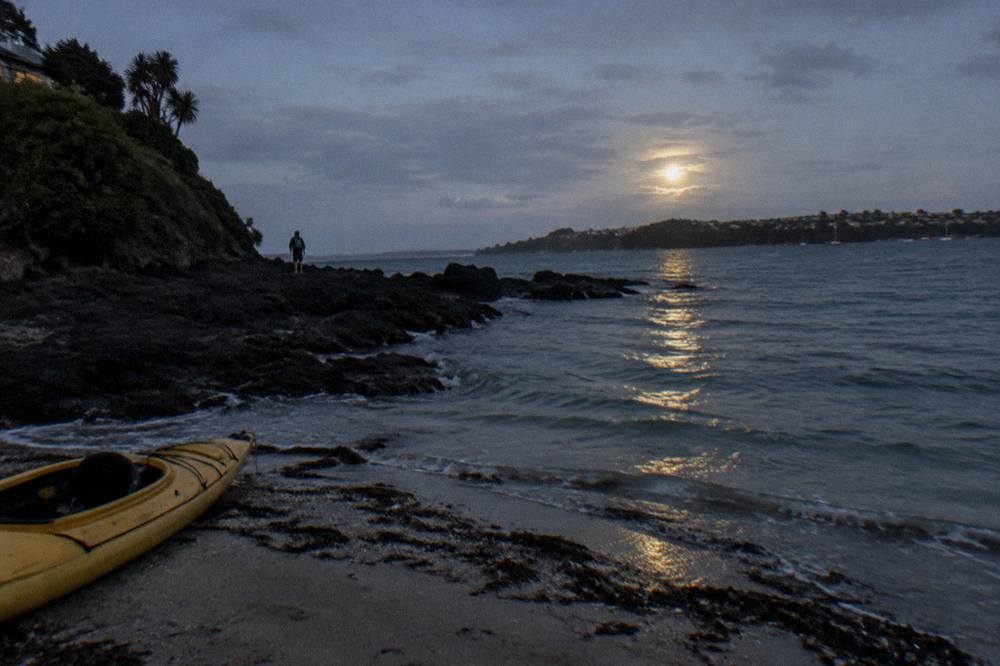
Social Nature Movement goes further and simply removes the worst nights from its calendar. The consequence for anyone planning around dates: its availability will show gaps, and those gaps are deliberate rather than a sign the operator is closed. Canoe & Kayak Adventures' season note, again in its words: "In November-April, the glow is often strong enough to enjoy on most nights. These popular dates do fill fast, so booking ahead is a good idea." That November to April line belongs to Canoe & Kayak Adventures only; Social Nature Movement separately says its peak season is October to April; Auckland Sea Kayaks says bioluminescence is "sometimes" seen on its sunset tour "typically October to April", that line applying to the sunset tour alone.
Moon dates, for planning, come from US Naval Observatory data. The new moons nearest this summer fall on 9 November 2026, 9 December 2026, 8 January 2027 and 7 February 2027. No date is a guaranteed dark night and no date is a guaranteed sighting; the moon is one variable among several, and the organisms vary naturally. This site's dedicated guide to the moon phase and a bioluminescence kayak tour works through the calendar in full.
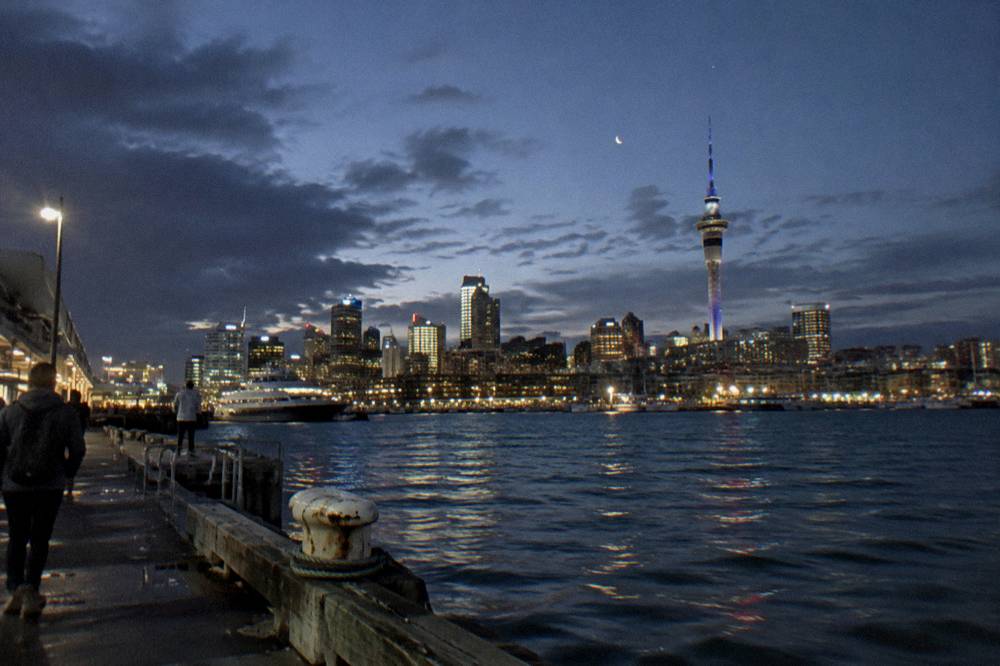
How Long After Sunset Does Full Dark Reach The Waitemata Harbour?
Full darkness arrives well after sunset in an Auckland summer. Computed from date and location for the Auckland waterfront, astronomical dusk falls at 9:49 pm on 15 November 2026, 10:27 pm on 15 December 2026 and 10:29 pm on 15 January 2027, while sunset on those dates is 8:08 pm, 8:36 pm and 8:42 pm respectively. Operators set their own start times around this.
The gap matters because the glow only occurs at night, governed by that circadian clock in the organisms. A tour that launches at civil twilight, when the sky still holds colour, will spend its opening minutes in light too strong for a dim blue-green flash to register against. By full dark, roughly an hour and a half to nearly two hours after a midsummer sunset, conditions are at their darkest.
| Date (Auckland waterfront) | Sunset | End of civil twilight | Full dark (astronomical dusk, computed) |
|---|---|---|---|
| 15 Nov 2026 | 8:08 pm | 8:37 pm | 9:49 pm |
| 15 Dec 2026 | 8:36 pm | 9:07 pm | 10:27 pm |
| 15 Jan 2027 | 8:42 pm | 9:12 pm | 10:29 pm |
| 15 Feb 2027 | 8:18 pm | 8:46 pm | 9:53 pm |
| 15 Mar 2027 | 7:41 pm | 8:07 pm | 9:08 pm |
| 15 Apr 2027 | 5:56 pm | 6:22 pm | 7:22 pm |
These clock times are computed from date and location, following US Naval Observatory sun and moon data. No tour start time can be derived from this table: the operators choose their own departure times, which shift with the season. What a reader can take from it is the shape of an Auckland summer evening, that full dark comes late, near 10 pm at the height of it, and that a two hour glow paddle in December and January will necessarily run into the night.
Daylight saving adds one more layer. Summer time, UTC+13, began 27 September 2026 and ends 4 April 2027, which is why the midsummer rows above run so late against the clock.
What Happens If The Glow Fades During The Paddle On The North Shore?
Nothing is lost but the light, and even that is not necessarily gone for the night. The glow depends on organisms drifting in the water at that spot at that moment, so it can be vivid in one bay and absent in the next, or strong for half a tour and faint for the rest. Canoe & Kayak Adventures addresses this directly: if the guide confirms no bioluminescence was seen, the operator gives a free repeat tour.
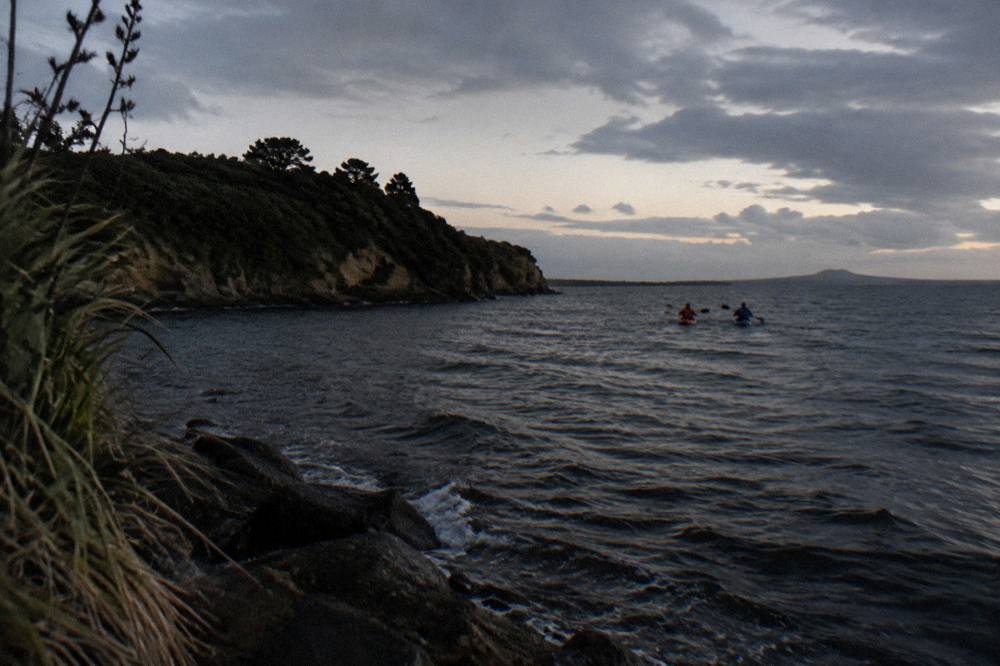
That repeat-tour offer is the most concrete protection available to an Auckland paddler, and it belongs to Canoe & Kayak Adventures alone. Its full wording deserves reading: "Bioluminescence is a natural event and can never be guaranteed, but we plan every trip around the best conditions and it's very rare not to see at least one type." The offer applies only when the guide confirms on the night that nothing was seen, and the terms are the operator's.
Fading mid-tour has a physical explanation worth knowing. The glow comes in patches, so it can thin out as the group paddles between areas, and it can return when the water is disturbed again over a richer patch of cells. Wind and rain work against it, which is why both North Shore operators run strict weather limits: Social Nature Movement proceeds only in calm conditions, and does not run Waiake above 5 m/s wind or 2.4 mm rain, or Okura above 8 m/s or 2.4 mm rain. Canoe & Kayak Adventures offers a different date or a full refund when it cancels for weather.
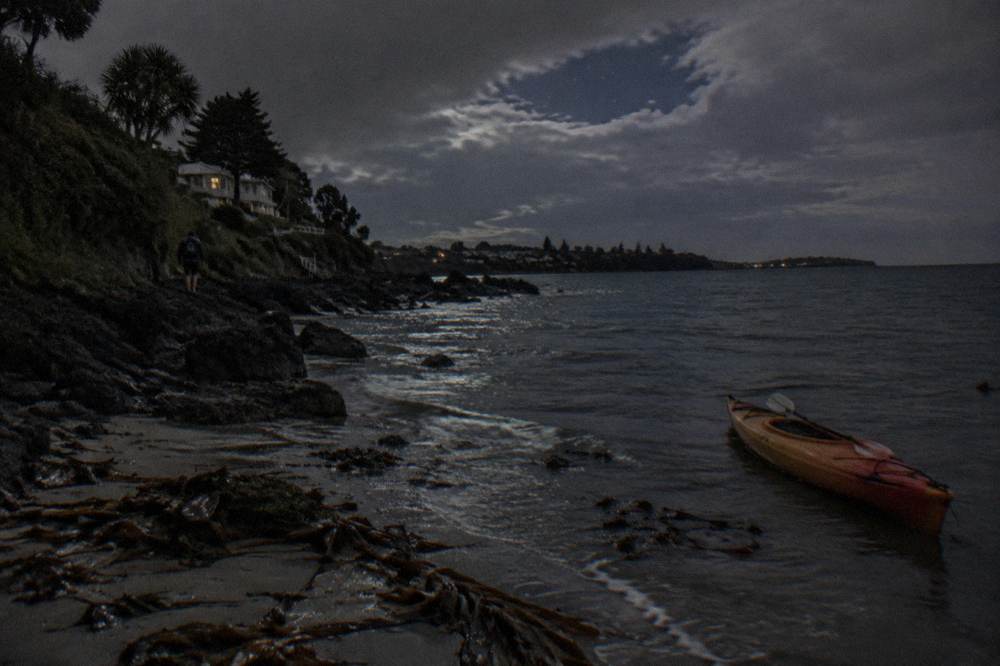
Cancellation on the customer side is uniform across the nine tours covered here: every booking page states a full refund when cancelled at least 24 hours before the start. Weather cancellations are the operator's call, and the free repeat tour sits outside that refund framework as a separate promise.
For a deeper look at the honest odds, this site's article on how rare it is to see bioluminescence on a kayak tour gathers the operator statements and the science in one place, and Wikipedia's page on Noctiluca scintillans covers the organism itself.
Is There A Longer Night Paddle Near Auckland With A Chance Of Glow?
Yes, one. Social Nature Movement's Tiritiri Matangi trip runs seven hours from $139 per person and includes a sunset kayak, a guided night walk, a grazing platter with drinks and a return paddle the booking page describes as having "a chance to see bioluminescent plankton". It is a dinner and wildlife trip, not a glow tour, and it has no rating shown yet.
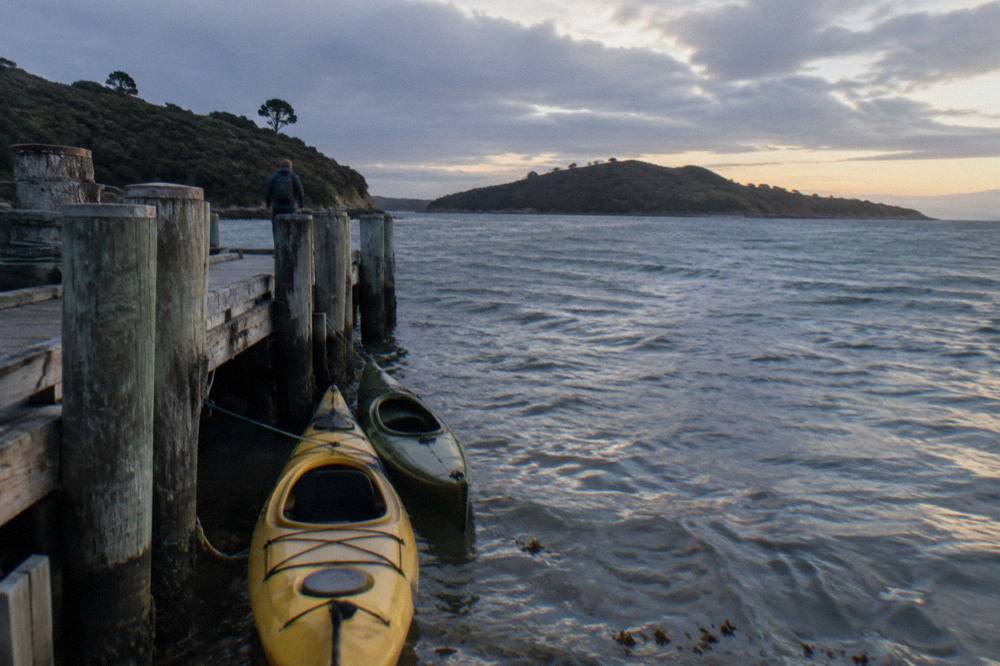
The distinction is important enough to spell out. The 7 hour Tiritiri Matangi trip is built around penguins, a nocturnal island walk and food, with bioluminescence listed as one possible feature of the paddle home. The two hour North Shore paddles are built entirely around the glow. Comparing the two on price alone, $139 against $53 or $67.52, would be comparing different products: one is a full evening expedition with pickup options chosen at booking, the others are short night paddles you drive to.
The glow-related content of that return paddle is a chance, in the booking page's own word, and nothing more. No booking page for any tour here promises a sighting. For travellers whose main goal is the glow, the dedicated paddles remain the direct route; for travellers wanting a long evening on the water with several experiences stacked into it, the Tiritiri trip is the only seven hour option in this category.
Auckland Sea Kayaks also runs long evening paddles, its Rangitoto sunset tours, from $139.02 and $116 per person depending on the booking page, both including a BBQ dinner and both departing St Heliers Bay. The operator says bioluminescence is "sometimes" seen on the sunset tour "typically October to April" and can never be guaranteed, so the same caution applies: dinner and a sunset are the promise, the glow is a possibility.
Does A Shorter City Paddle From Westhaven Marina Show The Same Glow?
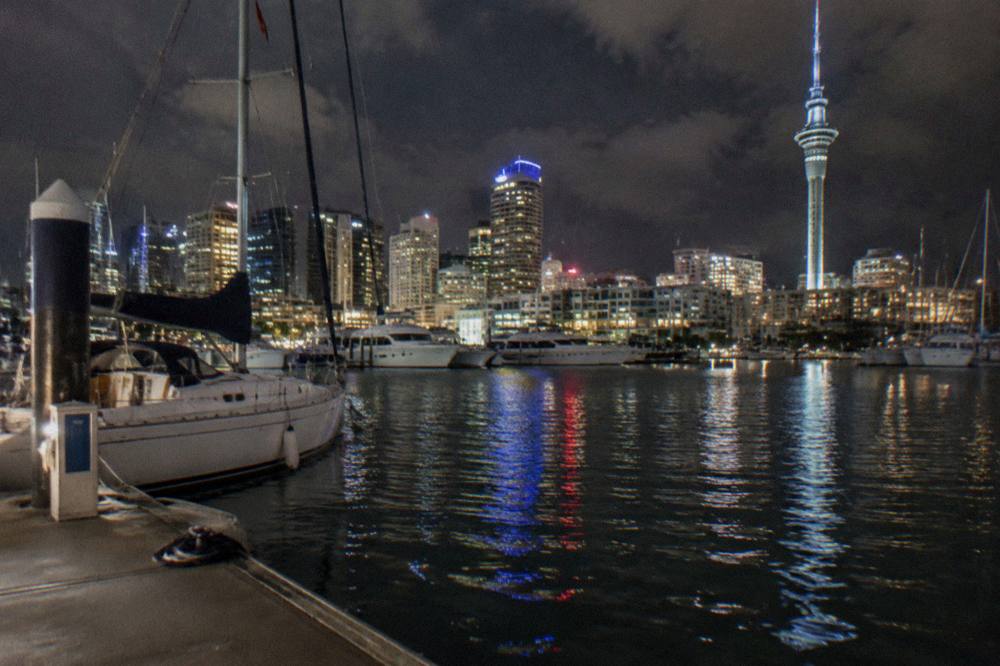
The City Lights tours from Westhaven Marina make no bioluminescence claim at all on their booking pages; they are night paddles built around Auckland's skyline from the sheltered Waitemata Harbour. The two hour version costs from $73 per person and is rated 5.0 across 15 reviews, and the 2.5 hour version from $82.27, rated 4.8 across 28 reviews, includes snacks.
The distinction is worth drawing because both tours share the words "night kayak". A reader searching for how long a glow lasts could easily land on a City Lights page and wonder whether the harbour itself can light up. It is a different product: Auckland Sea Kayaks departs from the boat ramp at Westhaven Marina, Z Pier, paddles the sheltered Waitemata Harbour towards the city lights, and fits every kayak with an all-round white navigation light at the rear. The operator, running since 2010 as an audited certified adventure activity operator, supplies life jackets and dry bags.
Both City Lights booking pages sell the same trip, the shorter with a sweet treat, the longer with snacks, so treat them as one product when comparing. For a glow-focused reader they serve a different purpose entirely, which is a shorter, cheaper, city-based night paddle. This site's City Lights night kayak Auckland guide covers them in full.
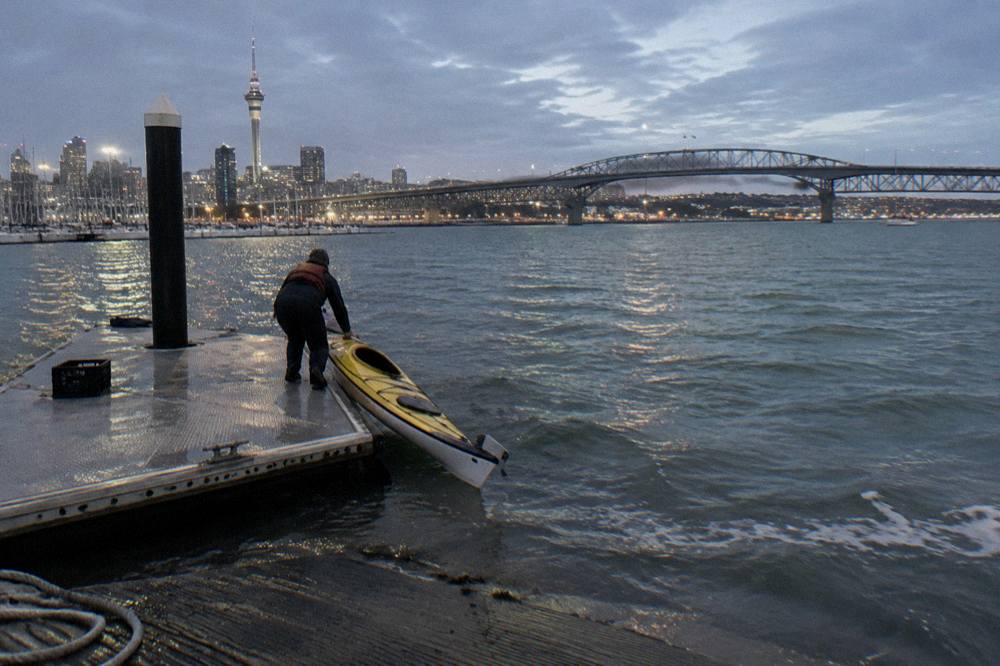
Safety framing applies to all of these paddles. Maritime NZ guidance for paddle craft says to dress for the water temperature, because cold water shock and hypothermia can kill, to carry two waterproof ways to call for help, and to check the marine weather forecast. From 9 October 2026, everyone on a recreational craft six metres or less, kayaks among them, must wear a properly fitted lifejacket while underway, per Maritime NZ. Life jackets come with the safety gear on the tours that state it, and Social Nature Movement's personal flotation devices carry a safety light.
How Should You Plan Two Hours On A Dark Auckland Sea?
Plan around three timeframes: the flash, which lasts a fraction of a second; the tour, about two hours; and the evening, which runs from sunset to full dark roughly an hour and a half later in midsummer. Book the tour length that fits your group, dress for the water temperature as Maritime NZ advises, and treat any sighting as the natural event it is.
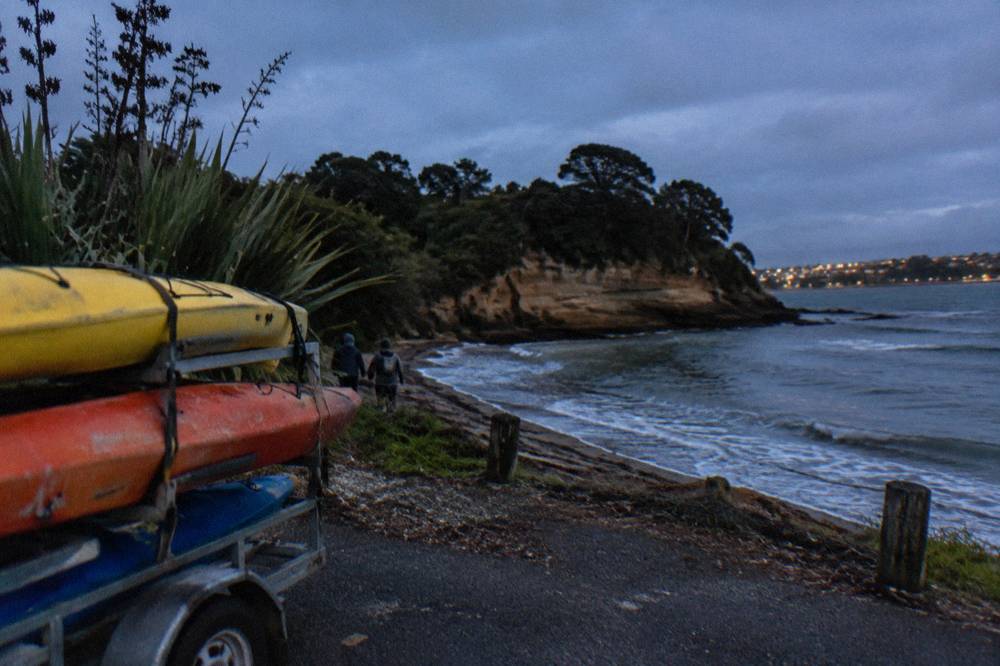
On clothing, Social Nature Movement publishes a specific bring list for its glow tour: thin merino or thermal shirt, fleece or woollen jumper, rain-proof jacket, warm beanie, towel, torch, water shoes, personal medication and a water bottle. Canoe & Kayak Adventures reminds paddlers that "Kayaking is a wet sport". Neither operator's list is the other's; each is quoted as that operator's own. This site's guide on what to wear on a night kayak tour in Auckland expands the layers in detail.
On photography, expect difficulty. Social Nature Movement says photographing the glow is challenging and needs specialised camera settings, and recommends a waterproof phone case; Auckland Sea Kayaks encourages phones, GoPro or a camera in a waterproof case at the guest's own risk. An 80 millisecond flash triggered by moving water is not a subject a phone camera captures easily, so the two hours are better spent watching than shooting.
On family fit, ages differ by operator and by page, and each belongs to its own tour: Canoe & Kayak Adventures says 11 and over accompanied by an adult on its operator page, with one booking page saying not suitable under 7; Social Nature Movement's operator page says 13 and over; Auckland Sea Kayaks' operator pages say 12 and over for City Lights and 14 and over for the sunset tour. One Canoe & Kayak tour and the Tiritiri Matangi trip each list a 120 kg weight limit, and one Rangitoto tour lists 125 kg. The night kayak tours with kids in Auckland guide untangles the family question tour by tour.
And on the original question, one last framing. A two hour paddle gives roughly two hours of opportunities: every stroke, splash and wake for the whole tour is a fresh trigger for organisms that flash in under a tenth of a second each. Whether they are there, and how thickly, varies naturally, and no operator promises it. What is fixed is the window, the launch point, and the price. From this site, that is the whole honest picture of the timing.
Common Questions About The Glow Lasting On A Bioluminescence Kayak Tour
How Long Does The Glow Last On A Bioluminescence Kayak Tour?
The glow is not a continuous light. It is a stream of very short flashes, each about 80 milliseconds, that appear only where water is disturbed and only at night. On Auckland tours the window for that is the tour itself: 1.5 to 2 hours with Social Nature Movement or 2 hours with Canoe & Kayak Adventures.
Does The Glow Stay Lit The Whole Time You Are Paddling?
It shows wherever and whenever the water is being disturbed, if the organisms are present in that spot. Stop moving the water and the light stops. Paddles, drips and the wake each trigger it, so an active paddle stroke produces far more light than a drifting kayak.
Is Two Hours Long Enough To See Bioluminescence In Auckland?
The operators structure their tours around that length, and Canoe & Kayak Adventures says it plans every trip around the best conditions and that it is "very rare not to see at least one type". It also offers a free repeat tour if the guide confirms nothing was seen. No booking page promises a sighting.
Does A Bright Moon Shorten How Long You Can See The Glow?
It reduces how visibly the glow shows rather than shortening it. Social Nature Movement does not run tours when the moon is in the sky above 50 percent illumination. Canoe & Kayak Adventures still runs tours but recommends booking near a new moon or on later-moonrise nights.
Do The Longer Auckland Tours Give You More Glow Time?
Not necessarily. The seven hour Tiritiri Matangi trip lists only "a chance to see bioluminescent plankton" on its return paddle, and the Rangitoto sunset tours make no bioluminescence promise on their booking pages, though the operator says glow is "sometimes" seen. The dedicated two hour paddles are the tours built around the glow.
When Does It Get Dark Enough For The Glow To Show In Summer?
Full dark, astronomical dusk, falls near 9:49 pm on 15 November 2026 and near 10:29 pm on 15 January 2027 over the Auckland waterfront, computed from date and location. Operators set their own start times, and the organisms' light occurs only at night.